

Headline
10 Most Difficult Exams In The World In 2025

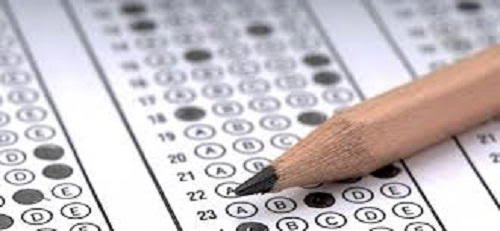


Exams asses what we know and how hard we work. But some exams are much harder than others. These tough tests need not just knowledge but also a lot of effort and mental strength. Passing them often takes years of study, determination, and sometimes many tries.
The country with the hardest exam is China, as it is home to the world’s No. 1 toughest exam, Gaokao, while India has 3 of the world’s top 10 toughest exams.
In this article, we’ll explore the 10 hardest exams in the world that only the toughest can pass.
10. Master Sommelier Diploma Exam
The Master Sommelier Diploma Exam is run by the Court of Master Sommeliers (CMS). It focuses on improving beverage services, especially wine and food pairing. The exam is very difficult, with a pass rate of only 10%, even after multiple attempts.
There are three levels in the exam: theory, service, and blind tasting. In the final level, candidates must identify the year, region, and type of wine. This makes it the hardest wine exam in the world. Most candidates need at least three tries, and some take five or six attempts. Candidates must pass the theory level first and then complete the other two levels within three years. If they fail, they must retake it within two years. If they don’t pass all levels within three years, they must retake the entire exam. Since 1969, only 269 people have passed.
The exam lasts 50 minutes. Around 70 candidates take the exam each year, with a 5-10% pass rate. The exam is held once a year in the UK and twice a year in the US.
READ ALSO: Top 10 Safest Cities In The World
9. All Souls Prize Fellowship Exam
The All Souls Prize Fellowship Exam is held every year by Oxford University. The exam offers a 7-year fellowship, with only one or two people chosen from about 80 each year. Applicants must write four essays on topics from humanities subjects, with 3 hours for each essay. The questions are abstract and hard to prepare for. Only people with a strong background in humanities can apply.
The questions are subjective and have no clear right or wrong answers, like “Is Edward Snowden a hero or a villain?”. The exam looks for students with strong debate, analysis, and judgement skills. Candidates must also show clear thinking, independence, and broad knowledge. Those who pass the written exam are invited for a viva, where they explain their answers orally.
The exam lasts 3 hours for each of the 4 papers. About 80 people take the test each year, with a pass rate of only 2.5%. The competition is tough. The exam covers subjects like English literature, philosophy, politics, and economics. Candidates can choose any topic for their specialised papers.
8. GATE (Graduate Aptitude Test in Engineering, India)
The GATE exam is an online test in India that checks students’ knowledge of engineering and technical skills. It is very competitive and tough, so long study hours are needed to pass. Many students take GATE every year to get into master’s and Ph.D. programs at top institutes like IITs, NITs, IIITs, IISc, and IIMs. Public sector companies like Indian Oil and GAIL also use GATE scores to hire people. Some universities in Germany and Singapore give scholarships based on GATE scores.
The exam has 65 questions: 10 on general aptitude and 55 on the candidate’s chosen subject. It lasts 3 hours and includes both multiple-choice and numerical questions. The questions are not too hard, but the large syllabus makes the exam tough. The pass rate is 18%, and the competition is high. The exam is recognised in India, Singapore, and Germany and covers subjects like aerospace engineering, IT, chemical engineering, and computer science.
7. CCIE (Cisco Certified Internetworking Expert)
The CCIE exam, run by Cisco, is for networking professionals who need to prove their skills in building, maintaining, and troubleshooting complex networks. Only Cisco engineers can take the test, and the low success rate makes it very hard to pass.
The exam has six sections, covering topics like routing, collaboration, and security. It has two stages. Candidates who pass the first stage can move on to the second, which lasts 8 hours with a 1% pass rate. To succeed, candidates need deep knowledge of networking and 7 to 10 years of experience.
READ ALSO: Top 5 African Countries With The Highest Alcohol Consumption
The exam includes a 2-hour written test and six other tests. Around 63,000 people take it each year, with a pass rate of 30%. The exam covers topics like Network Infrastructure, Software Defined Infrastructure, and Infrastructure Services.
6. CFA (Chartered Financial Analyst)
The CFA (Chartered Financial Analyst) exam is one of the hardest exams in finance. Every year, over 100,000 people from about 100 countries take the CFA exam. The CFA designation is one of the most respected in finance and investment management. The exam tests candidates on important finance tools and practices. To get the CFA Charter, candidates must pass three levels: CFA Level 1, Level 2, and Level 3. Each level has a tough 6-hour exam with 240 questions. Candidates also need 48 months of work experience. The first two levels have multiple-choice questions, and the third level has essay-style questions. On average, it takes four attempts to pass all three levels. After passing the exams, candidates need four years of work experience to become a CFA Charterholder.
5. GRE (Graduate Record Examination)
The GRE (Graduate Record Examination), run by ETS, is one of the hardest exams in the world. It tests if someone is ready to pursue a master’s degree abroad, mainly in the USA. For example, a good GRE score is necessary to get into top universities like the Massachusetts Institute of Technology. The GRE is for those who want to study abroad, especially for master’s, MBA, and PhD programs.
Although the GRE was first created for US universities, it is now accepted in more than 90 countries. It is more complex than other exams because of its detailed syllabus. The test measures skills in verbal reasoning, logical reasoning, quantitative ability, critical thinking, and analytical writing. Many people prepare hard for this test for different reasons, like studying or moving abroad, making it tough to pass. Therefore, strong preparation is needed.
The GRE General Test can be taken once every 21 days, up to five times a year. The test lasts 3 hours and 45 minutes, and the pass rate is 43%.
4. Mensa
Mensa International (MI) is a global group for people with very high IQs. It is one of the oldest and most respected high-IQ societies. To join, a person must score in the top 2% on an approved IQ test. This means their IQ is higher than 98% of people. Mensa is non-political and does not discriminate based on race or religion. The IQ test for Mensa is very hard. It tests logical thinking, problem-solving, and intelligence.
READ ALSO: 2024: Top 10 African Countries With The Highest Debt To IMF
People of all ages, from 2 to 100 years old, can take the test. If they pass, they can join a community of highly intelligent people worldwide. Mensa has 145,000 members in nearly 100 countries. Some IQ tests for Mensa membership include Stanford-Binet (132 and above) and Cattell (148 and above). The test takes 25 minutes and has 35 hard problems.
The pass rate is only 0.02%, making it one of the hardest IQ tests. Mensa tests are held in about 90 countries, including the US, UK, Ireland, and Germany. Passing the test is a big achievement, as it gives membership to one of the most exclusive high-IQ societies.
3. UPSC CSE
The Union Public Service Commission (UPSC) conducts the Civil Services Examination (CSE). It is one of the top five hardest exams in the world. This exam has been held for over 100 years and is highly competitive. Many students prepare for years to pass it. There is a limit on the number of attempts. General category candidates can try six times, while OBC candidates can try nine times. To take this exam, candidates must be between 21 and 32 years old.
The UPSC CSE selects top candidates for civil service jobs like the Indian Administrative Service (IAS), Indian Foreign Service (IFS), and Indian Police Service (IPS). Every year, about 500,000 people apply, but only 1,000 get selected.
The exam has three stages: Prelims, Mains, and an Interview. The prelims is held in March and has two objective-type papers. The Mains, held in December, has seven descriptive papers. Candidates who pass these two stages are invited for an interview, where a panel tests their knowledge, personality, and logical thinking. This exam is extremely difficult, with a pass rate of just 0.2%. In 2023, about 1.3 million candidates applied, but only 14,624 moved to the next round.
The exam lasts three hours and includes multiple-choice and descriptive papers on General Studies (Paper 1 & 2—CSAT). The UPSC CSE is held once a year across India. Passing this exam gives candidates the chance to work in top government positions in India.
READ ALSO: Top 10 Things Nigerians Spend Their Money On Amid Hardship
2. IIT-JEE
The IIT-JEE (Joint Entrance Examination Advanced) is the second toughest exam in the world and the most difficult exam in India. It is a national-level test and the only way to enter the Indian Institutes of Technology (IITs).
Students who pass this exam may get the Siemens Scholarship, which helps them pay for their engineering degree. The JEE exam has two levels: JEE Main and JEE Advanced. Students must first pass JEE Main before they can take JEE Advanced. The JEE Main exam happens twice a year, in January and April, while the JEE Advanced exam happens once a year and is conducted by seven IITs.
This exam is very competitive, as many students try for a few available seats. In 2023, 251,673 students took the exam, but only 26.17% passed. The test lasts for three hours and has 90 questions, each worth four marks. It includes Physics, Chemistry, Mathematics, and Biology.
1. Gaokao Exam
The Gaokao, or National College Entrance Exam (NCEE), is a very difficult test in China. It was introduced in 1952 and is the main exam for students who want to enter Chinese universities. The exam has tough questions in subjects like math, chemistry, biology, physics, geography, Chinese literature, and political science. It takes place once a year, usually in early June, and lasts about nine hours over two days. The schedule may be different in each province.
Most students take the Gaokao in their last year of high school, around age 18. However, preparation for this test starts early and often takes 12 years of hard work. The exam is very competitive, with a low passing rate of less than 0.25%. Each province has its own scoring system, so the passing score is different in each region and year. The pressure to do well is very high. Many students experience stress, anxiety, and other mental health problems because of this exam.
(VANGUARD)


Headline
Strait Of Hormuz: Pakistan Thanks Trump For Pausing ‘Project Freedom’

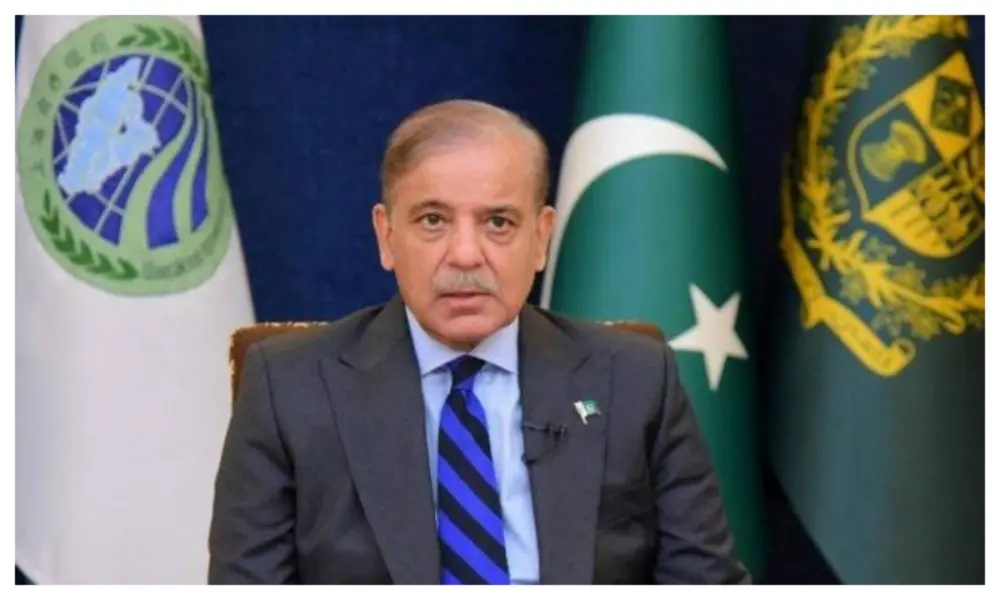
Pakistani Prime Minister Shehbaz Sharif on Wednesday expressed gratitude to United States President Donald Trump for temporarily pausing ‘Project Freedom’, an initiative to secure shipping through the Strait of Hormuz.
In a statement posted on X, Sharif thanked Trump for pausing the “Project Freedom” mission, praising him for his courageous leadership and timely announcement.
According to him, Trump’s decision was made in response to requests from Pakistan, Saudi Arabia and other brotherly countries.
READ ALSO: Oil Prices Drop After Iran Reopens Strait Of Hormuz
He added that the pause would go a long way towards advancing regional peace, stability and reconciliation during the sensitive period.
“Pakistan remains firmly committed to supporting all efforts that promote restraint and a peaceful resolution of conflicts through dialogue and diplomacy.
“We are very hopeful that the current momentum will lead to a lasting agreement that secures durable peace and stability for the region and beyond,” Sharif said.
Headline
FG Summons S. African Envoy Over Rising Xenophobic Attacks On Nigerians

The Federal Government has summoned the Acting High Commissioner of South Africa in Abuja over renewed concerns about xenophobic attacks and protests targeting foreign nationals, including Nigerians, living in that country.
The Ministry of Foreign Affairs said the envoy is expected at its headquarters on Monday, May 4, 2026, for a high-level engagement aimed at addressing the growing tension and safeguarding bilateral relations between both countries.
In a statement issued on Sunday, the spokesperson for the Ministry, Kimiebi Ebienfa, said Nigeria would formally express its “profound concern” over recent developments in South Africa, particularly reports of harassment, violence, and destruction of property belonging to foreign nationals.
According to the ministry, the meeting will focus on ongoing demonstrations by various groups in South Africa and documented cases of attacks on Nigerians and their businesses in parts of the country.
READ ALSO:Group Condemns Tunisian Xenophobic, Racial Attacks On African Migrants
“The objective of this engagement is to formally convey the Nigerian Government’s profound concern regarding recent events that have the potential to impact the established cordial relations between Nigeria and South Africa,” the statement read.
It added that discussions would also address ongoing demonstrations by various groups within South Africa and documented instances of mistreatment of Nigerian citizens and attacks on their businesses.
The ministry acknowledged growing anger among Nigerians over reports of xenophobic violence but urged restraint, stressing that diplomatic engagement remained the preferred channel for resolution.
It assured Nigerians that the Federal Government was actively engaging South African authorities to ensure the protection of its citizens abroad.
READ ALSO:US Visa Adjudication Sparks Concerns Over Diplomatic Relations
“The Ministry is aware of the growing discontent among Nigerians concerning the treatment of their nationals in South Africa. Nevertheless, it implores the Nigerian public to remain calm and reiterates the Federal Government’s commitment to protecting the rights and well-being of Nigerian citizens residing in South Africa,” the statement added.
The latest diplomatic move comes amid renewed reports of xenophobic tensions in parts of South Africa, where foreign-owned businesses have occasionally been targeted during protests linked to unemployment and economic hardship.
South Africa has a history of xenophobic violence dating back to 2008, with subsequent flare-ups in 2015 and 2019, when mobs attacked migrants, looted shops, and displaced thousands of foreign nationals across several provinces.
In past incidents, Nigerians and other African nationals were among those affected, prompting strong diplomatic reactions from Abuja and calls for stronger protection of foreign communities.
While South African authorities have repeatedly condemned such attacks and deployed security forces to restore order during outbreaks of violence, concerns have persisted over recurring hostility in some communities.
Headline
Mississippi Man ‘Kills Mother, Flushes Her Remains Down Toilet’


A 29-year-old Mississippi man, Zachary Lavel Jackson Jr., has been charged with multiple offences, including first-degree murder, over the death of his mother, Lana Brown Bradley, after deputies responded to her Natchez home on April 4 following a missing person report from relatives.
The Adams County Sheriff’s Office said deputies were called to Bradley’s residence after her oldest son was unable to reach her the previous day.
Jackson was initially identified as a family member before investigators confirmed he was her son.
Sheriff Travis Patten described the case as deeply disturbing.“This is by far the most heinous crime that I’ve ever witnessed in my entire life. We weren’t out there that day; this was one of those things when we walked up.
READ ALSO:Bandits Kill Nine, Injure Eight In Fresh Attack On Zamfara Village
“This was one of those cases that you will never, ever forget in your life. This is the type of case that follows you home,” Patten told WJTV.
According to the sheriff, deputies noticed signs of a recent cleanup when they arrived at the home.
“As soon as they walked in the house, they could just see where somebody had been cleaning up, and they could smell chemicals all throughout the house.
“Floor was extremely slippery. And the older son said that this is just unusual for the youngest son to be cleaning up the house like that,” Patten explained.
READ ALSO:US Comedian Reggie Carroll Shot Dead In Mississippi
Jackson, the youngest son, was found in a bathroom, where deputies allegedly made a discovery that became central to the investigation.
“I can say what was in the toilet, and it was her flesh. He chopped her up in pieces and dismembered her in a way that whoever came looking for her would have to do their due diligence to find her, and that’s just what we did,” the sheriff said.
Authorities said Jackson allegedly placed parts of his mother’s body in a suitcase and attempted to dispose of other remains.
Jackson faces charges of first-degree murder, second-degree murder, mayhem and tampering with evidence.
READ ALSO:Popular Influencer Lola Shot
Investigators said Bradley, a retired teacher, had recently sought to evict her son from the home. Patten, citing family interviews, said Jackson was believed to be mentally unstable but also noted that his actions appeared deliberate.
“He had threatened her the day before because she was looking to have him evicted from the home.
“She was in the process of doing so and had just gone to court the day before to have him removed from the home,” Patten explained.
-

 Politics4 days ago
2027: Tinubu’s Re-election May Put An End To Nigeria — Baba Ahmed Warns
-

 Business4 days ago
JUST IN: Nigerian Filling Stations Reduce Fuel Price After Hike
-

 Entertainment5 days ago
Actress Eniola Badmus Gets New Federal Appointment
-

 News2 days ago
BREAKING: Wike Picks Alabo George For Rivers Governorship
-

 News4 days ago
2027: Pastor Adeboye Speaks On Nigeria’s Next President
-

 Politics4 days ago
NDC Speaks On Peter Obi, Kwankwaso Joining Party
-

 News3 days ago
OPINION: Why South Africans Murder Nigerians In Cold Blood
-

 Politics5 days ago
2027: Pondi, Otuaro, Other Delta South Stakeholders, Endorse Senator Joel-Onowakpo For Second Term
-

 Politics2 days ago
JUST IN: Why I left ADC For NDC With Kwankwaso – Peter Obi Opens Up
-

 Business2 days ago
Why We Sited Our Multi-Billion Naira Automobile Firm Branch in Benin – Skyewise Group CEO


