
Headline
133m Poor Nigerians: Buhari Dragged To Court Over Failure To Probe Spending On ‘Social Intervention Programmes’

Socio-Economic Rights and Accountability Project (SERAP) has filed a lawsuit against President Muhammadu Buhari over “the failure to thoroughly, effectively and transparently investigate spending on all social safety-nets and poverty alleviation programmes and projects executed between 2015 and 2022.”
Joined in the suit as Respondent is the Attorney-General of the Federation and Minister of Justice, Abubakar Malami (SAN).
A recent report by the National Bureau of Statistics (NBS) shows damning revelations that some 133 million Nigerians are poor, despite the government reportedly spending N500 billion yearly on ‘social investment programmes.’ Half of all poor people in the country are children.
In the suit number FHC/ABJ/CS/2357/2022 filed last Friday at the Federal High Court, Abuja, SERAP is asking the court to “direct and compel President Buhari to thoroughly and transparently investigate the spending on all social safety-nets and poverty alleviation programs and projects executed between 2015 and 2022.”
SERAP is also asking the court to “direct and compel President Buhari to ensure that suspected perpetrators of corruption and mismanagement of public funds meant to take care of the poor face prosecution, as appropriate, and any stolen public funds are recovered.”
In the suit, SERAP is arguing that, “Nigerians have the right to be free from poverty. Allegations of corruption in social safety-nets and poverty alleviation programmes pose both direct and indirect threats to human rights, and contribute to extreme poverty in the country.”
SERAP is also arguing that, “Investigating the allegations of corruption in the spending on social safety-nets and poverty alleviation programmes and projects and recovering any stolen public funds would serve the public interest.”
According to SERAP, “The Federal Government has a legal responsibility to ensure transparency and accountability in how public funds are spent, to reduce vulnerability to corruption and mismanagement.”
READ ALSO: Buhari Opens Up On Death Claim, ‘Jubril From Sudan’
SERAP is also arguing that, “The government has legal obligations to effectively and progressively address and combat extreme poverty as a matter of human rights.”
The suit filed on behalf of SERAP by its lawyers Kolawole Oluwadare, Kehinde Oyewumi, and Blessing Ogwuche, read in part: “The failure to address extreme poverty has resulted in high levels of inequality, and serious violations of economic and social rights of socially and economically vulnerable Nigerians.”
“The NBS report suggests a grave violation of the public trust, and the lack of political will by the government to uphold the country’s constitutional and international human rights obligations.”
“The consequences of corruption are felt by citizens on a daily basis. Corruption exposes them to additional costs to pay for health, education and administrative services.”
“Corruption undermines economic development of the country, trapping the majority of Nigerians in poverty and depriving them of employment opportunities.”
“Extreme poverty is the greatest denial of the exercise of human rights, as it denies millions of Nigerians not only their economic and social rights but also civil and political rights such as the rights to life, human dignity, and political participation.”
“The failure to address extreme poverty has resulted in high levels of inequality, and serious violations of economic and social rights of Nigerians, particularly the socially and economically vulnerable sector of the population.”
READ ALSO: Your Christmas Message Is Meaningless, Blackmail, Group Takes Swipe On Buhari
“The report that 133 million Nigerians are poor suggests corruption and mismanagement in the spending of trillion of naira on social safety-nets and poverty alleviation programmes, including the reported disbursement of over $700 million from the repatriated Abacha looted funds to these programmes.”
“The report also shows that the purported social safety-nets and poverty alleviation programmes are clearly not working. It also shows a failure by the government to uphold the constitutionally and internationally guaranteed human rights of the Nigerian people.”
“The government has a sacred duty to ensure transparency and accountability in the spending of the country’s resources, including the spending of public funds on social safety-nets and poverty alleviation programmes and projects.”
“Section 14(2)(b) of the Nigerian Constitution of 1999 [as amended] provides that, ‘the security and welfare of the people shall be the primary purpose of government.’”
“Under Section 16(1)(a)(b), the government has the obligations to ‘harness the resources of the nation and promote national prosperity and an efficient, a dynamic and self-reliant economy’, and to secure the maximum welfare, freedom and happiness of every citizen.’”
“Nigeria has also ratified the African Charter on Human and Peoples’ Rights and the International Covenant on Economic, Social and Cultural Rights, which recognize legally enforceable economic and social rights, such as the rights to education, health, safe food and clean water, security, and shelter.”
“Successive governments have systematically neglected social and economic rights, and failed to address severe poverty and inequality in the country.”
“The allegations corruption and mismanagement in the spending of public funds on social safety-nets and poverty alleviation programmes and projects would clearly amount to a fundamental breach of national anticorruption laws and the country’s international anticorruption obligations.”
“The 2022 Multidimensional Poverty Index (MPI) Survey reveals that 65% of the poor (86 million people) live in the North, while 35% (nearly 47 million) live in the South. Poverty levels across States vary significantly, with the incidence of multidimensional poverty ranging from a low of 27% in Ondo to a high of 91% in Sokoto.”
READ ALSO: Groups Drag President Buhari To Court Over New NDDC Board
“The NBS also shows that over half of the population of Nigeria are multidimensionally poor and cook with dung, wood or charcoal, rather than cleaner energy. High deprivations are also apparent nationally in sanitation, time to healthcare, food insecurity, and housing.”
No date has been fixed for the hearing of the suit.
VANGUARD



Headline
‘Pioneer Of Cable TV News’: Key Facts About CNN Founder, Ted Turner
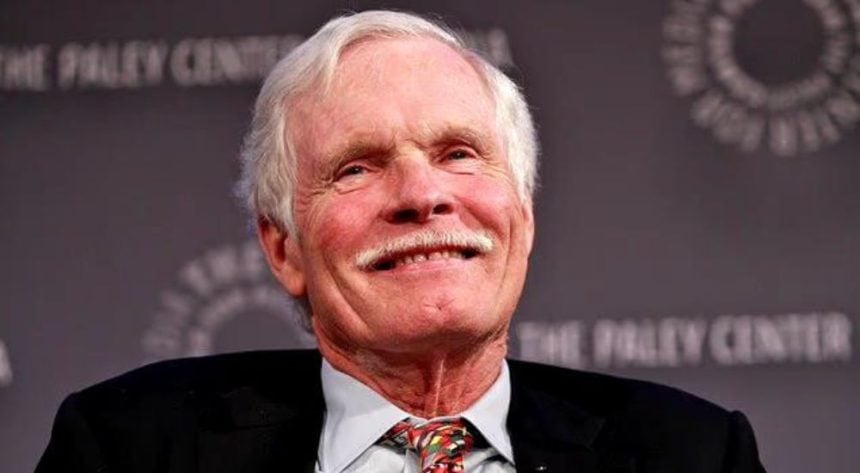
Ted Turner, the media businessman who founded CNN died at the age of 87. He died peacefully on Wednesday, surrounded by family, according to Turner Enterprises.
Contents
Launched 24-hour news television
Built a media network
Expanded through sports
Recognition and influence
Philanthropy and global causes
Environmental efforts
Health and later years
Early career path
Leadership and legacy
Personal life
Exit from business
Family
Below are key facts about his life and impact:
Launched 24-hour news television
Turner founded CNN on June 1, 1980, introducing the first 24-hour news channel and changing how audiences follow global events.
READ ALSO:CNN To Layoff 200 Staff Amid Attempts To Modernise Business
Built a media network
He moved from billboards into broadcasting, turning an Atlanta TV station into a national superstation in 1976. His business later grew to include CNN International, TNT, Turner Classic Movies and Cartoon Network.
Expanded through sports
Turner invested in sports broadcasting and owned teams including the Atlanta Braves and the Atlanta Hawks, using television to reach wider audiences.
Recognition and influence
In 1991, he was named Time magazine’s Man of the Year for his role in shaping modern news coverage.
Philanthropy and global causes
He founded the United Nations Foundation and supported campaigns against nuclear weapons. In 1997, he pledged $1 billion to the United Nations.
READ ALSO:CNN President, Jeff Zucker Resigns After Failing To Disclose Secret Affair With Colleague
Turner supported conservation work, including reintroducing bison in the United States, and backed environmental education through the “Captain Planet” cartoon.
Health and later years
In 2018, Turner revealed he had Lewy body dementia. He also recovered from a mild case of pneumonia in early 2025.
Early career path
He took over his father’s billboard company at 24 after his father’s death and later expanded into radio and television, despite limited experience in journalism.
“I worked until 7 o’clock, and when I got home the news was over,” he once said. “So I missed television news completely. And I figured there were lots of people like me.”
Leadership and legacy
READ ALSO:CNN Reporter Protests Nigeria’s $215 Single Entry Visa Fee
“Ted was an intensely involved and committed leader, intrepid, fearless and always willing to back a hunch and trust his own judgement,” Mark Thompson, Chairman and CEO of CNN Worldwide, said in a statement. “He was and always will be the presiding spirit of CNN. Ted is the giant on whose shoulders we stand, and we will all take a moment today to recognize him and his impact on our lives and the world.”
Personal life
Turner married actress Jane Fonda in 1991, and they later divorced after 10 years, though they remained close.
“I would never love anyone like I love him,” she said. “But I just couldn’t keep moving in his world, along the surface for the rest of my life. I knew that I would get to the end of my life and regret not doing the things that I also needed to do for me.”
Exit from business
He sold his company to Time Warner in 1996 and later stepped away following its merger with AOL.
Reflecting on his life, Turner once said: “I lost Jane. I lost my job here. I lost my fortune, most of it. Got a billion or two left. You can get by on that if you economize.”
Family
He is survived by his five children, 14 grandchildren and two great-grandchildren.
Headline
Iran’s Nationwide Internet Shutdown Hits 70 Days

NetBlocks, a monitoring group, has disclosed that an internet shutdown enforced by the Iranian regime has entered its 70th day, severing key access from swathes of the population under the shadow of war.
NetBlocks reported on Friday that the blackout has now surpassed 1,656 hours, marking more than two months since US-Israeli strikes pounded Tehran and escalated across the Middle East.
“Digital connectivity is vital in times of crisis,” NetBlocks said in a post on X. “Limiting service harms those most in need – people with disabilities, students, small businesses and the general public.”
READ ALSO:US Underestimated Iran Before War – France’s Bardella
According to CNN, Iran imposed a separate internet shutdown on the country’s 92 million people earlier this year, when it launched the most lethal crackdown on anti-government protesters since the Islamic Republic’s founding 47 years ago.
CNN further reports that the latest blackout has cut off another potential lifeline for Iranian residents faced with high unemployment and economic pressure exacerbated by the US-Israeli campaign.
(CNN)
Headline
Gas Prices In US Edge Down After Two Weeks Of Increases
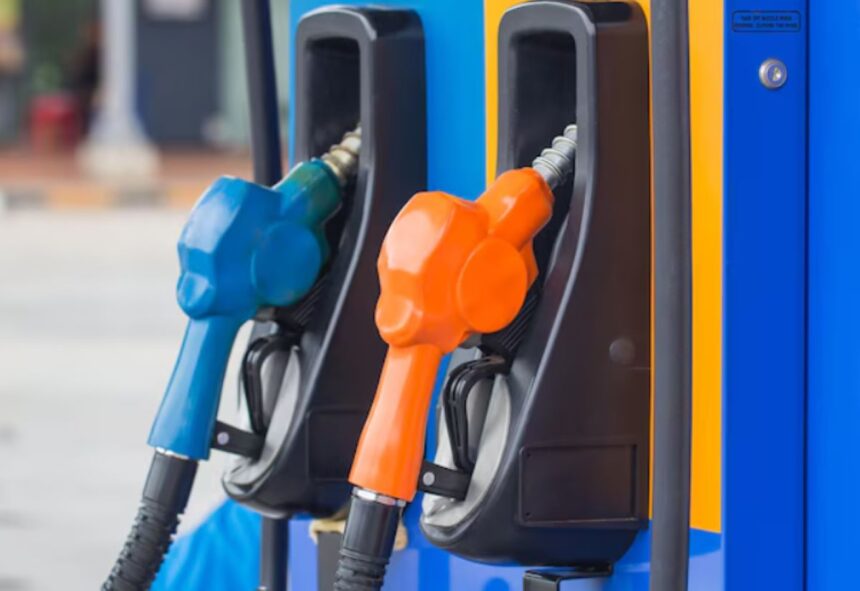
The cost of a gallon of regular gas in the United States (US) has edged down a little more than a penny to $4.55.
According to AAA’s readings, this marks the first decline in the average gas price after 15 straight days of increases.
The decline is minuscule compared to the large increases in gas prices over the last two weeks.
According to CNN, gasoline costs rose an average of nearly 4 cents a day during that period and had several daily increases of between 7 and 9 cents.
READ ALSO:Gas Station Explosion Rocks Calabar, Scores Injured, Property Destroyed
Also Read: Trump insists US-Iran ceasefire intact despite recent exchange of fire
CNN also reports that based on past gas spikes, it will likely take weeks for gas prices to get down below $4 a gallon.
The report, however, states that a previous two-week stretch of gas price declines only shaved 14 cents off the average price, taking the average price to $4.02, before the recent 15-day run of increases.
READ ALSO:Tinubu Signs Executive Order To Protect Nigeria’s Oil & Gas Revenue
According to CNN, it could take months for the average price to fall below $3 per gallon, as it did before the war in Iran.
CNN further reports that only one state – Oklahoma – now has an average price of less than $4 a gallon, and its average stands at $3.98. California has the highest average price at $6.16.
(CNN)

 News4 days ago
Gun Battle In Oyo Forest As Police Disrupt ₦10m Ransom Collection Plot
- Politics3 days ago
Four Fubara Loyalists Disqualified As APC Clears 21 For Rivers Reps Primaries
- News3 days ago
Lagos Sanctions 15 Money Lending Companies For Sharp Practices
 Metro4 days ago
Drama As Teenagers Stage Secret Wedding With N3,000 Bride Price
- Politics3 days ago
2027: Court Rebukes Plaintiff, Lawyer In Suit Against Jonathan, Awards N1m Fine
- News4 days ago
PAP Sends Additional 15 Scholarship Beneficiaries For Post-Graduate Studies In UK
- Sports4 days ago
CAF Introduces New Laws After Chaotic AFCON Final In Morocco
- Metro2 days ago
‘My Husband Refused To Work, Took To Excessive Drinking, Smoking After He Returned From South Africa’
- News3 days ago
Adeleke: Crime Cannot Dethrone Apetu And Enthrone Oluwo
- News3 days ago
IGP Vows To End Impunity, Upgrade Traffic Warden Unit


