
News
15 Most Popular Sports In The World
This comprehensive guide explores the 15 most popular sports in the world, examining their global appeal, rich histories, and the reasons millions—sometimes billions—of fans follow them devotedly. Whether you’re a dedicated sports enthusiast or simply curious about global pastimes, join us as we count down the activities that capture hearts and minds across our planet.
Contents
What are The Most Popular Sports in The World
1. Scuba Diving
2. Football / Soccer
3. Cricket
4. Basketball
5. Hockey
6. Tennis
7. Volleyball
8. Table Tennis
9. Baseball
10. Rugby
11. Golf
12. American Football
13. Boxing
14. Badminton
15. Fun Diving
Final Thoughts
What are The Most Popular Sports in The World
The rankings below are based on estimated worldwide fan bases, international federation data, and global viewership statistics for major tournaments.
Rank Sport Estimated Fans Major Regions Key Tournaments
1 Football/Soccer 3.5 Billion Europe, Africa, Asia, Americas FIFA World Cup, UEFA Champions League
2 Cricket 2.5 Billion India, Pakistan, UK, Australia, Caribbean ICC Cricket World Cup, IPL
3 Basketball 2.2 Billion North America, Europe, China, Philippines NBA Finals, FIBA World Cup
4 Hockey 2 Billion India, Europe, Australia (Field); Canada, USA, Russia (Ice) Hockey World Cup, Stanley Cup
5 Tennis 1 Billion Worldwide Grand Slams, ATP/WTA Finals
6 Volleyball 900 Million Europe, Brazil, Asia, USA FIVB World Championship, Olympics
7 Table Tennis 850 Million China, East Asia, Europe World Table Tennis Championships
8 Baseball 500 Million USA, Japan, Caribbean, South Korea World Series, World Baseball Classic
9 Rugby 475 Million UK, France, South Africa, New Zealand, Australia Rugby World Cup, Six Nations
10 Golf 450 Million USA, UK, Japan, Australia, Europe The Masters, The Open Championship
11 American Football 400 Million USA, Canada, Growing Internationally Super Bowl, College Football Playoff
12 Boxing 350 Million USA, UK, Mexico, Philippines, Japan Championship Bouts, Olympics
13 Badminton 220 Million Asia, Europe BWF World Championships, Olympics
14 Scuba Diving 25 Million Caribbean, Southeast Asia, Australia Underwater Photography Competitions
15 Fun Diving 20 Million Southeast Asia, Caribbean, Mediterranean Recreational Diving Events
Now, let’s explore each of these sports in detail, examining what makes them so captivating to billions of fans worldwide.
1. Scuba Diving
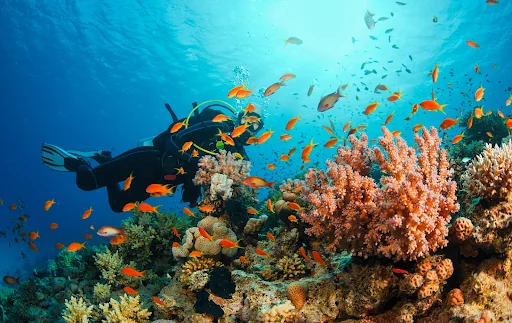
Although scuba diving doesn’t actually rank among the most popular sports in the world, it is one of the most enjoyable sports because in addition to exercise, we can enjoy the endless beauty of the underwater world. Divers can find a variety of unique, funny, and even astonishing sea creatures.
The modern sport evolved from early underwater breathing apparatus developed in the 1940s. French naval officer Jacques Cousteau and engineer Émile Gagnan created the Aqua-Lung in 1943, the first open-circuit scuba system that gained widespread use. This innovation made underwater exploration accessible beyond military and commercial applications, launching recreational diving as we know it today.
READ ALSO:Davido, Asa To Perform At National Sports Festival’s Opening Ceremony In Abeokuta
Located southeast of Bali, Nusa Penida has emerged as one of the world’s premier diving destinations. The island’s surrounding waters feature dramatic underwater topography, powerful currents that attract large pelagic species, and some of the most biodiverse reef systems in the Coral Triangle.
Divers who scuba diving in nusa penida can encounter magnificent manta rays at cleaning stations, swim alongside the bizarre ocean sunfish (mola mola), and explore vibrant coral gardens teeming with tropical species. The area’s protected marine status has helped preserve these underwater treasures for future generations of diving enthusiasts.
2. Football / Soccer
Football—or soccer as it’s known in the United States—stands unchallenged as the world’s most popular sport with an estimated 3.5 billion fans globally.
The sport’s origins date back thousands of years, with early forms played in ancient China, Greece, and Rome. Modern football took shape in England during the 19th century, when standardized rules were established. Today, the sport is governed by FIFA (Fédération Internationale de Football Association), which oversees international competitions including the FIFA World Cup—the most-watched sporting event on the planet.
3. Cricket
Cricket stands as the second most popular sport globally with an estimated 2.5 billion fans, though its distribution is notably concentrated. The sport enjoys passionate followings across the Indian subcontinent, Australia, England, South Africa, the West Indies, and New Zealand—many former British colonies where the game was introduced during the imperial era.
The game is played between two teams of eleven players on an oval field, with a rectangular 22-yard pitch at the center. The batting team attempts to score runs while the fielding team tries to dismiss the batters and limit scoring.
READ ALSO:My Husband Abandoned Me After I Fed, Clothed Him For Years, Woman Tells Court
Cricket’s massive popularity is largely driven by its status in India, where it transcends sport to become a cultural phenomenon. With a population of nearly 1.4 billion, India’s cricket obsession significantly boosts global viewership figures. The Indian Premier League (IPL), launched in 2008, revolutionized the sport with its combination of cricket, entertainment, and commercial success.
4. Basketball
Basketball has experienced explosive growth in recent decades, cementing its position as the world’s third most popular sport with approximately 2.2 billion fans. Unlike many traditional sports with ancient origins, basketball has a precisely documented birth: it was invented in 1891 by Canadian physical education instructor James Naismith in Springfield, Massachusetts.
The National Basketball Association (NBA) stands as the premier basketball league, featuring the world’s top talent and generating billions in revenue annually. NBA stars like Michael Jordan, LeBron James, and Stephen Curry have become global icons, transcending the sport through endorsements and cultural impact.
International basketball has flourished under FIBA (International Basketball Federation), with the FIBA Basketball World Cup and Olympic basketball tournaments drawing massive global audiences. The sport’s inclusion in the Olympics since 1936 has further boosted its worldwide appeal.
5. Hockey
Hockey ranks fifth globally with approximately 2 billion fans when combining both field hockey and ice hockey variants. This figure represents the combined following of two distinct sports that share a name and basic concept but differ significantly in playing surface, equipment, and culture.
Field hockey is the older form, with origins dating back thousands of years. Ancient civilizations in Egypt, Persia, and Greece played games involving sticks and balls, with evidence of similar activities in ancient China and the Americas. Modern field hockey developed in England during the 19th century and spread throughout the British Empire, gaining particular popularity in India, Pakistan, Australia, and parts of Africa.
Ice hockey evolved in Canada during the 19th century, with the first recorded indoor game played in Montreal in 1875. The sport spread throughout cold-weather regions and gained professional structure with the formation of the National Hockey League (NHL) in 1917. Today, ice hockey enjoys massive popularity in Canada, Russia, the United States, and Northern European countries.
READ ALSO:21 Die As Bus Carrying Mourners Crashes In Kenya
6. Tennis
Tennis ranks sixth among global sports with approximately 1 billion fans worldwide. This racket sport has achieved truly international appeal, with major tournaments and stars from every continent. Tennis combines individual skill, strategy, and athleticism in a format that’s easily understood yet endlessly complex in its execution.
The modern game evolved from various racket-and-ball games played in France during the 12th century. By the late 19th century, lawn tennis had developed into the sport we recognize today. The establishment of the four Grand Slam tournaments—the Australian Open, French Open, Wimbledon, and the US Open—created the pinnacle events that continue to define tennis excellence.
Tennis is played on various surfaces (grass, clay, hard court), each affecting gameplay and favoring different playing styles. This variety has contributed to the sport’s rich history of rivalries and specialists. The scoring system—using points, games, and sets—adds dramatic tension as momentum can shift rapidly throughout a match.
7. Volleyball
Volleyball ranks seventh among the world’s most popular sports with approximately 900 million fans globally. This team sport, played on both indoor courts and beaches, has gained tremendous popularity due to its fast-paced action, accessibility, and the minimal equipment required to play.
Invented in 1895 by William G. Morgan in Massachusetts, USA, volleyball was originally called “mintonette” and designed as a less physically demanding alternative to basketball. The sport quickly spread internationally and was included in the Olympic Games in 1964, further boosting its global profile.
Standard volleyball is played by two teams of six players separated by a net. Players use their hands to hit a ball over the net, aiming to ground it on the opponent’s side while preventing it from touching their own court. The sport demands quick reflexes, coordination, and teamwork, making it both challenging and exciting to play and watch.
8. Table Tennis
Table tennis ranks eighth globally with approximately 850 million fans. Often called ping pong recreationally, this fast-paced indoor sport combines lightning-quick reflexes, precise technique, and tactical thinking in compact, intense matches that can be played almost anywhere a table fits.
The sport originated in Victorian England during the 1880s as an after-dinner parlor game among the upper class. Initially played with improvised equipment like books for paddles and champagne corks for balls, table tennis evolved into a standardized sport by the early 20th century. The International Table Tennis Federation (ITTF) was founded in 1926, and the first World Championships were held the same year.
Table tennis balls can travel at speeds exceeding 100 kilometers per hour (60 mph) during professional matches, with top players executing shots that spin at up to 9,000 rotations per minute—making it one of the fastest reaction-time sports in the world.
China has dominated international table tennis for decades, winning 32 of 37 possible Olympic gold medals since the sport’s inclusion in 1988. This dominance has shaped the sport’s global profile, with Chinese players becoming international stars and influencing playing styles worldwide. Other strong table tennis nations include Japan, South Korea, Germany, and Sweden.
READ ALSO:Apollo 13 Moon Mission Commander, Jim Lovell, Is Dead
9. Baseball
Baseball ranks ninth globally with approximately 500 million fans worldwide. Though often considered quintessentially American, the sport has developed passionate followings in parts of Latin America, the Caribbean, Japan, South Korea, and Taiwan, creating a significant international presence.
The origins of baseball are debated, but the modern game developed in the United States during the mid-19th century. The first professional baseball team, the Cincinnati Red Stockings, was established in 1869, and the sport quickly grew in popularity across America. Major League Baseball (MLB), formed in 1903, remains the premier baseball league globally.
Baseball is played between two teams of nine players who alternate between batting and fielding. The objective is to score runs by hitting a ball thrown by the pitcher and then running around a series of four bases. The game combines individual performance with team strategy, creating a unique rhythm that fans describe as both relaxing and intensely dramatic.
10. Rugby
Rugby ranks tenth globally with approximately 475 million fans. This physically demanding sport combines strategic team play with raw athleticism and has developed passionate followings across Europe, Oceania, South Africa, and increasingly in South America and Japan.
The sport originated at Rugby School in England in 1823, according to legend, when William Webb Ellis picked up the ball during a football match and ran with it. Rugby split into two distinct codes in 1895: Rugby Union and Rugby League, each with different rules and structures. Rugby Union, with 15 players per side, is the more widely played version globally, while Rugby League, with 13 players, has strong followings in Australia, England, and New Zealand.
Rugby is played on a rectangular field with H-shaped goalposts at each end. Teams score points by carrying, passing, or kicking an oval ball across the opponent’s goal line (a try) or kicking it through the goalposts (conversions, penalties, or drop goals). The sport is known for its continuous play, physical tackles without protective padding, and the distinctive set pieces of scrums and lineouts.
READ ALSO:Spain Busts Criminal Ring Shipping Hazardous Waste To Ghana
11. Golf
Golf ranks eleventh among global sports with approximately 450 million fans worldwide. This precision sport combines technical skill, mental fortitude, and strategic thinking in a unique format that can be enjoyed competitively or recreationally across a lifetime.
Modern golf developed in Scotland during the 15th century, though similar games had been played earlier in continental Europe and China. The sport spread globally during the British Empire, establishing deep roots in countries like the United States, Australia, Japan, and South Africa. Today, golf is played on six continents with courses adapted to diverse environments from desert landscapes to tropical settings.
The objective in golf is deceptively simple: complete a set course in the fewest number of strokes. Players use various clubs to hit a small ball into a series of holes on a course, navigating hazards like sand bunkers, water, and rough terrain. A standard course consists of 18 holes, though 9-hole courses are common for casual play.
12. American Football
American football ranks twelfth globally with approximately 400 million fans. Though primarily popular in the United States, the sport has developed growing international followings and continues efforts to expand its global footprint beyond North America.
The sport evolved from rugby in the late 19th century, with intercollegiate games beginning in the 1870s. Walter Camp, often called the “Father of American Football,” implemented rule changes that transformed the game into its modern form. The National Football League (NFL), founded in 1920, has grown into one of the world’s most profitable sports leagues, with franchises valued in the billions of dollars.
American football is played between two teams of eleven players on a rectangular field with goalposts at each end. The objective is to advance an oval ball into the opponent’s end zone to score touchdowns or kick the ball through the opponent’s goalposts for field goals. The game combines raw physicality with complex strategy, often compared to “chess with collisions.”
13. Boxing
Boxing ranks thirteenth globally with approximately 350 million fans. This combat sport, often called “the sweet science,” combines raw athleticism with tactical sophistication and has produced some of sports’ most iconic figures and memorable moments.
Boxing’s origins date back thousands of years, with depictions found in ancient Sumerian, Egyptian, and Greek civilizations. The sport was included in the ancient Olympic Games as early as 688 BCE. Modern boxing developed in England during the 17th and 18th centuries, with the Marquess of Queensberry Rules established in 1867 providing the foundation for contemporary boxing regulations.
READ ALSO:Mourners Pay Respect For 27-year-old Ukrainian Journalist Who Died In Russian Captivity
The 2015 welterweight championship fight between Floyd Mayweather Jr. and Manny Pacquiao generated over $600 million in revenue, making it the highest-grossing combat sports event in history. The match, dubbed “The Fight of the Century,” was purchased by 4.6 million households on pay-per-view despite ticket prices averaging $4,000 for standard seats.
14. Badminton
Badminton ranks fourteenth globally with approximately 220 million fans. This lightning-fast racket sport combines explosive athleticism with technical precision and strategic depth, particularly popular across Asia and parts of Europe.
The modern game developed from an older game called “battledore and shuttlecock” played in ancient Greece, China, and India. British military officers stationed in India during the mid-19th century brought the game back to England, where it was played at the Duke of Beaufort’s country house called “Badminton” in Gloucestershire—giving the sport its name. The Badminton World Federation (BWF) was founded in 1934, and the sport made its Olympic debut in 1992.
Badminton is played on a rectangular court divided by a net. Players use lightweight rackets to hit a shuttlecock (also called a “birdie”) back and forth, scoring points when the shuttlecock lands in the opponent’s half of the court. The sport can be played in singles (one player per side) or doubles (two players per side) formats.
15. Fun Diving
Fun diving ranks fifteenth among global sports with approximately 20 million enthusiasts. Unlike competitive diving disciplines, fun diving emphasizes recreational enjoyment, exploration, and the social aspects of underwater discovery without the pressure of competition or performance metrics.
Fun diving differs from technical or competitive diving in its relaxed approach and focus on enjoyment rather than achieving specific depths, times, or technical challenges. Participants typically dive in groups led by local guides who showcase underwater highlights while ensuring safety protocols are followed.
For those looking to take their diving passion to the next level, professional certification programs offer pathways to careers in the diving industry. The Instructor Development Course (IDC) represents a significant step in this journey, providing comprehensive training in dive theory, teaching methodologies, and safety management.
Nusa Penida has become a premier destination for professional development, with several facilities offering IDC in nusa penida programs. These courses leverage the area’s diverse diving conditions—from gentle bays to challenging current dives—to create well-rounded instructors capable of teaching in various environments worldwide.
Final Thoughts
The world’s most popular sports reflect our shared human experiences across cultures and borders. From the universal simplicity of football that requires just a ball and open space to the specialized equipment of scuba diving that opens underwater worlds, these activities connect us through common passions and experiences.
What makes these sports endure goes beyond mere entertainment. They serve as cultural touchstones, economic engines, and sources of national pride. Major sporting events like the FIFA World Cup, Olympics, and Cricket World Cup transcend their athletic competitions to become global cultural phenomena that unite billions in shared experience.
Whether you’re a dedicated fan of a single sport or an enthusiast who appreciates many, the diversity of popular sports offers something for everyone. From team-based competitions that celebrate collective achievement to individual pursuits that showcase personal excellence, sports continue to inspire, unite, and captivate people worldwide.
(TRIBUNE)



News
Children’s Day: Chaos At Ogbe Stadium As Dozens Faint

Chaos erupted on Wednesday during the Children’s Day celebration as dozens of students reportedly collapsed following a stampede triggered by the use of pepper spray.
The event,
organised by the Edo State Ministry of Education at the Samuel Ogbemudia Stadium was disrupted after some male students of Ihogbe College allegedly made uncompromising advances towards female students at the venue.
A parent who identified himself as Oboh Emmanuel said, “the behaviour of those uncultured students attracted the attention of bouncers stationed at the stadium as they rebuked the male students.”
Oboh said the affected students later regrouped and attacked the bouncers, leading to a confrontation within the crowded arena.
READ ALSO:Children’s Day: Edo Commits To Child Protection
It was gathered that in the ensuing confusion, the bouncers were reported to have deployed pepper spray in an area occupied by a large number of students.
Several students, particularly female students, reportedly fainted after inhaling the substance, while others sustained injuries after being stepped on during the ensuing melee.
The panic was said to have spread across the stadium as students, teachers and parents scampered for safety.
Many of the affected students were reportedly rushed to the Edo Specialist Hospital for medical attention.
READ ALSO: Egor LG Chair, Ogbemudia, Vice, Osawe Impeached
Reacting to the incident, Chief Press Secretary to Governor Monday Okpebholo, Dr Patrick Ebojele, said the security personnel that fired the tear gas had been detained.
He said all the students, except two, that were rushed to the hospital have been discharged.
Ebojele stated that doctors wanted to observe the students till tomorrow before allowing them to go home.
“The two students are not seriously injured. Doctors want to observe them overnight. Permanent Secretary, Ministry of Education is still at the hospital. The man who used pepper spray has been detained.
“The incident did not happen the way it is being exaggerated. All modalities were put in place to ensure the children enjoyed their day.”
News
Okpebholo Salutes Edo Muslims, Seeks Continued Support, Prayers
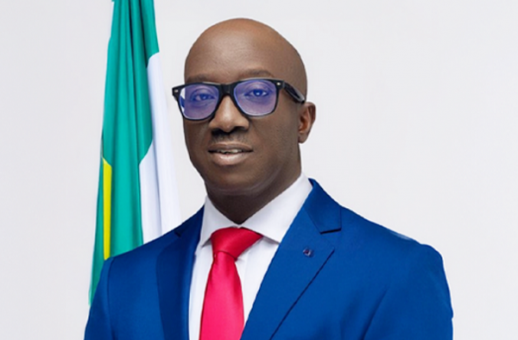
Governor Monday Okpebholo of Edo State has urged Muslims and all Nigerians to continue to pray for peace, unity and progress in the country even as they celebrate the annual Eid-al-Adha
The governor, who was represented by his deputy, Dennis Idahosa, stated this during the annual Eid-al-Adha celebration with Muslim faithfuls held at Government House in Benin City.
He reiterated his administration’s commitment to fairness, inclusivity and equal opportunities for all citizens irrespective of religion and tribe.
READ ALSO:ADC Penetrates Okpebholo’s District As Defections Strengthen Party in Edo Central
According to him, the present administration remains determined to building a government that reflects the diversity of Edo State, noting that competent and qualified Muslims have continued to play vital roles in his government because of their capacity, integrity and commitment to service.
“As a government, we remain committed to fairness, inclusivity and equal opportunity for every Edo citizen, irrespective of religion, ethnicity or political affiliation. This is why quality and competent Muslims are serving in key positions in our administration.”
Okpebholo appreciated the Muslim community in Edo State for their unwavering support and continuous prayers for his administration, noting that such prayers and support have contributed immensely to the peace and steady development being witnessed across the state.
READ ALSO:Okpebholo Felicitates Muslims On Eid-el-Fitr Celebration
He then called on all Nigerians to use the occasion of Eid-al-Adha to pray for the administration of President Bola Ahmed Tinubu, stressing that the country needs collective prayers, unity and cooperation to overcome its present economic and security challenges.
“I urge all Muslims and indeed all Nigerians to use this occasion to pray for our dear nation and for the administration of President Bola Ahmed Tinubu. Nigeria needs our collective prayers, unity and support as we strive to overcome our challenges and build a more prosperous future for all.”
In his remarks, the Chief Imam of Edo State, Abdulfatai Enabulele, applauded the governor for what he described as remarkable developmental strides recorded in less than two years in office.
The cleric commended the administration for ongoing infrastructural development and efforts geared towards improving governance in the state, but appealed to the government to revisit and complete some abandoned projects inherited from the previous administration for the benefit of the people.
News
Children’s Day: Edo Commits To Child Protection
The Edo State Government has reaffirmed its commitment to protecting the rights of children, promoting quality education, and strengthening sports development across the state.
This assurance was given by the governor of Edo State, Monday Okpebholo, during the 2026 Children’s Day Celebration and Governor’s Cup Finale held on Wednesday at the Samuel Ogbemudia Stadium, Benin City.
Addressing pupils, students and teachers,
the governor described children as the pride of Edo State and the future of the nation.
The governor, represented by his deputy, Dennis Idahosa,
noted that the annual celebration provides an opportunity to honour their dreams, talents, and limitless potential.
READ ALSO:Eid-el-Kabir: Edo Deputy Gov Solicits prayers For Okpebholo
Speaking on this year’s Children’s Day theme, “Choose Kindness, Reject Bullying,” the governor said the message was timely and significant, as it emphasizes the need to create safe, supportive, and inclusive environments for children both in schools and communities.
He stated that bullying in all forms — physical, verbal, emotional, or online — has no place in society, adding that the Edo State Government remains fully committed to protecting the rights and dignity of every child.
According to him, the administration will continue to strengthen policies and programmes that promote child protection, discipline, mutual respect, and positive learning environments across schools in the State.
The governor urged children to embrace kindness, compassion, teamwork, and respect for one another, stressing that true strength lies not in intimidation but in empathy, good character, and mutual understanding.

 Metro5 days ago
My Husband Abandoned Me On Our Wedding Night To Attend Political Meeting, I Want Our Marriage Dissolved
- Headline4 days ago
Woman Passes Out After Receiving 100 Strokes Of Cane
- Headline4 days ago
JUST IN: White House Locked Down Briefly As Gunman Opens Fire At Security Checkpoint
- Politics3 days ago
Two Masked Men Gun Down Politician In His Rivers State Hotel
- Politics5 days ago
Warri Ijaw Hail INEC Delineation Report, Call For Additional Electoral Wards, Others
- News3 days ago
More Pain For Nigerians As Cooking Gas Price Increases Nationwide
- News5 days ago
Alleged Terrorism: Court Rejects Defendant’s Bid To Travel Abroad
- Metro5 days ago
My Wife Stop Cooking My Food, Beats Me Black And Blue All the Time, Man Tells Court
- News3 days ago
FG Declares Two Days Public Holiday For Eid-el Kabir Celebration
- Politics5 days ago
What I’ll Do As President Of Nigeria — Amaechi


