

News
2.2 Million Nigerian Children Unvaccinated — UNICEF


An immunisation report released on Thursday by the United Nations Children’s Fund finds that 67 million children across the world missed out on either some or all routine vaccinations between 2019 and 2021, and 48 million children did not receive a single dose during this period.
The report showed that as of the end of 2021, India and Nigeria – with very large birth cohorts, had the largest numbers of zero-dose children but increases in the numbers of zero-dose children were especially notable in Myanmar and the Philippines.
India leads the world with the largest number of 2.7 million children with zero doses, followed by Nigeria with 2.2 million unvaccinated children.
New data indicates declining confidence in childhood vaccines of up to 44 percentage points in some countries during the COVID-19 pandemic, service disruption caused by strained health systems and diversion of scarce resources, conflict and fragility.
The public perception of the importance of vaccines for children declined during the COVID-19 pandemic in 52 out of 55 countries studied, UNICEF warned in the report.
READ ALSO: Nine Children Died, 50 Injured In Sudan’s War – UNICEF
These factors include uncertainty about the response to the pandemic, growing access to misleading information, declining trust in expertise, and political polarisation.
The report titled ‘The State of the World’s Children 2023: For Every Child, Vaccination’ reveals the perception of the importance of vaccines for children declined by more than a third in the Republic of Korea, Papua New Guinea, Ghana, Senegal and Japan after the start of the pandemic.
In the new data, collected by The Vaccine Confidence Project, China, India and Mexico were the only countries studied where the data indicates the perception of the importance of vaccines held firm or even improved. In most countries, people under 35 and women were more likely to report less confidence about vaccines for children after the start of the pandemic.
“In Angola, Nigeria and Papua New Guinea, a child from the wealthiest group in society is at least five times more likely to be vaccinated than one from the poorest group. The children who are not vaccinated are also often the children of mothers who have not been able to go to school and who are given little say in family and spending decisions,” the report showed.
READ ALSO: UNICEF Harps On Building Capacity Or Nigeria’s Teachers
“At the height of the pandemic, scientists rapidly developed vaccines that saved countless lives. But despite this historic achievement, fear and disinformation about all types of vaccines circulated as widely as the virus itself,” said UNICEF Executive Director, Catherine Russell. “This data is a worrying warning signal. We cannot allow confidence in routine immunizations to become another victim of the pandemic. Otherwise, the next wave of deaths could be of more children with measles, diphtheria or other preventable diseases.”
The report showed that vaccination coverage levels are decreasing in 112 countries.
“Children born just before or during the pandemic are now moving past the age when they would normally be vaccinated, underscoring the need for urgent action to catch up on those who were missed and prevent deadly disease outbreaks.
“In 2022, for example, the number of measles cases was more than double the total in the previous year. The number of children paralysed by polio was up 16 per cent year-on-year in 2022. When comparing the 2019 to 2021 period with the previous three-year period, there was an eightfold increase in the number of children paralysed by polio, highlighting the need to ensure vaccination efforts are sustained,” the report read in part.
READ ALSO: 75% Nigerian Children Can’t Read, Solve Maths – UNICEF
To address this child survival crisis, UNICEF is calling on governments to double down on their commitment to increase financing for immunisation and to work with stakeholders to unlock available resources, including COVID-19 funds, to urgently implement and accelerate catch-up vaccination efforts to protect children and prevent disease outbreaks.




News
Xenophobic Attacks: Nigerian Students To Picket MTN, MultiChoice, Other Businesses


The leadership of the National Association of Nigerian Students, NANS South-West Zone D, has announced plans to picket South African companies in Nigeria following the ongoing xenophobic attacks in the country.
DAILY POST reports that some Nigerians were recently killed in South Africa over the violent attacks.
A statement issued to newsmen by Comrade Adeyemo Josiah Kayode, Coordinator, NANS South-West, Zone D, said that the association is mobilizing to take decisive and lawful action by organizing peaceful picketing and mass advocacy against South African business interests operating in Nigeria.
READ ALSO:Xenophobic Attacks: Oshiomhole Tells FG To Retaliate Against South African Companies In Nigeria
“We categorically state that the continued targeting of Nigerians under any guise is unacceptable and must come to an immediate end.
“This will include major corporations such as MTN Group and MultiChoice Group. It is morally indefensible for businesses to thrive in an environment where the lives of Nigerians are protected, while Nigerians are subjected to fear and violence elsewhere.
“This contradiction will no longer be tolerated,” the statement said.
News
N5m, N10m Zero-interest Loans: SheVentures Opens Applications For Women Entrepreneurs


First City Monument Bank (FCMB) has opened a new round of applications for its SheVentures proposition, offering zero-interest loans of up to ₦10 million to women entrepreneurs to ease access to working capital and support business growth.
The facility provides loans ranging from ₦500,000 to ₦5 million under a general category, and ₦5 million to ₦10 million for sector-specific businesses, with funding capped at up to 50% of an applicant’s average monthly turnover.
At the centre of the offering is a 0% interest rate, with all charges embedded in a transparent structure.
Repayment is structured over four or six months, allowing businesses to match obligations with their cash flow cycles.
READ ALSO:I’ve Been Blacklisted In Music Industry For 13 Years – Seun Kuti
Yemisi Edun, Managing Director and Chief Executive of First City Monument Bank (FCMB), said the initiative reflects a deliberate approach to inclusive growth.
“Inclusive growth requires access to capital and the right conditions for businesses to deploy that capital effectively.
“Women-led enterprises are critical to economic activity, yet they face structural barriers.
This intervention aims to help close that gap by providing financing that supports job creation, business expansion, and long-term sustainability for women entrepreneurs.”
“Access to affordable finance remains a major constraint for women entrepreneurs,” said Nnenna Jacob-Ogogo, Group Head, SheVentures and Impact Segments at First City Monument Bank (FCMB).
READ ALSO:My Beef With Wizkid Is For Life – Seun Kuti
“By removing the cost barrier and offering quick, flexible funding, this zero-interest loan is designed to safeguard existing jobs, enable businesses to invest in growth initiatives, and foster resilience in challenging economic conditions.”
Women-owned businesses account for a significant share of Nigeria’s small and medium-sized enterprises but continue to face high borrowing costs and limited access to credit.
Through these efforts, SheVentures tackles persistent financing gaps facing women-led businesses, combining targeted funding with broader support to empower women entrepreneurs, encourage business innovation, and enhance their ability to compete on a national scale.
Applications for the zero-interest loan are now open.Apply now.
News
Xenophobic Attacks: Oshiomhole Tells FG To Retaliate Against South African Companies In Nigeria

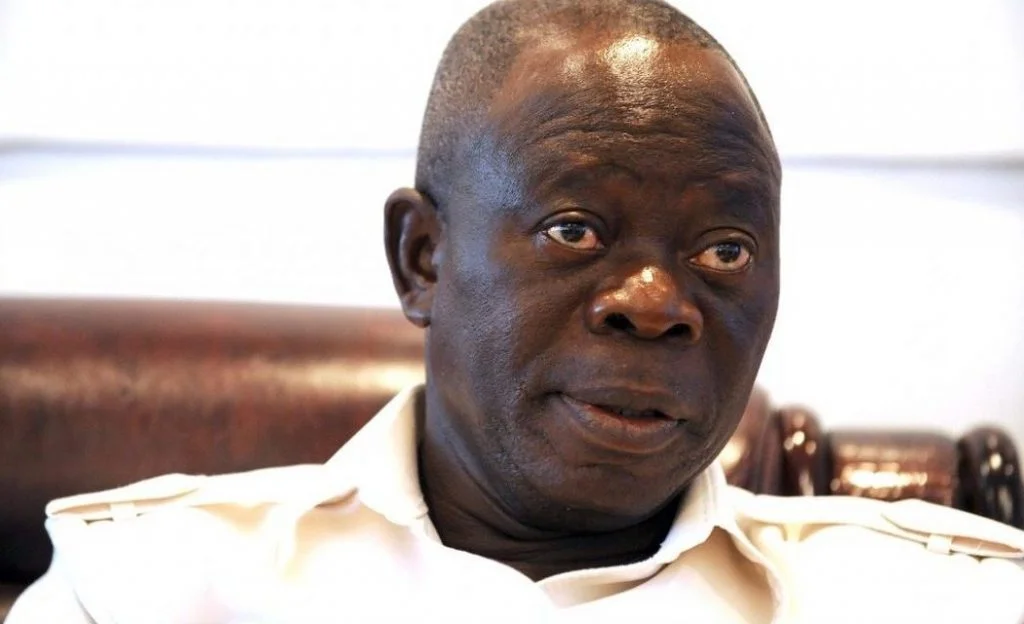
Senator Adams Oshiomhole has called on the Federal Government to retaliate against South African businesses operating in Nigeria following the recent attacks on Nigerians in South Africa.
Speaking during plenary on Tuesday, Oshiomhole said the Federal Government should consider revoking the working license of South African owned companies such as MTN and DSTV.
He argued that Nigeria must respond firmly to what he described as persistent hostility against its citizens.
READ ALSO:South Africa To Investigate ‘Mystery’ Of Planeload Of Palestinians
“I am not going to shed tears. If you hit me, I hit you. I think it is appropriate in diplomacy. It is an economic struggle,” Oshiomhole said.
He argued that while some South Africans accuse Nigerians of taking their jobs, Nigerians should return home and take over employment opportunities created by major South African companies operating in the country, including MTN and DSTV.
“When we hit back, the President of South Africa will not only talk but will also go on his knees to recognise that Nigeria cannot be intimidated.
READ ALSO:South African Ambassador Found Dead Outside Paris Hotel
“We will not condone any life being lost. If a crime has been committed under the South African law they have the right to bring any such person to justice, but to kill our people as if we are helpless, we will not allow that,” Oshiomhole added.
DAILY POST reports that several Nigerians in South Africa have reportedly been attacked, and their businesses destroyed, in ongoing xenophobic attacks in the country.
-

 Politics4 days ago
2027: Tinubu’s Re-election May Put An End To Nigeria — Baba Ahmed Warns
-

 Politics5 days ago
BREAKING: 2027: Former Adamawa APC Guber Candidate, Aishatu Binani Defects To NDC
-

 Politics5 days ago
Senatorial Seat: Ogbakha-Edo Warns Against Imposition Of Candidates In Edo South
-

 Business4 days ago
JUST IN: Nigerian Filling Stations Reduce Fuel Price After Hike
-

 Entertainment5 days ago
Actress Eniola Badmus Gets New Federal Appointment
-

 News4 days ago
2027: Pastor Adeboye Speaks On Nigeria’s Next President
-

 News2 days ago
BREAKING: Wike Picks Alabo George For Rivers Governorship
-

 Politics4 days ago
NDC Speaks On Peter Obi, Kwankwaso Joining Party
-

 News3 days ago
OPINION: Why South Africans Murder Nigerians In Cold Blood
-

 Politics5 days ago
2027: Pondi, Otuaro, Other Delta South Stakeholders, Endorse Senator Joel-Onowakpo For Second Term
