
News
20 Governors Borrow Fresh N446bn As Revenues Tumble
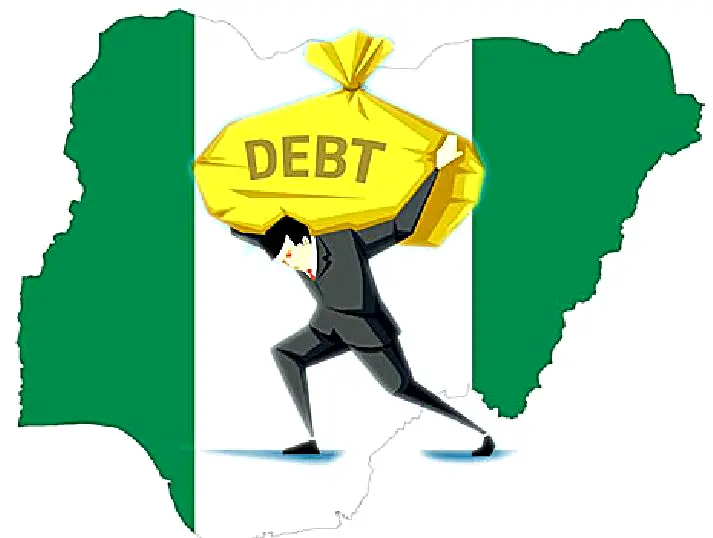
Debt servicing costs incurred by 29 state governments consumed 80.7 per cent of their Internally Generated Revenue during the first six months of 2024, highlighting the significant financial burden the sub-nationals currently face, according to The PUNCH.
The dire situation also forced the governors to borrow a total sum of N446.29 billion within the same period despite a 40 per cent increase in its statutory allocation from the Federation Account.
The latest information is according to an analysis of data obtained by our correspondent using the budget implementation reports from each state’s website and Open Nigerian States. This BudgIT-backed website serves as a repository of government budget data.
The performance report is prepared quarterly and issued within four weeks from the end of each quarter.
This heavy burden underscores a critical issue in fiscal management, as the vast majority of the revenue that states could otherwise allocate to essential public services and development projects is being diverted to meet debt obligations.
It also reveals the severe constraints faced by state governments in managing their debt burdens inherited from previous administrations and addressing the needs of their residents.
Nigerians had hoped that with an increased statutory allocation of 40 per cent from the central government, state governors should have more than enough to fulfill their statutory obligations.
In 2023, state governors got the most FAAC allocations in at least seven years. The rise in FAAC allocations to the three tiers of government, especially states followed the petrol subsidy removal and currency reforms of the current administration.
The reforms have reportedly led to a 40 per cent boost in income. Experts believe the revenue increase should have reduced state governments’ appetite for more borrowing.
Instead, the sub nationals are spending a large chunk on repaying loans and taking more loans.
Recall report earlier had it that most of the Federal Accounts Allocation Committee funds for Osun, Ondo, Kaduna, and Cross Rivers states will be used in servicing debts this year.
This is because these states currently have a deficit of N10.94bn, N27.72bn, N15.83bn, N10.02bn respectively following debt servicing deductions by FAAC.
With such a large portion of revenue being used to service debt, it becomes increasingly challenging for states to achieve long-term economic stability and improve the quality of life for their residents.
Earlier this year, Kaduna State governor, Uba Sani had complained vehemently about the huge debt burden inherited from previous administrations, lamenting that it had stopped the prompt payment of salaries and more borrowings in the last nine months of his government.
The governor who made this known while addressing a Town Hall Meeting at the late Umaru Musa Yar’Adua Hall, stated that his administration inherited a total of $587m, N85bn, and 115 contract liabilities.
READ ALSO: FG, States, LGs Shared N1.2tn In August – FAAC
He said, “Despite the huge debt burden of $587m, N85bn, and 115 contractual liabilities sadly inherited from the previous administration, we remain resolute in steering Kaduna State towards progress and sustainable development. We have conducted a thorough assessment of our situation and are sharpening our focus accordingly.”
The PUNCH had reported that state governors faced an uphill task of stimulating the economies of their respective states after they inherited at least N2.1tn in domestic debts and $1.9bn in external debts from their predecessors.
This was as 22 states spent a total sum of N251.79bn to service debt borrowed by past administrations within nine months of assuming office (July 2023 and March 2024).
The situation also forced the state governments of Ekiti, Cross River, and Ogun to propose a suspension of their foreign debt repayments worth $501m due to severe foreign exchange volatility.
The request, though rejected by FAAC, was part of their efforts to mitigate the heightened debt service burdens, which state officials claimed has significantly hampered their ability to service existing debts.
Experts say the high debt servicing costs leave little room for investment in infrastructure, education, healthcare, and other key areas vital for economic growth and social welfare.
Meanwhile, an analysis of the budget implementation report showed that Akwa-Ibom, Borno, Cross Rivers, Edo, Katsina, and Niger spent between 60 and 80 per cent of their internally generated revenue to repay owed debts.
Also, states as Abia, Anambra, Bayelsa, Delta, Ebonyi, Ekiti, Jigawa, Enugu, Kebbi, Kwara, Ondo, Osun Zamfara, and Oyo disbursed between 13 and 58 per cent of their revenue for debt servicing
While the amount spent on debt servicing for nine states including Adamawa, Bauchi, Gombe, Imo, Kano, Kogi, Plateau, Taraba, and Yobe exceeded their revenue within the period.
Data for Benue, Nasarawa, Ogun, Rivers, Sokoto, and Kaduna states were not available when this report was filed. Only Lagos State recorded an impressive IGR of N603.71bn while it paid N201.49bn as debt charges.
A state-by-state breakdown indicated that Abia State under the leadership of Governor Alex Otti spent N4.83bn on servicing its debt, while it earned N15.6bn as revenue, representing a ratio of 31 per cent.
Adamawa spent N14.48bn on its debt but earned N5.75bn, recording a deficit of minus 252 per cent, Akwa-Ibom state spent N20.78bn on its servicing but got N31.74bn IGR indicating 65.4 per cent ratio.
Anambra serviced its debt with N4.8bn but got N18.61bn IGR at a ratio of 25.9 per cent. Bauchi got a debt service ratio of minus 42.9 per cent after it earned N3.92bn but spent N16.8bn on servicing. Bayelsa spent N17.84bn on servicing but earned N46.98bn as revenue, indicating a servicing ratio of 38 per cent.
Further analysis of the report indicated Borno spent N7.25bn on debt charges and earned N12.04bn, representing a ratio of 60.2 per cent, Cross Rivers had a debt service ratio of 60.7 per cent after it spent N12.05bn on loans and got N19.86bn IGR.
READ ALSO: 22 States Spent N251bn On Debt Servicing In Nine Months – Report
Delta State’s burden was 58.2 per cent after it spent N39.08bn on reducing its debt and earned N67.05bn within the review period. Ebonyi had a 48.6 per cent debt ratio due to its N5.05bn spending on debt and N10.39bn revenue collection. Edo State under the leadership of Governor Godwin Obaseki spent N22.66bn on servicing and collected N34.44bn as revenue, indicating a debt ratio of 65.8 per cent.
Ekiti had a debt service ratio of 47.9 per cent after it spent N7.85bn on loans and got N16.39bn IGR. Enugu spent N3.49bn on its debt but earned N16.39bn, indicating a 20.6 per cent ratio. Gombe spent N13.07bn on its debt but earned N9.6bn, recording a deficit of minus 136 per cent. Imo State also recorded a deficit of minus 1.10 per cent after it spent N10.68bn on servicing but got N9.69bn as revenue.
Also, Jigawa State spent N1.89bn on servicing while it earned N4.55bn as revenue, representing a ratio of 41.6 per cent. Kano recorded a deficit of minus 244.4 per cent due to N60.02bn expense on debt but collected N24.57bn as revenue.
Katsina had a 77.4 per cent debt ratio due to its N8.14bn spending on debt and N10.51bn revenue collection. Kebbi spent N1.99bn on its loan servicing while it earned N4.79bn as revenue, representing a ratio of 41.6 per cent. Kwara State recorded the lowest debt-to-revenue ratio of 13.9 per cent, and spent N4.87bn on debt charges but collected N35.1bn as revenue.
Kogi spent N12.79bn on servicing and collected N12.75bn as revenue, indicating a debt ratio of minus 1.06 per cent. Niger State recorded a debt ratio of 80.7 per cent due to debt charges of N11.88bn and revenue collection of N14.73bn.
Ondo State recorded a debt to revenue of 52.4 per cent, Osun (43.2 per cent), Oyo (57.2 per cent). Plateau State recorded the highest debt-to-revenue ratio of minus 550.76 per cent, spending N61.23bn on debt charges but collected N11.11bn as revenue. Taraba and Yobe states recorded a deficit of minus 283.5 per cent and 1.16 per cent respectively.
Experts have, however, attributed the significant increase in debt servicing cost partly to the devaluation of the naira, which drove up the cost of servicing foreign debt obligations as the nation grapples with the forex liquidity crisis and exchange rate volatility.
The Director/CEO of the Centre for Promotion of Private Enterprise, Dr Muda Yusuf, speaking in an exclusive interview on Sunday, stated that the significant debt servicing cost was adversely impacted by the depreciation of the naira, which caused a decline in its value relative to other currencies.
He noted that the enormous debt burden inherited by the current administration is also straining state finances and impacting its ability to meet major obligations.
Mr Muda said, “The point is that these states inherited a huge burden of debts. The figure mentioned may sound outrageous but is not much when calculated in dollar terms. Multilateral debts are also tied to infrastructural projects and developmental purposes. Borrowing is not in itself bad if it is used for developmental purposes but the burden of debt must not suffocate the state finances and affect its ability to fulfill major obligations.
“Also, those debts are foreign and once the naira depreciates, it affects the level of debt. As they struggle to service it, the level is still going up because of the exchange rate depreciation. With the depreciation of the currency, the burden of servicing those loans has become extremely very heavy. The exchange rate factor is a major challenge in the debt burden of many states.”
READ ALSO: FG Eyes $4.4bn New Loans As Debt Hits N101tn
Government spending has come under increased scrutiny in recent times, particularly in light of the country’s worsening economic challenges.
At different fora, financial experts have also raised concerns about states’ spending on recurrent expenditure, highlighting the need to embrace financial innovations.
A professor of Economics at Babcock University, Segun Ajibola, stated that the enduring problem of high governance expenses had persisted at the state level, with inadequate oversight and accountability resulting in minimal economic benefits for grassroots citizens.
Ajibola, a former president of the Chartered Institute of Bankers, lamented that state assemblies had also abandoned their oversight duties, leaving the state governors to operate with no iota of transparency and accountability.
He said, “The first issue is the perennial complaint about the high cost of governance in Nigeria and at all levels. When you look at these issues, attention is often concentrated on the Federal Government, so the searchlight is always more on the central government. Most often, nobody cares about what is happening in the states and local government, and that is where the problem is.
“There are so many institutional frameworks in place to look at what is happening at the federal level but who cares about the states? The cost of governance in relative terms is even much higher in states than the federal and that is why you hardly feel the impact of governance in most states.
“Only a few states can boost a significant presence in the lives of their people in our states. The state assemblies are expected to conduct oversight functions on the activities of the executives in their respective states, but in reality, how many states are doing that, leaving the executives to be all in all incurring high costs.”
Meanwhile, 20 state governments borrowed a total sum of N446.29bn collectively to address their budget deficits and to cover various expenses, including essential services, infrastructure projects, and operational costs.
The PUNCH findings also revealed that the majority of these loans were sourced from multilateral and international creditors, contrary to the Federal Government’s emphasis on borrowing from the domestic market.
Further analysis showed that Cross Rivers State was among the states that got the highest loan of N121.22bn between January and June. It was followed by Oyo State with N55.36bn loans. Third on the list is Kogi State with loans worth N41.22bn.
Katsina State also obtained loans worth N34.09bn from creditors within the quarter.
Other states including Niger got N34.03bn, Gombe (N32.38bn), Ondo (N20,82bn), Borno (N20.7bn), Bauchi (N19.28bn), Taraba (N20.23bn), Yobe (N10.17bn), Kwara (N10.06bn), Ekiti (N7.94bn), Ebonyi (N6.43bn), Kano (N6.15bn), Abia (N3.37bn), Enugu (N1.39bn).
The states with the least borrowing include Edo (N633.73m), Osun (N250m), and Plateau state with N530.86m loan.
PUNCH



News
Shatta Wale Bailed Burna Boy From Ghana Prison After Arrest For Smoking Weed – Captan

Ghanian singer, Captan, has claimed that his former record label boss, Shatta Wale, once bailed Nigerian singer Burna Boy out of prison in Ghana after he was allegedly arrested for smoking weed.
Speaking in a recent podcast interview, Captan claimed that Shatta Wale sent him and others to free Burna Boy from police custody.
He also claimed that Shatta Wale and his group once accommodated Burna Boy when he was being hunted by some dangerous men.
READ ALSO: Wale Edun Opens Up After Sack
Captan said, “I once bailed Burna Boy out of prison in Ghana when he was arrested for smoking weed. Shatta Wale sent me and some guys to go and free him from police custody.
“There was a time we also accommodated him when some people were after his life. We helped him settle the case.”
He added that he and Burna Boy are no longer in good terms after the Nigerian artist’s fallout with his mentor, Shatta Wale.
He, however, said he and Shatta Wale are open to reconciling with Burna Boy if he asks for it.
Watch the video here
News
Children’s Day: Chaos At Ogbe Stadium As Dozens Faint
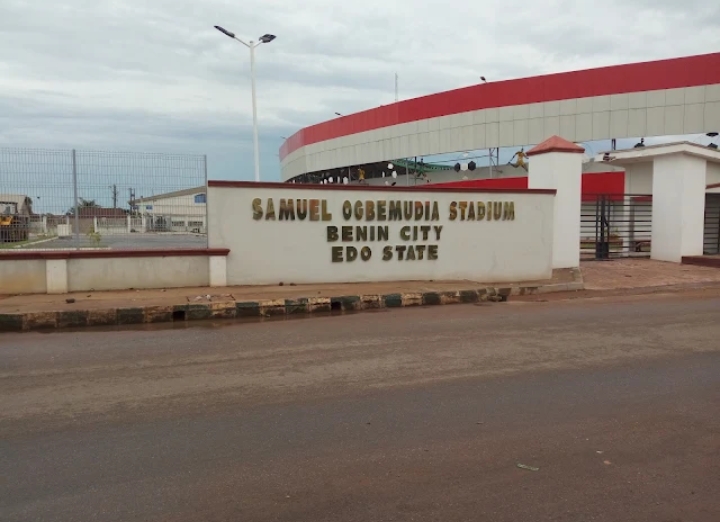
Chaos erupted on Wednesday during the Children’s Day celebration as dozens of students reportedly collapsed following a stampede triggered by the use of pepper spray.
The event,
organised by the Edo State Ministry of Education at the Samuel Ogbemudia Stadium was disrupted after some male students of Ihogbe College allegedly made uncompromising advances towards female students at the venue.
A parent who identified himself as Oboh Emmanuel said, “the behaviour of those uncultured students attracted the attention of bouncers stationed at the stadium as they rebuked the male students.”
Oboh said the affected students later regrouped and attacked the bouncers, leading to a confrontation within the crowded arena.
READ ALSO:Children’s Day: Edo Commits To Child Protection
It was gathered that in the ensuing confusion, the bouncers were reported to have deployed pepper spray in an area occupied by a large number of students.
Several students, particularly female students, reportedly fainted after inhaling the substance, while others sustained injuries after being stepped on during the ensuing melee.
The panic was said to have spread across the stadium as students, teachers and parents scampered for safety.
Many of the affected students were reportedly rushed to the Edo Specialist Hospital for medical attention.
READ ALSO: Egor LG Chair, Ogbemudia, Vice, Osawe Impeached
Reacting to the incident, Chief Press Secretary to Governor Monday Okpebholo, Dr Patrick Ebojele, said the security personnel that fired the tear gas had been detained.
He said all the students, except two, that were rushed to the hospital have been discharged.
Ebojele stated that doctors wanted to observe the students till tomorrow before allowing them to go home.
“The two students are not seriously injured. Doctors want to observe them overnight. Permanent Secretary, Ministry of Education is still at the hospital. The man who used pepper spray has been detained.
“The incident did not happen the way it is being exaggerated. All modalities were put in place to ensure the children enjoyed their day.”
News
Okpebholo Salutes Edo Muslims, Seeks Continued Support, Prayers
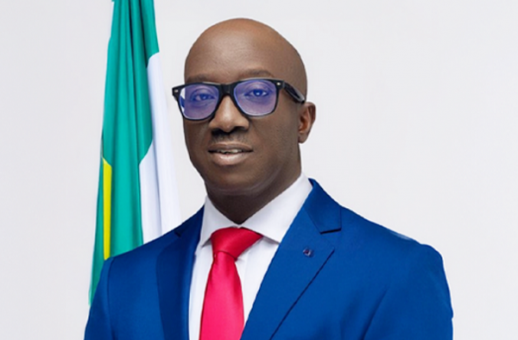
Governor Monday Okpebholo of Edo State has urged Muslims and all Nigerians to continue to pray for peace, unity and progress in the country even as they celebrate the annual Eid-al-Adha
The governor, who was represented by his deputy, Dennis Idahosa, stated this during the annual Eid-al-Adha celebration with Muslim faithfuls held at Government House in Benin City.
He reiterated his administration’s commitment to fairness, inclusivity and equal opportunities for all citizens irrespective of religion and tribe.
READ ALSO:ADC Penetrates Okpebholo’s District As Defections Strengthen Party in Edo Central
According to him, the present administration remains determined to building a government that reflects the diversity of Edo State, noting that competent and qualified Muslims have continued to play vital roles in his government because of their capacity, integrity and commitment to service.
“As a government, we remain committed to fairness, inclusivity and equal opportunity for every Edo citizen, irrespective of religion, ethnicity or political affiliation. This is why quality and competent Muslims are serving in key positions in our administration.”
Okpebholo appreciated the Muslim community in Edo State for their unwavering support and continuous prayers for his administration, noting that such prayers and support have contributed immensely to the peace and steady development being witnessed across the state.
READ ALSO:Okpebholo Felicitates Muslims On Eid-el-Fitr Celebration
He then called on all Nigerians to use the occasion of Eid-al-Adha to pray for the administration of President Bola Ahmed Tinubu, stressing that the country needs collective prayers, unity and cooperation to overcome its present economic and security challenges.
“I urge all Muslims and indeed all Nigerians to use this occasion to pray for our dear nation and for the administration of President Bola Ahmed Tinubu. Nigeria needs our collective prayers, unity and support as we strive to overcome our challenges and build a more prosperous future for all.”
In his remarks, the Chief Imam of Edo State, Abdulfatai Enabulele, applauded the governor for what he described as remarkable developmental strides recorded in less than two years in office.
The cleric commended the administration for ongoing infrastructural development and efforts geared towards improving governance in the state, but appealed to the government to revisit and complete some abandoned projects inherited from the previous administration for the benefit of the people.

 Metro5 days ago
My Husband Abandoned Me On Our Wedding Night To Attend Political Meeting, I Want Our Marriage Dissolved
- Headline4 days ago
Woman Passes Out After Receiving 100 Strokes Of Cane
- Politics5 days ago
Warri Ijaw Hail INEC Delineation Report, Call For Additional Electoral Wards, Others
- Headline4 days ago
JUST IN: White House Locked Down Briefly As Gunman Opens Fire At Security Checkpoint
- Politics3 days ago
Two Masked Men Gun Down Politician In His Rivers State Hotel
- Metro5 days ago
My Wife Stop Cooking My Food, Beats Me Black And Blue All the Time, Man Tells Court
- News5 days ago
Alleged Terrorism: Court Rejects Defendant’s Bid To Travel Abroad
- News3 days ago
More Pain For Nigerians As Cooking Gas Price Increases Nationwide
- Politics5 days ago
What I’ll Do As President Of Nigeria — Amaechi
- News3 days ago
FG Declares Two Days Public Holiday For Eid-el Kabir Celebration


