
Politics
2023: INEC Budgets N239bn For Poll Materials, Presidential Run-off
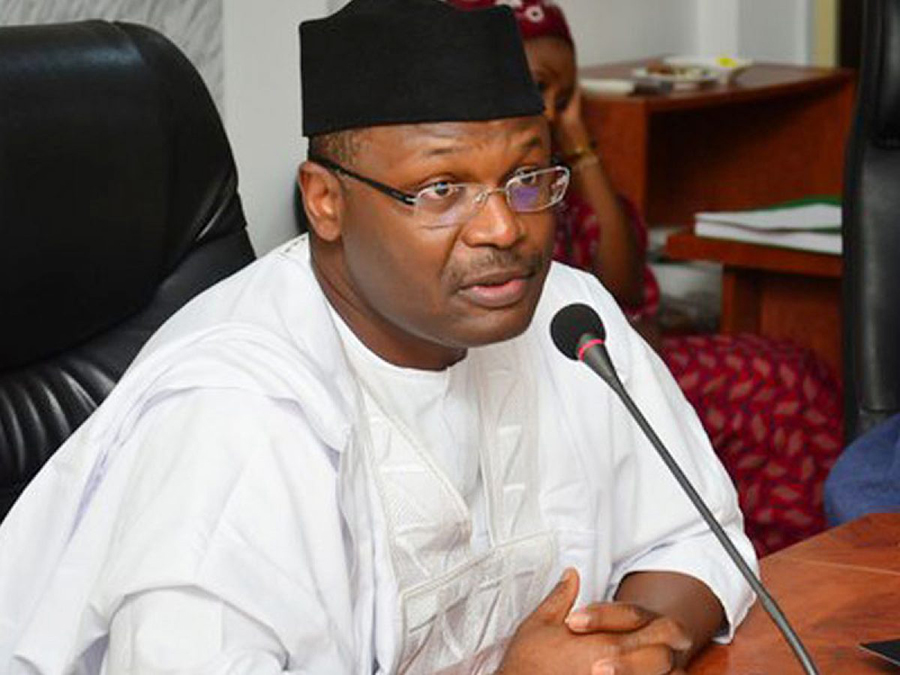
The Independent National Electoral Commission will spend not less than N239.2bn on procuring voting materials and vehicles that will be used in the 2023 general election.
This is according to the 2023 General Election Project Plan that was launched by INEC in Abuja on Thursday.
The commission stated that N239.2bn, which constitutes 78.44 per cent of its N305bn budget, would be spent on 10 critical items which included ballot papers, operational vehicles, ballot boxes, allowances of ad hoc workers, printing of result sheets, logistics and procurement of accreditation devices.
Also included in the N239.2bn budget is the N27.1bn set aside by the commission for possible run-off elections, including the one for the presidential poll.
Run-off elections are conducted in the event that there is no clear winner in a general poll.
A breakdown of the document, 2023 General Election Project Plan, shows that the highest single component will be the procurement of accreditation devices which will gulp N105.2bn. This also constitutes 34.51 per cent of the total election budget of N305bn.
READ ALSO: INEC Clears Air On Postponing 2023 Elections
The allowance for ad hoc workers, who will be more than one million people, is pegged at N23.7bn while N23bn was set aside for election logistics expenses which include the movement, deployment and retrieval of men and materials for the elections.
INEC will also spend N20.6bn on the printing of ballot papers and N12.7bn on the procurement of non-sensitive materials. The commission set aside N9.5bn for the printing of result sheets, N7.8bn for the procurement of ballot boxes and a separate N5.39bn for the same purpose. The electoral body will also spend N3.9bn for the procurement of operational vehicles.
In a diagram illustrating a comparative analysis of the 2019 and 2023 general election budgets, INEC noted that while N189bn was set aside for the previous elections, the 2023 general election would gulp N305bn.
It noted that while the country had 84 million registered voters in the last elections, it would have about 100 million voters next year. Also, while 119, 973 polling units existed last year, the next elections would have 176, 846 polling units. It noted that while the average cost per voter was $7.38 in 2019, it had dropped to $5.39 per voter.
Meanwhile, the commission on Thursday said that no amount of security challenges would stop the conduct of the 2023 general election.
The Chairman of INEC, Prof. Mahmood Yakubu, stated this during the public presentation of the 2022-2026 strategic plan and the 2023 Election Project Plan in Abuja.
Yakubu’s assurance came barely days after elder statesman, Chief Afe Babalola (SAN), called on the country to set up an interim national government next year instead of holding an election. He proposed that the interim government would birth a new constitution after which elections would take place.
Others had also expressed fears over the security situation in the North-West and the South-East which could scuttle the elections.
READ ALSO: INEC In Dilemma Over Prosecution Of 1.1million Multiple Registrants
However, the INEC chairman said no amount of security challenges would stop the conduct of the 2023 general election.
The commission also said that about one million electoral officials, both regular and ad hoc staff, would be deployed to 176,846 polling units in 8,809 Wards and 774 Local Government Areas in the country.
He said, “As you may be aware, the election will be conducted for 1,491 constituencies nationwide made up of one presidential constituency, 109 senatorial districts, 360 federal constituencies, 28 governorship elections and 993 state constituencies.
“The election will involve an estimated one million electoral officials (both permanent and temporary or ad hoc staff) deployed to 176,846 polling units in 8,809 Wards and 774 Local Government Areas across the country. The election will be governed by a new Electoral Act 2022, which contains many progressive provisions that will enhance the capacity of the commission to conduct elections and manage the electoral process better.
“We have carefully listened to the demand of Nigerians for seamless processes, particularly with regard to enhanced voter education, better distribution of voters to polling units, quality training of election personnel, the functionality of electronic devices, improved logistics, prompt commencement of polls, and availability of assistive devices for persons with disability at polling units and greater transparency in result management.”
Yakubu said the commission was aware of the security challenges and their impact on the electoral process, noting that it would continue to engage early and intensely with the security agencies to ensure the safety of our personnel and materials, accredited observers and the media and, above all, the voters.
“Clearly, these are challenging times but we are determined that elections must hold in 2023. However, this is a shared responsibility. INEC plays a critical role but the commission alone cannot deliver the elections we all desire. I, therefore, appeal to all Nigerians to join hands with us in ensuring that we make a success of the process”, he said.
He added that the activities in the timetable and schedule of activities for the 2023 general election are firm and fixed, adding that all stakeholders are advised to take this into consideration in planning their activities.
READ ALSO: Ronaldo Still Running At 37 – Pastor Ibiyeomie Identifies Problem Of Nigerian Footballers
The Country Director of the International Foundation for Electoral Systems, Seray Jah, who was represented by IFES Deputy Director, Obaje Ukeh, said the foundation was ready to continue its support to INEC for the success of the forthcoming elections.
Jah said the five-year plan and the election project plan act as a road map that will provide focus and guidance for INEC to succeed in achieving its mandate by ensuring seamless conduct of the 2023 general election.
Also speaking, the National Security Adviser and co-chairman of Inter-Agency Consultative Committees on Elections Security, Babagana Monguno, who was represented by Sanusi Galadima, assured Nigerians and development partners of the commitment of security agencies to protect lives and property at the polls.
The chairman of the Inter-Party Advisory Council, Yabagi Sani, pledged the support of IPAC to ensure smooth conduct of the 2023 general election and commended INEC for its efforts towards improving the country’s electoral process.
He said, “Today, we have witnessed yet another very significant development in the commendable efforts of INEC to fine-tune the operations of the electoral process in Nigeria for greater service delivery.
“It is also an occasion of manifestation of the unfolding trend of the application of science, technology and proactive prognosis, planning and solutions to challenges and situations even before they manifest.
He said the project plan was a reflection of efforts at critical assessment and reappraisal with a view to improving on strategies and conduct of transparent and acceptable elections in Nigeria.
INEC always prepares for run-off, first presidential ballot may not produce winner – REC
Explaining the commission’s preparations for run-off elections, the Niger State Resident Electoral Commissioner, Prof Sam Egwu, in an interview with one of our correspondents, said in every election, INEC always prepared for a run-off poll.
He said, “In every election, INEC prepares for a run-off and it will not be different for 2023. It’s because for presidential and governorship (elections), it’s possible to win majority votes without meeting geographical spread.
“It is possible not to produce a winner in the first ballot because, aside from your majority votes, you have to get 25 per cent in at least two-thirds of the local governments for governorship and two-thirds of the states for the presidential.
“So, potentially, in every election, you can have a run-off; so, there’s always a preparation in case there is a run-off. Before, the law said you had to do the run-off within seven days. But the amendment to the constitution in 2010 now makes it 21 days.”
Also, the INEC National Electoral Commissioner for information and Voter Education, Festus Okoye, in an interview with The PUNCH, explained, “The framers of the Nigerian Constitution envisage a President with a national mandate. Based on this supposition, a President must be elected by a majority of the Nigerian people and the President must also enjoy a sizable geographical spread.
“Premised on this, a candidate for an election to the office of the President shall be deemed to have been elected where there being more than two candidates for the election he has the highest number of votes cast at the election; and he has not less than one-quarter of the votes cast at the election in each of at least two-thirds of all the states in the Federation and the Federal Capital Territory, Abuja.
READ ALSO: Edo Guber: INEC Cautions Politicians On Use Of inflammatory Languages
“In default, there shall be a second election (which in popular parlance is called a run-off), which shall be conducted within twenty-one days of the result of the election. The conditions for the second election are adumbrated in Section 134 of the Constitution.
“The commission plans for the main election and the second election. The Commission cannot begin fresh planning for a second election when the announcement of results and reverse logistics for the main election will take almost two weeks. The commission has always prepared for the second election with the main election since the return to civil democratic rule. No national commissioner has the ability to predict the future or the outcome of any election. This commission will continue to plan and plan well and plan strategically.”

Politics
PDP Crisis: INEC Rejects Turaki-led NWC

The Independent National Electoral Commission, INEC, has said it will not recognise the Kabiru Turaki-led National Working Committee, NWC, of the Peoples Democratic Party, citing existing court judgments and unresolved legal processes.
This was as contained in a letter dated December 22, 2025, signed by INEC Secretary, Dr Rose Oriaran-Anthony.
The Commission stated that it could not act on demands to acknowledge or upload on its website the list of national officers said to have been elected at the National Convention held on November 15 and 16, 2025, in Ibadan.
READ ALSO:Osun, Imo, Kano Lead As INEC Reports 2.3m New Voter Registrations
According to INEC, its position was guided by subsisting court decisions and pending litigation relating to the leadership crisis within the PDP.
The electoral body further noted that it would be improper to recognise any factional officers while the matter remains before the courts.
Politics
Govt That Fails To Protect Its Citizens Has No Business Remaining In Office – Kwankwaso
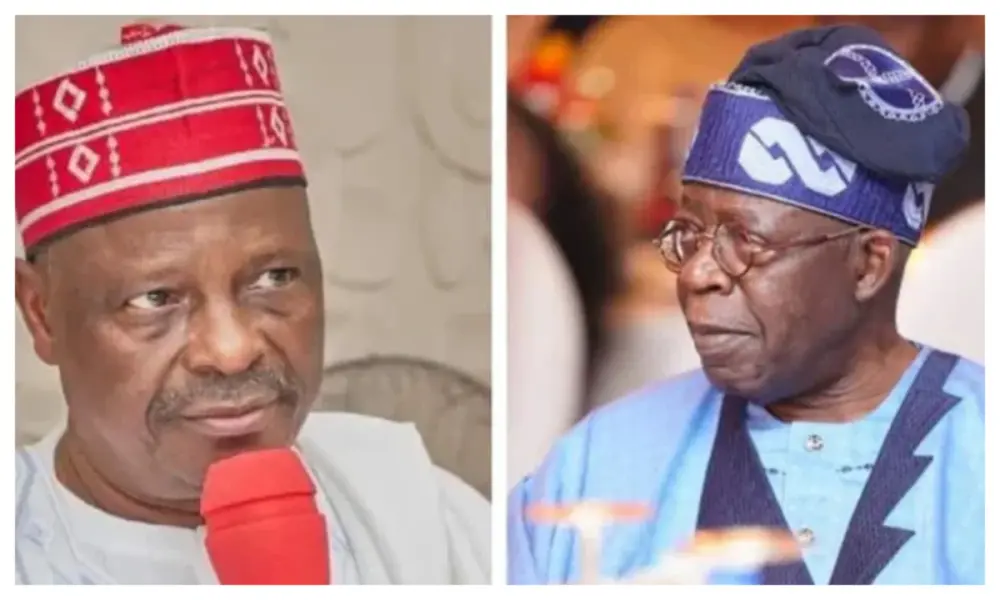
Senator Rabiu Musa Kwankwaso, leader of the Kwankwasiyya Movement and 2023 presidential candidate of the New Nigeria Peoples Party (NNPP), has accused the Federal Government under President Bola Ahmed Tinubu of lacking the political will to tackle Nigeria’s worsening insecurity.
Kwankwaso spoke on Tuesday in Kano while unveiling 2,000 operatives of the Kano State Neighbourhood Security Network.
He urged President Tinubu to “rise to the occasion and truly act as the Commander-in-Chief” in addressing banditry and other security challenges.
READ ALSO:Tinubu Embarks On Three-state Visit
According to him, Nigeria’s military “remains one of the most gallant in the world,” having served in international peacekeeping missions in Darfur, Liberia, and other conflict zones.
However, he said the armed forces are not being adequately supported to perform optimally.
“Today, many innocent Nigerians are being killed, while the perpetrators walk freely as if nothing happened. The government must apologise to Nigerians for its laxity in the fight against insecurity,” he said.
Kwankwaso, who once served as Minister of Defence, added: “When I was Defence Minister, I knew the capability of the Nigerian military. They are courageous and professional but need clear direction, support, and political will to do the needful.”
READ ALSO:Soyinka Decries Seyi Tinubu’s ‘Excessive’ Security Escort
He stressed that Nigeria’s armed forces had historically ranked among the best globally and urged the government to equip them properly to change the current security situation.
Kwankwaso also said that if elected president in 2027, he would recruit over one million additional military personnel to strengthen national security.
“Any government that fails to protect the lives and property of its citizens has failed woefully and has no business remaining in office,” he declared.
He further called on the Federal Government to integrate community-based security initiatives, like the Kano Neighbourhood Security Network, into the national security system to boost morale and improve intelligence-driven operations against criminals.
Politics
ADC Announces Temporary Closure Of Secretariat
The African Democratic Congress, ADC , says it has temporarily closed its National Secretariat as part of the end-of-year break.
A statement by its National Publicity Secretary, Bolaji Abdullahi, said full operations are scheduled to resume in the New Year.
According to the statement, the secretariat will close on December 23, 2025, and reopen on January 5, 2026.
READ ALSO:Irresponsible Of You To Blame Trump Over Rising Insecurity – ADC Blasts Tinubu’s Govt
The party, however, said essential skeletal services will remain available throughout the period, while all other official activities at the National Secretariat will be suspended to allow staff and party officials observe the Christmas and New Year holidays.
“This is to inform the public that the African Democratic Congress National Secretariat will close for the year on 23rd December 2025 and will resume full operations on 5th January 2026.
“During this period, only skeletal services will be available, while all other official activities at the Secretariat will be temporarily suspended,” the statement said.
READ ALSO:Hoodlums Set Ablaze ADC Secretariat In Ekiti, Disrupt Party Excos’ Inauguration
The party thanked its members, partners and supporters for their continued loyalty and cooperation throughout the year, noting that their support remains critical to the growth and stability of the party.
The ADC also said it is committed to its ideals and to democratic engagement as it prepares for activities in the coming year.

 News5 days ago
JUST IN: Kano Lawmaker, Sarki Aliyu Daneji, Dies Hours After Colleague’s Passing
- News5 days ago
FULL LIST: Churches That Don’t Celebrate Christmas
- Headline3 days ago
JUST IN: US Forces Bomb Terrorists Camps In Nigeria
- News4 days ago
Okpebholo Slams ₦25bn Libel Suit On Edo PDP Chairman
- Headline3 days ago
US Dept Of War Shares Video Of Air Strikes In Nigeria
- Entertainment5 days ago
AFCON 2025: Davido Wins $96,000 After Super Eagles Beat Tanzania
- News5 days ago
Sheikh Gummi Sues Two Over Alleged False Facebook Publication
- News5 days ago
7 Health Risks Of Owning A Cat
- Headline5 days ago
Coup: Guinea-Bissau Junta Releases Six Held Opposition Politicians
- News5 days ago
Top 11 Friendliest Countries To Visit


