

Politics
2023 Polls: Concerns As Over 3 Million Students Face Disenfranchisement



Barely 30 days to Nigeria’s presidential election – the world’s first big election of 2023, the Independent National Electoral Commission, INEC, faces myriads of complaints.
These include difficulties in picking up voters’ cards, alleged extortion by INEC officials and reported refusal to distribute the cards to non-indigenes in some States.
As the January 29 deadline for collection of the Permanent Voters Cards, PVCs, inches closer, there are fears that about as high as 3.2 million Nigerian students who were at home during the continuous voters’ registration exercise might be unable to participate in the 2023 general elections.
The development is a fallout of the eight months of protracted industrial action embarked upon by the members of the Academic Staff Union of Universities, ASUU, for the larger part of 2022.
READ ALSO: BREAKING: Court Of Appeal Nullifies APC Guber Primaries In Benue
Recall that ASUU had declared strike on February 14, 2022, over the Federal government’s lackadaisical attitude towards the demands and plight of lecturers.
While announcing the labour action, Prof Emmanuel Osodeke, ASUU President, said, “the government’s response to the union’s demands had not been satisfactorily addressed”.
However, ASUU called off the strike after it had lasted eight months in October 2022, following an intervention by the Speaker of the House of Representatives, Femi Gbajabiamila.
DAILY POST reported that Gbajabiamila had intervened in the dispute to broker peace between the Federal government and ASUU after all negotiations had failed.
During the period between the strike, the nationwide Continuous Voter Registration, CVR, exercise was ongoing across the country.
It commenced in June 2021 and hit its peak when many students were at home.
On July 31, 2022, the INEC announced the end of the voters’ registration exercise to enable the electoral body to clean up the register and remove multiple registrants using the Automated Biometric Identification System, ABIS.
Speaking at the commission’s 2022 third quarterly meeting with political parties in Abuja, INEC chairman, Mahmood Yakubu disclosed that the total number of newly registered voters in Nigeria stood at 9,518,188, adding that the 2023 general elections were for the youths.
“In terms of demographic distribution, 7.2 million new voters or 76.5 per cent, are young people between 18-34 years, while there is a slightly higher number of females (4.8 million or 50.82 per cent) than males (4.6 million or 49.18 per cent) voters. In terms of occupation, 3.8 million (40.8 per cent) are students,” Yakubu said.
As expected, the commission announced the timeline for the collection of PVCs for those who registered after the voter register cleanup. It said the collection of PVC would take place from December 12, 2022, and was expected to end on January 22, 2023.
However, following widespread complaints from many parts of the country, the INEC extended by seven days the deadline for the collection of PVCs.
The INEC Commissioner for Voter Education, Festus Okoye, who announced the new deadline for the PVC collection, said the exercise would now end on January 29 instead of January 22, as earlier scheduled.
“The commission is determined to ensure that registered voters have ample opportunity to collect their PVCs ahead of the forthcoming election.
“For this reason, the timeframe for the collection of PVCs is extended by eight days. Instead of ending on January 22, 2023, the collection of PVCs will continue until January 29, 2023. At the moment, the period of collection is 9 a.m. – 3 p.m. daily (including Saturdays and Sundays),” Okoye said.
But not satisfied with the one week extension, some stakeholders, including political parties, have raised concerns about Nigerian students who registered at their various home locations while the ASUU strike lasted but are now unable to collect their PVCs.
One of such stakeholders, a renowned scholar and Director of the Abuja School of Social and Political Thoughts, Dr Sam Amadi, believed it is necessary to allow students to leave school and return home to collect their PVCs.
Amadi spoke to DAILY POST following a press conference organised by the School of Social and Political Thoughts in Abuja on Tuesday.
He noted that the youths (18-35) totalled 37,060,399, representing 40 per cent of the total 93,469,008 eligible voters announced by the INEC.
“Some stakeholders, including political parties, had raised concerns about the process before the extension was granted. They complain about the slow pace of work. Others complain of obstruction of INEC officials or inadequate arrangement for a more grassroots collection. There are concerns about students who have returned to school but registered at home while schools were closed due to prolonged strikes. The question is whether it is reasonable to expect these students to leave school, go back home and collect their PVCs within the period allocated by INEC for PVC collection,” Amadi questioned.
He added that many registered voters are yet to collect their voter cards due to the misbehaviour of INEC staff who colluded with politicians to deny some registered voters their PVC, and in many cases, due to avoidable operational hitches.
Meanwhile, the University of Abuja students, who spoke to DAILY POST, lamented that the strike had affected their participation in the forthcoming elections.
They knocked the tertiary institution’s management for their inability to consider a break for students to collect their PVCs, an indispensable requirement for participating in the poll.
“From the look of things, we students are helpless. Many of us live in homes far from the Federal Capital Territory, FCT, and we can’t force ourselves home to collect our PVCs. It is left for the university management to decide if we are to have a break or not,” Kephas, a 400-level student of Political Science from Kaduna State lamented.
Edozie, an Abia State indigene studying English, said, “I just wish I could travel and pick up my PVC, but as it stands, I can’t help it. It is quite unfortunate that the youths have become a scapegoat for Nigerian leaders.”
READ ALSO: JUST IN: PDP Suspends Chimaroke Nnamani, Chris Ogbu, Ayeni Funso, Others
DAILY POST also sought to contact the university’s Public Relations Officer to ascertain if the school management had made arrangements to grant students a break period, but it was unsuccessful.
Also speaking to the DAILY POST, a communication scholar at the University of Nigeria, Nsukka, Dr Chidiebere Nwachukwu said the youths should be given adequate support to participate actively in the democratic process.
“I do think that adequate provisions should be made for the students to go and collect their PVCs since we want to make this election as inclusive as possible. This is the only way the youths who are driving the process can have every avenue to participate actively in electing the next leaders.
“There is no way we can be talking about democracy if we do not have the input mechanism for making sure that those who should participate are given the opportunity to participate actively in the democratic process,” he said.
DAILY POST




Politics
2027: Nobody Wants Fubara – Wike

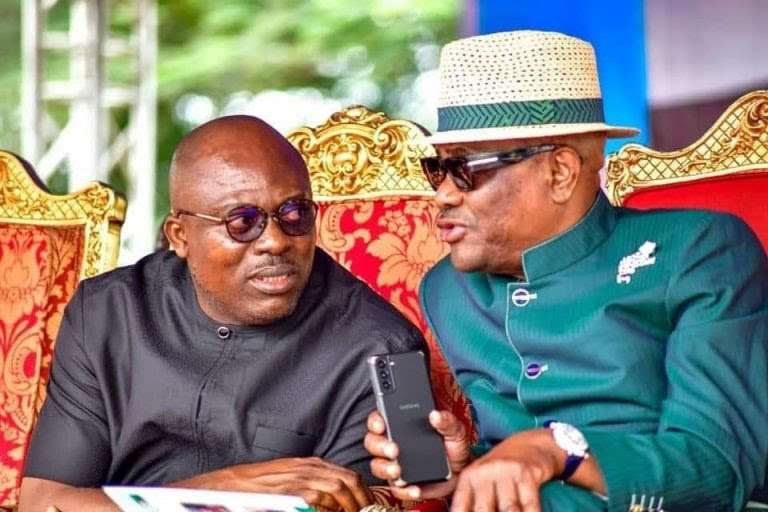
The Minister of the Federal Capital Territory, Nyesom Wike, has dismissed claims that there is widespread support for Rivers State Governor Siminalayi Fubara to return in 2027.
Speaking during his monthly media parley on Wednesday in Abuja, Wike suggested that Fubara can’t claim to enjoy unanimous backing from the public.
He explained that the political crisis in Rivers State had earlier been addressed through the intervention of President Bola Tinubu, particularly during impeachment proceedings initiated against Fubara.
According to Wike, the President advised all parties to embrace peace, leading to the withdrawal of the impeachment move by the State House of Assembly after agreements were reached.
READ ALSO:Rivers APC Suspends Fubara Over Alleged Anti-party Activities
Wike, however, alleged that the governor failed to fully adhere to the terms agreed during the arbitration process.
Reacting to claims that the people were urging Fubara to seek re-election in 2027, Wike rejected the assertion, insisting that such narratives were misleading.
Wike maintained that appearing before the President for arbitration required respect for the outcome, noting that all parties were expected to uphold their commitments.
He said: “The President, intervened in the impeachment proceeding. I said withdraw, let their be peace. And the governor said, look, I’m ready for peace. Look, I’m no longer interested for this. I will not do this. The Assembly went and withdrew the impeachment.
“Having withdrawn the impeachment, he is now too smart on what you agreed before the President. It’s like when you go on arbitration.”
READ ALSO:Court Restrains Rivers Assembly, CJ From Impeaching Fubara, Deputy
Wike continued, “This one is what I don’t like. Nobody wants anybody. Please, don’t tell me that. Excuse me.
You can go and tell that to the market people or children. Two years that people say he should come out. Who told you that?
“Which politician will say that I was sleeping they came and woke me? Even if people people come to wake you, can’t you say, no, I won’t do it. I’m not prepared for it.
“That you appeared before a President of the country on arbitration, the two parties on arbitration, and these people respected Mr. President, and have done their own part.”
Politics
2027: Wike Opens Up On Preferred Rivers Guber Candidate

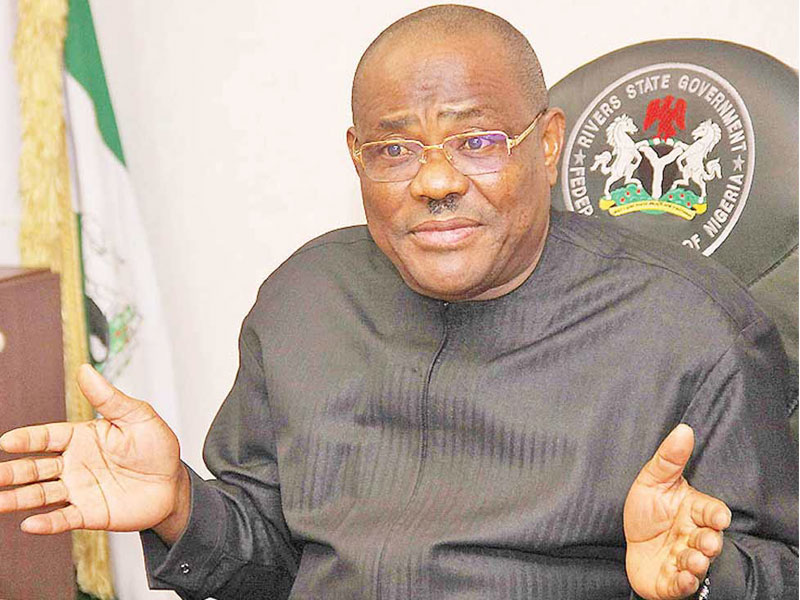
The Minister of the Federal Capital Territory, Nyesom Wike, on Wednesday said he hasn’t endorsed any candidate for the Rivers state gubernatorial election in 2027.
Wike stated this on Wednesday during his monthly media parley in Abuja.
Wike said that the endorsement will come only after a meeting by the joint coalition in the state.
READ ALSO:2027: Wike Refuses To Confirm Or Deny Chinda’s Governorship Bid
He said: “I haven’t endorsed anybody. And I can’t endorse anybody until the joint coalition meets.”
DAILY POST reports that questions have been raised concerning the fate of current governor of Rivers State, Siminalayi Fubara, in 2027.
The FCT Minister was reported to have endorsed former State Commissioner for Works, Alabo Dakorinama George Kelly, as his preferred candidate for the Rivers State governorship election.
Sources told DAILY POST that Wike settled for George after a closed-door meeting with key political stakeholders in Port Harcourt on Monday.
Politics
Open Bank Account In PDP Name, See What Will Happen – Wike Dares Turaki Faction

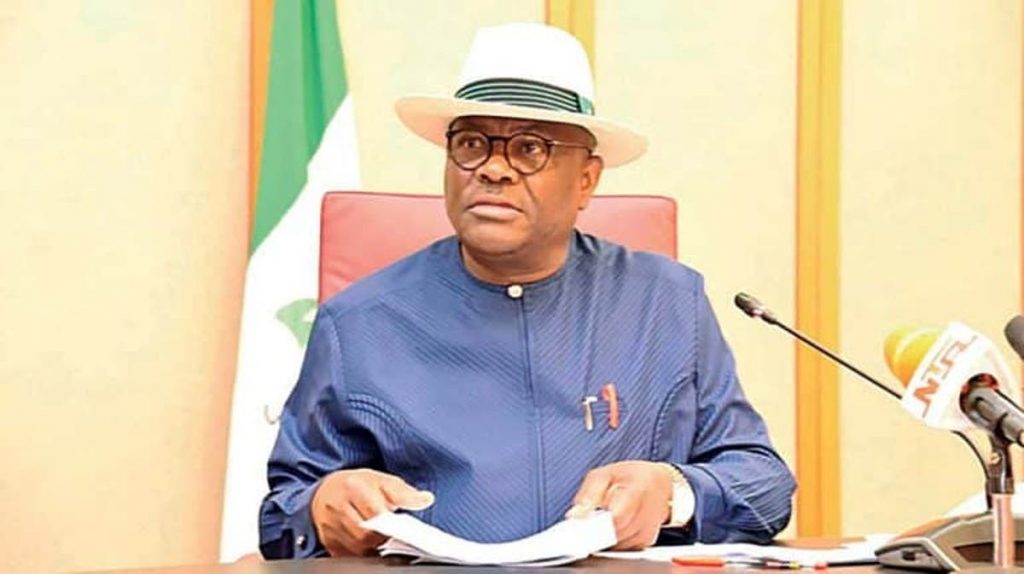
Minister of the Federal Capital Territory, FCT, Nyesom Wike, on Wednesday challenged the Peoples Democratic Party, PDP, faction led by Tanimu Turaki to open an official party bank account and secretariat if they truly believe they control the opposition party’s structure.
Speaking with journalists on Wednesday in Abuja, Wike accused some party leaders of misleading Nigerians and violating court judgments in the lingering leadership crisis rocking the PDP.
The former Rivers State governor insisted that the faction opposing the party’s recognised leadership lacked legal standing and could not lawfully operate the affairs of the party.
“You cannot continue to deceive Nigerians. If they are sure they are the authentic leadership of the PDP, let them open an official PDP account and tell party members to pay nomination fees into it,” Wike said.
READ ALSO:BREAKING: Wike Picks Alabo George For Rivers Governorship
He specifically challenged Taminu Turaki, SAN, and other leaders of the rival camp to test their claims by opening a bank account in the name of the PDP.
“Let Turaki, as a Senior Advocate of Nigeria, open an account for the PDP. Let them announce it publicly for members who want to contest elections. That day, you will see what will happen,” he stated.
Wike argued that no bank would recognise such an account because the faction allegedly lacks the legally recognised party structure and documentation required to operate.
“That bank will be in trouble because to open such an account, you must provide the party’s authentic documents and recognised leadership. Who has those documents?” he queried.
READ ALSO:How Wike Rescued Me From Political Oblivion — Oshiomhole
The FCT minister also warned against attempts to establish what he described as illegal party offices, vowing that any action capable of causing a breakdown of law and order in Abuja would not be tolerated.
“If anybody goes ahead to open an illegal office in the name of the PDP in Abuja, I will seal it. I will not allow any breach of peace because my duty is to maintain law and order in the Federal Capital Territory,” he said.
Wike maintained that court judgments had already settled the dispute over the PDP leadership and convention issues, accusing some actors of twisting judicial pronouncements for political convenience.
“People should stop deceiving Nigerians. The judgments are clear. You cannot ignore court decisions and begin to create parallel structures,” he added.
READ ALSO:Rivers Crisis: Bad People Won’t Prevail Over Us – Wike
The minister further dismissed claims that the Supreme Court ruling favoured the rival faction, insisting that the legal processes and decisions available supported his position and that of the recognised party leadership.
According to him, attempts to reinterpret the judgments outside the established legal context were aimed at confusing party members and the public.
Wike said he remained a committed member of the PDP and was only defending what he described as constitutional order and due process within the party.
PDP has remained embroiled in internal leadership disputes following disagreements over the party’s convention, caretaker arrangements and recognition of key national officers ahead of the 2027 general elections.
-

 Politics4 days ago
2027: Tinubu’s Re-election May Put An End To Nigeria — Baba Ahmed Warns
-

 Politics5 days ago
BREAKING: 2027: Former Adamawa APC Guber Candidate, Aishatu Binani Defects To NDC
-

 Politics5 days ago
Senatorial Seat: Ogbakha-Edo Warns Against Imposition Of Candidates In Edo South
-

 Business4 days ago
JUST IN: Nigerian Filling Stations Reduce Fuel Price After Hike
-

 Entertainment5 days ago
Actress Eniola Badmus Gets New Federal Appointment
-

 News4 days ago
2027: Pastor Adeboye Speaks On Nigeria’s Next President
-

 News2 days ago
BREAKING: Wike Picks Alabo George For Rivers Governorship
-

 Politics4 days ago
NDC Speaks On Peter Obi, Kwankwaso Joining Party
-

 News3 days ago
OPINION: Why South Africans Murder Nigerians In Cold Blood
-

 Politics5 days ago
2027: Pondi, Otuaro, Other Delta South Stakeholders, Endorse Senator Joel-Onowakpo For Second Term
