

Politics
2027: Ministers Who May Resign Before Tinubu’s March 31 Deadline



Tinubu’s oil revenue Executive Order TINUBU
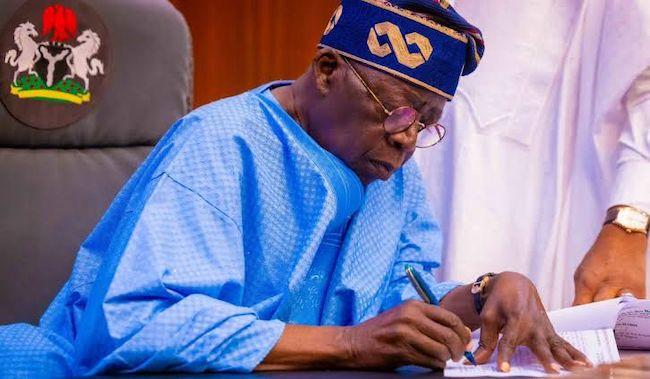
At least six ministers in the President Bola Ahmed Tinubu’s cabinet may resign ahead of the President’s March 31 deadline for his political appointees seeking elective office in the 2027 general elections.
Contents
Minister of Power, Bayo Adelabu
Minister of Health and Social Welfare, Muhammad Ali Pate
Minister of Agriculture and Food Security, Abubakar Kyari
Minister of Transportation, Saidu Alkali
Minister of Foreign Affairs, Yusuf Maitama Tuggar
Minister of Communications, Innovation and Digital Economy, Bosun Tijani
A directive from Tinubu, issued through the Office of the Secretary to the Government of the Federation (SGF), George Akume, mandates all affected officials to step down before participating in party primaries.
The order is pursuant to the provisions of Section 88(1) of the Electoral Act, 2026, as well as the timetable issued by the Independent National Electoral Commission (INEC) for party primaries ahead of the 2027 general elections.
In the circular signed by Akume and issued by the Permanent Secretary, General Services Office, Ibrahim Abubakar Kana, the government stated that the resignation requirement applies to all categories of presidential political appointees, including ministers, special advisers, senior special assistants, and heads of federal agencies.
READ ALSO:US: Elon Musk Offers To Pay TSA Workers’ Salaries Amid DHS Budget Standoff
“All affected officials are required to submit their formal resignation letters through the Office of the Secretary to the Government of the Federation not later than March 31, 2026,” the statement said.
Ahead of the deadline, Tribune Online takes a look at ministers who may comply with the directive to join the race for the governorship ticket of the All Progressives Congress (APC) in their respective states.
Minister of Power, Bayo Adelabu
Bayo Adelabu is among the most prominent figures who may be preparing to exit the cabinet. A former Deputy Governor of the Central Bank of Nigeria (CBN), he has built a strong political profile in Oyo State over the past decade.
Adelabu contested the governorship election in 2019 under the APC and again in 2023 under the Accord Party, losing both times to Governor Seyi Makinde. His renewed ambition for 2027 is seen as a continuation of his long-standing political project in the state.
According to Nigerian Tribune, Adelabu had, in October 2025, declared that it is his turn to become the governor of Oyo State in 2027.
In a viral video sighted by Tribune Online at the time, Adelabu, while addressing a gathering, said his ambition was not driven by selfish motives but by a genuine desire to improve the lives of the people of Oyo State.
Speaking in Yoruba, he said, “I have been on this political journey for quite some time. In politics, I have learned that one may not always get what one deserves in a single attempt — life and politics have both taught me this lesson.
“I have paid my dues. I contested alongside Seyi Makinde in 2019 and again in 2023.
READ ALSO:Asake Finally Opens Up On Relationship Status
“Today, I declare: it is our turn — it is my turn in 2027, as God has revealed it. Adelabu! Àwálòkàn! Penkelemesi Èmilòkàn!
“We will begin our door-to-door campaign in earnest, and by the grace of God and our collective efforts, victory is not only possible — it is certain.”
Minister of Health and Social Welfare, Muhammad Ali Pate
Coordinating Minister of Health and Social Welfare, Muhammad Ali Pate, is a public health expert with both national and international experience. He previously served as Nigeria’s Minister of State for Health between July 2011 and July 2013 under former President Goodluck Jonathan and later worked as Director of the Global Financing Facility (GFF) at the World Bank Group.
Pate has contested the Bauchi governorship in the past and remains an influential figure in the state’s politics, keeping him in contention for another possible run.
Some groups have continued to project him as a strong contender for the Bauchi governorship in 2027. One of such groups, the Bakaro/Dangikka Primary School Old Boys Association, described him as a suitable candidate for the position.
In a statement signed by its Secretary-General, Umar Musa, and titled “Why Bauchi needs Professor Ali Pate as Governor, 2027”, the association called on him to contest, stating that, “It’s time for a new era of purposeful and progressive leadership in Bauchi State with a vision, experience and dedication to Public Service.”
The group added that, “In our view and candid opinion, the present Coordinating Minister of Health and Social Welfare, Prof Mohammed Ali Pate is best man for the job.”
READ ALSO:Tinubu Orders Political Appointees Seeking Elective Offices To Resign Before March 31
It further stated that, “Pate is Nigeria’s Coordinating Minister of Health and Social Development. Achievements and qualifications makes him the best candidate that has all it takes to become the next Bauchi State Governor 2027.”
Minister of Agriculture and Food Security, Abubakar Kyari
Kyari was first elected into the House of Representatives in 1998 during the military regime of General Sani Abacha under the platform of the United Nigeria Congress Party. He later rose within the All Progressives Congress (APC), serving as Deputy National Chairman (North), a position that strengthened his influence within the party.
He was elected to the Senate in 2015 on the platform of the APC and re-elected in 2019, serving until April 2022 when he resigned to assume the role of Deputy National Chairman (North). He briefly served as Acting National Chairman of the party in July 2023 following the resignation of Abdullahi Adamu, before his appointment as Minister of Agriculture and Food Security by President Bola Tinubu in August 2023 after Senate confirmation.
Although he has not made any official declaration, many groups, including Borno Social Media Frontiers (BSF), have tipped Kyari as a potential contender to succeed Borno State Governor Babagana Umara Zulum.
Minister of Transportation, Saidu Alkali
The former three-term senator who represented Gombe North in the 6th, 7th and 9th assemblies is believed to be working from Abuja to clinch the APC governorship ticket in Gombe State.
Alkali’s political career has spanned both legislative and executive roles. He previously served as Commissioner for Information in Gombe State and later chaired the Senate Committee on the Nigerian Air Force.
READ ALSO:Nigerian Man Protests Against Tinubu, Shettima In UK [VIDEO]
His experience and political network have made many to tipped him for the APC governorship ticket in the state.
Minister of Foreign Affairs, Yusuf Maitama Tuggar
Yusuf Maitama Tuggar is also expected to consider leaving the cabinet to pursue his governorship ambition in Bauchi State, setting up a potential contest within the APC.
He previously served as a member of the House of Representatives from 2007 to 2011, representing Gamawa Federal Constituency, and has contested the governorship twice.
His ambition dates back to 2011 when he ran under the now-defunct Congress for Progressive Change (CPC), and again in 2015 when he lost the APC primaries. He is now widely regarded as a strong contender in the state.
A Bauchi-based pressure group, the Bauchi South Concern Citizens Movement, called on Tuggar at a meeting held a few months ago to contest the 2027 governorship election, citing the need for power rotation to Bauchi North after years of leadership from Bauchi South.
An APC elder, Abdullahi Usman Matori, who spoke at the meeting, defended the call for Bauchi North to produce the state’s next governor, noting that Bauchi South has held the position since 1999.
Minister of Communications, Innovation and Digital Economy, Bosun Tijani
Bosun Tijani is widely recognised for his background in the technology sector. He is the co-founder of Co-Creation Hub (CcHUB), one of Africa’s leading innovation centres, and earned a PhD in innovation and economic development from the University of Leicester in 2023.
Since his appointment, he has focused on digital infrastructure, startup support and tech-driven economic growth.
Although he has yet to formally declare his intention to contest any elective position, Tijani has also been tipped as a potential contender for the Ogun State governorship in 2027.
(TRIBUNE)




Politics
2027: NDC Unveils Electoral Committee Members For Primaries

The Nigeria Democratic Congress, NDC, has released list of Electoral Committee Members to Conduct primary election.
The exercise is for State House of Assembly, House of Representatives, Senate, Governorship and Presidential Primaries across all States in Nigeria and the FCT.
This was contained in a statement posted on its verified X handle on Thursday.
READ ALSO:Fubara Clears Air On ‘Defection’ To NDC [VIDEO]
The party had provided updates concerning its upcoming Presidential, National Assembly, Governorship, and State Assembly primaries.
According to the party’s National Chairman, Moses Cleopas,
and Barr. Ikenna Alex-Morgan Enekweizu, National Secretary, the primaries are confirmed to take place across the nation on May 29, 2026, adhering to the previously established timetable of May 28 and 29.
Politics
APC: Fubara Has Been Treated Badly, It’s Dangerous For Tinubu – Otubanjo

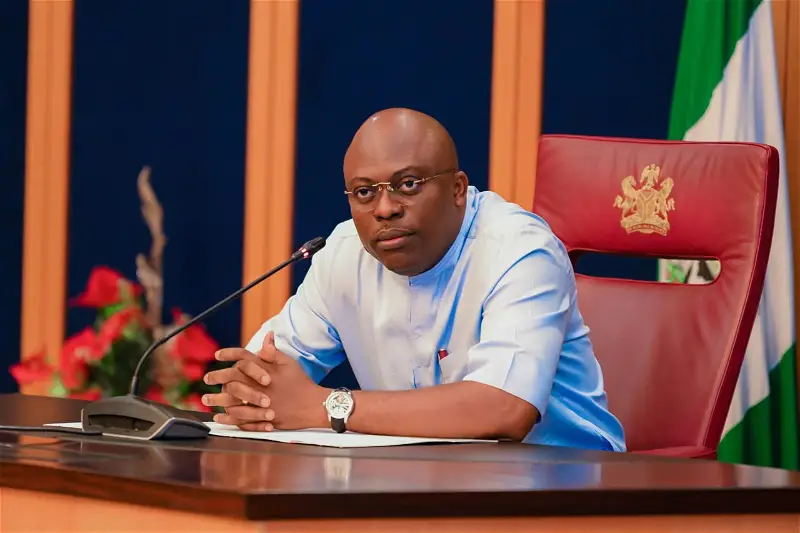
The director of research at the Nigerian Institute of International Affairs, Femi Otubanjo, has said the treatment of Rivers State Governor, Siminalayi Fubara, in the just concluded All Progressives Congress’, APC, primary poses political danger to President Bola Tinubu.
Otubanjo stated this on Thursday while speaking on Arise Television’s Morning Show, where he also criticised the role being played by the Minister of the Federal Capital Territory, Nyesom Wike, in the political affairs of Rivers State and the All Progressives Congress.
According to him, the handling of Fubara’s political crisis remains one of the most surprising developments in Nigeria’s political landscape.
READ ALSO:Four Fubara Loyalists Disqualified As APC Clears 21 For Rivers Reps Primaries
Otubanjo further argued that Wike, who is not a member of the APC, appears to be dictating political activities within the ruling party in Rivers State.The research director warned that the current political arrangement in Rivers State could negatively affect Tinubu politically, insisting that Wike was pursuing his personal agenda rather than that of the president.
He said: “The treatment of Fubara must be one of the American wonders of Nigerian politics. Fubara has been badly treated. We have a situation in which Nyesom Wike who is not even in the APC is taking the primary decision in the APC. I hope the tactical team of President Bola Tinubu is not sleeping.
“The reality is that what they have done is very dangerous for Tinubu. What has emerged in Rivers today is that Wike is pursuing his own agenda, not Tinubu’s agenda inspite of PBAT and all of that combination.”
“If Wike really wants to pursue Tinubu’s agenda, he must retain Fubara.”
Politics
In Defence Of Khalifa Jarrett Tenebe: The Generational Shift Reshaping Edo Politics

By DAN Osa-Ogbegie
For decades, Edo politics remained trapped within a narrow and predictable cycle of political recycling. The same ageing actors moved endlessly from one office to another, from one administration to the next, and from one political alignment to another, as though leadership in Edo State had become the exclusive inheritance of a permanent political aristocracy.
Meanwhile, thousands of intelligent, energetic, and capable young Edo people watched helplessly from the margins while opportunities for leadership, governance, party administration, and public service remained tightly controlled by individuals whose political relevance dated back several decades.
That unhealthy political culture is now gradually changing.
Today, one of the most important political transformations taking place within the All Progressives Congress in Edo State is the deliberate transition from recycled political gerontocracy to a younger generation of political actors. That transition is unfolding under the leadership of Senator Monday Okpebholo, Governor of Edo State and Leader of the APC in Edo State, together with the State Chairman of the party, Khalifa Jarrett Tenebe.
Predictably, such a shift has unsettled entrenched interests.
Those who became accustomed to monopolising political relevance naturally feel threatened by the emergence of a younger generation that is increasingly assertive, visible, influential, and institutionally empowered. Yet, history teaches a simple lesson: no political structure survives indefinitely without renewal.
READ ALSO: APC Primary: Edo Senator Kicks As Committee Releases Results
No serious political party can continue recycling the same exhausted political machinery forever while expecting innovation, grassroots energy, modern governance ideas, and long-term political sustainability.
That reality appears to be clearly understood by Governor Monday Okpebholo and Khalifa Jarrett Tenebe.
Much of the criticism unfairly directed at Khalifa Jarrett Tenebe in recent times stems from the fact that he has become one of the visible faces of this generational transition within Edo APC. Beneath the noise, propaganda, and political bitterness lies an undeniable truth: the party is consciously opening spaces for younger people in ways not seen for many years.
From the youthful Deputy Chairman of APC in Edo State, Sylvester Aigboboh, to several younger commissioners, Special Advisers, members of the State Executive Council, board chairmen, local government administrators, and strategic appointees across government, the evidence of deliberate political renewal is becoming increasingly impossible to ignore.
READ ALSO:APC Members In Ikole LG Condemn Attacks On Members During Reps Primary
In Uhunmwode Local Government Area, Hon. Austin Imafidon has emerged as one of the young faces of focused governance and grassroots administration. Beyond politics, he has already established himself successfully in business, bringing into governance the mindset of productivity, enterprise, and modern administrative engagement.
In Etsako, Hon. Sunny Ekpeson has continued to attract national attention as the youngest ALGON Chairman in Nigeria, representing a clear departure from the era where local government leadership was treated as the permanent preserve of ageing political operators disconnected from younger demographics.
In Ikpoba-Okha Local Government Area, Hon. Eric Osawaru represents another example of the younger political generation now entrusted with leadership responsibilities, while in Oredo Local Government Area, Engr. Gabriel Iduseri equally reflects the growing confidence being reposed in younger administrators within the APC structure.
In Owan, Hon. Aitalegbe Ernest, popularly known as “China Boy,” has also emerged as one of the prominent young political figures gaining traction as the incoming Chairman of the local government, further reinforcing the expanding generational transition currently taking shape across Edo State.
READ ALSO: OPINION: APC’s Politics Of Consensus
The same pattern is visible across government institutions and strategic agencies.
Pastor Stanley Dave Ighodaro, a successful entrepreneur with thriving business interests in Europe, now heads the Edo State Parks and Gardens Agency. His emergence reflects an increasingly important shift towards bringing professionally exposed and globally minded younger individuals into governance and public administration.
Similarly, Kassim Otono, who serves as Special Adviser on Oil and Gas to the Executive Governor of Edo State, represents another example of younger technocratic involvement within the present administration. His inclusion within such a strategic sector underscores the growing confidence being placed in younger professionals and politically aware technocrats within government.
This is how enduring institutions are built.
A political party that refuses to regenerate itself eventually becomes intellectually stagnant, structurally weak, and electorally disconnected from evolving social realities.
Governor Monday Okpebholo deserves commendation for recognising that governance in a rapidly changing society cannot remain permanently tied to political methods and leadership assumptions developed several decades ago. Contemporary governance demands adaptability, technological awareness, stronger grassroots engagement, administrative energy, and a deeper connection with younger populations.
READ ALSO: 2027: Ex-Owan West LG Boss Picks APC Nomination Form For Edo Assembly Race
Khalifa Jarrett Tenebe equally deserves credit for helping stabilise the party while managing this difficult but necessary transition process. Generational shifts are never easy within political systems historically dominated by established interests. Resistance is inevitable. Political resentment is expected. Internal anxieties naturally emerge whenever old monopolies begin to weaken.
Leadership, however, requires courage.
The recently concluded primaries further revealed this evolving direction within the APC. The emergence of candidates such as Rt. Hon. Omoregie Ogbeide-Ihama, Osazee Igbinovia, Dr. Emmanuel Paddy Iyamu, Omosede Igbinedion, Sir Lucky Eseigbe, and Odianosen Okojie reflects a growing political philosophy that increasingly values capacity, grassroots relevance, contemporary appeal, and generational continuity.
Equally symbolic is the emergence of several young Acting Local Government Council Chairmen who are now candidates of the party in the forthcoming local government elections. That development sends a powerful message across Edo State that political participation is gradually becoming more accessible to younger people with competence, commitment, and organisational value.
READ ALSO:JUST IN: Former APC National Youth Leader Dumps Party
For too long, many young people in Edo politics were reduced to political spectators, social media defenders, praise singers, or election-day foot soldiers while actual power remained tightly guarded elsewhere. Such a model was never sustainable.
A society that continuously sidelines its younger generation ultimately weakens its own political future.
The ongoing transition within Edo APC does not amount to hostility towards elders or experienced political actors. Experience remains valuable. Elder statesmen still possess institutional memory and political wisdom that younger actors can benefit from immensely. Mentorship, however, must never become political suffocation. Guidance must never evolve into permanent political domination.
Every generation deserves the opportunity to participate meaningfully in shaping the future it will eventually inherit.
That is precisely why the current direction of the APC leadership in Edo State deserves objective acknowledgement rather than emotional hostility.
Many of those attacking Khalifa Jarrett Tenebe today are not truly angry about party administration. Their deeper discomfort arises from the reality that political influence is gradually shifting away from old centres of control towards a newer generation of actors who may no longer depend entirely on traditional political gatekeepers for relevance or survival.
Societies evolve.
Political cultures evolve.
Leadership itself evolves.
No generation owns political power forever.
Ultimately, the future of Edo State cannot be built exclusively around recycled political veterans whose greatest political moments belong largely to the past. A forward-looking society must continuously create room for younger leadership, newer ideas, fresh administrative energy, and modern political thinking.
That future is already unfolding within the APC in Edo State.
History may eventually remember Khalifa Jarrett Tenebe and Governor Monday Okpebholo as central figures in the difficult but necessary political transition that began moving Edo away from recycled political dominance towards a broader and younger leadership culture capable of preparing the state for a different era.
Daniel Aroren Noah Osa-Ogbegie is a Benin based legal practitioner and public intellectual from Uhunmwode Local Government Area.
-

 Headline4 days ago
Woman Passes Out After Receiving 100 Strokes Of Cane
-

 Headline4 days ago
JUST IN: White House Locked Down Briefly As Gunman Opens Fire At Security Checkpoint
-

 Politics3 days ago
Two Masked Men Gun Down Politician In His Rivers State Hotel
-

 Politics5 days ago
Warri Ijaw Hail INEC Delineation Report, Call For Additional Electoral Wards, Others
-

 News3 days ago
More Pain For Nigerians As Cooking Gas Price Increases Nationwide
-

 Metro4 days ago
Police Reject N500m Bribe, Recover N7.8bn Illicit Drugs In Lagos
-

 News5 days ago
Alleged Terrorism: Court Rejects Defendant’s Bid To Travel Abroad
-

 Politics5 days ago
What I’ll Do As President Of Nigeria — Amaechi
-

 News3 days ago
FG Declares Two Days Public Holiday For Eid-el Kabir Celebration
-

 Politics3 days ago
‘Tinubu’s Borrowing In 24 Months Surpasses 55 Years’ Debt Record’