
Headline
5 African Countries That Retained Their Colonial Names
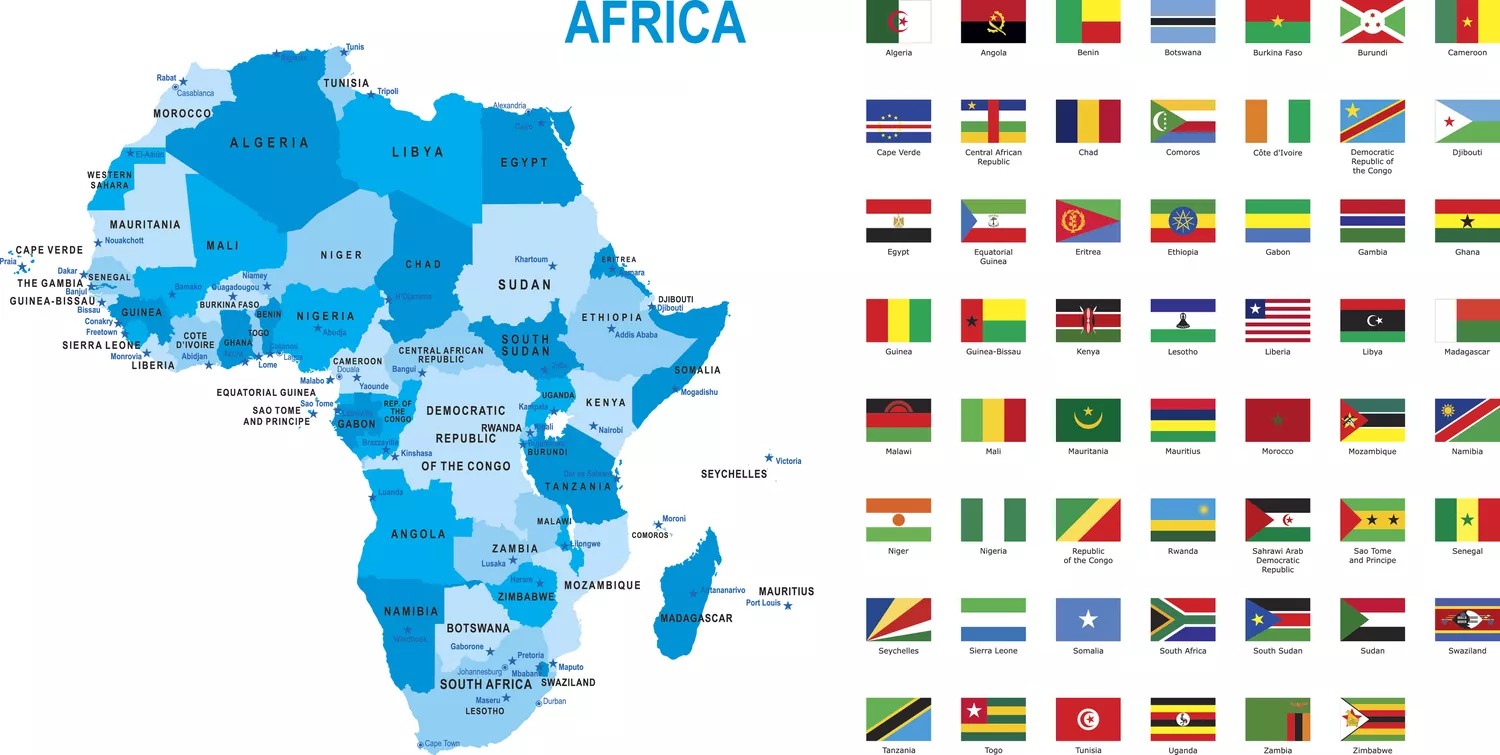
Names are an important part of who we are, and that is true for African countries with their names often reflecting history and culture.
Many African countries were once colonised by European powers, who named them during that time.
Some countries changed their names after they became independent, choosing something that felt more connected to their identity. But other countries decided to keep the names from the colonial era.
Here are five African countries that retained their colonial names:
Nigeria
The name Nigeria comes from the Niger River, which flows through the country. It was coined on January 8, 1897, by British journalist Flora Shaw. The neighbouring Republic of Niger also takes its name from the same river.
READ ALSO: Top 5 Countries In Africa Where Workers Earn Lowest Salaries
Nigeria gained partial self-governance in 1954 and full independence from the United Kingdom on October 1, 1960, as the Federation of Nigeria. Abubakar Tafawa Balewa became the country’s first Prime Minister, while Queen Elizabeth II remained the ceremonial head of state as Queen of Nigeria.
Mali
Mali came under French colonial rule in 1892. By 1893, the French had appointed a civilian governor for the territory, known as Soudan Français (French Sudan), but resistance to their rule persisted. By 1905, most of the region was firmly under French control.
French Sudan was managed as part of the Federation of French West Africa and provided labour for France’s coastal colonies. In 1958, the territory, now called the Sudanese Republic, gained complete internal autonomy and joined the French Community. In early 1959, the Sudanese Republic and Senegal formed the Federation of Mali. On March 31, 1960, France agreed to grant the Federation of Mali full independence. On June 20, 1960, the Federation of Mali became an independent nation, with Modibo Keïta as its first president.
READ ALSO: Top 10 Countries In Africa With Largest Debts In Mid-2024
Sierra Leone
Sierra Leone, a country in West Africa, got its name from 15th-century Portuguese explorer Pedro de Sintra, who was the first European to map Freetown harbor. The original Portuguese name “Serra Lyoa” (meaning “Lion Mountains”) referred to the hills surrounding the harbor. On April 27, 1961, Sierra Leone gained independence from British colonial rule. The Sierra Leone People’s Party (SLPP) won the general elections in 1962, with the All People’s Congress (APC) emerging as the primary opposition party.
Guinea
Guinea officially gained independence from France on October 2, 1958, after a referendum on the French Fifth Republic’s constitution on September 28 of that year. Ahmed Sékou Touré, a member of the Malinké ethnic group and a leftist leader, was appointed the first president by the Constituent Assembly.
The country is named after the Guinea region, which extends from the Gulf of Guinea into tropical forested areas and reaches the Sahel. The term “Guinea” comes from the Portuguese word “Guiné,” which emerged in the 15th century to describe lands inhabited by African people south of the Senegal River.
In 1978, Guinea’s official name changed to the People’s Revolutionary Republic of Guinea, and in 1984, after the death of Sékou Touré, the country was renamed the Republic of Guinea.
‘Your Leg No Good, You Need Prayer’ – Portable Blasts Babymama, Ashabi
Cameroon
The area now known as Cameroon was originally called “Rio dos Camarões” (River of Prawns) by Portuguese explorers in the 15th century, due to the large number of shrimp they found in the Wouri River. This name evolved into “Cameroon” during British and French colonial rule. In 1884, the region became a German colony known as Kamerun.
After World War I, it was divided between France and the United Kingdom under League of Nations mandates, with France governing 4/5 of the territory and the UK administering the remaining 1/5.
Cameroon gained independence from France in 1960 and from the UK in 1961.



Headline
Indian Court Denies Bail To Nigerian Man Over Drug Charges
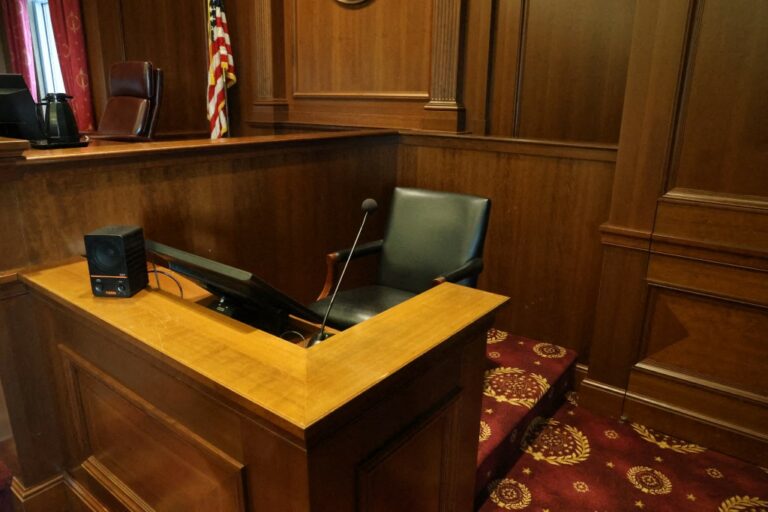
A court in India has denied bail to a 44-year-old Nigerian national, Cristian Soporuchukwu, who is currently facing drug trafficking charges in the country.
Cristian Soporuchukwu initially entered India on a business visa but was later arrested over allegations of involvement in the sale of hard drugs.
Reports indicated that after arriving in India, Soporuchukwu travelled through Goa, Delhi, and Mumbai, where he allegedly established links with suspected drug traffickers.
READ ALSO:Indian National Arraigned In Lagos Over Alleged N22m Supermarket Fraud
He was accused of purchasing MDMA crystals and distributing them to college students and information technology workers.
According to reports, operatives of the Beguru Police arrested Cristian Soporuchukwu in April 2025 for allegedly selling MDMA crystals around Begur Lake and the AECS Layout Road area.
The New Indian Express reported that the High Court of Karnataka subsequently dismissed the Nigerian’s bail application.
READ ALSO:NDLEA Intercepts Indian Lady With 72 Parcels Of Heroin ON n Chocolate Wraps
“The anti-narcotics wing seized about 1 kg of MDMA crystals, a pocket weighing machine, 10 zip-lock covers, a mobile phone and a scooter from him,” the report stated.
Justice V. Srishananda, while ruling on the bail application, reportedly held that errors relating to the grounds of arrest could not automatically justify bail in serious narcotics-related offences under the Narcotic Drugs and Psychotropic Substances, NDPS, Act.
The court further noted that Cristian Soporuchukwu had allegedly overstayed his visa in India, according to the report.
Headline
Strait Of Hormuz: US Announces Sanctions Against Iran
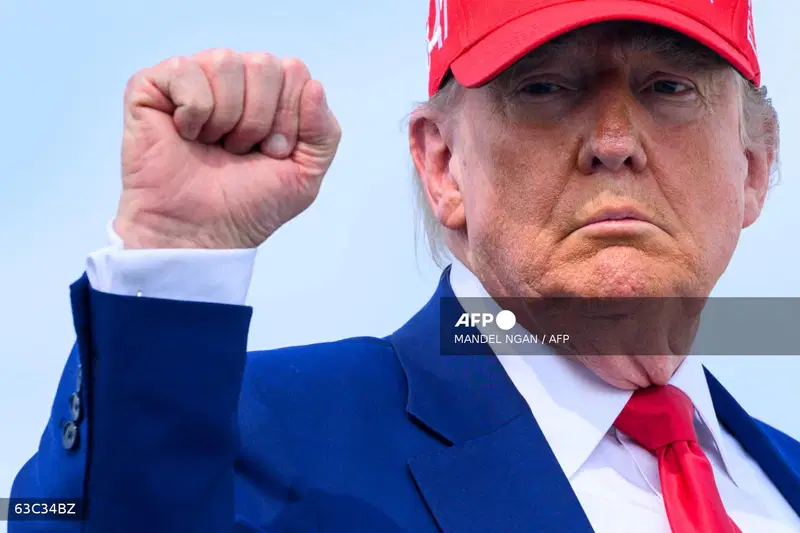
The United States Treasury has announced sanctions against Iran’s Persian Gulf Strait Authority.
Treasury Secretary, Scott Bessent, said this in a statement on Wednesday.
The statement extended the threat of sanctions to anyone paying the fees, saying they may be providing support to and receiving services from Iran’s Revolutionary Guards, and therefore may be exposed to sanctions risk.
READ ALSO:Strait Of Hormuz: Pakistan Thanks Trump For Pausing ‘Project Freedom’
“The Iranian military’s latest attempt to extort global maritime trade is proof that Economic Fury has left the regime desperate for cash.
“Treasury has deprived the Iranian regime of revenue for their weapons programs, terrorist proxies, and nuclear ambitions,” Bessent said.
Bessent added that the US has succeeded in disrupting tens of billions of dollars’ worth of revenue from being accessible to Tehran.
Headline
US Launches New Airstrikes On Iran
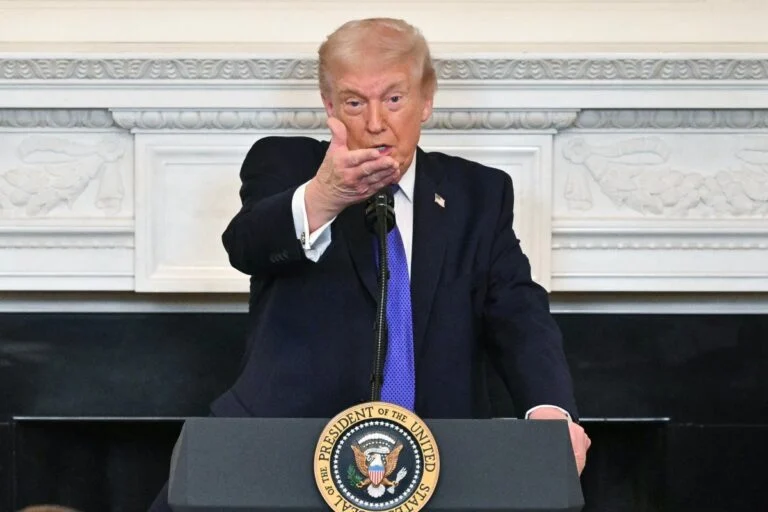
The United States has launched new airstrikes in southern Iran.
The strike shot down four one-way attack drones that posed a threat around the Strait of Hormuz and then a ground control site.
A US official revealed that American forces struck an Iranian ground control station in Bandar Abbas that was about to launch a fifth drone.
READ ALSO:US Restricts Entry Routes For Travellers From DRC, Uganda, South Sudan Over Ebola Outbreak
The official described the strikes as purely defensive, saying the US intended to maintain the ceasefire.
Report says this is the second time in three days that the US has carried out self-defense strikes against Iranian military targets in southern Iran.
Recall that on Monday the US carried out airstrikes against Iranian missile locations and boats that US Central Command said were preparing to launch mines in the Strait of Hormuz.

 Headline4 days ago
Woman Passes Out After Receiving 100 Strokes Of Cane
- Headline4 days ago
JUST IN: White House Locked Down Briefly As Gunman Opens Fire At Security Checkpoint
- News3 days ago
More Pain For Nigerians As Cooking Gas Price Increases Nationwide
- Politics3 days ago
Two Masked Men Gun Down Politician In His Rivers State Hotel
- Metro4 days ago
Police Reject N500m Bribe, Recover N7.8bn Illicit Drugs In Lagos
- Politics5 days ago
What I’ll Do As President Of Nigeria — Amaechi
- News3 days ago
FG Declares Two Days Public Holiday For Eid-el Kabir Celebration
- Politics3 days ago
‘Tinubu’s Borrowing In 24 Months Surpasses 55 Years’ Debt Record’
- Politics2 days ago
Court Clears Goodluck Jonathan To Contest 2027 Presidential Election
- News5 days ago
TCN Seeks Edo Govt, Community Support Against Power Infrastructure Vandalism


