
Business
6 Nigerian Banks Report N3trn Profit Amid Complaints, Challenging Environment
Relief for Nigerians as banks dispense, accept old Naira notes
Six banks in the country have posted N3.41 trillion as Profit After Tax (PAT) for the year 2024 ended against the N2.1 trillion recorded in the 2023 financial year.
This is in spite of diverse transaction and service complaints, dissatisfaction among customers and the challenging economic situation of the country.
The figure represents a 62.38 per cent increase from the amount recorded during the 2023 financial year (FY).
The News Agency of Nigeria (NAN) correspondent, who monitored banks’ 2024 audited financial statements posted on the Nigerian Exchange Group (NGX) platform, reveals that all the banks recorded increase in their gross earnings.
Similarly, their Profit Before Tax (PBT) rose to N4.1 trillion in 2024, which represents 42.7 per cent increase compared to N9.61 billion recorded in the corresponding period in 2023.
The banks analysed include Zenith Bank Plc, Guaranty Trust Holding Company (GTCO) Plc, United Bank for Africa (UBA) Plc, Fidelity Bank Plc, Stanbic IBTC Holdings PLC and Wema Bank Plc.
The banks attributed the profit to equity holders, non-controlling interests, earning per share (basic and diluted).
As part of its earnings, GTCO announced a final dividend of N7.03 per share, which brought the total dividend for the 2024 financial year to N8.03 per share, against the N3.20 per share paid in 2023.
Zenith proposed a final dividend of N4.00 per share in addition to N1.00 per share interim dividend, which amounted to N5.00 per share.
UBA proposed a total dividend of N5.00 per share, while Fidelity proposed a final dividend of N2.10 per ordinary share, and Stanbic IBTC proposed a final dividend of N3.00 against N2.20 paid in N2023.
READ ALSO: How I Was Offered N5bn Bribe To impeach Fubara – Rivers Chief Of Staff
Similarly, the banks’ donations to charitable and non-political organisations rose to N969 billion for the 2024 FY compared to their N2.6 billion contribution in 2023.
However, there were still unresolved customers’ complaints recorded by the banks.
GTCO received 941,241 complaints and resolved 935,081, leaving 7,998 complaints unresolved, while UBA received 3,210,708 complaints and resolved 2,090,122 out of them, leaving 1,120,907 unresolved for the 2024 FY.
Zenith Bank has 203,787 complaints including the ones brought forward and resolved 202,384, leaving 1,403 unresolved.
Wema Bank received 783,461 and resolved 780,063, leaving 11,372 complaints unresolved, including the number carried forward (C/F).
Reacting to these headwinds, financial experts urged the Central Bank of Nigeria (CBN) to step up its monitoring and supervisory role to ensure that banks are not over-charging customers.
Prof. Uche Uwaleke, the President, Capital Market Academics of Nigeria (CMAN), told NAN that
the CBN’s Monetary Policy Committee (MPC) enabled a number of banks to increase interest income.
READ ALSO: UK Releases Names of Dead Nigerians With Unclaimed Estates, Searches For Relatives
Uwaleke said that interest income made lending rates to increase without commensurate increase in savings rates.
He said that other factors which led to growth in banks’ profits exchange rate, included the depreciation of the Naira, which made banks holding foreign denominated assets to benefit.
According to him, there is the issue of the banking sector recapitalisation, which enables banks to raise some money from the capital market and invest in Information Technology (IT) infrastructure.
”It is very true that a number of banks, especially the tier 1 banks, are declaring huge profits in spite of the economic situation in the country.
“The reason is not far-fetched. If you recall, 2024 was characterised by a high interest rate environment.
”The economy is still experiencing weak growth and we see that in virtually all the sectors, particularly the risk sectors of the economy, manufacturing, agric, did not really make any meaningful growth in 2024,” he said.
He, however, noted that the services sector had powered growth, adding that the banking sector is within the services sector.
READ ALSO:World Bank Expresses Concern Over Nigeria’s Data, Statistics Quality
“Now how do we really bridge this disconnect, this gap between the financial sector and the risk sector and how do we also ensure that the bank customers also begin to have a feel of the fortunes of banks, if one might put it that way?
”The CBN needs to really monitor and supervise the banks to ensure that they are not overcharging the customers.
”I know there is the recommended bank charges by the CBN for banks, but it is important for the regulator to ensure that customers don’t bear the brunt of some of the inefficiencies we see from some banks,” he said.
Uwaleke said the CBN should also advise advise banks to increase savings rates in tandem with lending rates.
”It is also the duty of the CBN to ensure that whenever the policy rate is increased, as we saw in 2024, usually banks are quick to increase lending rates, but savings rates don’t usually respond by as much.
”So the CBN needs to advise the banks on the margin between savings and the lending rates that it shouldn’t exceed a particular limit.
”So it is important that savings rates increase in tandem with lending rates each time policy rates are increased,” he suggested.
READ ALSO: Nigeria’s Revenue Drops N194.6bn In February – FAAC
The expert said that customers were also very important stakeholders in the banking business, hence the need for the CBN to protect them.
Mr Okechukwu Unegbu, a former President of the Chartered Institute of Bankers of Nigeria (CIBN) said that banks usually initiate all forms of charges at the expense of their customers.
Unegbu regretted that some customers were reluctant about challenging their banks in the event of some ‘illegal’ charges.
”Banks charge all sorts even illegal charges and if customers complain they won’t respond because they feel that money is not much.
”Customers are docile too, they are sleeping, they should wake up and take these banks to court for some of these illegal charges,” he said.
The customer will say for example, is it because of N50 that I’m going to court?
”It is not the N50 but the underlining principle and the banks are using this as a very good excuse to rip customers of their hard earned money.
”If you charge N50 to 1,000 customers, you can see how much it is,” he said.
Unegbu called on Bank Customers Association of Nigeria (BCAN) to rise up to their responsibility by holding banks accountable for their ‘unfair’ actions to customers.
Some bank customers who spoke to NAN alleged that there complaints to their banks on transaction failure and debits had yet to be resolved by the banks.
Mrs Catherine Itoha, a customer of GTCO, said the bank had yet to reverse over N20,000 debited from her account through various failed Point of Sale (PoS) transactions since 11 months.
Itoha urged some banks and their staff to adopt principles of fair practice in handling their customers.
”Customers are the reason why banks are in existence so, we deserve to be treated fairly.
”GTB debited me in about four different transactions that I did but up till now, they did not reverse any of these monies.
”I visited the bank, filled forms, spoke to their staff personally but still the issue was not resolved since last year,” she said.
Mr Augustine Ode, a Zenith Bank customer, appealed to the CBN to check the excesses of some banks, who were allegedly defrauding customers and posting huge profits.



Business
Naira Appreciates Against Dollar At Official FX Market
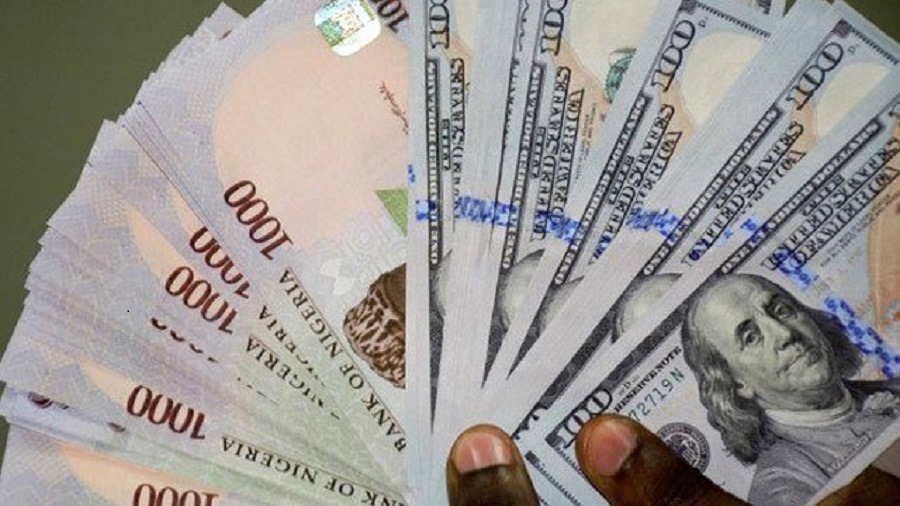
…Black market (Buying and selling rates): N1,385— N1,390
The Nigerian naira appreciated against the United States (US) dollar, trading at N1,331.2027 at the Central Bank of Nigeria (CBN) official foreign exchange (FX) window on Friday, September 18, 2026.
The data shared on the CBN’s official platform shows that the naira traded at the Nigerian Foreign Exchange Market (NFEM) rate of N1,331.2027 per dollar and closed at N1,329.9900 per dollar.
The currency, which traded at an NFEM rate of N1,331.2812 on September 17, 2026, appreciated by at least N0.08 after trading activities on Friday.
READ ALSO: Naira To Dollar Exchange Rate At Official FX Market
At the parallel market, both the buying and selling rate decreased by N5, when compared to the previous trading rate on Thursday, September 17, 2026.
According to Aboki FX , the Naira-to-dollar exchange rate at the black market on Friday, September 18, 2026, was N1,385 and N1,390 per dollar for buying and selling rates, respectively.
Business
Again, Naira Depreciates Against Dollar At Official FX Market
…Black market (Buying and selling rates): N1,380— N1,385
The Nigerian naira depreciated against the United States (US) dollar, trading at N1,329.8568 at the Central Bank of Nigeria (CBN) official foreign exchange (FX) window on Wednesday, September 16, 2026.
The data shared on the CBN’s official platform shows that the naira traded at the Nigerian Foreign Exchange Market (NFEM) rate of N1,329.8568 per dollar and closed at N1,329.5600 per dollar.
The currency, which traded at an NFEM rate of N1,329.1485 on September 15, 2026, depreciated by at least N0.71 after trading activities on Wednesday.
READ ALSO: Naira To Dollar Exchange Rate At Official FX Market
At the parallel market, both the buying and selling rate remained the same, when compared to the previous trading rate on Tuesday, September 15, 2026.
According to Aboki FX , the Naira-to-dollar exchange rate at the black market on Wednesday, September 16, 2026, was N1,380 and N1,385 per dollar for buying and selling rates, respectively.
Business
How To Buy Dangote Refinery Shares As IPO Opens September 14

Investors seeking to own a stake in the Dangote Petroleum Refinery and Petrochemicals FZE will be able to subscribe to its initial public offering (IPO) from September 14, 2026.
The ₦2.15 trillion offer by Dangote, valued at about $1.6 billion, involves 4.1 billion ordinary shares priced at an indicative ₦525 per share.
The offer, which is expected to become Nigeria’s largest-ever public share sale, will remain open until October 13, 2026.
The development gives Nigerians and other eligible investors an opportunity to acquire shares in the refinery as the Dangote Group moves to broaden ownership of the business.
At the signing of the IPO documents in Lagos on September 7, President of Dangote Group, Aliko Dangote, said the offer was designed to enable ordinary Nigerians to become shareholders in the refinery.
“What we are trying to achieve is to make sure our drivers, cooks, servants, and everybody have the opportunity of having stakes in the refinery,” Dangote said.
READ ALSO: BREAKING: Dangote Refinery Reduces Petrol, Diesel Prices
How to subscribe
According to the Managing Director, Investment Banking, Chapel Hill Denham, Mr Lanre Buluro, prospective investors can subscribe digitally using a bank account, Bank Verification Number (BVN) and a mobile phone or laptop.
He said an investor can complete the process within two to three minutes, with the minimum subscription set at 10 shares.
At ₦525 per share, the minimum subscription of 10 shares will cost ₦5,250.
Buluro said investors could access the offer through platforms including Moniepoint, MTN MoMo, Airtel, Payaza, Piggyvest, Paga, Bamboo and Chapel Hill Denham’s Invest Naija platform.
Do I need a CSCS account?
Buluro said prospective investors do not necessarily need an existing Central Securities Clearing System (CSCS) identity number before subscribing.
READ ALSO: Dangote Refinery Reduces Petrol Gantry Price
According to him, a CSCS account can be created for a new investor during the subscription process after the investor’s BVN and bank account details have been verified.
He explained that stockbrokers are behind the participating platforms and would contact subscribers after the transaction to provide their CSCS and Clearing House Number (CHN).
The allotted shares will subsequently be domiciled in the investor’s CSCS account.
What happens after subscription?
Investors can subscribe throughout the offer period, which runs from September 14 to October 13.
At the close of the offer, the advisers and the Securities and Exchange Commission (SEC) will assess the total subscriptions and determine the final allotment.
This means investors may not necessarily receive all the shares they apply for if the offer is oversubscribed.
READ ALSO: Dangote Unveils 10-day Credit Facility For Petrol Station Owners
Buluro disclosed that the offer has a provision to accommodate additional subscriptions in the event of oversubscription.
He said up to about 30 per cent additional shares could be issued under the oversubscription provision, potentially increasing the number of shares available from 4.1 billion to about 5.3 billion.
Before you invest
Buluro advised prospective investors, particularly first-time investors, to read the IPO prospectus carefully and seek guidance from a qualified financial adviser before committing their funds.
Investors should also understand that subscribing to an IPO does not guarantee a profit. The value of shares can rise or fall after allotment, depending on the company’s performance and market conditions.
The Dangote Refinery IPO is expected to significantly deepen public participation in the Nigerian capital market by allowing more individuals to take direct equity positions in one of the country’s largest industrial projects.
(TRIBUNE)

 News4 days ago
BREAKING: Tinubu Extends Working Vacation
- Headline4 days ago
How To Format An Academic CV For US Master’s, PhD Applications
- News4 days ago
Benue Govt Suspends Muslim Pilgrims Welfare Board Chairman, Secretary
 News3 days ago
OPINION: The Stranger In APC’s Kitchen
- Entertainment4 days ago
Why Funke Akindele Was Not At My Movie Premiere – Kamo State
- Politics4 days ago
Crisis Rocks NDC Over Obi-Kwankwaso Campaign Council
- Sports4 days ago
5 Football Players Who Excelled In Multiple Positions
- News4 days ago
FULL LIST: Names Of 37 Illegal Miners Who Died In NSCDC Custody
- News5 days ago
[OPINION] Wike-APC: Fights Always End Adultery
- News4 days ago
OPINION: Shehu Sani Tells Truth To His North


