

Business
6 Nigerian Banks Report N3trn Profit Amid Complaints, Challenging Environment

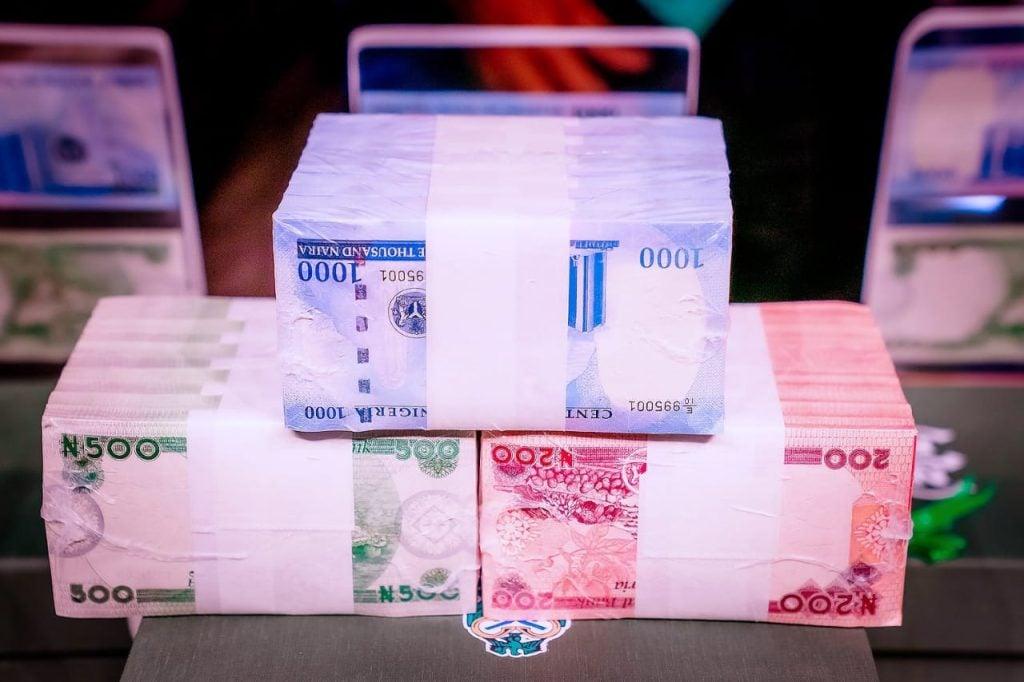


Relief for Nigerians as banks dispense, accept old Naira notes
Six banks in the country have posted N3.41 trillion as Profit After Tax (PAT) for the year 2024 ended against the N2.1 trillion recorded in the 2023 financial year.
This is in spite of diverse transaction and service complaints, dissatisfaction among customers and the challenging economic situation of the country.
The figure represents a 62.38 per cent increase from the amount recorded during the 2023 financial year (FY).
The News Agency of Nigeria (NAN) correspondent, who monitored banks’ 2024 audited financial statements posted on the Nigerian Exchange Group (NGX) platform, reveals that all the banks recorded increase in their gross earnings.
Similarly, their Profit Before Tax (PBT) rose to N4.1 trillion in 2024, which represents 42.7 per cent increase compared to N9.61 billion recorded in the corresponding period in 2023.
The banks analysed include Zenith Bank Plc, Guaranty Trust Holding Company (GTCO) Plc, United Bank for Africa (UBA) Plc, Fidelity Bank Plc, Stanbic IBTC Holdings PLC and Wema Bank Plc.
The banks attributed the profit to equity holders, non-controlling interests, earning per share (basic and diluted).
As part of its earnings, GTCO announced a final dividend of N7.03 per share, which brought the total dividend for the 2024 financial year to N8.03 per share, against the N3.20 per share paid in 2023.
Zenith proposed a final dividend of N4.00 per share in addition to N1.00 per share interim dividend, which amounted to N5.00 per share.
UBA proposed a total dividend of N5.00 per share, while Fidelity proposed a final dividend of N2.10 per ordinary share, and Stanbic IBTC proposed a final dividend of N3.00 against N2.20 paid in N2023.
READ ALSO: How I Was Offered N5bn Bribe To impeach Fubara – Rivers Chief Of Staff
Similarly, the banks’ donations to charitable and non-political organisations rose to N969 billion for the 2024 FY compared to their N2.6 billion contribution in 2023.
However, there were still unresolved customers’ complaints recorded by the banks.
GTCO received 941,241 complaints and resolved 935,081, leaving 7,998 complaints unresolved, while UBA received 3,210,708 complaints and resolved 2,090,122 out of them, leaving 1,120,907 unresolved for the 2024 FY.
Zenith Bank has 203,787 complaints including the ones brought forward and resolved 202,384, leaving 1,403 unresolved.
Wema Bank received 783,461 and resolved 780,063, leaving 11,372 complaints unresolved, including the number carried forward (C/F).
Reacting to these headwinds, financial experts urged the Central Bank of Nigeria (CBN) to step up its monitoring and supervisory role to ensure that banks are not over-charging customers.
Prof. Uche Uwaleke, the President, Capital Market Academics of Nigeria (CMAN), told NAN that
the CBN’s Monetary Policy Committee (MPC) enabled a number of banks to increase interest income.
READ ALSO: UK Releases Names of Dead Nigerians With Unclaimed Estates, Searches For Relatives
Uwaleke said that interest income made lending rates to increase without commensurate increase in savings rates.
He said that other factors which led to growth in banks’ profits exchange rate, included the depreciation of the Naira, which made banks holding foreign denominated assets to benefit.
According to him, there is the issue of the banking sector recapitalisation, which enables banks to raise some money from the capital market and invest in Information Technology (IT) infrastructure.
”It is very true that a number of banks, especially the tier 1 banks, are declaring huge profits in spite of the economic situation in the country.
“The reason is not far-fetched. If you recall, 2024 was characterised by a high interest rate environment.
”The economy is still experiencing weak growth and we see that in virtually all the sectors, particularly the risk sectors of the economy, manufacturing, agric, did not really make any meaningful growth in 2024,” he said.
He, however, noted that the services sector had powered growth, adding that the banking sector is within the services sector.
READ ALSO:World Bank Expresses Concern Over Nigeria’s Data, Statistics Quality
“Now how do we really bridge this disconnect, this gap between the financial sector and the risk sector and how do we also ensure that the bank customers also begin to have a feel of the fortunes of banks, if one might put it that way?
”The CBN needs to really monitor and supervise the banks to ensure that they are not overcharging the customers.
”I know there is the recommended bank charges by the CBN for banks, but it is important for the regulator to ensure that customers don’t bear the brunt of some of the inefficiencies we see from some banks,” he said.
Uwaleke said the CBN should also advise advise banks to increase savings rates in tandem with lending rates.
”It is also the duty of the CBN to ensure that whenever the policy rate is increased, as we saw in 2024, usually banks are quick to increase lending rates, but savings rates don’t usually respond by as much.
”So the CBN needs to advise the banks on the margin between savings and the lending rates that it shouldn’t exceed a particular limit.
”So it is important that savings rates increase in tandem with lending rates each time policy rates are increased,” he suggested.
READ ALSO: Nigeria’s Revenue Drops N194.6bn In February – FAAC
The expert said that customers were also very important stakeholders in the banking business, hence the need for the CBN to protect them.
Mr Okechukwu Unegbu, a former President of the Chartered Institute of Bankers of Nigeria (CIBN) said that banks usually initiate all forms of charges at the expense of their customers.
Unegbu regretted that some customers were reluctant about challenging their banks in the event of some ‘illegal’ charges.
”Banks charge all sorts even illegal charges and if customers complain they won’t respond because they feel that money is not much.
”Customers are docile too, they are sleeping, they should wake up and take these banks to court for some of these illegal charges,” he said.
The customer will say for example, is it because of N50 that I’m going to court?
”It is not the N50 but the underlining principle and the banks are using this as a very good excuse to rip customers of their hard earned money.
”If you charge N50 to 1,000 customers, you can see how much it is,” he said.
Unegbu called on Bank Customers Association of Nigeria (BCAN) to rise up to their responsibility by holding banks accountable for their ‘unfair’ actions to customers.
Some bank customers who spoke to NAN alleged that there complaints to their banks on transaction failure and debits had yet to be resolved by the banks.
Mrs Catherine Itoha, a customer of GTCO, said the bank had yet to reverse over N20,000 debited from her account through various failed Point of Sale (PoS) transactions since 11 months.
Itoha urged some banks and their staff to adopt principles of fair practice in handling their customers.
”Customers are the reason why banks are in existence so, we deserve to be treated fairly.
”GTB debited me in about four different transactions that I did but up till now, they did not reverse any of these monies.
”I visited the bank, filled forms, spoke to their staff personally but still the issue was not resolved since last year,” she said.
Mr Augustine Ode, a Zenith Bank customer, appealed to the CBN to check the excesses of some banks, who were allegedly defrauding customers and posting huge profits.




Business
Again, Dangote Refinery Hikes Fuel Price


Dangote Refinery has increased the ex-depot price of petrol by N75, bringing the price up to N1,350 per litre from the previous price of N1,275.
This is the first fuel increase by the Refinery in the month of May.
READ ALSO:JUST IN: Dangote Refinery Reduces Petrol Price
This latest development is coming seven days after the refinery raised its ex-depot price from N1,200 to N1,275 per litre.
Recall that the refinery on April 29 increased the ex-depot price of petrol by N75.
Business
Why We Sited Our Multi-Billion Naira Automobile Firm Branch in Benin – Skyewise Group CEO


Dr. Elvis Abuyere, Chief Executive Officer and Managing Director of Skyewise Group, an automobile firm, has explained the reason for establishing a branch of the company in Benin City, the Edo State capital, describing the ancient city as “a growing economy full of enormous potential for vibrant youth.”
He added that the company considers Edo State one of the most interesting states, noting that the decision aligns with its long-term vision.
Abuyere, who spoke in Benin on Monday while taking journalists on a tour of the new automobile facility, said:
“We started very small — from Abuja to Lagos and now Benin. It is a joy and privilege for us to have completed this amazing regional office with Skyewise Group.”
READ ALSO:BREAKING: Wike Picks Alabo George For Rivers Governorship
According to him, beyond the automobile business, Skyewise Group is in Benin to invest in real estate, logistics, youth empowerment, and credit management. “Aand also to lend our support to what the Edo State Government is doing, knowing the fact that there is an agenda,” he added.
The young CEO urged youths in Nigeria, particularly those in Edo State, to embrace entrepreneurship, stressing that “we believe it is the future of Africa,” especially Nigeria.
He said Nigeria stands as the giant of Africa and that its youth must take bold steps in the entrepreneurship landscape.
According to Abuyere, to ensure Edo youths actualise their entrepreneurial potential, the company has prepared soft loans to help them start businesses, adding that Skyewise Group is not limited to automobile operations.
READ ALSO:Senatorial Seat: Ogbakha-Edo Warns Against Imposition Of Candidates In Edo South
He said: “More importantly to us is youth empowerment. We want our youth to be empowered, and this is where the Skyewise Foundation comes in.
“We believe the future of Africa is entrepreneurship, and that future lies in the hands of the young people of Nigeria. We want to empower them to stand the test of time, build something meaningful, and reduce unemployment and insecurity in our land.
“I believe we need to begin taking bold steps by refining the mindset of our young people. We need to give them a sense of belonging and direction.
“We have been addressing the liquidity gap in society by providing microloans to support businesses in our environment and in Benin City.”
When asked why he chose Benin City for the multi-billion naira automobile firm, Abuyere noted: “I think this is the first automobile showroom in Edo State where you can see a car lifted from the ground floor to the first floor and beyond.”
Business
JUST IN: Nigerian Filling Stations Reduce Fuel Price After Hike

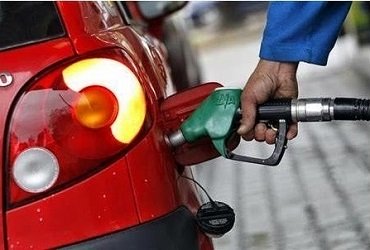
Nigerian filling stations reduced their Premium Motor Spirit price on Saturday, barely 24 hours after the hike.
Checks by DAILY POST showed that Ranoil, Empire Energy, and other filling stations in Abuja adjusted their petrol pumps to N1,365 and N1,375 per litre respectively, down from N1,440 per litre on Friday.
This means that petroleum marketers dropped their fuel price by N65 and N75 per litre. DAILY POST reports that the move was to attract patronage from customers.
Recall that three days ago, Nigerian filling stations had raised their petrol pump price to between N1,365 and N1,440 nationwide after Dangote Refinery and depot owners increased ex-depot prices to around N1,275 and N1,290 per litre.
According to DAILY POST, while the Nigerian National Petroleum Company Limited and MRS Bovas filling stations raised their petrol price to around N1,365 per litre, others adjusted theirs above N1,440 per litre.
READ ALSO:Drivers Protest Fuel Increase, Raise Fares in Benin
However, with the latest fuel price reduction by Ranoil and Empire Energy, the majority of filling station outlets now dispense petrol between N1,365 and N1,375 per litre.
This development comes as the ripple effect of crude oil prices continues to impact Nigeria’s domestic fuel price.
Brent and West Texas Intermediate crude rose to $114 and $105 per barrel before dropping to $108 and $101 after the filing of this report.
-

 Headline4 days ago
Woman Passes Out After Receiving 100 Strokes Of Cane
-

 Headline4 days ago
JUST IN: White House Locked Down Briefly As Gunman Opens Fire At Security Checkpoint
-

 News3 days ago
More Pain For Nigerians As Cooking Gas Price Increases Nationwide
-

 Politics3 days ago
Two Masked Men Gun Down Politician In His Rivers State Hotel
-

 Metro4 days ago
Police Reject N500m Bribe, Recover N7.8bn Illicit Drugs In Lagos
-

 Politics5 days ago
What I’ll Do As President Of Nigeria — Amaechi
-

 News3 days ago
FG Declares Two Days Public Holiday For Eid-el Kabir Celebration
-

 Politics3 days ago
‘Tinubu’s Borrowing In 24 Months Surpasses 55 Years’ Debt Record’
-

 Politics2 days ago
Court Clears Goodluck Jonathan To Contest 2027 Presidential Election
-

 News5 days ago
TCN Seeks Edo Govt, Community Support Against Power Infrastructure Vandalism