

News
Act Fast, Nigerians Are Starving, Anglican Primate Urges Tinubu

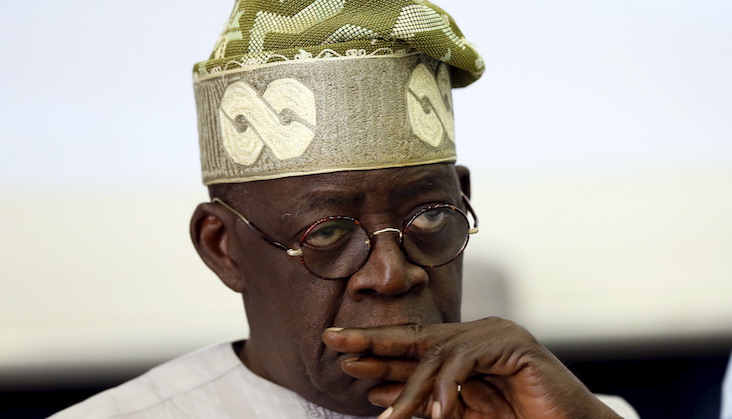


The Primate of the Church of Nigeria (Anglican Communion), Most Rev. Henry Ndukuba, has implored President Bola Ahmed Tinubu to urgently tackle the growing hunger and economic hardship facing Nigerians.
In the wake of a communiqué issued on Sunday in Abuja, after the Church’s Standing Committee meeting, Primate Ndukuba’s message was clear.
The communiqué, endorsed by key church figures including Primate Ndukuba, the Dean Most Rev. Blessing Enyindah, and the General Secretary Ven. Gershinen Paul Dajur, stressed the critical state of national affairs and called for repentance and resistance to apostasy.
The document spotlighted government plans and policy directions, the fight against corruption, judiciary concerns, the faltering economy, and the neglect of quality education.
It also condemned ongoing attacks across several states and urged the government and security forces to uphold their duty to protect citizens and their property.
The communiqué further reiterated the need for a civil and democratic constitution that truly represents the populace, ensuring no group is sidelined or oppressed.
It partly reads, “The Standing Committee meeting of the Church of Nigeria (Anglican Communion) therefore calls on the President and government to rise to the occasion of the challenging issues facing the nation:
READ ALSO: Hardship: Tinubu Hints On Providing Social Welfare For All Citizens
“All corrupt public office holders and their collaborators should be brought to book and disciplined accordingly. We call on the Judiciary to do more to guarantee justice in the country.
“The Nigeria economy has been a subject of great concern due to its diverse and biting challenges. It is currently at its lowest ebb since independence with macro-economic indicators moving in discouraging directions. Monetary policies have been inconsistent, non-supportive of economic growth, ineffective and cost-push inflation has been out of control resulting in high food prices. Nigerians are hungry.
“We, therefore, call on the government to have a rethink on its penchant for external borrowing, give proper attention to fiscal policies, and diversify its economic base by harnessing our abundant natural resources.
“The Standing Committee meeting decries the constant attacks in Plateau, Zamfara, Ekiti, Ondo, Benue, parts of Imo and Anambra States and other parts of the country. It therefore calls on the government and statutory security agencies to rise to their responsibilities of protection of the lives and property of the citizenry, giving heed to the call for effective community policing.
“We note with dismay the failure of government to provide quality education for her citizenry, which has compelled Nigerians to seek admission in other countries, thus spending huge sums of money in foreign countries, thereby weakening the Nigerian economy.
“The Standing Committee renews her call for a totally civilian and democratic Constitution made by a sovereign representation of her people and not the continuous amendment of a military formulated Constitution. This will reflect the birthing of the government of the people in a new Nigeria.”
During an extensive interaction with journalists, the Archbishop Ndukuba addressed multiple pressing issues, including the purported involvement of religious organizations in sponsoring terrorism.
READ ALSO: Economic Hardship: CSO Gives FG Ultimatum, Threatens Nationwide Protest
He called on the EFCC to operate independently and hold religious bodies accountable without generalizing.
“Religion is expected to be a source of solutions, not to add to societal issues. It’s commendable that these issues are brought to public attention, but that’s not sufficient. The EFCC should be permitted to perform its duties without interference, allowing religious organizations to be held accountable.
“We must avoid blanket judgments of all religious groups and instead focus on actions that promote national unity and progress. All citizens should have the freedom to pursue a good life.
“No reasonable religious person, whether Christian or Muslim, would support terrorism. Yet, the depth of our problems is revealed when identities are weaponized, leading to societal collapse. Those responsible must be held accountable.,” he stated.
On the potential Nigeria Labour Congress (NLC) strike, the Primate advocated for dialogue over conflict and suggested governmental measures to meet national requirements, potentially including a cabinet reshuffle.
While highlighting the injustice of silencing public expression, he said, “Nigeria is a free country, and people should have the right to express themselves. I hope that the government will implement policies that address the nation’s needs, even if it requires a cabinet reshuffle. The people are hungry, and a hungry man is an angry man. It’s unjust to silence their expressions.
“The government and the NLC leaders should pursue negotiation instead of confrontation. The release of those arrested during protests would serve to calm public anger, as selective justice is detrimental.
READ ALSO: Tinubu’s Sudden Announcement Of Subsidy Removal Created Untold Hardship – Prof Sagay
“Our nation’s problem is not with its ordinary citizens, who ask only for food security and basic infrastructure. Nigerians are not lazy; they are hardworking and deserve the opportunity to provide for their families.”
The Primate also dismissed the idea of moving the capital from Abuja to Lagos, instead advocating for the development of new cities across the six geopolitical zones to reduce congestion and promote balanced development.
Drawing on China’s strategy of constructing new cities, he said, “Abuja was chosen as the Federal Capital Territory for valid reasons, and we must ensure justice for its indigenous people to prevent further agitation. Lagos is already overburdened, and building new cities, like China’s approach, could be a solution for Nigeria’s growing population and economic needs.
“It’s crucial that we work together to harness Nigeria’s human and material resources for the benefit of all. If we can learn from the example of China, which is actively building new cities and industrial centers to accommodate its development, why can’t we do the same?
“With God’s blessings, we have what it takes to establish new satellite cities across the six geopolitical zones. If we could construct one additional city in the North and another in the South, we would alleviate the congestion in both Abuja and Lagos, giving rise to growth and equal opportunities for everyone who settles there.
“These new cities would also aid in our national development. With Nigeria projected to be one of the most populous nations by 2050, we must have robust plans to address the deficits in infrastructure, housing, and employment.”
He emphasized the importance of strategic, long-term planning for Nigeria’s future sustainability and growth.
READ ALSO: Hardship: 10 million MSMEs Shut In 2023, Says ASBON
“Investing in the creation of new urban areas is not just about expansion; it’s about strategic development that can provide a sustainable future for the growing population. It’s about creating a legacy of balanced, equitable growth that embraces all regions and communities.
“In essence, we must commit to long-term, strategic planning that places the wellbeing of all Nigerians at the forefront. By doing so, we can ensure that Nigeria not only meets the challenges of today but also builds a foundation strong enough to support the generations of tomorrow.
“The path ahead is not easy, and it will require sacrifice, unity, and unwavering commitment from all sectors of society—government officials, religious leaders, and citizens. Together, we can forge a path toward a prosperous and equitable Nigeria,” the Primate added.
Archbishop Ndukuba encouraged Nigerians to invest in agriculture and urged the political elite to ensure equitable distribution of national wealth.
He also highlighted the importance of the rule of law in promoting national virtues of faith, love, and progress.
“Nigeria may struggle with these issues in the future, particularly when ‘sacred cows’ exist—people who believe they own the nation and can operate above the law, be they politicians, community leaders, traditional rulers, or religious figures. I am convinced that adherence to the rule of law is essential to safeguard society,” he concluded.




News
Out-of-school: Group To Enroll Adolescent Mothers In Bauchi

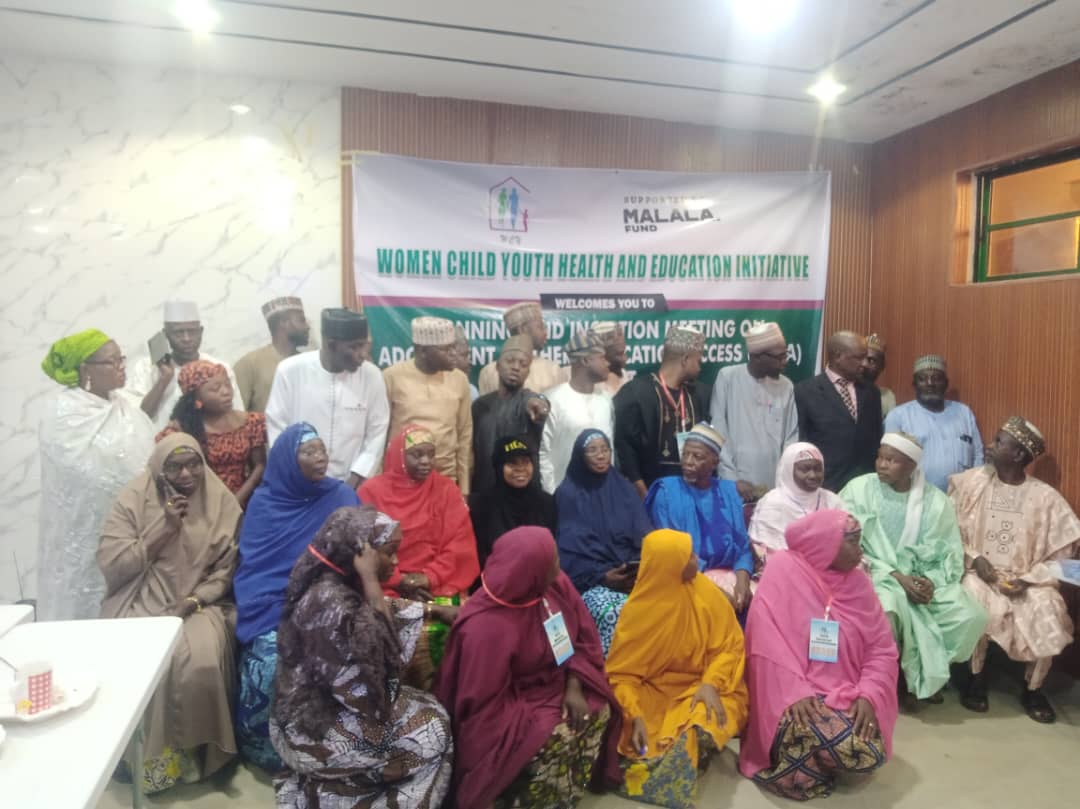
Women Child Youth Health and Education Initiative (WCY) with support from Malala Education Champion Network, have charted a way to enroll adolescent mothers to access education in Bauchi schools.
Rashida Mukaddas, the Executive Director, WCY stated this in Bauchi on Wednesday during a one-day planning and inception meeting with education stakeholders on Adolescent Mothers Education Access (AMEA) project of the organisation.
According to her, the project targeted three Local Government Areas of Bauchi, Misau and Katagum for implementation in the three years project.
She explained that all stakeholders in advancing education in the state would be engaged by the organisation to advocate for Girl-Child education.
READ ALSO:Maternal Mortality: MMS Tackling Scourge —Bauchi Women Testify
The target, she added, was to ensure that as many as married adolescent mothers and girls were enrolled back in school in the state.
“Today marks an important step in our collective commitment to ensuring that every girl in Bauchi state, especially adolescent who are married, pregnant, or young mothers has the right, opportunity, and support to continue and complete her education.
“This project has been designed to address the real and persistent barriers that prevent too many adolescent mothers from returning to school or staying enrolled.
“It is to address the barriers preventing adolescent mothers from continuing and completing their education and adopting strategies that will create an enabling environment that safeguard girls’ rights to education while removing socio-cultural and economic obstacles,” said Mukaddas.
READ ALSO:Bauchi: Auto Crash Claimed 432, Injured 2,070 Persons In 1 Months — FRSC
She further explained to the stakeholders that the success of the project depended on the strength of their collaboration, the alignment of their actions, and the commitments they forge toward the implementation of the project.
Also speaking, Mr Kamal Bello, the Project Officer of WCY, said that the collaboration of all the education stakeholders in the state with the organisation could ensure stronger enforcement of the Child Rights Law.
This, he said, could further ensure effective re-entry and retention policies for adolescent girls, increased community support for girls’ education and a Bauchi state where no girl was left behind because of marriage, pregnancy, or motherhood.
“It is observed that early marriage is one of the problems hindering girls’ access to education.
READ ALSO:Bauchi: Auto Crash Claimed 432, Injured 2,070 Persons In 1 Months — FRSC
“This organisation is working toward ensuring that girls that have dropped out of school due to early marriage are re-enrolled back in school,” he said.
Education stakeholders present at the event included representatives from the state Ministry of Education, Justice, Budget and Economic Planning and Multilateral Coordination.
Others were representatives from International Federation of Women Lawyers, Adolescent Girls Initiative for Learning and Empowerment (AGILE), Bauchi state Agency for Mass Education, Civil Society Organization, Religious and Traditional institutions, among others.
They all welcomed and promised to support the project so as to ensure its effective implementation and achieve its set objectives in the state.
News
OPINION: Fubara, Adeleke And The Survival Dance


By Israel Adebiyi
You should be aware by now that the dancing governor, Ademola Adeleke has danced his last dance in the colours of the Peoples Democratic Party. His counterpart in Rivers, Siminalayi Fubara has elected to follow some of his persecutors to the All Progressive Congress, after all “if you can’t beat them, you can join them.”
Politics in Nigeria has always been dramatic, but every now and then a pattern emerges that forces us to pause and think again about where our democracy is heading. This week on The Nation’s Pulse, that pattern is what I call the politics of survival. Two events in two different states have brought this into sharp focus. In both cases, sitting governors elected on the platform of the same party have found new homes elsewhere. Their decisions may look sudden, but they reveal deeper issues that have been growing under the surface for years.
In Rivers, Governor Siminalayi Fubara has crossed into the All Progressives Congress. In Osun, Governor Ademola Adeleke has moved to the Accord Party. These are not small shifts. These are moves by people at the top of their political careers, people who ordinarily should be the ones holding their parties together. When those at the highest levels start fleeing, it means the ground beneath them has become too shaky to stand on. It means something has broken.
A Yoruba proverb captures it perfectly: Iku to n pa oju gba eni, owe lo n pa fun ni. The death that visits your neighbour is sending you a message. The crisis that has engulfed the Peoples Democratic Party did not start today. It has been building like an untreated infection. Adeleke saw the signs early. He watched senior figures fight openly. He watched the party fail to resolve its zoning battles. He watched leaders undermine their own candidates. At some point, you begin to ask yourself a simple question: if this house collapses today, what happens to me? In Osun, where the competition between the two major parties has always been fierce, Adeleke was not going to sit back and become another casualty of a party that refused to heal itself. Survival became the most reasonable option.
His case makes sense when you consider the political temperature in Osun. This is a state where the opposition does not sleep. Every misstep is amplified. Every weakness is exploited. Adeleke has spent his time in office under constant scrutiny. Add that to the fact that the national structure of his party is wobbly, divided and uncertain about its future, and the move begins to look less like betrayal and more like self-preservation.
MORE FROM THE AUTHOR:OPINION: Wike’s Verbal Diarrhea And Military Might
Rivers, however, tells a slightly different story. Fubara’s journey has been a long lesson in endurance. From the moment he emerged as governor, it became clear he was stepping into an environment loaded with expectations that had nothing to do with governance. His political godfather was not content with being a supporter. He wanted control. He wanted influence. He wanted obedience. Every decision was interpreted through the lens of loyalty. From the assembly crisis to the endless reconciliation meetings, to the barely hidden power struggles, Fubara spent more time fighting shadows than building the state he was elected to lead.
It soon became clear that he was governing through a maze of minefields. Those who should have been allies began to treat him like an accidental visitor in the Government House. The same legislators who were meant to be partners in governance suddenly became instruments of pressure. Orders came from places outside the official structure. Courtrooms turned into battlegrounds. At some point, even the national leadership of his party seemed unsure how to tame the situation. These storms did not come in seasons, they came in waves. One misunderstanding today. Another in two weeks. Another by the end of the month. Anyone watching closely could see that the governor was in a permanent state of emergency.
So when the winds started shifting again and lawmakers began to realign, those who understood the undercurrents knew exactly what was coming. Fubara knew too. A man can only take so much. After months of attacks, humiliations and attempts to cage his authority, the move to another party was not just political. It was personal. He had given the reconciliation process more chances than most would. He had swallowed more insults than any governor should. He had watched institutions bend and twist under the weight of private interests. In many ways, his defection is a declaration that he has finally chosen to protect himself.
But the bigger question is how we got here. How did two governors in two different parts of the country end up taking the same decision for different but related reasons? The answer goes back to the state of internal democracy in our parties. No party in Nigeria today fully practices the constitution it claims to follow. They have elaborate rules on paper but very loose habits in reality. They talk about fairness, but their primaries are often messy. They preach unity, but their caucuses are usually divided into rival camps. They call themselves democratic institutions, yet dissent is treated as disloyalty.
MORE FROM THE AUTHOR:OPINION: Nigerian Leaders And The Tragedy Of Sudden Riches
Political parties are supposed to be the engine rooms of democracy. They are the homes where ideas are debated, leaders are groomed, and future candidates are shaped. In Nigeria, they increasingly look like fighting arenas where the loudest voices drown out everyone else. When leaders ignore their own constitutions, the structure begins to crack. When factions begin to run parallel meetings, the foundation gets weaker. When decisions are forced down the throats of members, people begin making private plans for their future.
No governor wants to govern in chaos. No politician wants to be the last one standing in a sinking ship. This is why defections are becoming more common. A party that cannot manage itself cannot manage its members. And members who feel exposed will always look for safer ground.
But while these moves make sense for Adeleke and Fubara personally, the people they govern often become the ones left in confusion. Voters choose candidates partly because of party ideology, even if our ideologies are weak. They expect stability. They expect continuity. They expect that the mandate they gave will remain intact. So when a governor shifts political camp without prior consultation, the people feel blindsided. They begin to wonder whether their votes carry weight in a system where elected officials can switch platforms in the blink of an eye.
This is where the politics of survival becomes dangerous for democracy. If leaders keep prioritizing their personal safety over party stability, the system begins to lose coherence. Parties lose their identity. Elections lose their meaning. Governance becomes a game of musical chairs. Today you are here. Tomorrow you are there. Next week you may be somewhere else. The people become bystanders in a democracy that is supposed to revolve around them.
Rivers and Osun should serve as reminders that political parties need urgent restructuring. They need to rebuild trust internally. They need to enforce their constitutions consistently. They need to treat members as stakeholders, not spectators. When members feel protected, they stay. When they feel targeted, they run. This pattern will continue until parties learn the simple truth that power is not built by intimidation, but by inclusion.
MORE FROM THE AUTHOR:The Audacity Of Hope: Super Eagles And Our Faltering Political Class
There is also the question of what these defections mean for governance. When governors are dragged into endless party drama, service delivery suffers. Time that should be spent on roads, schools, hospitals, water projects and job creation ends up being spent in meetings, reconciliations and press briefings. Resources that should strengthen the state end up funding political battles. The public loses twice. First as witnesses to the drama. Then as victims of delayed or abandoned development.
In Rivers, the months of tension slowed down the government. Initiatives were stalled because the governor was busy trying to survive political ambush. In Osun, Adeleke had to juggle governance with internal fights in a crumbling party structure. Imagine what they could have achieved if they were not constantly looking over their shoulders.
Now, as both men settle into new political homes, the final question is whether these new homes will provide stability or merely temporary shelter. Nigeria’s politics teaches one consistent lesson. New alliances often come with new expectations. New platforms often come with new demands. And new godfathers often come with new conditions. Whether Adeleke and Fubara have truly found peace or simply bought time is something only time will tell.
But as citizens, what we must insist on is simple. The politics of survival should not become the politics of abandonment. Our leaders can fight for their political life, but they must not forget that they hold the people’s mandate. The hunger, poverty, insecurity and infrastructural decay that Nigerians face will not be solved by defection. It will be solved by steady leadership and functional governance.
The bigger lesson from Rivers and Osun is clear. If political parties in Nigeria continue on this path of disunity and internal sabotage, they will keep losing their brightest and most strategic figures. And if leaders keep running instead of reforming the system, then we will wake up one day to a democracy where the people are treated as an afterthought.
Governors may survive the storms. Parties may adjust to new alignments. But the people cannot keep paying the price. Nigeria deserves a democracy that works for the many, not the few. That is the real pulse of the nation.
News
Human Rights Day: Stakeholders Call For More Campaigns Against GBV

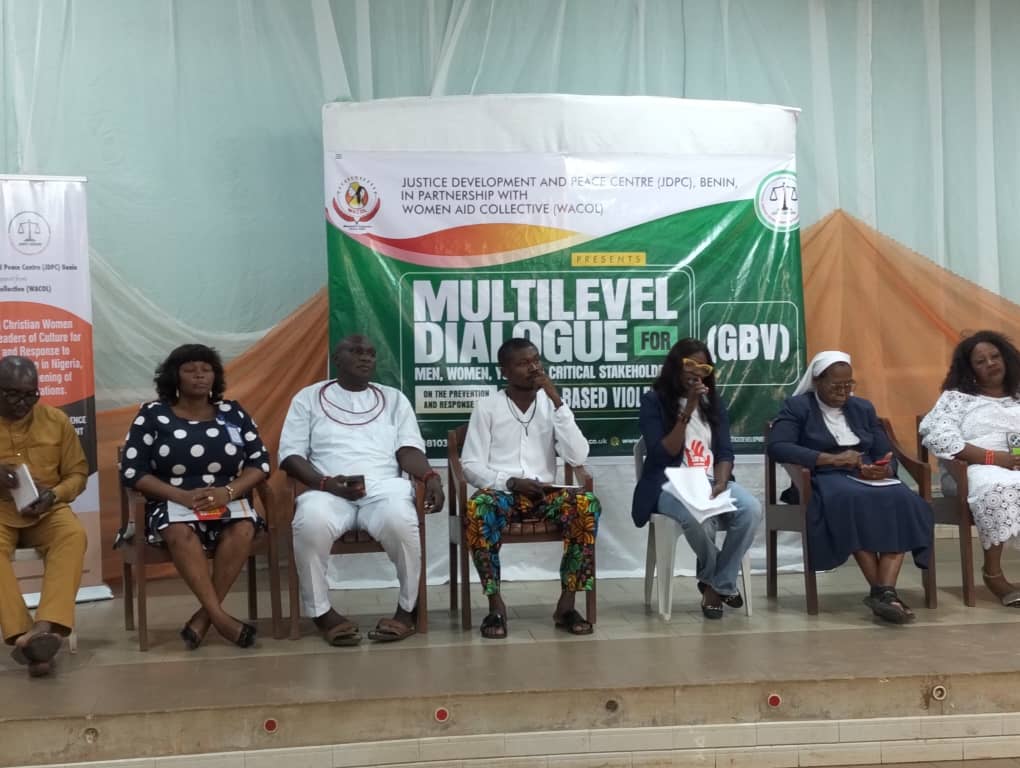
Panel of discussants at an event to commemorate the International Human Rights Day, 2025 on Wednesday called for more campaigns against Gender-Based Violence, adding that it must start from the family.
The panel of discussants drawn from religious and community leaders, security agents, members of the civil society community, chiefs, etc, made the call in Benin in an event organised by Justice Development & Peace Centre (JDPC), Benin, in collaboration with Women Aid Collective (WACOL) with the theme: Multilevel Dialogue for Men, Women, Youth and Critical Take holders on the Prevention and Response to Gender-Based Violence (GBV).
The stakeholders, who said causes of GBV are enormous, called for more enlightenment and education in the family, community and the religious circle.
Security agents in the panel charged members of the public to report GBV cases to security agents regardless of the sex Involved, adding: “When GBV happens, it should be reported to the appropriate quarters. It doesn’t matter if the woman or the man is the victim. GBV perpetrators should not be covered up, they must be exposed. We are there to carry out the prosecution after carrying out the necessary investigation.”
READ ALSO:World Human Rights Day: CSO Tasks Govt On Protection Of Lives
Earlier in his opening remarks, Executive Director, JDPC, Rev. Fr. Benedicta Onwugbenu, lamented that (GBV) remains the most prevalent in the society yet hidden because of silence from victims.
According to him, GBV knows no age, gender or race, adding that “It affects people of all ages, whether man or woman, boy or girl.”
“It affects people from different backgrounds and communities, yet it remains hidden because of silence, stigma, and fear. Victims of GBV are suffering in silence.”
On her part, Programme Director, WACOL, Mrs. Francisca Nweke, who said “women are more affected, and that is why we are emphasising on them,” stressed “we are empowering Christian women and women leaders of culture for prevention and response to Gender-Based Violence in Nigeria through the strengthening of grassroots organisations.”
-

 Metro5 days ago
Three Die, Several Injured In Lagos-Ibadan Expressway Crash
-

 News5 days ago
Soyinka Decries Seyi Tinubu’s ‘Excessive’ Security Escort
-

 Metro5 days ago
Edo Final-year Student Dies In Sign-out Motorcade Crash
-

 Headline5 days ago
South Korea, Japan Protest China, Russia Aircraft Incursions
-

 Metro5 days ago
Edo Assembly Declares Okpebholo’s Projects Unprecedented
-

 Metro5 days ago
One Dies In Oyo Fire, Two Rescued
-

 News5 days ago
World Human Rights Day: CSO Tasks Govt On Protection Of Lives
-

 News4 days ago
Human Rights Day: Stakeholders Call For More Campaigns Against GBV
-

 News5 days ago
NAF Releases 2025 Recruitment Aptitude Test List
-

 News4 days ago
OPINION: Fubara, Adeleke And The Survival Dance

