
Business
Again, Naira Depreciates Against Dollar At Official FX Market
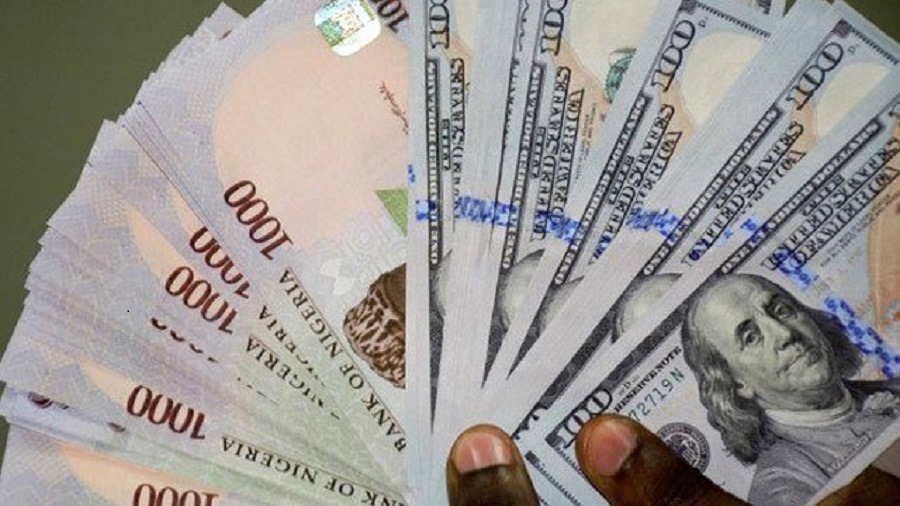
…Black market (Buying and selling rates): N1,380— N1,385
The Nigerian naira depreciated against the United States (US) dollar, trading at N1,329.8568 at the Central Bank of Nigeria (CBN) official foreign exchange (FX) window on Wednesday, September 16, 2026.
The data shared on the CBN’s official platform shows that the naira traded at the Nigerian Foreign Exchange Market (NFEM) rate of N1,329.8568 per dollar and closed at N1,329.5600 per dollar.
The currency, which traded at an NFEM rate of N1,329.1485 on September 15, 2026, depreciated by at least N0.71 after trading activities on Wednesday.
READ ALSO: Naira To Dollar Exchange Rate At Official FX Market
At the parallel market, both the buying and selling rate remained the same, when compared to the previous trading rate on Tuesday, September 15, 2026.
According to Aboki FX , the Naira-to-dollar exchange rate at the black market on Wednesday, September 16, 2026, was N1,380 and N1,385 per dollar for buying and selling rates, respectively.



Business
Naira Appreciates Against Dollar At Official FX Market
…Black market (Buying and selling rates): N1,385— N1,390
The Nigerian naira appreciated against the United States (US) dollar, trading at N1,331.2027 at the Central Bank of Nigeria (CBN) official foreign exchange (FX) window on Friday, September 18, 2026.
The data shared on the CBN’s official platform shows that the naira traded at the Nigerian Foreign Exchange Market (NFEM) rate of N1,331.2027 per dollar and closed at N1,329.9900 per dollar.
The currency, which traded at an NFEM rate of N1,331.2812 on September 17, 2026, appreciated by at least N0.08 after trading activities on Friday.
READ ALSO: Naira To Dollar Exchange Rate At Official FX Market
At the parallel market, both the buying and selling rate decreased by N5, when compared to the previous trading rate on Thursday, September 17, 2026.
According to Aboki FX , the Naira-to-dollar exchange rate at the black market on Friday, September 18, 2026, was N1,385 and N1,390 per dollar for buying and selling rates, respectively.
Business
How To Buy Dangote Refinery Shares As IPO Opens September 14

Investors seeking to own a stake in the Dangote Petroleum Refinery and Petrochemicals FZE will be able to subscribe to its initial public offering (IPO) from September 14, 2026.
The ₦2.15 trillion offer by Dangote, valued at about $1.6 billion, involves 4.1 billion ordinary shares priced at an indicative ₦525 per share.
The offer, which is expected to become Nigeria’s largest-ever public share sale, will remain open until October 13, 2026.
The development gives Nigerians and other eligible investors an opportunity to acquire shares in the refinery as the Dangote Group moves to broaden ownership of the business.
At the signing of the IPO documents in Lagos on September 7, President of Dangote Group, Aliko Dangote, said the offer was designed to enable ordinary Nigerians to become shareholders in the refinery.
“What we are trying to achieve is to make sure our drivers, cooks, servants, and everybody have the opportunity of having stakes in the refinery,” Dangote said.
READ ALSO: BREAKING: Dangote Refinery Reduces Petrol, Diesel Prices
How to subscribe
According to the Managing Director, Investment Banking, Chapel Hill Denham, Mr Lanre Buluro, prospective investors can subscribe digitally using a bank account, Bank Verification Number (BVN) and a mobile phone or laptop.
He said an investor can complete the process within two to three minutes, with the minimum subscription set at 10 shares.
At ₦525 per share, the minimum subscription of 10 shares will cost ₦5,250.
Buluro said investors could access the offer through platforms including Moniepoint, MTN MoMo, Airtel, Payaza, Piggyvest, Paga, Bamboo and Chapel Hill Denham’s Invest Naija platform.
Do I need a CSCS account?
Buluro said prospective investors do not necessarily need an existing Central Securities Clearing System (CSCS) identity number before subscribing.
READ ALSO: Dangote Refinery Reduces Petrol Gantry Price
According to him, a CSCS account can be created for a new investor during the subscription process after the investor’s BVN and bank account details have been verified.
He explained that stockbrokers are behind the participating platforms and would contact subscribers after the transaction to provide their CSCS and Clearing House Number (CHN).
The allotted shares will subsequently be domiciled in the investor’s CSCS account.
What happens after subscription?
Investors can subscribe throughout the offer period, which runs from September 14 to October 13.
At the close of the offer, the advisers and the Securities and Exchange Commission (SEC) will assess the total subscriptions and determine the final allotment.
This means investors may not necessarily receive all the shares they apply for if the offer is oversubscribed.
READ ALSO: Dangote Unveils 10-day Credit Facility For Petrol Station Owners
Buluro disclosed that the offer has a provision to accommodate additional subscriptions in the event of oversubscription.
He said up to about 30 per cent additional shares could be issued under the oversubscription provision, potentially increasing the number of shares available from 4.1 billion to about 5.3 billion.
Before you invest
Buluro advised prospective investors, particularly first-time investors, to read the IPO prospectus carefully and seek guidance from a qualified financial adviser before committing their funds.
Investors should also understand that subscribing to an IPO does not guarantee a profit. The value of shares can rise or fall after allotment, depending on the company’s performance and market conditions.
The Dangote Refinery IPO is expected to significantly deepen public participation in the Nigerian capital market by allowing more individuals to take direct equity positions in one of the country’s largest industrial projects.
(TRIBUNE)
Business
7 Nigerian Stocks That Consistently Pay Higher Dividends Than Fixed Deposits

The typical associated investment ideas that come to mind when Nigerians think about investing are real estate, saving accounts, fixed deposits and businesses.
Another way, though, is to invest in the Nigerian stock market, which allows investors to invest in listed firms and generate profits from dividends.
Payments companies make to shareholders from their profits are dividends. Companies that have a history of paying out dividends can be appealing to investors seeking regular income.
A dividend yield is one way to measure dividend paying stocks, by comparing the amount of a dividend paid by the company and the price of the stock itself.
For example, if a firm’s share price is N100 with a dividend payout of N10, the dividend yield of the firm is 10 per cent.
Some of the Nigerian stocks have recorded dividend yield which matches fees one can get from fixed deposits, but dividend payment is not guaranteed and prices of particular stocks may change.
In this article Tribune online seven Nigerian stocks that stood out for their dividend payouts based on available 2025 and early 2026 data.
READ ALSO: NGX: Losses In Banking, Insurance Stocks Wipe N1.88trn
Access Holdings Plc
Access Holdings is one of the Nigerian financial institutions that has attracted dividend-focused investors because of its regular shareholder distributions.
In April 2025, the company’s board approved a final dividend of N2.05 per share for the financial year ended December 31, 2024. This brought the total dividend for the year to N2.50 per share.
Based on a share price of about N22.50 in early 2026, the total dividend represented a yield of approximately 9.15 per cent.
For an investor holding 100 shares, a N2.50 dividend per share would amount to N250 in dividend income.
The company’s dividend record, alongside its earnings performance and expansion plans, has made Access Holdings one of the stocks investors watch when looking for income from the Nigerian Exchange.
GTCO Holdings
GTCO Holdings is another major Nigerian financial services company known for rewarding shareholders through dividends.
The company paid a final dividend of N7.03 per share in April 2025 for the previous financial year. It subsequently declared an interim dividend of N1 per share in September 2025.
Combined, the two payments amounted to N8.03 per share in 2025.
READ ALSO: Investors Lose N1.8 Trillion Amid Sell Pressure In 27 Stocks
Based on the share price used in the source data, the dividend yield was approximately 8.15 per cent.
For someone holding 100 GTCO shares, the combined dividend payments would amount to about N803.
The company’s dividend history and financial performance have continued to make it one of the Nigerian stocks of interest to investors seeking income from shares.
Zenith Bank PLC
Zenith Bank has a long-standing record of paying dividends to shareholders and remains one of the prominent dividend-paying stocks on the Nigerian Exchange.
For the half-year ended June 30, 2025, the bank declared an interim dividend of N1.25 per share, which was paid in October 2025.
This came after the N4 final dividend paid in April 2025, bringing the total dividend from the two payments to N5.25 per share.
Using a share price of about N71 in January 2026, the combined dividend represented a yield of approximately 7.4 per cent.
READ ALSO: Asian Stocks Rise As Trump Postpones Mexico, Canada Tariffs
An investor holding 1,000 shares would have received about N5,250 from the combined dividend payments.
Zenith Bank’s history of shareholder distributions has helped maintain its appeal among investors interested in dividend income.
United Bank for Africa (UBA)
United Bank for Africa (UBA) is another major Nigerian bank that has consistently featured among dividend-paying companies on the Nigerian Exchange.
In 2025, UBA declared an interim dividend of N0.25 per share for the first half of the year.
Dividend tracking data cited in the source material put UBA’s annual dividend at about N3.25 per share, translating to a dividend yield of approximately 7.4 per cent based on the share price at the time.
For an investor holding 1,000 shares, a N3.25 dividend per share would amount to N3,250 in annual dividend income.
UBA’s size, earnings performance and history of shareholder payouts have kept the company on the radar of investors seeking both dividend income and potential capital appreciation.
READ ALSO: Stock Market Review: FBN Holdings Leads 41 Others As Investors Gain N811bn
Fidelity Bank Plc
Fidelity Bank is another Nigerian financial institution that has rewarded shareholders through dividends.
In 2025, the bank paid a final dividend of N1.25 per share for the previous financial year.
Based on the share price referenced in the source data, the payment represented a dividend yield of approximately 6.6 per cent.
An investor holding 1,000 shares would have received N1,250 from the N1.25 dividend per share.
Fidelity has also paid interim dividends in some previous years, giving it a track record worth considering for investors looking at companies with a history of returning part of their profits to shareholders.
Seplat Energy Plc
Seplat Energy is one of Nigeria’s leading independent energy companies and has also built a reputation for returning cash to shareholders.
READ ALSO: Stock Investors Record N13bn Loss In Seven Days Over Interest Rates Hike
The company pays dividends quarterly, giving shareholders the opportunity to receive income at different points during the year rather than waiting for one annual payment.
Based on the dividend data provided in the source material, Seplat’s annual dividend was about N362.60 per share, while its share price was around N5,809.
This translated to a dividend yield of approximately 5.4 per cent.
For an investor holding 1,000 shares, the stated annual dividend would amount to about N362,600, assuming the same dividend level.
Beyond its dividend payments, Seplat provides investors with exposure to Nigeria’s energy sector, although its share price and future dividend payments remain subject to market and business conditions.
Dangote Cement Plc
As Sub-Saharan Africa’s largest cement manufacturer, Dangote Cement dominates the infrastructure building sector. Its solid pricing power and strong cash generation allow the board to declare massive annual dividends per share year after year. Long-term retail holders enjoy payouts that far exceed the low single digits typical of fixed savings.
(TRIBUNE)

 News2 days ago
BREAKING: Tinubu Extends Working Vacation
- News3 days ago
Six Hidden Health Benefits Of Unsweetened Zobo
- News5 days ago
Edo: Council Chairman Under Fire For Threatening Commercial Drivers Who Refuse To Wear APC Insignia
- News5 days ago
Edo: Ekpeson Redeems N20m Pledge To Family Of Fallen Soldier
- News3 days ago
Jehovah’s Witnesses Announce New Position On Blood Transfusion Policy
- News3 days ago
2027: Step-by-step Guide To Applying For INEC Ad Hoc Staff Recruitment
- News5 days ago
OPINION: Nigerian Pastors, Imams And Their Sex Sermon Obsession
- News3 days ago
How 36 Nigerian States Got Their Names
- Headline3 days ago
Nigerian Man Jailed After Masturbating In Front Of Woman On UK Train
- Headline2 days ago
How To Format An Academic CV For US Master’s, PhD Applications


