
News
Anambra, Lagos, Others Top 2025 Fiscal Performance Rankings, As C’Rivers Dropped from 5th to 30th
Anambra State has emerged as the best-performing state in Nigeria’s 2025 Fiscal Performance Ranking, according to BudgIT’s State of States Report, released on Tuesday.
Lagos, Kwara, Abia, and Edo followed in the top five, while Cross River suffered a major decline, dropping from fifth in 2024 to 30th in 2025.
Rivers State, a consistent top-five performer in previous years, was excluded from this year’s report due to the state of emergency declared earlier in the year, which prevented the release of audited data.
In a statement shared on X (formerly Twitter) on Tuesday, BudgIT described this year’s edition—titled “A Decade of Subnational Fiscal Analysis: Growth, Decline and Middling Performance”—as a milestone marking 10 years of tracking fiscal sustainability and governance transparency across Nigeria’s 36 states.
BudgIT highlighted the key movements in the 2025 rankings.
READ ALSO:Lagos Assembly Moves To Establish State-owned Railway Corporation
“Anambra State rose from second to first position, securing the title of the best-performing state in the federation, while Lagos maintained its second place for the second consecutive year.
“Kwara climbed from fourth to third, Edo entered the top five after consistently ranking within the top ten over the last four editions, and Abia, which had never previously featured in the top 10, now ranks fourth,” the organisation said.
Other notable movements include Akwa Ibom, which surged 17 places from 27th to 10th, and Zamfara, which moved up nine places from 26th to 17th.
At the lower end of the rankings, Imo, Kogi, Jigawa, Benue, and Yobe occupy the bottom positions.
The report retained five key metrics to rank all 35 states: Index A – a state’s ability to meet operating expenses using only Internally Generated Revenue (IGR); Index A1 – year-on-year IGR growth; Index B – capacity to cover all expenses and loan obligations using total revenue without borrowing; Index C – debt sustainability based on foreign debt as % of total debt, total debt as % of revenue, debt service as % of revenue, and personnel cost as % of revenue; and Index D – prioritisation of capital expenditure over recurrent spending.
On revenue performance, BudgIT noted major shifts in IGR.
READ ALSO:UK Bars Over 100 Job Roles From Foreign Recruitment To Curb Migration
“While Rivers (121.26%) and Lagos (118.39%) were the only two states with sufficient IGR to cover their operating expenses in 2024, the absence of Rivers from this year’s analysis has reshaped this dynamic.
“Lagos remains a returning champion with 120.87%, while Enugu now leads with an impressive 146.68% IGR-to-operating expense ratio,” the report said.
Only five states—Abia, Anambra, Kwara, Ogun, and Edo—generated enough IGR to cover at least 50% of their operating expenses, compared with six in 2024. Fourteen states now require more than five times their IGR to cover costs, up from six in 2024, underscoring persistent challenges.
In capital expenditure, Abia led with 77.05% of its total expenditure devoted to capital projects, followed by Anambra, Enugu, Ebonyi, and Taraba, each allocating over 70%.
Overall, 24 states spent at least half of their budgets on capital projects, while Bauchi, Ekiti, Delta, Benue, Oyo, and Ogun devoted more than 60% to personnel and overhead costs.
Total recurrent revenue for all 35 states grew from N6.6 trillion in 2022 to N8.66 trillion in 2023 and N14.4 trillion in 2024—a 66.28% increase, far surpassing the 28.95% rise between 2022 and 2023.
READ ALSO:UK Bars Over 100 Job Roles From Foreign Recruitment To Curb Migration
Lagos accounted for 13.42% (N1.93 trillion) of total revenue in 2024. Gross FAAC transfers increased by 110.74%, reaching N11.38 trillion, with states like Oyo (785.79%), Delta (708.36%), and Anambra (640.98%) recording over 600% growth between 2015 and 2024. Despite these gains, 28 states relied on FAAC for at least 55% of total revenue.
Subnational debt also saw a change. Total debt rose modestly from N9.89 trillion in 2023 to N10.57 trillion in 2024, a 6.8% increase. The top five debtor states—Lagos, Kaduna, Edo, Ogun, and Bauchi—accounted for 50.32% of total debt.
Encouragingly, 31 states reduced domestic debt by at least N10 billion, while foreign debt fell by over $200 million.
On long-term trends, BudgIT said, “Over the past decade, the State of States has evolved into Nigeria’s most authoritative subnational fiscal analysis. This 10th edition not only reflects the story of growth and imbalance but also underscores the urgent need for reform.”
READ ALSO:Tinubu Gives D’Tigress $100,000 Each, Flats, National Honour
“Fiscal sustainability requires that states look inward, improving revenue systems, cutting waste, and prioritising infrastructure and human development investments that deliver long-term value,” said Vahyala Kwaga, Group Head of Research.
The report also highlighted uneven social spending. In education, only 66.9% of the budgeted N2.41 trillion was spent. Nine states—Edo, Delta, Katsina, Rivers, Yobe, Ekiti, Bayelsa, Bauchi, and Osun—exceeded 80% of their budgeted allocations, with Edo, Delta, and Katsina surpassing 100%. Average per capita spending remained low at N6,981, with no state exceeding N20,000 per capita and only eight states above N10,000.
In health, the states budgeted N1.32 trillion but expended N816.64 billion, achieving 61.9% implementation. Seven states—Yobe, Gombe, Ekiti, Lagos, Edo, Delta, and Bauchi—spent over 80% of their health budgets, with Yobe leading at 98.2%. Average per capita spending was N3,483, with only a few states exceeding N5,000, highlighting gaps in service delivery relative to education.



News
Children’s Day: Chaos At Ogbe Stadium As Dozens Faint

Chaos erupted on Wednesday during the Children’s Day celebration as dozens of students reportedly collapsed following a stampede triggered by the use of pepper spray.
The event,
organised by the Edo State Ministry of Education at the Samuel Ogbemudia Stadium was disrupted after some male students of Ihogbe College allegedly made uncompromising advances towards female students at the venue.
A parent who identified himself as Oboh Emmanuel said, “the behaviour of those uncultured students attracted the attention of bouncers stationed at the stadium as they rebuked the male students.”
Oboh said the affected students later regrouped and attacked the bouncers, leading to a confrontation within the crowded arena.
READ ALSO:Children’s Day: Edo Commits To Child Protection
It was gathered that in the ensuing confusion, the bouncers were reported to have deployed pepper spray in an area occupied by a large number of students.
Several students, particularly female students, reportedly fainted after inhaling the substance, while others sustained injuries after being stepped on during the ensuing melee.
The panic was said to have spread across the stadium as students, teachers and parents scampered for safety.
Many of the affected students were reportedly rushed to the Edo Specialist Hospital for medical attention.
READ ALSO: Egor LG Chair, Ogbemudia, Vice, Osawe Impeached
Reacting to the incident, Chief Press Secretary to Governor Monday Okpebholo, Dr Patrick Ebojele, said the security personnel that fired the tear gas had been detained.
He said all the students, except two, that were rushed to the hospital have been discharged.
Ebojele stated that doctors wanted to observe the students till tomorrow before allowing them to go home.
“The two students are not seriously injured. Doctors want to observe them overnight. Permanent Secretary, Ministry of Education is still at the hospital. The man who used pepper spray has been detained.
“The incident did not happen the way it is being exaggerated. All modalities were put in place to ensure the children enjoyed their day.”
News
Okpebholo Salutes Edo Muslims, Seeks Continued Support, Prayers
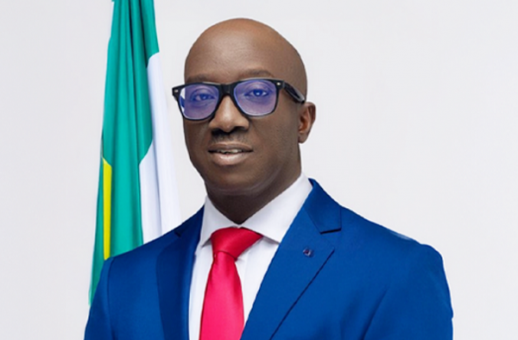
Governor Monday Okpebholo of Edo State has urged Muslims and all Nigerians to continue to pray for peace, unity and progress in the country even as they celebrate the annual Eid-al-Adha
The governor, who was represented by his deputy, Dennis Idahosa, stated this during the annual Eid-al-Adha celebration with Muslim faithfuls held at Government House in Benin City.
He reiterated his administration’s commitment to fairness, inclusivity and equal opportunities for all citizens irrespective of religion and tribe.
READ ALSO:ADC Penetrates Okpebholo’s District As Defections Strengthen Party in Edo Central
According to him, the present administration remains determined to building a government that reflects the diversity of Edo State, noting that competent and qualified Muslims have continued to play vital roles in his government because of their capacity, integrity and commitment to service.
“As a government, we remain committed to fairness, inclusivity and equal opportunity for every Edo citizen, irrespective of religion, ethnicity or political affiliation. This is why quality and competent Muslims are serving in key positions in our administration.”
Okpebholo appreciated the Muslim community in Edo State for their unwavering support and continuous prayers for his administration, noting that such prayers and support have contributed immensely to the peace and steady development being witnessed across the state.
READ ALSO:Okpebholo Felicitates Muslims On Eid-el-Fitr Celebration
He then called on all Nigerians to use the occasion of Eid-al-Adha to pray for the administration of President Bola Ahmed Tinubu, stressing that the country needs collective prayers, unity and cooperation to overcome its present economic and security challenges.
“I urge all Muslims and indeed all Nigerians to use this occasion to pray for our dear nation and for the administration of President Bola Ahmed Tinubu. Nigeria needs our collective prayers, unity and support as we strive to overcome our challenges and build a more prosperous future for all.”
In his remarks, the Chief Imam of Edo State, Abdulfatai Enabulele, applauded the governor for what he described as remarkable developmental strides recorded in less than two years in office.
The cleric commended the administration for ongoing infrastructural development and efforts geared towards improving governance in the state, but appealed to the government to revisit and complete some abandoned projects inherited from the previous administration for the benefit of the people.
News
Children’s Day: Edo Commits To Child Protection
The Edo State Government has reaffirmed its commitment to protecting the rights of children, promoting quality education, and strengthening sports development across the state.
This assurance was given by the governor of Edo State, Monday Okpebholo, during the 2026 Children’s Day Celebration and Governor’s Cup Finale held on Wednesday at the Samuel Ogbemudia Stadium, Benin City.
Addressing pupils, students and teachers,
the governor described children as the pride of Edo State and the future of the nation.
The governor, represented by his deputy, Dennis Idahosa,
noted that the annual celebration provides an opportunity to honour their dreams, talents, and limitless potential.
READ ALSO:Eid-el-Kabir: Edo Deputy Gov Solicits prayers For Okpebholo
Speaking on this year’s Children’s Day theme, “Choose Kindness, Reject Bullying,” the governor said the message was timely and significant, as it emphasizes the need to create safe, supportive, and inclusive environments for children both in schools and communities.
He stated that bullying in all forms — physical, verbal, emotional, or online — has no place in society, adding that the Edo State Government remains fully committed to protecting the rights and dignity of every child.
According to him, the administration will continue to strengthen policies and programmes that promote child protection, discipline, mutual respect, and positive learning environments across schools in the State.
The governor urged children to embrace kindness, compassion, teamwork, and respect for one another, stressing that true strength lies not in intimidation but in empathy, good character, and mutual understanding.

 Metro5 days ago
My Husband Abandoned Me On Our Wedding Night To Attend Political Meeting, I Want Our Marriage Dissolved
- Headline4 days ago
Woman Passes Out After Receiving 100 Strokes Of Cane
- Headline4 days ago
JUST IN: White House Locked Down Briefly As Gunman Opens Fire At Security Checkpoint
- Politics5 days ago
Warri Ijaw Hail INEC Delineation Report, Call For Additional Electoral Wards, Others
- Politics3 days ago
Two Masked Men Gun Down Politician In His Rivers State Hotel
- News3 days ago
More Pain For Nigerians As Cooking Gas Price Increases Nationwide
- Metro5 days ago
My Wife Stop Cooking My Food, Beats Me Black And Blue All the Time, Man Tells Court
- News5 days ago
Alleged Terrorism: Court Rejects Defendant’s Bid To Travel Abroad
- Politics5 days ago
What I’ll Do As President Of Nigeria — Amaechi
- Politics3 days ago
‘Tinubu’s Borrowing In 24 Months Surpasses 55 Years’ Debt Record’


