
Headline
Asian Stocks Rise As Trump Postpones Mexico, Canada Tariffs
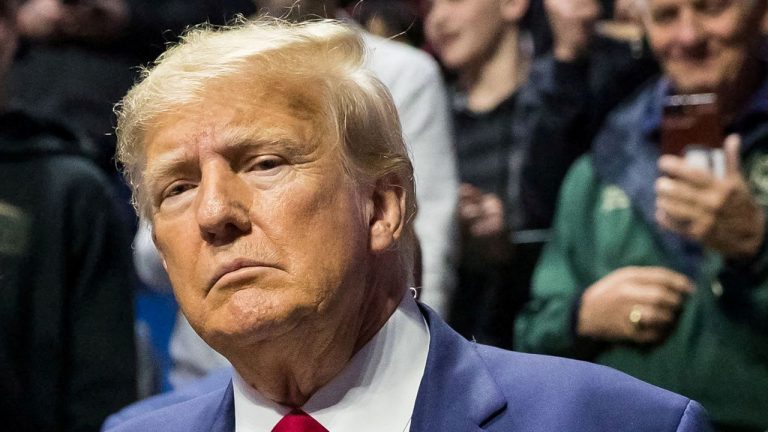
Asian equities rose with the Mexican peso and Canadian dollar Tuesday after Donald Trump said he would delay the imposition of stiff tariffs on imports from the US neighbours, soothing trade war worries for now.
Tokyo, Seoul, Manila, Sydney, Mumbai, Bangkok, Wellington and Taipei were also in the green. Sydney and Singapore edged down.
But early euphoria was tempered somewhat after China announced levies on some imports of US goods as Washington’s measures kicked in, with no news that the two sides had reached an agreement to pause.
Markets from Japan to New York were sent tumbling Monday after news at the weekend that Trump had signed off 25 percent duties against Mexico and Canada, fanning concerns for the stuttering global economy.
Hours before the tariffs were due to take effect, Trump said he had struck deals with Canadian Prime Minister Justin Trudeau and Mexican President Claudia Sheinbaum on immigration and fentanyl, and would postpone the measures for a month.
Talks on final deals would continue with both countries, he added.
READ ALSO: Trump’s New Tariffs Target Canada, Mexico, China
The tycoon added that he would hold talks with Beijing “probably in the next 24 hours” to avoid new 10 percent tariffs on Chinese imports.
However, with the deadline for the tariffs passing at 0500 GMT, China unveiled tariffs on a range of US goods, including crude, coal, liquefied natural gas, agricultural machinery, large-engined vehicles and pickup trucks.
China, Canada and Mexico are the United States’ three biggest trading partners and had warned they would retaliate.
News of the deals with Mexico and Canada saw the Mexican peso surge more than three percent — having tumbled to a three-year low on Monday — before paring the gains slightly. The Canadian dollar jumped more than one percent.
Asian stock markets also advanced, though unease about the lack of movement on averting the Chinese tariffs saw traders’ pare the morning’s gains.
READ ALSO: Trump Orders Bombing Of ISIS Targets In Somalia
Hong Kong, which rose more than three percent in the morning, was up more than two percent, with analysts saying the measures so far would not have a major impact on China’s economy.
The euro and British pound remained under pressure after Trump warned the European Union would be next in the firing line, while he did not rule out tariffs against Britain.
“A risk is that this is the beginning of a tit-for-tat trade war, which could result in lower GDP growth everywhere, higher US inflation, a stronger dollar and upside pressure on US interest rates,” said Stephen Dover, chief market strategist and head of Franklin Templeton Institute.
“At the margin, these tariffs should encourage more domestic production of goods in the United States. However, the uncertainty surrounding the permanence of these tariffs makes it challenging for companies to make informed capital investment decisions.”
The volatile start to February on markets follows their rollercoaster ride last week after China’s DeepSeek unveiled a cheaper artificial intelligence model rivalling those of US tech giants, sparking questions over the vast sums invested in the sector in recent years.
READ ALSO: Trump’s Policies: 201 Nigerians In US Custody For Deportation
“One thing we can say for sure. Markets are going to remain subject to massive headline risk in coming hours… days… and years,” Ray Attrill at National Australia Bank warned.
Gold spot prices held gains after spiking to a new record high of $2,830.74 on Monday, having retreated from last week’s all-time peak owing to the stronger dollar and as traders sought out the metal as a safe haven from uncertainty.
– Key figures around –
Tokyo – Nikkei 225: UP 0.7 percent at 38,798.37 (close)
Hong Kong – Hang Seng Index: UP 2.4 percent at 20,693.48
Shanghai – Composite: Closed for a holiday
Euro/dollar: DOWN at $1.0300 from $1.0302 on Monday
Pound/dollar: UP at $1.2409 from $1.2407
Dollar/yen: UP at 155.26 yen from 154.80 yen
Euro/pound: DOWN at 83.02 pence from 83.03 pence
West Texas Intermediate: DOWN 1.7 percent at $71.95 per barrel
Brent North Sea Crude: DOWN 1.0 percent at $75.23 per barrel
New York – Dow: DOWN 0.3 percent at 44,421.91 (close)
London – FTSE 100: DOWN 1.0 percent at 8,583.56 (close)
AFP



Headline
How Our Airstrikes Stopped Christmas Attacks In Nigeria — US Lawmaker
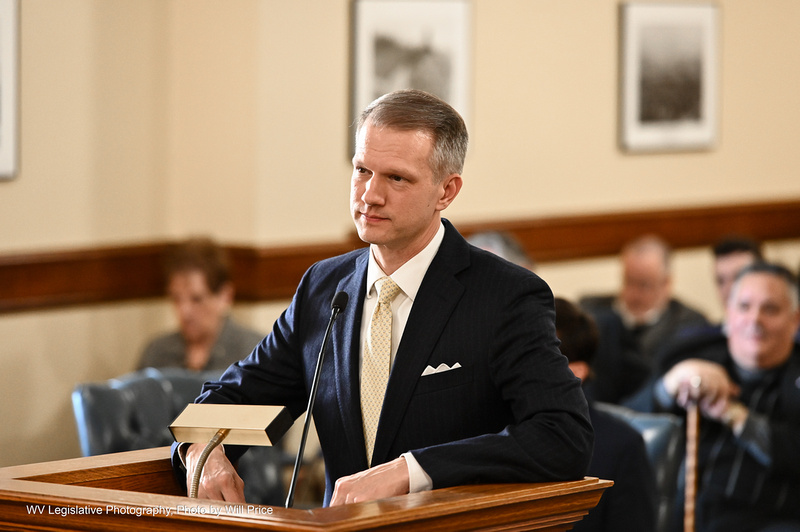
Riley Moore, a member of the United States House of Representatives from West Virginia’s 2nd District, has linked the absence of Christmas attacks in Nigeria this year to US military airstrikes carried out against Islamist militants on Christmas Day.
In a post on his official X account on Saturday, Moore contrasted the situation with the past two Christmas seasons, during which he claimed Christians were killed in attacks across parts of Nigeria.
The lawmaker noted that this year’s response targeted extremist groups instead of marking another period of violence.
READ ALSO:Rep Moore Confirms 12 Tomahawk Missiles Launched In Sokoto
He added that US forces acted decisively against militants in coordination with the Nigerian government.
“For the past two Christmases, Christians have been murdered in Nigeria. This year, thanks to @POTUS, Radical Islamic Terrorists were on the receiving end of 12 Tomahawk missiles as a present.
“The successful strikes on ISIS, in coordination with the Nigerian government, are just the first step to secure the country and end the slaughter of our brothers and sisters in Christ,” Moore wrote.
US President Donald Trump said on Thursday that American forces had conducted deadly strikes against Islamic State terrorists in north-western Nigeria.
Trump, who spoke via his Truth Social platform, warned that more attacks would follow if the militants continued killing Christians, adding that the Department of War executed numerous “perfect strikes.”
Headline
U.S. Lawmaker Reacts To Nigeria, U.S. Airstrikes
United States Congressman, Riley Moore, has stated that President Donald Trump is determined to put an end to the killing of Christians in Nigeria, warning that further action may follow if the violence persists.
Moore made the statement on Friday via his official X handle.
According to the lawmaker, the strike represents the first step in addressing what he described as the ongoing slaughter of Christians and the broader security crisis affecting Nigerians across religious and ethnic lines.
READ ALSO:US Dept Of War Shares Video Of Air Strikes In Nigeria
“President Trump has been clear that the killing of Christians in Nigeria must end,” he said.
He that the administration’s resolve on the matter should not be underestimated.
“As I stated at the outset: Do not test President Trump‘s resolved in this matter.
READ ALSO:JUST IN: US Forces Bomb Terrorists Camps In Nigeria
“Tonight’s strike in coordination with the Nigerian government is just the first step to ending the slaughter of Christians and the security crisis affecting all Nigerians,” he said.
He stressed that the operation signals a stronger stance by the United States in support of Nigeria’s efforts to tackle terrorism and violent extremism, noting that further measures could be taken if the situation does not improve.
Headline
US Dept Of War Shares Video Of Air Strikes In Nigeria
A video footage of the US military air strikes in Nigeria has emerged.
The video was released by the US Department of War following its air strikes against terrorists in Sokoto.
Earlier, the US secretary of War, Pete Hegseth had confirmed that military air strikes hit terrorists in Nigerians, saying it was deadly.
Later on, the US. African Command, confirmed that it conducted the attacks described as very deadly by President Donald Trump.
Trump said he was only keeping the promise he made earlier last month to strike the terrorists he believes are killing innocent Christians.
READ ALSO:JUST IN: US Forces Bomb Terrorists Camps In Nigeria
Although described as powerful and deadly, the casualty caused by the attack is yet to be released.
Explaining further, security expert, Brant Philip, said the strikes may have been launched “from the USS Paul Ignatius, using a Tomahawk missile.”
The Nigerian government through its ministry of foreign affairs has also confirmed that the strikes were successful.
Watch video here

 News4 days ago
FULL LIST: Churches That Don’t Celebrate Christmas
- News4 days ago
JUST IN: Kano Lawmaker, Sarki Aliyu Daneji, Dies Hours After Colleague’s Passing
- Headline3 days ago
JUST IN: US Forces Bomb Terrorists Camps In Nigeria
- News3 days ago
Okpebholo Slams ₦25bn Libel Suit On Edo PDP Chairman
- Headline3 days ago
US Dept Of War Shares Video Of Air Strikes In Nigeria
- Entertainment4 days ago
AFCON 2025: Davido Wins $96,000 After Super Eagles Beat Tanzania
- News5 days ago
OPINION: The Day Friendship Died
- News4 days ago
Sheikh Gummi Sues Two Over Alleged False Facebook Publication
- News4 days ago
7 Health Risks Of Owning A Cat
- Headline4 days ago
Coup: Guinea-Bissau Junta Releases Six Held Opposition Politicians


