
News
ASUU Directs Members To Begin Nationwide Strike Education
…UNIJOS, UniAbuja join strike
The leadership of the Academic Staff Union of Universities (ASUU) has confirmed that a directive has been issued for all branches of the union nationwide to withdraw their services over the delay in the payment of June 2025 salaries to its members, citing the enforcement of “No Pay, No Work” resolution.
ASUU branches in two federal universities, the University of Jos and the University of Abuja, have already commenced strike action in compliance with the directive.
President of ASUU, Prof. Chris Piwuna, who confirmed the development to Tribune Online on Monday in Abuja, said what the institutions are doing is simply enforcing a National Executive Council (NEC) resolution of the union that any month in which salaries are delayed beyond three days, members should withdraw their services until the salaries are paid.
Piwuna lamented the lackadaisical attitude of government officials toward the issue of lecturers’ salaries, which he described as a paltry amount.
He explained that since the migration of university workers from the Integrated Personnel Payroll and Information System (IPPIS) to the Government Integrated Financial Management Information System (GIFMIS), union members have experienced significant hardship due to salary delays.
READ ALSO: 10 Die In Ogun Night Bus Crash
He disclosed that the leadership of the union has engaged relevant government officials, including the Minister of Education and the Accountant General of the Federation, without any positive result. Hence, the ASUU NEC resolved to enforce the “No Pay, No Work” policy.
He said: “What they are doing is just enforcing a NEC resolution. We have agreed at NEC that our members are going through a lot since our migration out of the Integrated Personnel Payroll and Information System. Certainly, our salaries are delayed for a week and sometimes 10 days before our members receive the paltry amount we get to help us carry out our duties well.
“Therefore, we agreed that if there is no pay, there will be no work,” Piwuna said.
On whether other universities are joining the strike action, the ASUU President said all institutions that have not been paid are expected to withdraw their services, insisting that this was the resolution at NEC and the only way to address the challenge, which he noted is being deliberately caused by some government officials, especially at the Office of the Accountant General of the Federation.
He said any institution that has not been paid will join the action because “we are tired of talking about this.”
“We have spoken to the relevant authorities—the minister is aware, the Office of the Accountant General is aware. All those concerned are aware that this thing has been happening. We’ve had meetings with them to express our dissatisfaction with the way our salaries are being paid, and they have not taken any action. We want to work, but we cannot because they have not allowed us to work,” he stated.
READ ALSO: Tragedy As Navy Boat Capsizes After Free Medical Outreach In Delta
Piwuna maintained that the government has no genuine reason for the delay in salary payments because the platform used for payments has no issues.
According to him, when the money finally gets to the universities, nobody has complained of being underpaid or not receiving their salary.
“So, the platform through which the payment is effected has not been the problem. It’s just a deliberate effort by the Office of the Accountant General to delay the release of the funds. The platform is working well, but those who make it work are not willing to make it work. We think it’s a deliberate act; that is the point we are making,” the ASUU President added.
He, however, noted that the issue of salary delays is the immediate challenge facing union members and warned that the outstanding N10 billion Earned Academic Allowance (EAA) should be released promptly by the government to avoid another round of struggle.
He noted that the Federal Government was supposed to pay lecturers N50 billion in outstanding EAA but only released N40 billion, leaving a balance of N10 billion.
READ ALSO: FG To Spend N17bn On Lagos Bridge Damaged By Fire
“On the EAA you talked about, the total amount was N50 billion, and what they gave to us is N40 billion. N10 billion is still outstanding. We hope that this is paid quickly so that we do not have to fight over it,” the ASUU President said.
Chairman of the University of Jos branch of ASUU, Jurbe Molwus, had announced the withdrawal of services by members of the union at the university, citing the delay in the payment of their June 2025 salaries.
Molwus said this followed the National Executive Council resolution directing branches to take action when salaries are not paid by the third day of a new month, and the congress affirming the position. He said union members have abstained from lectures and statutory meetings.
The chairman stated further that any time salaries are not paid by the third day of the month, there would be a continuous withdrawal of services by the lecturers.
He also said the strike monitoring team of the branch had been activated to ensure compliance.
Members of the Academic Staff Union of Universities (ASUU), University of Abuja branch, have also withdrawn their services on Monday as a result of the delay in the payment of their June 2025 salaries, Nigerian Tribune has gathered.
Chairman of the UniAbuja branch of ASUU, Dr. Sylvanus Ugoh, did not return calls to confirm the strike action by his members.
The spokesperson of the University of Abuja, Dr. Habib Yakoob, when contacted, however said he was not in a position to speak on the issue and advised that the question be directed to the branch chairman of ASUU.



News
YULETIDE: Edo Sports Commission Boss Preaches Unity, Peace
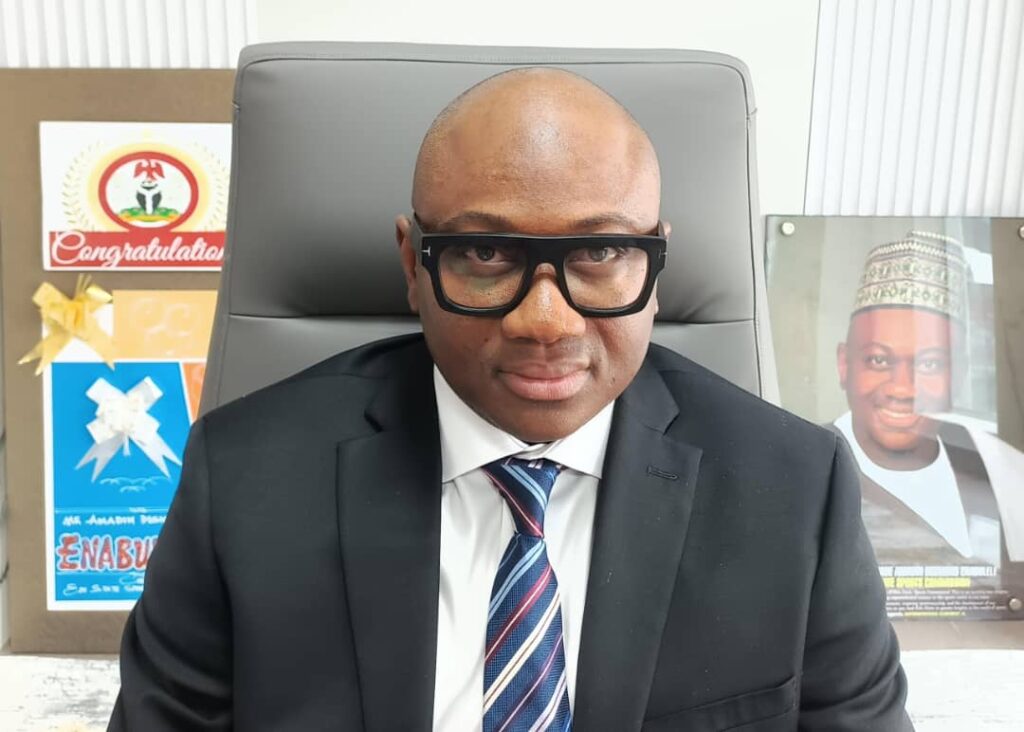
The Executive Chairman of the Edo State Sports Commission, Hon. Amadin Desmond Enabulele, has extended warm Christmas greetings to athletes, coaches, sports administrators, journalists, and the people of Edo State, urging them to uphold the enduring values of love, peace, and unity that define the festive season.
In a statement issued by his Media Officer, Edoko Wilson Edoko, Hon. Enabulele described Christmas as a period of reflection, gratitude, and renewed commitment to collective progress and shared responsibility.
“I sincerely appreciate all stakeholders in the sports sector for their cooperation, resilience, and unwavering support throughout the year. Your contributions have been instrumental to the growth and success of sports in Edo State,” he said.
READ ALSO:Edo SWAN Distances Self From Online Publication Against Enabulele
He further commended Edo athletes for their dedication and discipline, noting that their consistent performances have continued to bring pride and recognition to the state at both national and international levels.
According to him, the Commission remains committed to athletes’ welfare, grassroots sports development, and the creation of opportunities that will enable talents to flourish.
Enabulele also called on residents of the state to celebrate responsibly and show compassion to one another, particularly the less privileged, emphasizing that unity and peaceful coexistence are vital for sustainable development.
READ ALSO:How Enabulele Is Driving Okpebholo’s Agenda In Edo Sports Commission
He reaffirmed the Edo State Sports Commission’s resolve to strengthen collaboration with partners and stakeholders in the coming year, with increased focus on excellence, transparency, and inclusive sports development.
The Sports Commission boss concluded by wishing everyone a joyous Christmas celebration and a prosperous New Year filled with hope, good health, and greater achievements.
News
MOWAA: Okpehbolo Receives Edo Assembly Resolution Indicting Obaseki

Edo State Governor, Monday Okpebholo, received report and resolutions of the Edo State House of Assembly which indicted former Governor Godwin Obaseki on the Museum of West African Art (MOWAA) and the Radisson Hotel projects.
Recall that the Edo Assembly raised a five-man committee to investigate funding and ownership of both projects following a request by Governor Okpebholo.
Okpebholo, who spoke after receiving the report said its findings and recommendations would be fully implemented.
Okpebholo said the Economic and Financial Crimes Commission (EFCC) would be invited to further examine issues raised in the recommendations.
READ ALSO:MOWAA: Why I Will Not Appear Before Edo Assembly Panel — Obaseki
According to him, the Edo State Government has significant stakes in the MOWAA and Radisson Blu hotel having invested ₦3.8bn respectively in both projects.
He said changes in the structure and nomenclature of the MOWAA project made the investigation unavoidable.
Okpebholo said it was unacceptable to suggest Edo State has only 10 per cent stake in the Radisson Blu hotem despite investing over ₦28bn.
“Edo State has spent over ₦3.8 billion on this project, yet some people are saying the state has no stake in it. That is totally unacceptable. I will work with your recommendations and forward them to the relevant authorities to investigate what truly happened. We will also involve the EFCC.
READ ALSO:MOWAA Controversy: Edo Assembly Threatens Arrest Warrant On Obaseki, Others
“Our investment in this project is over ₦28 billion. We must invite the EFCC to step in and determine if this is how businesses are conducted in Nigeria,” he said.
In its recommendations passed by the Assembly, the five-man committee headed by Hon Addeh Isibor, urged the Edo State Government to take possession of both projects.
It asked Governor Okpebholo to contract competent hands to complete renovation of the Hotel and take all steps to put the Hotel to use.
The recommendations urged the Edo State Government to revoke “the fraudulent Certificate of Occupancy to the property issued in the name of Hospitality Investment and Management Company Limited and revert same to the Edo State Government that purchased the property.
READ ALSO:Edo Assembly Charges Contractor Handling Ekekhuan Road To Accelerate Work
“That the Edo State Government initiate legal action and work with relevant Anti-graft Agencies to retrieve both the complete statement of account and the balance of the Seventeen Billion, Five Hundred Million Naira (N17,500,000,000.00) Bond proceeds still in the possession of the Escrow Agents. Meristen Trustees Limited and Emerging Africa Trustees Limited.
“The title to the MOWAA Property having never been revoked, same remains the property of the Central Hospital, Benin City
“That the Edo State Government immediately takes all necessary step to put the property to good use in the best and overriding public interest of the people of Edo State.”
Speaker of the Assembly, Hon. Blessing Agbebaku, said the facts about MOWAA and Radisson Blu Hotel were now clearly documented in resolutions and outcomes.
News
Sheikh Gummi Sues Two Over Alleged False Facebook Publication

Prominent Islamic scholar, Sheikh Ahmad Gummi, has approached the Chief Magistrate Court in Kaduna, seeking the issuance of a criminal direct complainant summons against two Facebook users over alleged criminal conspiracy, attempt to cause public disturbance and criminal defamation.
The application, filed at the Chief Magistrate Court sitting on Ibrahim Taiwo Road, Kaduna, listed the defendants as George Udom and Bello Isiaka.
According to him, the defendants allegedly published a “Breaking News” statement on their respective Facebook pages on December 23, 2025, between 7:00 am and 10:00 am, attributed to him, threatening that the family of the Minister of Defence, General Christopher Musa, would be eliminated if military operations against bandits were not stopped.
Gummi alleged that the publication was falsely attributed to him, as his photograph was allegedly used alongside the statement, giving the impression that he issued the threat against the Defence Minister.
READ ALSO:Nigeria Army Alone Cannot Defeat Bandits — Sheikh Gumi
The Islamic scholar stated that following the publication, he received numerous phone calls from concerned members of the public who believed he authored the statement and was attempting to intimidate the Minister of Defence in the discharge of his official duties.
He further maintained that the publication portrayed him as a troublemaker and a threat to public peace, despite his long-standing reputation as a cleric known for preaching peace and harmony within and outside Nigeria.
The complainant argued that the alleged publication was capable of inciting public disorder in Kaduna State, particularly Southern Kaduna, and could expose him to danger by presenting him as a prime suspect in the event of any attack on the Defence Minister’s family.
READ ALSO:Insecurity: What Sheikh Gumi Told Me After Visiting Bandits Hideouts — Obasanjo
He also contended that the actions of the defendants amounted to an attempt to cause public disturbance and criminal defamation of his character.
Dr Gummi told the court that the alleged acts contravened Sections 59, 57, 372, 116 and 117 of the Kaduna State Penal Code Law, 2017.
The application, dated December 24, 2025, was filed by a team of lawyers led by Suleiman Danlami Lere, with the complainant urging the court to summon the defendants to answer to the allegations.

 News2 days ago
PHOTOS: New Era In Furupagha-Ebijaw As Okpururu 1 Receives Staff Of Office
- Metro5 days ago
JUST IN: Former Edo Information Commissioner Is Dead
- News2 days ago
UBTH CMD Marks 120 Days In Office, Expresses Commitment To Providing Conducive Working Environment
- News2 days ago
FG Declares Public Holidays For Christmas, New Year Celebrations
- News5 days ago
Coordinator, Edo First Lady Office, Majority Leader, Rights Lawyer, Others Bag 2025 Leadership Award
- Metro5 days ago
She Grabs, Pulls My Manhood Anytime We Fight — Husband
- News2 days ago
OPINION: Gumi And His Terrorists
- News2 days ago
FIRS Confirms NIN As Tax ID
- Metro5 days ago
Why I Charged My Husband Money For Sex —Woman
 News2 days ago
OPINION: My Man Of The Season


