

News
Back To School: What Parents Must Know As 2025/2026 Session Begins




As public and private schools across Lagos, Ogun, Kwara states, and various parts of the country reopen September 15, 2025, for the first term of the 2025/2026 academic session, parents are busy buying uniforms, paying fees, and preparing their children for a new school year.
But beyond books and tuition, education stakeholders are urging families to pay closer attention to the conditions in which their children will be learning.
From leaking roofs to porous fences, many classrooms across Nigeria still struggle to meet basic safety and learning standards.
These stakeholders are urging them to look beyond the excitement of resumption and pay attention to three critical issues that directly affect their children’s safety and learning: the state of classrooms, the security of school environments, and the problem of overcrowded classes.
Experts argue that resumption should not simply be about dates on the calendar, but about readiness: are the classrooms safe, are the teachers equipped, and are the children truly protected?
The Punch on Monday spoke with three education stakeholders — who shared practical concerns and tips for parents as schools reopen.
Infrastructure Decay
Hurts Learning
For the Head of School at Offspring Ilm School, Ilorin, Mrs Lateefat Alli-Oluwafuyi, one of the greatest obstacles to effective learning is the physical environment of many Nigerian schools.
She lamented that countless schools still operate with cracked walls, leaking roofs, broken furniture, and little or no sanitation facilities.
“A child sitting on the floor or under a leaking roof already feels abandoned by the system before even opening a book,” she told Punch Online.
READ ALSO:Delta Govt Closes Six Unapproved Schools
“Learning should happen in an environment that affirms dignity and comfort. Unfortunately, what we see in many schools are conditions that undermine children’s confidence and discourage attendance,” she added.
She argued that poor infrastructure directly contributes to poor performance and dropout rates, as pupils are less motivated to remain in environments that feel unsafe and undignified.
Oluwafuyi urged governments and private school owners to prioritise urgent renovations, while also calling on parents to speak up and hold local education authorities accountable.
Security Must Be Non-Negotiable
In his own remark, the principal at O.LAMURS School of Basic Ethics and Ethnic Studies, Alhaji Muhammad Adeyemi, emphasised that security remains one of the most pressing concern as schools resume.
He warned that in an era of abductions for ransom and ritual purposes, schools cannot afford to take safety for granted.
“Many schools have no perimeter fencing, no guards, and no system to verify who picks up children at closing time. That is dangerous,” he noted.
READ ALSO:Katsina Govt Revokes Licenses Of All Private, Community Schools
“Parents should sound a clear warning: nobody should take their child home without their consent.
“If there will be another guardian, schools must document it and enforce it strictly,” he added.
He also raised concerns about the journey to school, pointing out that some pupils rely on tricycle operators, okada riders, or even unmonitored school bus drivers.
Some of these operators, she added, engage in reckless or negligent behaviors, such as driving under the influence of alcohol or substances.
“Parents must evaluate transport arrangements carefully. Don’t just assume a school bus is safe or that a familiar okada rider can be trusted. Vet drivers, ask questions, and insist on accountability,” he advised.
Overcrowding is a Silent Crisis
The Founder of Inventive Tutors, Osogbo, Mr Kabir Isa, highlighted the problem of overcrowding, describing it as a silent crisis that undermines education across Nigeria.
He noted that some classrooms, particularly in public schools, hold between 80 and 100 pupils at once, making effective teaching almost impossible.
READ ALSO:Lagos Begins Comprehensive Assessment Of Public Primary Schools
“When you pack 90 children into a room built for 30, you’re not teaching — you’re warehousing.
“Teachers cannot give individual attention, children cannot concentrate, and the overall quality of education collapses. Even the health risks associated with it should never be underestimated,” he said.
While acknowledging that Osun schools will officially resume on September 22, he urged authorities to use the window to address overcrowding, even if it means splitting sessions or adopting staggered timetables.
He argued that reducing class size should be treated as a matter of urgency.
“Parents must ask questions about how many pupils are in their child’s class. If a class is overcrowded, they should demand alternatives.
“Overcrowding kills learning as much as bad infrastructure or insecurity,” he warned.
As Nigerian children settle into a new academic year, experts stress that safety, dignity, and quality must remain at the center of resumption plans.
For parents, the call is clear: do not focus only on fees and supplies — pay attention to where your child sits, how they get to school, and whether they are secure.
Because until schools become truly safe and conducive, the excitement of a new term will remain overshadowed by the same old challenges, they uniformly asserted.
Key Points for Parents
Inspect your child’s school environment: leaking roofs, broken desks, and lack of sanitation affect learning.
Confirm safety arrangements: ensure schools document who can pick up your child.
Evaluate transport options carefully — don’t assume buses or trusted riders are safe.
Ask about class sizes; overcrowded classrooms limit effective teaching.
Demand accountability from schools and local authorities.
(PUNCH)




News
N5m, N10m Zero-interest Loans: SheVentures Opens Applications For Women Entrepreneurs


First City Monument Bank (FCMB) has opened a new round of applications for its SheVentures proposition, offering zero-interest loans of up to ₦10 million to women entrepreneurs to ease access to working capital and support business growth.
The facility provides loans ranging from ₦500,000 to ₦5 million under a general category, and ₦5 million to ₦10 million for sector-specific businesses, with funding capped at up to 50% of an applicant’s average monthly turnover.
At the centre of the offering is a 0% interest rate, with all charges embedded in a transparent structure.
Repayment is structured over four or six months, allowing businesses to match obligations with their cash flow cycles.
READ ALSO:I’ve Been Blacklisted In Music Industry For 13 Years – Seun Kuti
Yemisi Edun, Managing Director and Chief Executive of First City Monument Bank (FCMB), said the initiative reflects a deliberate approach to inclusive growth.
“Inclusive growth requires access to capital and the right conditions for businesses to deploy that capital effectively.
“Women-led enterprises are critical to economic activity, yet they face structural barriers.
This intervention aims to help close that gap by providing financing that supports job creation, business expansion, and long-term sustainability for women entrepreneurs.”
“Access to affordable finance remains a major constraint for women entrepreneurs,” said Nnenna Jacob-Ogogo, Group Head, SheVentures and Impact Segments at First City Monument Bank (FCMB).
READ ALSO:My Beef With Wizkid Is For Life – Seun Kuti
“By removing the cost barrier and offering quick, flexible funding, this zero-interest loan is designed to safeguard existing jobs, enable businesses to invest in growth initiatives, and foster resilience in challenging economic conditions.”
Women-owned businesses account for a significant share of Nigeria’s small and medium-sized enterprises but continue to face high borrowing costs and limited access to credit.
Through these efforts, SheVentures tackles persistent financing gaps facing women-led businesses, combining targeted funding with broader support to empower women entrepreneurs, encourage business innovation, and enhance their ability to compete on a national scale.
Applications for the zero-interest loan are now open.Apply now.
News
Xenophobic Attacks: Oshiomhole Tells FG To Retaliate Against South African Companies In Nigeria

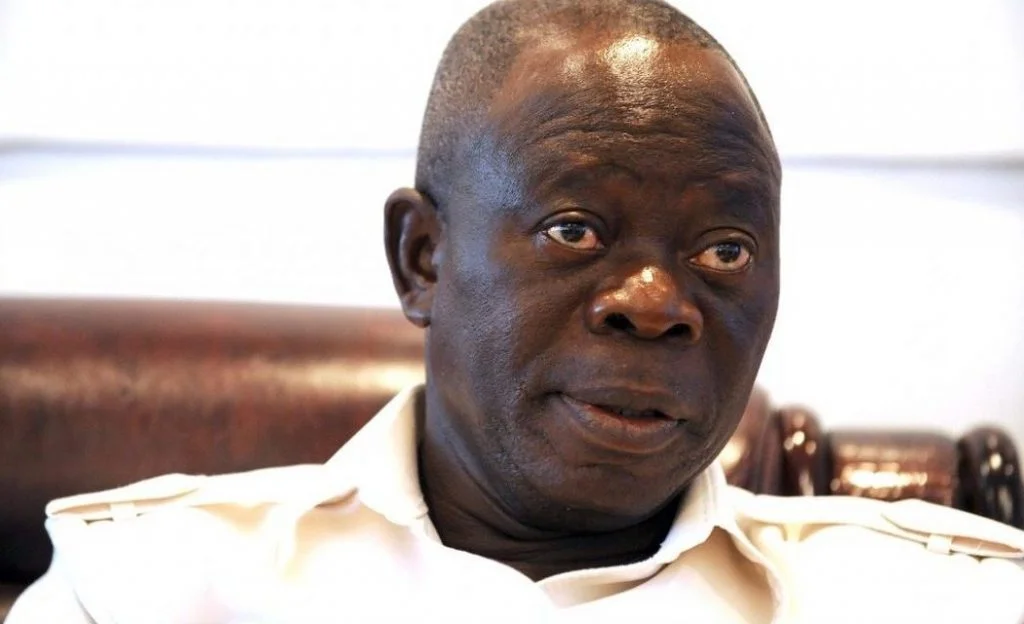
Senator Adams Oshiomhole has called on the Federal Government to retaliate against South African businesses operating in Nigeria following the recent attacks on Nigerians in South Africa.
Speaking during plenary on Tuesday, Oshiomhole said the Federal Government should consider revoking the working license of South African owned companies such as MTN and DSTV.
He argued that Nigeria must respond firmly to what he described as persistent hostility against its citizens.
READ ALSO:South Africa To Investigate ‘Mystery’ Of Planeload Of Palestinians
“I am not going to shed tears. If you hit me, I hit you. I think it is appropriate in diplomacy. It is an economic struggle,” Oshiomhole said.
He argued that while some South Africans accuse Nigerians of taking their jobs, Nigerians should return home and take over employment opportunities created by major South African companies operating in the country, including MTN and DSTV.
“When we hit back, the President of South Africa will not only talk but will also go on his knees to recognise that Nigeria cannot be intimidated.
READ ALSO:South African Ambassador Found Dead Outside Paris Hotel
“We will not condone any life being lost. If a crime has been committed under the South African law they have the right to bring any such person to justice, but to kill our people as if we are helpless, we will not allow that,” Oshiomhole added.
DAILY POST reports that several Nigerians in South Africa have reportedly been attacked, and their businesses destroyed, in ongoing xenophobic attacks in the country.
News
IGP Orders Officers Display Name Tag On Uniform, Gives Update On State Police

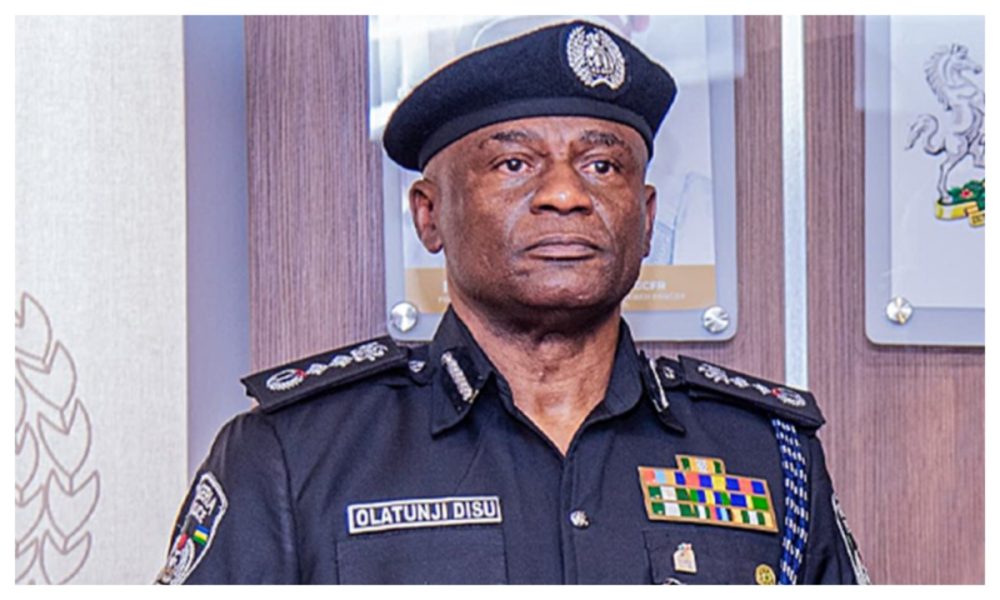
The Inspector General of Police, IGP, Tunji Disu, has ordered all police personnel to always have their name tags on their uniforms for easy identification.
Disu disclosed that only police personnel who are undercover are exempted from displaying their name tags.
Speaking on Tuesday, Disu said: “All police officers should have their name tags. All of us on the high table have our names apart from the undercover among us so if you look at all the Commissioners of Police we have our name tags, so it’s not our standard.
READ ALSO:
“All the Commissioners of Police are here and that is why we called this meeting, we have list of things like this that we will want to discuss with the Commissioners of Police, we have told them earlier and we will still let them know that every that happens within their area of jurisdiction falls under their control.”
On the issue of state police, the IGP said: “Since we got the signal that the Federal Government of Nigeria intend to establish State Police and since we are the federal police, we decided to take the bull by the horn and put down our own side of what we believe on how the state police should be run.
“A lot of things were taken into consideration, a lot of comparative analysis was done and it has been transmitted to the National Assembly.”
-

 Politics4 days ago
2027: Tinubu’s Re-election May Put An End To Nigeria — Baba Ahmed Warns
-

 Politics5 days ago
BREAKING: 2027: Former Adamawa APC Guber Candidate, Aishatu Binani Defects To NDC
-

 Politics5 days ago
Senatorial Seat: Ogbakha-Edo Warns Against Imposition Of Candidates In Edo South
-

 Business4 days ago
JUST IN: Nigerian Filling Stations Reduce Fuel Price After Hike
-

 Entertainment5 days ago
Actress Eniola Badmus Gets New Federal Appointment
-

 News2 days ago
BREAKING: Wike Picks Alabo George For Rivers Governorship
-

 Politics4 days ago
NDC Speaks On Peter Obi, Kwankwaso Joining Party
-

 News3 days ago
OPINION: Why South Africans Murder Nigerians In Cold Blood
-

 News4 days ago
2027: Pastor Adeboye Speaks On Nigeria’s Next President
-

 Politics5 days ago
2027: Pondi, Otuaro, Other Delta South Stakeholders, Endorse Senator Joel-Onowakpo For Second Term
