
Business
Banks Confirm Receiving More Cash, Load ATMs
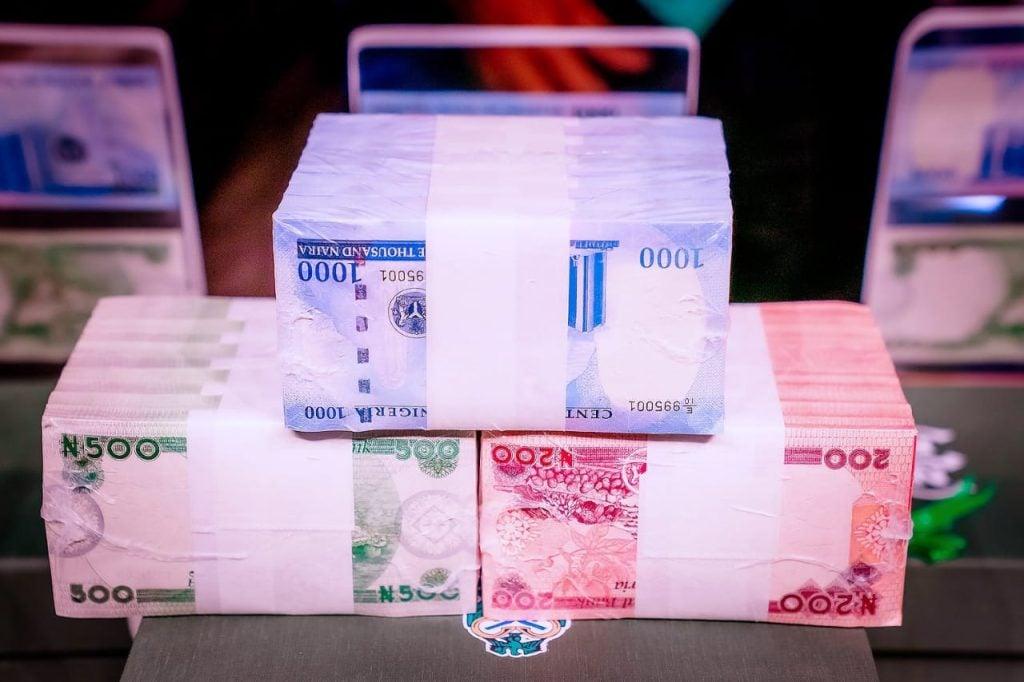
The Central Bank of Nigeria has released more old notes to Deposit Money Banks as the apex bank steps up efforts to flood the economy with more cash after a prolonged cash crunch that has made life difficult for millions of Nigerians and residents.
The CBN had on Thursday begun the release of billions of naira to DMBs. Bank officials said the CBN again released several billions of naira to lenders on Friday
Reports several branches of banks opened over the weekend and dispensed cash to their customers via Automated Teller Machines and over-the-counter.
Some of the banks had sent out emails to their customers notifying them that they would be open over the weekend for banking operations as ordered by the apex bank.
READ ALSO: CBN Instructs Banks To Open Weekends
Visits to banks’ branches in Lagos, Abuja, Ogun and other states revealed that most banks complied with the order of the CBN and attended to customers both in the banking hall and dispensed cash via ATM.
Most of the banks’ branches along the Oshodi-Apapa Expressway and Gbagada area of Lagos opened on Saturday and Sunday and subsequently dispensing cash to their customers.
The Access Bank branch at Sadiku Bus stop along the Oshodi-Apapa Expressway dispensed cash via its ATMS.
The United Bank for Africa branch at Oshodi, close to the expressway dispensed cash both in the banking hall and at its ATMs. Customers were able to get N20,000 over-the-counter.
The Access Bank branch next to it allowed its customers to get N20,000 while holders of other banks’’ ATMs got N5,000 only.
Fidelity Bank branch also at Oshodi expressway paid N20,000 inside the banking hall. Of its three ATMs, only one was dispensing, paying other banks’ customers N5,000 and its customers N20,000.
READ ALSO: [JUST IN] Cash Scarcity: NLC, CBN Meet In Abuja
Meanwhile, it was not observe any of the banks dispensing crispy naira notes and customers didn’t care as long as they got the cash.
A taxi driver, who identified himself as Baba Taju, said the kind of naira notes didn’t matter as long as he got some to spend.
“You think that’s important now? What did we do when we couldn’t get any cash? Please any cash is welcome as long as I can spend it,” he said.
Also, customers in the Federal Capital Territory continued to receive naira notes on Sunday.
Some crowds of customers were seen at banks’ ATM galleries while others tried to perform over-the-counter transactions.
Along the airport road, only Guaranty Trust Bank opened for physical operations, Stanbic IBTC loaded its ATMS with cash while Zenith Bank didn’t open for business.
READ ALSO: [BREAKING] Cash Scarcity: Labour Threatens To Shut Down CBN
It was observed that the old N1,000 notes distributed were not crisp ones as officials separated mutilated notes before giving them to customers.
In Ogun State, findings by our correspondent at Zenith Bank, PremiumTrust Bank, GTB, Unity Bank and Access Bank branches in Redemption Camp along the Lagos-Ibadan Expressway indicated that all the ATMs were fully loaded with cash
It was observed that there were no long queues and after the Sunday service, bank customers were allowed to walk in and carry out their normal transactions.
Also, both old and new naira notes were dispensed.
Along the Ojodu-Berger axis of Lagos State, our correspondent visited six banks. The banks were Union Bank Plc, Ecobank, Access Bank, GTB, Zenith Bank, and First Bank. All six banks, apart from Guaranty Trust Bank did not open their banking halls to customers. ATMs were also not loaded.
PUNCH



Business
Again, Dangote Refinery Hikes Fuel Price

Dangote Refinery has increased the ex-depot price of petrol by N75, bringing the price up to N1,350 per litre from the previous price of N1,275.
This is the first fuel increase by the Refinery in the month of May.
READ ALSO:JUST IN: Dangote Refinery Reduces Petrol Price
This latest development is coming seven days after the refinery raised its ex-depot price from N1,200 to N1,275 per litre.
Recall that the refinery on April 29 increased the ex-depot price of petrol by N75.
Business
Why We Sited Our Multi-Billion Naira Automobile Firm Branch in Benin – Skyewise Group CEO

Dr. Elvis Abuyere, Chief Executive Officer and Managing Director of Skyewise Group, an automobile firm, has explained the reason for establishing a branch of the company in Benin City, the Edo State capital, describing the ancient city as “a growing economy full of enormous potential for vibrant youth.”
He added that the company considers Edo State one of the most interesting states, noting that the decision aligns with its long-term vision.
Abuyere, who spoke in Benin on Monday while taking journalists on a tour of the new automobile facility, said:
“We started very small — from Abuja to Lagos and now Benin. It is a joy and privilege for us to have completed this amazing regional office with Skyewise Group.”
READ ALSO:BREAKING: Wike Picks Alabo George For Rivers Governorship
According to him, beyond the automobile business, Skyewise Group is in Benin to invest in real estate, logistics, youth empowerment, and credit management. “Aand also to lend our support to what the Edo State Government is doing, knowing the fact that there is an agenda,” he added.
The young CEO urged youths in Nigeria, particularly those in Edo State, to embrace entrepreneurship, stressing that “we believe it is the future of Africa,” especially Nigeria.
He said Nigeria stands as the giant of Africa and that its youth must take bold steps in the entrepreneurship landscape.
According to Abuyere, to ensure Edo youths actualise their entrepreneurial potential, the company has prepared soft loans to help them start businesses, adding that Skyewise Group is not limited to automobile operations.
READ ALSO:Senatorial Seat: Ogbakha-Edo Warns Against Imposition Of Candidates In Edo South
He said: “More importantly to us is youth empowerment. We want our youth to be empowered, and this is where the Skyewise Foundation comes in.
“We believe the future of Africa is entrepreneurship, and that future lies in the hands of the young people of Nigeria. We want to empower them to stand the test of time, build something meaningful, and reduce unemployment and insecurity in our land.
“I believe we need to begin taking bold steps by refining the mindset of our young people. We need to give them a sense of belonging and direction.
“We have been addressing the liquidity gap in society by providing microloans to support businesses in our environment and in Benin City.”
When asked why he chose Benin City for the multi-billion naira automobile firm, Abuyere noted: “I think this is the first automobile showroom in Edo State where you can see a car lifted from the ground floor to the first floor and beyond.”
Business
JUST IN: Nigerian Filling Stations Reduce Fuel Price After Hike
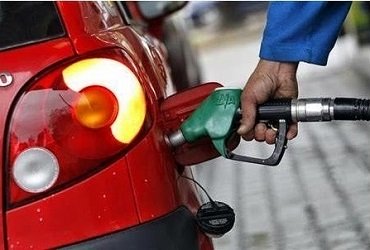
Nigerian filling stations reduced their Premium Motor Spirit price on Saturday, barely 24 hours after the hike.
Checks by DAILY POST showed that Ranoil, Empire Energy, and other filling stations in Abuja adjusted their petrol pumps to N1,365 and N1,375 per litre respectively, down from N1,440 per litre on Friday.
This means that petroleum marketers dropped their fuel price by N65 and N75 per litre. DAILY POST reports that the move was to attract patronage from customers.
Recall that three days ago, Nigerian filling stations had raised their petrol pump price to between N1,365 and N1,440 nationwide after Dangote Refinery and depot owners increased ex-depot prices to around N1,275 and N1,290 per litre.
According to DAILY POST, while the Nigerian National Petroleum Company Limited and MRS Bovas filling stations raised their petrol price to around N1,365 per litre, others adjusted theirs above N1,440 per litre.
READ ALSO:Drivers Protest Fuel Increase, Raise Fares in Benin
However, with the latest fuel price reduction by Ranoil and Empire Energy, the majority of filling station outlets now dispense petrol between N1,365 and N1,375 per litre.
This development comes as the ripple effect of crude oil prices continues to impact Nigeria’s domestic fuel price.
Brent and West Texas Intermediate crude rose to $114 and $105 per barrel before dropping to $108 and $101 after the filing of this report.

 Politics5 days ago
BREAKING: NDC Zones Presidency
- Politics3 days ago
APC Clears Wike Loyalists, Disqualifies All Fubara-aligned Aspirants For State Assembly
- News5 days ago
Presidency Reveals Details Of Ribadu’s Meeting With US VP, Secretary Of State
- News4 days ago
Edo Bags NECO Excellence Award
- News5 days ago
EFCC Declares Ex-humanitarian Minister Sadiya Farouq Wanted
- Headline5 days ago
Gas Prices In US Edge Down After Two Weeks Of Increases
- Metro5 days ago
My Wife Goes To Mountains To Pray, Denies Me Sex For 9yrs
- News4 days ago
Edo Deputy Governor Pays Tribute As Dignitaries Honour Late Mother
- Headline5 days ago
‘Pioneer Of Cable TV News’: Key Facts About CNN Founder, Ted Turner
- Metro5 days ago
‘My Wife Deserted Me 4 Months After We Got Married, Took To Prostitution Abroad’


