
Headline
Benin Opposition Leader Jailed 20 Years For Terrorism

Benin opposition leader Reckya Madougou was sentenced on Saturday to 20 years in prison for terrorism by a special court in the capital Porto-Novo after a brief trial that her lawyers condemned as a “political attack”.
After more than 20 hours of hearings, Madougou was found guilty of “complicity in terrorist acts” by the Economic Crime and Terrorism Court, or Criet, which on Tuesday sentenced another key opposition figure to 10 years.
Critics say the court, set up in 2016, has been used by President Patrice Talon’s regime to crack down on the opposition and pushed Benin into authoritarianism.
“This court has deliberately decided to penalise an innocent person,” Madougou said shortly before her prison sentence was announced.
“I have never been and I will never be a terrorist,” the 47-year-old former justice minister added.
“It’s a sad day for our justice system, I maintain that there is no proof,” one of her lawyers, Robert Dossou, told AFP.
Madougou was one of several Benin opposition leaders banned from running in an election in April in which Talon won a second term with 86 percent of the vote.
She was arrested in the economic capital Cotonou in March — just weeks before the election — accused of financing an operation to assassinate political figures to prevent the vote, in an alleged bid to “destabilise” the country.
“Tried at 6am, without witnesses, without documents, without evidence, Recky Madougou was sentenced to 20 years in prison by three accomplices of those in power,” her France-based lawyer Antoine Vey tweeted after the sentencing.
“Her crime: to have embodied a democratic alternative to the regime of Patrice Talon.”
Vey had told the trial on Friday that “this procedure is nothing but a political attack”.
“Even before her arrest, everything was orchestrated,” Vey said a day after arriving from Paris.
He asked for the trial to be cancelled, before leaving the court and never returning — Madougou’s Benin-based lawyers stayed for the remainder.
Vey then told AFP that it was “a trial in which nothing was judicial”.
Madougou said on the stand at the trial that she had “no illusions” about its outcome.
“I offer myself to the democracy of my country, if my sacrifice can give your court back its independence,” she said.
– Judge flees pressure –
Less than a week before the April election, a judge from the special court fled Benin denouncing political pressure to make rulings, in particular in the case of Madougou’s arrest.
Government officials dismiss claims of political interference and say Benin’s judiciary is independent.
Benin was long praised for its thriving multi-party democracy in a troubled region. But critics say the West African state’s democracy has steadily eroded under Talon, a 63-year-old cotton magnate first elected in 2016.
READ ALSO: Don’t Rush To Destroy Rape Evidence, FIDA Urges Victims
Some opposition leaders have fled the country while others were disqualified from running in elections, or targeted for investigation.
Joel Aivo, a professor who had been held for eight months, was found guilty on Tuesday of plotting against the state and money laundering.
Aivo, who was also barred from running in the election, was arrested on April 15, four days after the ballot that saw Talon returned to power.
The same special court in 2018 also sentenced Sebastien Ajavon, an opposition figure who came third in the previous election, to 20 years in prison for drug trafficking.
He was again sentenced in early March in absentia to a second sentence of five years in prison for forgery and fraud.
Like most Beninese opposition figures, he now lives in exile.
AFP

Headline
South Korea, Japan Protest China, Russia Aircraft Incursions
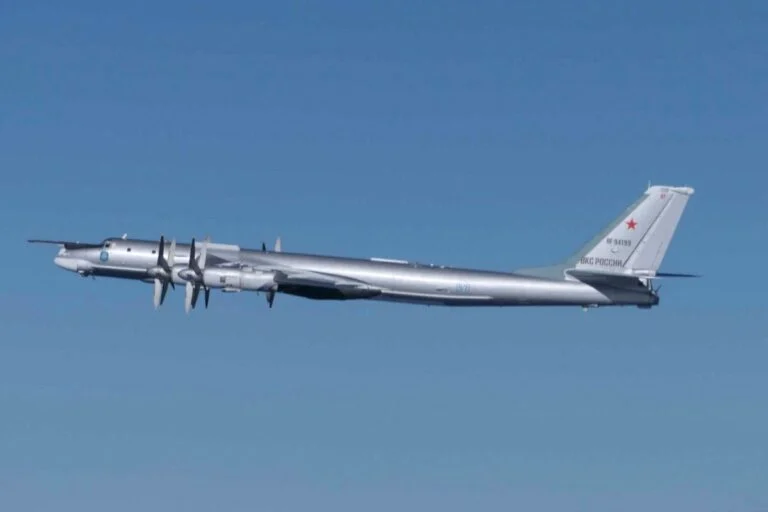
South Korea and Japan reacted furiously on Wednesday after Chinese and Russian military aircraft conducted joint patrols around the two countries, with both Seoul and Tokyo scrambling jets.
South Korea said it had protested with representatives of China and Russia, while Japan said it had conveyed its “serious concerns” over national security.
According to Tokyo, two Russian Tu-95 nuclear-capable bombers on Tuesday flew from the Sea of Japan to rendezvous with two Chinese H-6 bombers in the East China Sea, then conducted a joint flight around the country.
The incident comes as Japan is locked in a dispute with China over comments Prime Minister Sanae Takaichi made about Taiwan.
READ ALSO:China Backs Nigeria, Warns Against Foreign Interference
The bombers’ joint flights were “clearly intended as a show of force against our nation, Defence Minister Shinjiro Koizumi wrote on X Wednesday.
Top government spokesman Minoru Kihara said that Tokyo had “conveyed to both China and Russia our serious concerns over our national security through diplomatic channels”.
Seoul said Tuesday the Russian and Chinese warplanes entered its air defence zone and that a complaint had been lodged with the defence attaches of both countries in the South Korean capital.
“Our military will continue to respond actively to the activities of neighbouring countries’ aircraft within the KADIZ in compliance with international law,” said Lee Kwang-suk, director general of the International Policy Bureau at Seoul’s defence ministry, referring to the Korea Air Defence Identification Zone.
READ ALSO:Trial For South Korean Woman Accused Of ‘Suitcase Murders’ Starts Today
South Korea also said it deployed “fighter jets to take tactical measures in preparation for any contingencies” in response to the Chinese and Russian incursion into the KADIZ.
The planes were spotted before they entered the air defence identification zone, defined as a broader area in which countries police aircraft for security reasons but which does not constitute their airspace.
Japan’s defence ministry also scrambled fighter jets to intercept the warplanes.
Beijing later Tuesday confirmed it had organised drills with Russia’s military according to “annual cooperation plans”.
READ ALSO:South Korean Actress Kim Sae-ron Found Dead In Seoul Apartment
Moscow also described it as a routine exercise, saying it lasted eight hours and that some foreign fighter jets followed the Russian and Chinese aircraft.
Since 2019, China and Russia have regularly flown military aircraft into South Korea’s air defence zone without prior notice, citing joint exercises.
In November last year, Seoul scrambled jets as five Chinese and six Russian military planes flew through its air defence zone.
Similar incidents occurred in June and December 2023, and in May and November 2022.
READ ALSO:Russia Insists Ukraine Must Cede Land Or Face Continued Military Push
Meanwhile, Tokyo said Monday it had scrambled jets in response to repeated takeoff and landing exercises involving fighter jets and military helicopters from China’s Liaoning aircraft carrier as it cruised in international waters near Japan.
It also summoned Beijing’s ambassador after military aircraft from the Liaoning locked radar onto Japanese jets, the latest incident in the row ignited by Takaichi’s comments backing Taiwan.
Takaichi suggested last month that Japan would intervene militarily in any Chinese attack on the self-ruled island, which Beijing claims as its own and has not ruled out seizing by force.
AFP
Headline
Thousands Reported To Have Fled DR Congo Fighting As M23 Closes On Key City

Fierce fighting rocked the eastern Democratic Republic of Congo on Tuesday as the Rwanda-backed M23 militia rapidly advanced towards the strategic city of Uvira, with tens of thousands of people fleeing over the nearby border into Burundi, sources said.
The armed group and its Rwandan allies were just a few kilometres (miles) north of Uvira, security and military sources told AFP.
The renewed violence undermined a peace agreement brokered by US President Donald Trump that Kinshasa and Kigali signed less than a week ago, on December 4.
Trump had boasted that the Rwanda-DRC conflict was one of eight he has ended since returning to power in America in January.
READ ALSO:Ambassadorial Nominees: Ndume Asks Tinubu To Withdraw List
With the new fighting, more than 30,000 people have fled the area around Uvira for Burundi in the space of a week, a UN source and a Burundian administrative source told AFP.
The Burundian source told AFP on condition of anonymity he had recorded more than 8,000 daily arrivals over the past two days, and 30,000 arrivals in one week. A source in the UN refugee agency confirmed the figure.
The Rwanda-backed M23 offensive comes nearly a year after the group seized control of Goma and Bukavu, the two largest cities in eastern DRC, a strategic region rich in natural resources and plagued by conflict for 30 years.
Local people described a state of growing panic as bombardments struck the hills above Uvira, a city of several hundred thousand residents.
“Three bombs have just exploded in the hills. It’s every man for himself,” said one resident reached by telephone.
READ ALSO:South Africa Beat DR Congo In shootout To Finish Third At AFCON
“We are all under the beds in Uvira — that’s the reality,” another resident said, while a representative of civil society who would not give their name described fighting on the city’s outskirts.
Fighting was also reported in Runingo, another small locality some 20 kilometres (12 miles) from Uvira, as the M23 and the Rwandan army closed in.
Burundi views the prospect of Uvira falling to Rwanda-backed forces as an existential threat, given that it sits across Lake Tanganyika from Burundi’s economic capital Bujumbura.
The city is the main sizeable locality in the area yet to fall to the M23 and its capture would essentially cut off the zone from DRC control.
READ ALSO:Stampede Kills 37 During Army Recruitment In Congo Capital
Burundi deployed about 10,000 soldiers to eastern DRC in October 2023 as part of a military cooperation agreement, and security sources say reinforcements have since taken that presence to around 18,000 men.
The M23 and Rwandan forces launched their Uvira offensive on December 1.
Rich in natural resources, eastern DRC has been choked by successive conflicts for around three decades.
Violence in the region intensified early this year when M23 fighters seized the key eastern city of Goma in January, followed by Bukavu, capital of South Kivu province, a few weeks later.
– Regional risk –
The peace deal meant to quell the fighting was signed last Thursday in Washington by Congolese President Felix Tshisekedi and his Rwandan counterpart Paul Kagame, with Trump — who called it a “miracle” deal — also putting his signature to it.
READ ALSO:FULL LIST: US To Review Green Cards From 19 ‘Countries Of Concern’ After Washington Shooting
The agreement includes an economic component intended to secure US supplies of critical minerals present in the region, as America seeks to challenge China’s dominance in the sector.
But even on the day of the signing, intense fighting took place in South Kivu, where Uvira is located, which included the bombing of houses and schools.
Witnesses and military sources in Uvira said that Congolese soldiers fleeing the fighting had arrived in the city overnight Monday and shops were looted at dawn.
Several hundred Congolese and Burundian soldiers had already fled to Burundi on Monday, according to military sources, since the M23 fighters embarked on their latest offensive from Kamanyola, some 70 kilometres north of Uvira.
Since the M23’s lightning offensive early this year, the front had largely stabilised over the past nine months.
Burundian President Evariste Ndayishimiye warned in February there was a danger of the conflict escalating into a broader regional war, a fear echoed by the United Nations.
Headline
‘Santa Claus’ Arrested For Possessing, Distributing Child Sexual Abuse Material

A 64-year-old man from Hamilton Township has been arrested in the United States after investigators linked him to the possession and distribution of child sexual abuse material.
The suspect, identified as Mark Paulino, had been working as a “Santa for hire” at holiday events, a role that placed him in repeated contact with children.
Mercer County officials said the investigation began on 4 December when detectives were alerted to suspicious online activity involving the uploading of child pornography from a residence in Hamilton Township. The probe quickly identified Paulino, a retired elementary school teacher, as the person involved.
READ ALSO:Nigerian Ringleader Of Nationwide Bank Fraud, Money Laundering Jailed In US, Says FBI
Police stated that Paulino had presented himself online as a retired teacher and had recently performed as Santa Claus for photographs and private, corporate, and organisational events. “Because this role involved direct, repeated contact with children, detectives worked around the clock to secure a search warrant,” authorities explained.
The warrant was executed on 5 December, during which police seized multiple items regarded as evidentiary. Paulino was taken into custody without incident and charged with possession and distribution of child sexual abuse materials, as well as endangering the welfare of a child.
Prosecutors have filed a motion to detain him pending trial. The investigation remains ongoing, and authorities have urged members of the public with relevant information to come forward.

 Politics4 days ago
JUST IN: Tinubu Holds Closed-door Meeting With Rivers, Ebonyi Govs
- News4 days ago
Why My Lineage Qualifies Me For Awujale Throne — K1 De-Ultimate
- Politics4 days ago
Tinubu, Six APC Governors Hold Closed-door Meeting At Aso Villa
- News4 days ago
Group Wants Edo AG Professorship Investigated
- Politics3 days ago
JUST IN: Fubara Dumps PDP For APC
- News4 days ago
Gbaboyor’s Allegations Against Otuaro Baseless, Malicious — PAP Office
- News3 days ago
Otuaro: IPF Urges Reps To Take Caution Over Arrest Threat
- News4 days ago
Step-by-step Guide On How To Register For 2026 UTME
- News4 days ago
FG Offered 4,000 Pregnant Women Free C-section – Report
- News4 days ago
I Don’t Know My Exact Age, Obasanjo Reveals


