
Business
CBN Gives Conditions For Bulk Withdrawal, Says PoS Operators Not Endangered
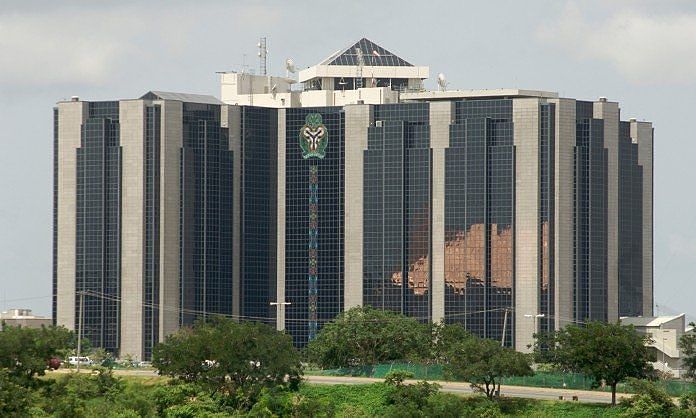
The Central Bank of Nigeria (CBN) has countered claims that its new policy limiting cash withdrawals is targeted at point-of-sales (PoS) agents in particular.
Though the apex bank, on December 6, set the weekly withdrawal limit at N100,000 and N500,000 for persons and organisations, respectively, it made allowances for compelling cases to withdraw up to N5 million or N10 million.
“Let me just correct an impression: not in any way are they (PoS agents) endangered,” the CBN’s Director of Banking Supervision, Mustafa Haruna, said during a live appearance on Channels Television’s Sunrise on Saturday.
“When you do the numbers, how much does a typical agent outlet need in a day? People need to just see this as a policy that is intended at contributing to economic growth and development, and when Nigerians know the enormous benefits inherent in this policy, I’m very sure it will shift mindsets.
“It is typical when you introduce something new, there is always that trepidation and apprehension. But that is why we are also combining it with extensive and sustained campaigns and sensitisation just to ensure that Nigerians understand what is at play, what is involved, and what is in it for them.”
Haruna cited the December 6 circular of the apex bank which stated that in “compelling circumstances,” should an individual or organisation need an amount above the set limit, there are conditions to fulfill.
The CBN had stated that in such instances, not exceeding once a month, withdrawals above the limit shall be subject to processing fees of five and 10 percent for individuals and corporate entities, respectively, in addition to “enhanced due diligence and further information requirements.”
Applicants are also required to upload the following on the CBN’s portal: Valid means of identification of the payee (National ID, International Passport, Driver’s License); Bank Verification Number (BVN) of the payee; and notarised customer declaration of the purpose for the cash withdrawal; senior management approval for the withdrawal by the Managing Director of the drawee, where applicable; and approval in writing by the MD/CEO of the bank authorising the withdrawal.
Haruna explained that the CBN had seen exponential growth in the agent networks around Nigeria, describing them as “quite ubiquitous.”
“There is hardly any nuke or cranny in Nigeria where you go that you won’t see one agent outlet or the other where they do cash-in, cash-out services. Such customers can take advantage of those services,” the CBN director said.
READ ALSO: Cash Withdrawal Limit: Falana, PoS Operators In Lagos Threaten Lawsuit Against CBN
“But to the point about the quantum of naira such a customer would need, of course, this is an evolutionary process; we will get there. And if you have such a need for a high volume of cash, you can always go to your bank to say, ‘Look, this is my business,’ and they will be able to (attend to you).”
According to him, the CBN policy was about expanding the cashless policy first launched a decade ago as a pilot programme in major cities like Lagos and Abuja. He explained that scaling up the policy was necessary due to the high cost of currency management.
“We started since 2012 and we had some charges that you have to pay, although the revised limit and charges are different from what we had. This is not something new. We feel we should take things to a high level if we must make progress, in line with global trends,” he said.



Business
Report Any MRS Filling Stations Selling Fuel Above N739 Per Liter — Dangote Refinery To Nigerians

Dangote Refinery has urged Nigerians to report any MRS filling station outlets nationwide selling fuel above the N739 per liter announced price.
The company disclosed this in a statement on Sunday.
The refinery insisted that its petrol being at retail outlets remain N739 per liter while the gantry price is N699.
It further called on other filling station owners to patronize its refined petroleum products at the N699 rate.
“We also call on other petrol station operators to patronize our products so that the benefits of this price reduction can be passed on to Nigerians across all outlets, ensuring broad-based relief and a more stable downstream market.”
READ ALSO:Dangote Sugar Announces South New CEO
Recall that Aliko Dangote, the president of Dangote Refinery, had pegged the retail price of his petrol at a maximum of N740.
DAILY POST reports that MRS filling and other filling stations had reduced fuel prices to between N739 and N912 per liter in Abuja.
However, reports emerged that some MRS filling stations were selling above the N739 per liter announced price benchmark.
Business
Naira Records Significant Appreciation Against US Dollar
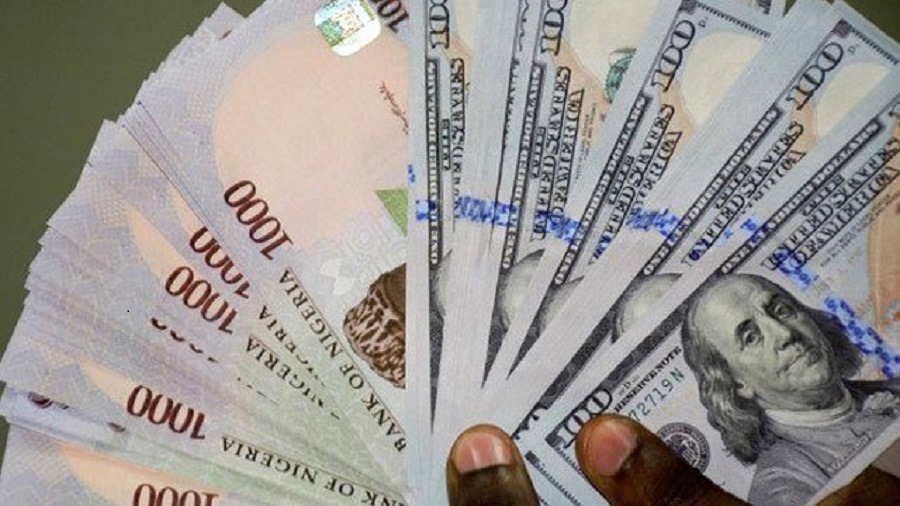
The Naira recorded significant appreciation against the United States dollar on Monday at the official foreign exchange market to begin the week ahead of Yuletide on a good note.
The Central Bank of Nigeria’s data showed that the Naira strengthened to N1,456.56 per dollar on Monday, up from N1,464.49 traded on Friday last week, 19th December 2025.
This means that the Naira gained N7.93 against the dollar when compared with the N1,464.49 was exchanged as of Friday, December 19, 2025. DAILY POST reports that Monday’s gain at the official FX market is the first since December 15th.
READ ALSO:
Meanwhile, at the black market, the Naira remained stable at N1500 per dollar on Monday, according to multiple Bureau De Change operators in Wuse Zone 4, Abuja.
The development comes as the country’s external reserves stood at $44.66 billion as of last week Friday.
Business
CBN Revokes Licences Of Aso Savings, Union Homes As NDIC Begins Deposit Payments
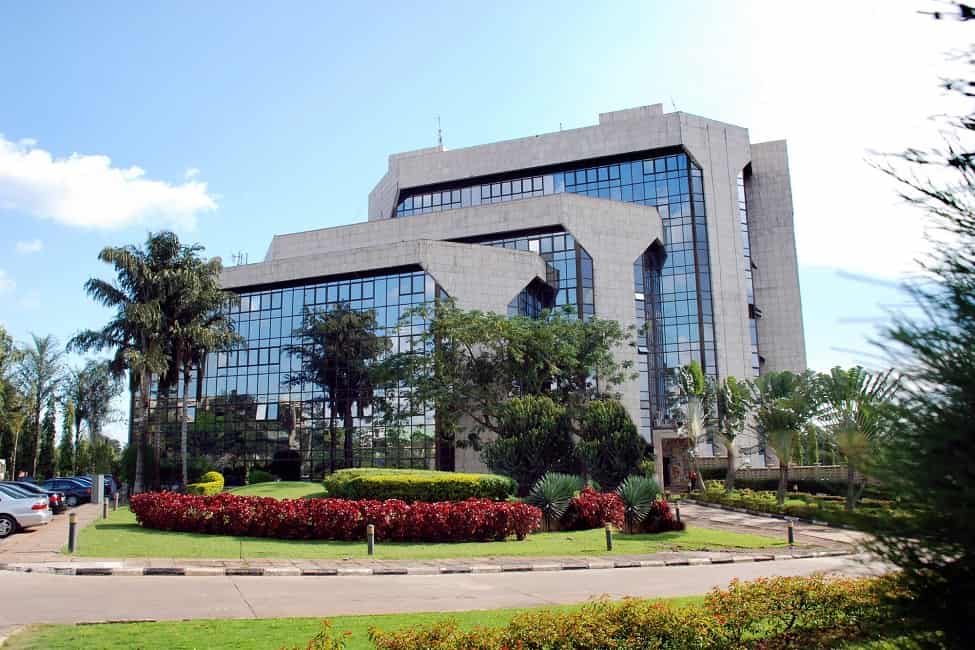
The Central Bank of Nigeria (CBN) has revoked the operating licences of Aso Savings and Loans Plc and Union Homes Savings and Loans Plc, citing persistent regulatory infractions and deepening financial distress in the two primary mortgage banks.
The revocation, which took effect on December 15, 2025, was carried out under Section 12 of the Banks and Other Financial Institutions Act (BOFIA) 2020 and Section 7.3 of the Revised Guidelines for Mortgage Banks in Nigeria, the CBN said in a statement issued on Tuesday.
According to the apex bank, the affected institutions failed to meet minimum paid-up share capital requirements, had insufficient assets to cover their liabilities, recorded capital adequacy ratios below prudential thresholds, and consistently breached regulatory directives.
“The CBN remains committed to its core mandate of ensuring financial system stability,” a statement, signed by the apex bank’s Acting Director, Corporate Communications, Mrs Hakama Sidi Ali said.
READ ALSO:CBN Directs Nigerian Banks To Withdraw Misleading Advertisement
Following the licence revocation, the Nigeria Deposit Insurance Corporation (NDIC) was appointed liquidator of the defunct banks in line with the law.
The Corporation said it has commenced the liquidation process and begun verification and payment of insured deposits to customers.
Under the deposit insurance framework, depositors are entitled to receive up to two million naira per depositor, with payments made through BVN-linked alternate bank accounts.
Depositors with balances above the insured limit will receive the initial two million naira while the remaining sums will be paid as liquidation dividends after the realisation of the banks’ assets and recovery of outstanding loans.
READ ALSO:CBN Issues Directive Clarifying Holding Companies’ Minimum Capital
The NDIC said depositors may submit claims either online or physically at designated branches of the closed banks, while creditors will be paid after all depositors have been fully settled, in accordance with statutory provisions.
The two mortgage banks have faced prolonged operational challenges, including depositor complaints, governance concerns, and delisting from the Nigerian Exchange (NGX) in 2024 for failure to submit audited financial statements for more than six years.
The CBN assured the public that the action was taken to strengthen the mortgage banking sub-sector and protect depositors, adding that banks whose licences have not been revoked remain safe and sound.
This means the two financial institutions can no longer operate as licensed financial institutions.

 News2 days ago
PHOTOS: New Era In Furupagha-Ebijaw As Okpururu 1 Receives Staff Of Office
- Metro4 days ago
JUST IN: Former Edo Information Commissioner Is Dead
- News1 day ago
UBTH CMD Marks 120 Days In Office, Expresses Commitment To Providing Conducive Working Environment
- News5 days ago
Coordinator, Edo First Lady Office, Majority Leader, Rights Lawyer, Others Bag 2025 Leadership Award
- News2 days ago
FG Declares Public Holidays For Christmas, New Year Celebrations
- News5 days ago
[OPINION] Tinubu: Ade Ori Okin Befits KWAM 1, Not Awujale Crown
- Metro4 days ago
She Grabs, Pulls My Manhood Anytime We Fight — Husband
- News2 days ago
OPINION: Gumi And His Terrorists
- News2 days ago
FIRS Confirms NIN As Tax ID
 News2 days ago
OPINION: My Man Of The Season


