
Headline
China, US To Ease Restrictions On Each Other’s Journalists
China and the U.S. have agreed to ease restrictions on each other’s journalists amid a slight relaxation of tensions between the two sides.
The official China Daily newspaper on Wednesday said the agreement was reached ahead of Tuesday’s virtual summit between Chinese leader Xi Jinping and U.S. President Joe Biden.
The agreement represents a degree of progress on an issue that has long aggravated relations, but details remain to be ironed out. COVID-19 travel restrictions and long-standing obstacles faced by foreign media within China are also factors standing in the way of a major breakthrough in media relations.
Under the agreement, the U.S. will issue one-year multiple-entry visas to Chinese journalists and will immediately initiate a process to address “duration of status” issues, China Daily said.
China will reciprocate by granting equal treatment to U.S. journalists once the U.S. policies take effect, and both sides will issue media visas for new applicants “based on relevant laws and regulations,” the report said.
Foreign Ministry spokesperson Zhao Lijian gave no information on a timeline for implementation, but called the agreement a “hard-won achievement that is in the interest of both sides and should be cherished.”
“We hope that the U.S. will keep its promise to put the relevant measures and policies in place as soon as possible and work with China to create favorable conditions for both (nations’) media to continue to work and live in each other’s countries,” Zhao said at a daily briefing.
READ ALSO: Baby Theft: Ondo Judge Rejects Lawyer’s Request To Bar Journalists From Trial
In a statement to The Associated Press late Tuesday, the State Department said China had committed to issuing visas for a group of U.S. reporters “provided they are eligible under all applicable laws and regulations.”
“We will also continue issuing visas to (Chinese) journalists who are otherwise eligible for the visa under U.S. law,” the statement said.
China also committed to increase the length for which U.S. journalist visas are valid from the current 90 days to one year.
“On a reciprocal basis, we are committing to increase validity of U.S. visas issued to PRC journalists to one year as well,” the State Department statement said, referring to the People’s Republic of China.
Not mentioned in either statement were press conditions in the semi-autonomous Chinese territory of Hong Kong, where both local and international media have come under increasing pressure.
The Economist said last week that Hong Kong refused a visa renewal for its correspondent Sue-Lin Wong. Authorities have not explained the rejection.
Limits on journalists have fueled tensions between the two countries for more than a year after the U.S. cut 20 visas issued to Chinese state media journalists and required those remaining to register as foreign agents, among other changes.
READ ALSO: China sentences Canadian Entrepreneur To 11 Years In Case Linked To Tech Giant, Huawei
China responded by expelling journalists working for U.S. outlets and severely restricting conditions for those continuing to work in the country.
The new agreement “was the result of more than a year of difficult negotiations over the treatment of media outlets in both countries,” China Daily said.
“It is hoped that more good news is ahead for the two countries’ media outlets through further China-U.S. cooperation,” the newspaper added.
The State Department said it has “remained in close consultation with the affected outlets, as well as other outlets facing personnel shortages due to PRC government policy decisions, and we are gratified their correspondents will be able to return to the PRC to continue their important work. We welcome this progress but see it simply as initial steps.”
The State Department also said it would continue to work toward expanded access and better conditions for U.S. and foreign media in China, where they face considerable obstacles ranging from questioning by police, harassment preventing them from doing their work, personal threats and lawsuits brought by people they interview.
“We will continue to advocate for media freedom as a reflection of our democratic values,” the State Department told the AP.
Asked about Wong’s case, Hong Kong leader Carrie Lam said the issuing of visas is at the “autonomy and the discretion of any government.”
Lam added that the authorities do not comment on individual cases but will continue to facilitate the operation of overseas media based in Hong Kong “in a legitimate manner” according to the city’s mini-constitution, known as the Basic Law.
The city’s Foreign Correspondents’ Club said it was “deeply concerned” over the denial of Wong’s employment visa.
“We again call on the government to provide concrete assurances that applications for employment visas and visa extensions will be handled in a timely manner with clearly-stated requirements and procedures, and that the visa process for journalists will not be politicized or weaponized,” the club said in a statement last week.
Wong is the latest in a string of journalists in Hong Kong to be denied visas.
READ ALSO: Alleged Sales Of Weapons To Insurgents: Nigerian Army Replies London-based Magazine
In 2018, Hong Kong authorities refused to renew the work visa of Financial Times senior editor Victor Mallet after he chaired a lunchtime talk at the Foreign Correspondents’ Club with the leader of a now-banned pro-Hong Kong independence party. Authorities did not say why Mallet’s application was rejected.
In 2020, Hong Kong did not renew a work visa for Chris Buckley, a New York Times reporter who had been working in Hong Kong after being expelled from China, as well as for Irish journalist Aaron Mc Nicholas, who was then an incoming editor for the independent media outlet Hong Kong Free Press.
(AP)



Headline
Indian Court Denies Bail To Nigerian Man Over Drug Charges
A court in India has denied bail to a 44-year-old Nigerian national, Cristian Soporuchukwu, who is currently facing drug trafficking charges in the country.
Cristian Soporuchukwu initially entered India on a business visa but was later arrested over allegations of involvement in the sale of hard drugs.
Reports indicated that after arriving in India, Soporuchukwu travelled through Goa, Delhi, and Mumbai, where he allegedly established links with suspected drug traffickers.
READ ALSO:Indian National Arraigned In Lagos Over Alleged N22m Supermarket Fraud
He was accused of purchasing MDMA crystals and distributing them to college students and information technology workers.
According to reports, operatives of the Beguru Police arrested Cristian Soporuchukwu in April 2025 for allegedly selling MDMA crystals around Begur Lake and the AECS Layout Road area.
The New Indian Express reported that the High Court of Karnataka subsequently dismissed the Nigerian’s bail application.
READ ALSO:NDLEA Intercepts Indian Lady With 72 Parcels Of Heroin ON n Chocolate Wraps
“The anti-narcotics wing seized about 1 kg of MDMA crystals, a pocket weighing machine, 10 zip-lock covers, a mobile phone and a scooter from him,” the report stated.
Justice V. Srishananda, while ruling on the bail application, reportedly held that errors relating to the grounds of arrest could not automatically justify bail in serious narcotics-related offences under the Narcotic Drugs and Psychotropic Substances, NDPS, Act.
The court further noted that Cristian Soporuchukwu had allegedly overstayed his visa in India, according to the report.
Headline
Strait Of Hormuz: US Announces Sanctions Against Iran
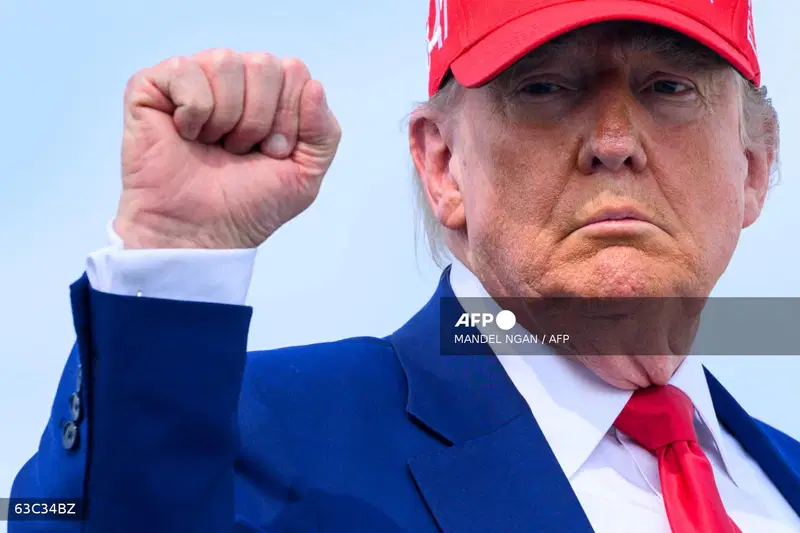
The United States Treasury has announced sanctions against Iran’s Persian Gulf Strait Authority.
Treasury Secretary, Scott Bessent, said this in a statement on Wednesday.
The statement extended the threat of sanctions to anyone paying the fees, saying they may be providing support to and receiving services from Iran’s Revolutionary Guards, and therefore may be exposed to sanctions risk.
READ ALSO:Strait Of Hormuz: Pakistan Thanks Trump For Pausing ‘Project Freedom’
“The Iranian military’s latest attempt to extort global maritime trade is proof that Economic Fury has left the regime desperate for cash.
“Treasury has deprived the Iranian regime of revenue for their weapons programs, terrorist proxies, and nuclear ambitions,” Bessent said.
Bessent added that the US has succeeded in disrupting tens of billions of dollars’ worth of revenue from being accessible to Tehran.
Headline
US Launches New Airstrikes On Iran
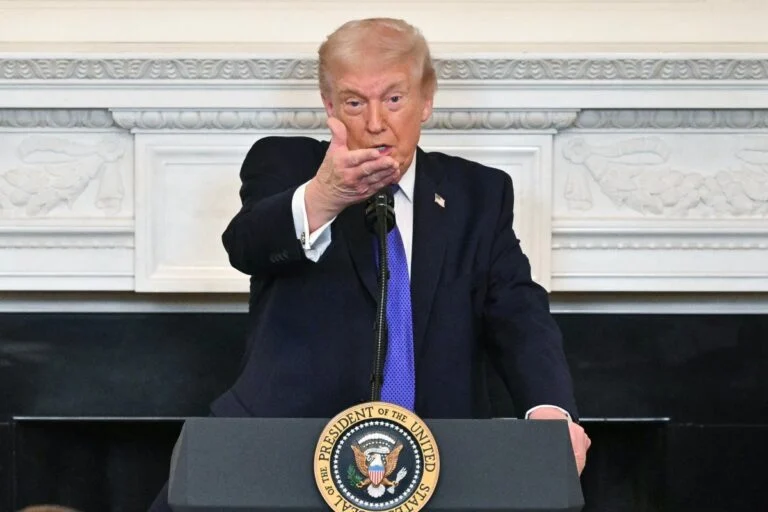
The United States has launched new airstrikes in southern Iran.
The strike shot down four one-way attack drones that posed a threat around the Strait of Hormuz and then a ground control site.
A US official revealed that American forces struck an Iranian ground control station in Bandar Abbas that was about to launch a fifth drone.
READ ALSO:US Restricts Entry Routes For Travellers From DRC, Uganda, South Sudan Over Ebola Outbreak
The official described the strikes as purely defensive, saying the US intended to maintain the ceasefire.
Report says this is the second time in three days that the US has carried out self-defense strikes against Iranian military targets in southern Iran.
Recall that on Monday the US carried out airstrikes against Iranian missile locations and boats that US Central Command said were preparing to launch mines in the Strait of Hormuz.

 Headline4 days ago
Woman Passes Out After Receiving 100 Strokes Of Cane
- Headline4 days ago
JUST IN: White House Locked Down Briefly As Gunman Opens Fire At Security Checkpoint
- Politics5 days ago
Warri Ijaw Hail INEC Delineation Report, Call For Additional Electoral Wards, Others
- Politics3 days ago
Two Masked Men Gun Down Politician In His Rivers State Hotel
- News3 days ago
More Pain For Nigerians As Cooking Gas Price Increases Nationwide
- Metro4 days ago
Police Reject N500m Bribe, Recover N7.8bn Illicit Drugs In Lagos
- Politics5 days ago
What I’ll Do As President Of Nigeria — Amaechi
- News3 days ago
FG Declares Two Days Public Holiday For Eid-el Kabir Celebration
- Politics3 days ago
‘Tinubu’s Borrowing In 24 Months Surpasses 55 Years’ Debt Record’
- Politics2 days ago
Court Clears Goodluck Jonathan To Contest 2027 Presidential Election


