
Headline
Clark Vs Obasanjo: Ex-President Attacked Over Comment On N’Delta
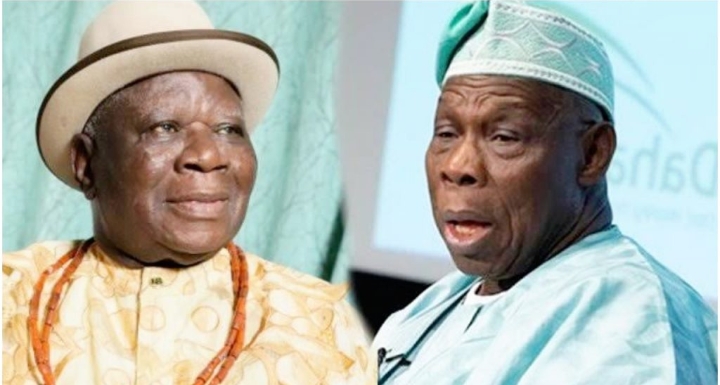
Former President Olusegun Obasanjo has been lampooned for his response to a letter by a Niger Delta leader, Edwin Clark.
In a rejoinder on Tuesday, Obasanjo declared that the oil within the region belongs to the entire people of Nigeria.
On Wednesday, a South-South coalition said from paragraphs 4 to 12 of his reply, Obasanjo emphasized the constitutionality of “the forceful expropriation of Niger Delta”.
The Niger Delta Congress (NDC) chided the ex-Head of State for failing to see the absurdity in centring his arguments on legalities “conceived by members of the larger ethnic nationalities which Obasanjo belongs”.
A statement by the spokesman, Ovunda Eni, noted that in paragraph 13, Obasanjo, not only admitted Niger Delta resources was eyed by both sides during the civil war, he asked the people to be appreciative because the situation would have worsened if the Biafran side won.
Eni, a lawyer, thanked the retired General for the “revelations” which he said aren’t new to the region.
“It important for the Niger Delta people to take note that its territory and people are seen as war booty won and/or lost. This thinking continues to influence the relationship between the Niger Delta and the larger nationalities; not neighbours, not brothers, not comrades, not friends, but war booty.
“In paragraph 18, the former President made it known that he has been a champion of equity and fairness in Nigeria. And in his bid to ensure this equity, he believes that it is necessary to “suppress” ethnic nationalities, or “tribes” in his own words, so the state can emerge.
“What he failed to reveal is that suppressing “tribes” in a state is in reality nothing more than an attempt to create a state where smaller nationalities are silenced, or annihilated so their lands and resources are annexed and controlled by the larger ethnic nations who also make up the state.
“We have seen the ruthlessness with which this suppression as a strategy has been applied, most importantly with the genocide in Odi which left over 10% of the population dead in 1999; a genocide perpetrated by Nigerian troops when President Obasanjo himself was the Commander in Chief of the Armed Forces.
“President Obasanjo stating that he would continue to push for the suppression of “tribes” in the Nigerian state until he “breathes” his “last”, is Obasanjo pledging allegiance to a genocidal ideology. Such audacity can only come when a man has successfully carried out a massacre.
READ ALSO: Chieftaincy: ‘How My father, I Were Arrested, Charged For Murder’ – Wike
“This does not only show the failure of the Nigerian state he swears by, but also shows the complicity of the international community he hobnobs with and whose interests in the Niger Delta he has served. This also shows the failure of the Niger Delta leadership to stand by and for our people.
“In subsequent paragraphs, the former President went back in time to cite colonialism and its legal constructs in different ways to derive legitimacy for the injustice that has been the relationship between the Niger Delta and what is currently known as Nigeria right from as early as the colonial era.
“As interesting as this attempt to gaslight the Niger Delta is, what is poignant for the NDC is the subtlety in insinuating that what we currently have operable in Nigeria is an extension of colonialism with the larger groups as the new colonial masters. We choose to not be colonised by any group.
“Most important to the NDC are paragraphs 20 and 21 wherein Obasanjo revealed moves he and some other collaborators from within and outside the Niger Delta are making to once again shortchange the people as has been done within the Nigerian context since 1960, and which he has played an integral part of from the civil war till date.”
Eni said the former leader spelt out the work being done by the Committee for Goodness of Nigeria (CNG) – which he is a part – where Niger Delta representatives are proposing an 18% derivation in CNG recommendations “to those who can take action” ahead of a new constitution before the 2023 elections.
NDC condemned the “insulting” proposition, insisting that agitations have revolved around economic and political autonomy (resource control), contained in the different declarations and charters that have emanated since the 1965 Rumuomasi declaration.
The body recalled that at the South-South Hearing on 1999 Constitution review in Port Harcourt on 27th May 2021, the NDC presented recommendations to the Senate Committee led by Senator Betty Apiafi where 50% resource control or derivation was demanded.
The statement reminded the public that the NDC has been collating signatures of ethnic nationalities’ representatives for the Niger Delta Peoples Charter which asserts the right of the region to control their resources and determine their socio-political future.
Eni vowed that the people will resist any move to foist any constitution that does not take cognizance of the demands of the people as captured in the charter adopted on 8th October 2021 at the Niger Delta Peoples Conference in Yenagoa, capital of Bayelsa.



Headline
‘Pioneer Of Cable TV News’: Key Facts About CNN Founder, Ted Turner
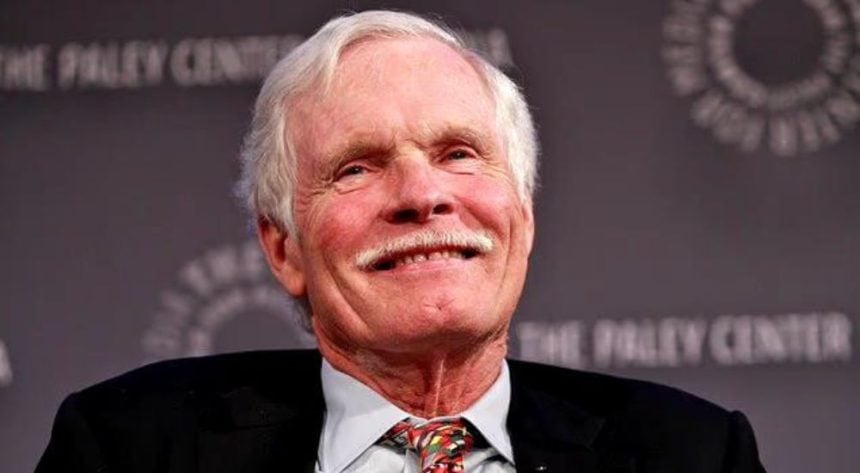
Ted Turner, the media businessman who founded CNN died at the age of 87. He died peacefully on Wednesday, surrounded by family, according to Turner Enterprises.
Contents
Launched 24-hour news television
Built a media network
Expanded through sports
Recognition and influence
Philanthropy and global causes
Environmental efforts
Health and later years
Early career path
Leadership and legacy
Personal life
Exit from business
Family
Below are key facts about his life and impact:
Launched 24-hour news television
Turner founded CNN on June 1, 1980, introducing the first 24-hour news channel and changing how audiences follow global events.
READ ALSO:CNN To Layoff 200 Staff Amid Attempts To Modernise Business
Built a media network
He moved from billboards into broadcasting, turning an Atlanta TV station into a national superstation in 1976. His business later grew to include CNN International, TNT, Turner Classic Movies and Cartoon Network.
Expanded through sports
Turner invested in sports broadcasting and owned teams including the Atlanta Braves and the Atlanta Hawks, using television to reach wider audiences.
Recognition and influence
In 1991, he was named Time magazine’s Man of the Year for his role in shaping modern news coverage.
Philanthropy and global causes
He founded the United Nations Foundation and supported campaigns against nuclear weapons. In 1997, he pledged $1 billion to the United Nations.
READ ALSO:CNN President, Jeff Zucker Resigns After Failing To Disclose Secret Affair With Colleague
Turner supported conservation work, including reintroducing bison in the United States, and backed environmental education through the “Captain Planet” cartoon.
Health and later years
In 2018, Turner revealed he had Lewy body dementia. He also recovered from a mild case of pneumonia in early 2025.
Early career path
He took over his father’s billboard company at 24 after his father’s death and later expanded into radio and television, despite limited experience in journalism.
“I worked until 7 o’clock, and when I got home the news was over,” he once said. “So I missed television news completely. And I figured there were lots of people like me.”
Leadership and legacy
READ ALSO:CNN Reporter Protests Nigeria’s $215 Single Entry Visa Fee
“Ted was an intensely involved and committed leader, intrepid, fearless and always willing to back a hunch and trust his own judgement,” Mark Thompson, Chairman and CEO of CNN Worldwide, said in a statement. “He was and always will be the presiding spirit of CNN. Ted is the giant on whose shoulders we stand, and we will all take a moment today to recognize him and his impact on our lives and the world.”
Personal life
Turner married actress Jane Fonda in 1991, and they later divorced after 10 years, though they remained close.
“I would never love anyone like I love him,” she said. “But I just couldn’t keep moving in his world, along the surface for the rest of my life. I knew that I would get to the end of my life and regret not doing the things that I also needed to do for me.”
Exit from business
He sold his company to Time Warner in 1996 and later stepped away following its merger with AOL.
Reflecting on his life, Turner once said: “I lost Jane. I lost my job here. I lost my fortune, most of it. Got a billion or two left. You can get by on that if you economize.”
Family
He is survived by his five children, 14 grandchildren and two great-grandchildren.
Headline
Iran’s Nationwide Internet Shutdown Hits 70 Days

NetBlocks, a monitoring group, has disclosed that an internet shutdown enforced by the Iranian regime has entered its 70th day, severing key access from swathes of the population under the shadow of war.
NetBlocks reported on Friday that the blackout has now surpassed 1,656 hours, marking more than two months since US-Israeli strikes pounded Tehran and escalated across the Middle East.
“Digital connectivity is vital in times of crisis,” NetBlocks said in a post on X. “Limiting service harms those most in need – people with disabilities, students, small businesses and the general public.”
READ ALSO:US Underestimated Iran Before War – France’s Bardella
According to CNN, Iran imposed a separate internet shutdown on the country’s 92 million people earlier this year, when it launched the most lethal crackdown on anti-government protesters since the Islamic Republic’s founding 47 years ago.
CNN further reports that the latest blackout has cut off another potential lifeline for Iranian residents faced with high unemployment and economic pressure exacerbated by the US-Israeli campaign.
(CNN)
Headline
Gas Prices In US Edge Down After Two Weeks Of Increases

The cost of a gallon of regular gas in the United States (US) has edged down a little more than a penny to $4.55.
According to AAA’s readings, this marks the first decline in the average gas price after 15 straight days of increases.
The decline is minuscule compared to the large increases in gas prices over the last two weeks.
According to CNN, gasoline costs rose an average of nearly 4 cents a day during that period and had several daily increases of between 7 and 9 cents.
READ ALSO:Gas Station Explosion Rocks Calabar, Scores Injured, Property Destroyed
Also Read: Trump insists US-Iran ceasefire intact despite recent exchange of fire
CNN also reports that based on past gas spikes, it will likely take weeks for gas prices to get down below $4 a gallon.
The report, however, states that a previous two-week stretch of gas price declines only shaved 14 cents off the average price, taking the average price to $4.02, before the recent 15-day run of increases.
READ ALSO:Tinubu Signs Executive Order To Protect Nigeria’s Oil & Gas Revenue
According to CNN, it could take months for the average price to fall below $3 per gallon, as it did before the war in Iran.
CNN further reports that only one state – Oklahoma – now has an average price of less than $4 a gallon, and its average stands at $3.98. California has the highest average price at $6.16.
(CNN)

 News4 days ago
Gun Battle In Oyo Forest As Police Disrupt ₦10m Ransom Collection Plot
- Politics3 days ago
Four Fubara Loyalists Disqualified As APC Clears 21 For Rivers Reps Primaries
 Metro4 days ago
Drama As Teenagers Stage Secret Wedding With N3,000 Bride Price
- Politics3 days ago
2027: Court Rebukes Plaintiff, Lawyer In Suit Against Jonathan, Awards N1m Fine
- News3 days ago
Lagos Sanctions 15 Money Lending Companies For Sharp Practices
- Politics5 days ago
2027: Daniel-Abiodun Feud Deepens Over Senatorial Ticket For Ogun East
- News4 days ago
PAP Sends Additional 15 Scholarship Beneficiaries For Post-Graduate Studies In UK
- Sports4 days ago
CAF Introduces New Laws After Chaotic AFCON Final In Morocco
- Entertainment5 days ago
Grammy Announces Date For 2027 Awards Nominations
- News5 days ago
Sleep Timing Irregularity Could Double Risk Of Heart Attack, Experts Warn


