
Headline
Corporation For Public Broadcasting To Shut Down Following Trump’s Funding Cuts
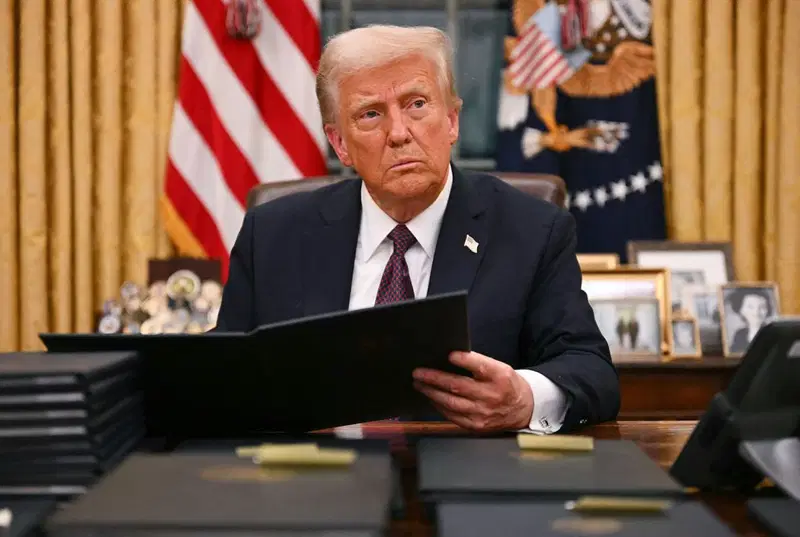
The Corporation for Public Broadcasting (CPB) announced on Friday that it will shut down operations, ending over 60 years of public media funding.
The move comes after President Donald Trump and Republican lawmakers succeeded in eliminating federal support for the organization.
Trump recently signed a rescissions bill canceling $9 billion in previously approved government spending. Of that amount, $1.1 billion had been allocated to CPB for the next two years.
Trump has long criticized public media as “biased” against conservatives and made repeated efforts to cut its funding.
READ ALSO:Trump Says Hamas Doesn’t Want A Deal, ‘Want To Die’
“Despite the extraordinary efforts of millions of Americans who called, wrote, and petitioned Congress to preserve federal funding for CPB, we now face the difficult reality of closing our operations,” said CPB President and CEO Patricia Harrison.
“CPB remains committed to fulfilling its fiduciary responsibilities and supporting our partners through this transition with transparency and care.”
The organization is now focused on helping local PBS and NPR stations—especially those in rural areas—prepare for the resulting budget shortfalls.
Harrison previously warned that some stations could be forced to close entirely.
Larger outlets may survive with help from donors and other revenue streams, but public media leaders say the national network will be severely weakened.
READ ALSO:CWC: Trump Put Your Medal In His Pocket, Took It To White House – Cucurella Tells Madueke
“The ripple effects of this closure will be felt across every public media organization and, more importantly, in every community across the country that relies on public broadcasting,” said NPR CEO Katherine Maher.
The CPB expects to eliminate most of its 100 staff positions by September 30, when the current funding expires.
A small transition team will remain until January to oversee a “responsible and orderly closeout of operations.”
The shutdown marks a political win for Trump, who has pushed for defunding CPB since the start of his presidency. Earlier this year, he tried to remove three board members, despite lacking legal authority under the 1967 law that created the corporation.
CPB filed a lawsuit to block that attempt, but on Friday, it voluntarily dropped the case—effectively conceding defeat.
READ ALSO:US Appeal Court Rules Against Trump Birthright Citizenship Order
“REPUBLICANS HAVE TRIED DOING THIS FOR 40 YEARS, AND FAILED… BUT NO MORE,” Trump posted on Truth Social, celebrating the bill’s passage through the GOP-controlled House and Senate.
Some advocates had hoped that Congress might still restore funding through the usual budget process.
However, a draft Senate bill released Thursday included no CPB funding—suggesting those hopes are now unlikely to materialize.
Trump and other Republicans argue that defunding CPB is a stand against liberal influence in public broadcasting.
Public media supporters say the move undermines civic life and access to reliable news.
READ ALSO:Anxiety As Trump Gives Russia 50 Days To Make Ukraine Deal
“The end of CPB is the direct result of the deep and corrupt failure of Congress and the Trump administration to invest in informing the American public,” said Craig Aaron, co-CEO of media advocacy group Free Press.
“They have trashed decades of democracy-building work and will deny many journalists, artists, educators and creators the opportunity to be heard.”
Aaron said he still believes there’s a chance to rebuild publicly funded media from the ground up. He called for a new system “as a bulwark against authoritarianism that meets the civic needs of all our communities.”
Some broadcasters are already mobilizing support. In Boston, GBH put up a sign reading, “Local. Trusted. Defunded.”
“We’re not backing down,” the station said in a fundraising message. “But we can’t do it without you. Donate now to keep public media strong and independent.”
(CNN)



Headline
Insecurity: US Congressman Riley Moore Reveals Trump’s Mission In Nigeria
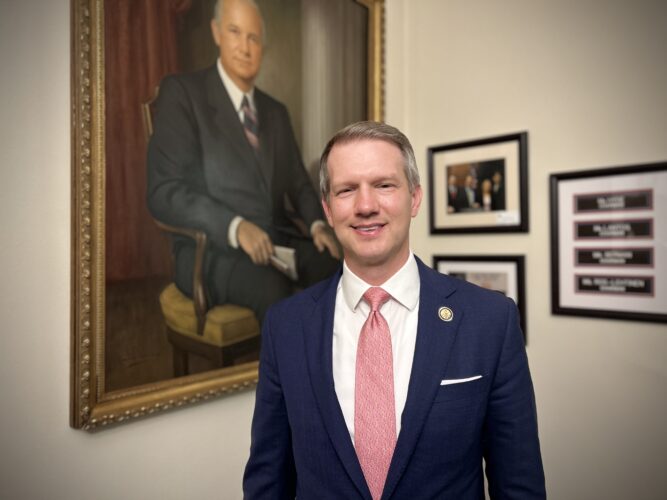
US Congressman Riley Moore has dismissed insinuations that President Donald Trump is attempting to bring war to Nigeria.
Moore made the remark in a post on his verified X handle on Monday.
His comments followed a US military airstrike on a terrorist enclave in north-west Nigeria on Christmas Day, reportedly carried out on the directive of President Trump.
“President Trump is not trying to bring war to Nigeria, he’s bringing peace and security to Nigeria and to the thousands of Christians who face horrific violence and death.
READ ALSO:Russia Calls up 135,000 Military Personnel
“The strikes against ISIS on Christmas, in coordination with the Nigerian government, have given hope to the Christians in Nigeria,” he said.
Recall that the lawmaker had previously stated that President Trump is focused on ending the killing of Christians in Nigeria.
It will be recalled that Moore led a US delegation on a fact-finding mission into alleged Christian genocide in Nigeria some weeks ago.
During his brief stay in the country, Moore travelled to Benue State, where he interfaced with religious and traditional leaders, as well as internally displaced persons.
Headline
Russia Calls up 135,000 Military Personnel

Russia has enlisted 135,000 conscripts for military service in 2026, following the conclusion of the autumn army draft by the Defense Ministry.
A statement on Monday said most personnel have been assigned to training units and military formations where they will “get a military specialty and learn to operate modern military hardware.”
The conscripts can choose to serve in any of the various military branches and armed services after an assessment of their health condition and the results of psychological examinations.
READ ALSO:Russian Strike On Odesa Region Kills Eight, Injures 27
The ministry disclosed that 680 recruits have joined scientific and research-production units, while 240 from the country’s national teams in Olympic disciplines joined sports companies.
However, military personnel who have served the established term of military service have been discharged and sent to their places of residence.
The latest enlistment confirms Russia is shoring up its troops deployed to the ongoing special military operation in Ukraine ahead of the new year.
READ ALSO:Putin Says Russia Ready For War, Blames Europe For Sabotaging Peace
A fortnight ago, European leaders reaffirmed their pledge to form a multinational force–under the aegis of the Coalition of the Willing–to assist Ukraine in securing land, skies, and seas.
The pledge is one of the six commitments the EU and heads of state developed for Ukraine’s security and economic recovery support measures.
In an interview with TASS on Sunday, Russian Foreign Minister Sergey Lavrov condemned Europe’s insistence on sending military forces to Ukraine.
“We have said many times that our Armed Forces would view them as a legitimate target,” he said, warning that anyone who attacks Russia would face “a devastating blow.”
Headline
How Our Airstrikes Stopped Christmas Attacks In Nigeria — US Lawmaker
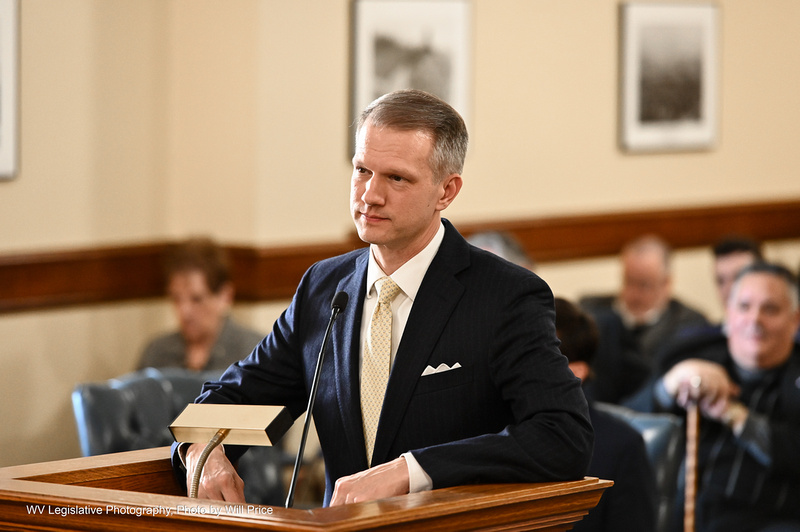
Riley Moore, a member of the United States House of Representatives from West Virginia’s 2nd District, has linked the absence of Christmas attacks in Nigeria this year to US military airstrikes carried out against Islamist militants on Christmas Day.
In a post on his official X account on Saturday, Moore contrasted the situation with the past two Christmas seasons, during which he claimed Christians were killed in attacks across parts of Nigeria.
The lawmaker noted that this year’s response targeted extremist groups instead of marking another period of violence.
READ ALSO:Rep Moore Confirms 12 Tomahawk Missiles Launched In Sokoto
He added that US forces acted decisively against militants in coordination with the Nigerian government.
“For the past two Christmases, Christians have been murdered in Nigeria. This year, thanks to @POTUS, Radical Islamic Terrorists were on the receiving end of 12 Tomahawk missiles as a present.
“The successful strikes on ISIS, in coordination with the Nigerian government, are just the first step to secure the country and end the slaughter of our brothers and sisters in Christ,” Moore wrote.
US President Donald Trump said on Thursday that American forces had conducted deadly strikes against Islamic State terrorists in north-western Nigeria.
Trump, who spoke via his Truth Social platform, warned that more attacks would follow if the militants continued killing Christians, adding that the Department of War executed numerous “perfect strikes.”

 Headline4 days ago
JUST IN: US Forces Bomb Terrorists Camps In Nigeria
- News5 days ago
Okpebholo Slams ₦25bn Libel Suit On Edo PDP Chairman
- Headline4 days ago
US Dept Of War Shares Video Of Air Strikes In Nigeria
- News4 days ago
PHOTOS: SGF George Akume Weds Ooni’s Ex-Queen
- News1 day ago
BREAKING: Anthony Joshua Involved In Road Accident
- News4 days ago
Trump’s Airstrikes: Halt Military Cooperation With US Immediately – Sheikh Gumi Tells Tinubu Govt
- News4 days ago
Shehu Sani Reacts To Trump’s Military Strikes In Nigeria
- Headline4 days ago
U.S. Lawmaker Reacts To Nigeria, U.S. Airstrikes
- News2 days ago
Ex-Edo Gov Obaseki Reacts As His Cousin Is Beaten, Stripped
- News5 days ago
YULETIDE: UBTH CMD Charges Nigerians To Be Hopeful In Coming Year


