
News
Court Sets Date To Hear Emefiele’s Applications On Forfeited Assests.

Justice Deinde Dipeolu of the Federal High Court has fixed, Thursday, September 12, for the hearing of all applications challenging the temporary order forfeiting $2,045,045 and some property allegedly linked to a former Governor of the Central Bank of Nigeria (CBN), Godwin Emefiele.
The then vacation Judge, Justice Akintayo Aluko had on August 15, ordered the interim forfeiture of the money and some landed properties after listening to an ex-parte application to that effect moved by the counsel to the Economic and Financial Crimes Commission (EFCC), Rotimi Oyedepo (SAN).
The lands are listed as two fully detached duplexes of identical structures situated at No. 17b Hakeem Odumosu Street, Lekki Phase 1, Lagos; an undeveloped/bare land, measuring 1919.592sqm with Survey Plan No. DS/LS/340 lying, being situated at Oyinkan Abayomi Drive (Formerly Queens Drive), Ikoyi, Lagos.
Others are a bungalow lying, being and situated at No. 65a Oyinkan Abayomi Drive (Formerly Queens Drive), Ikoyi, Lagos; a bedroom duplex lying, being and situated at 12a Probyn Road, Ikoyi; Industrial complex under construction on a 22-plot of land, lying, being and situate in Agbor, Delta State; 8 units of the undetached apartment on a plot measuring 2457.60sqm OF lying, being and situate at No. 8a Adekunle Lawal Road, Ikoyi, and a full duplex together with all its appurtenances on a plot of land measuring 2217.87sqm lying, being and situate at 2a Bank Road, Ikoyi, Lagos.
Justice Aluko also ordered that two share certificates of Queensdorf Global Fund Limited Trust belonging to Emefiele be forfeited.
After granting the ex-parte motion, the judge directed the EFCC to publish it in a national newspaper to enable anyone interested in the properties to appear before the Court and show cause within 14 days why the court should not grant the final order of forfeiture of the said properties in favour of the federal government
At the resumed hearing on Thursday, two lawyers, Olalekan Ojo (SAN) and A. Labi-Lawal, appeared for the embattled former CBN Governor, Emefiele; also, another lawyer, Chibuzor Opara, announced his appearance for the occupants of 8a Adekunle Lawal Road, Ikoyi, Lagos.
READ ALSO:Court Orders Seizure Of $4.7m, N830bn, Mansions, Others Linked To Ex-CBN Gov, Emefiele
The EFCC lawyer, Mrs Bilikisu Buhari-Bala, said that the court fixed the matter for Thursday to enable the anti-graft agency present a compliance report with the orders made on August 15, 2024.
Mrs Buhari-Bala also told the judge that the EFCC had filed an affidavit showing that the order was published on August 28, 2024, in a national newspaper.
She further claimed that she had received two processes from Emefiele and that the applications were not ripe for hearing.
She, therefore, asked the court for a short date to enable her to respond to Emefiele’s applications.
For his part, Ojo (SAN), in his response, informed the court that the process filed on behalf of Emefiele is to stop further proceedings in the forfeiture suit.
He stated that, “The law says, where there is an application of such, the issue of final forfeiture should be stalled.”
Ojo further informed the court that his client’s interlocutory application must be heard and determined before any further proceedings.
He, therefore, urged the court to adjourn to Monday for the hearing of his client’s application.
Opara, who appeared for the occupants of 8a, Adekunle Lawal Road, Ikoyi, told the court that he was yet to have all processes filed in the matter despite applying to the court for a search.
He, therefore, urged the court for an adjournment to enable him to file his client’s processes.
Based on the development, Justice Dipeolu adjourned the case to September 12, 2024 for the hearing of the applications.



News
Eating Takeout Food Often May Increase Heart Disease Risk — Study
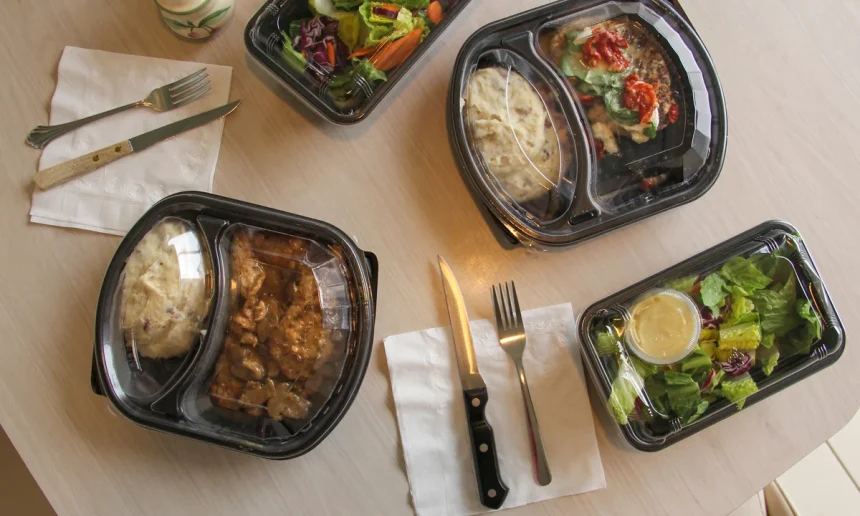
Research suggests that higher takeout food consumption may increase a person’s risk of cardiovascular disease, like heart disease.
In a new study, published in Food Science & Nutrition, researchers said eating takeout food too often can influence systemic inflammation that underlies much cardiovascular disease.
The study of over eight thousand people in the 2009 to 2018 U.S. National Health and Nutrition Examination Survey (NHANES) found that those who eat greater amounts of takeout food are likely to have various elevated risk factors for heart disease.
They were interviewed in their homes and also visited a mobile examination centre, where they recalled their food intake, received cardiometabolic health assessments, and had blood collected.
READ ALSO:23 Ships With Fuel, Food Items To Arrive Lagos Ports – NPA
Mammograms may predict heart disease risk in women — Study
The researchers found a correlation between the amount of takeout food a person consumes and their likelihood of developing chronic low-level inflammation, a key driver of cardiovascular pathology.
Deaths from cardiovascular disease and the consumption of takeout foods are both on the rise, and while that does not prove a causal relationship, the study explores whether there is a connection between the two.
The study tracked degrees of systemic inflammation according to the Dietary Inflammatory Index (DII), a scale that quantifies the risk of inflammation related to the intake of specific dietary substances.
READ ALSO:Food Security: 14,000 Smallholder Farmers To Benefit From N4bn Smart Agriculture Training In Bauchi
The three major takeaways from the analysis included that a higher level of takeout food consumption corresponded to an unfavourable cardiometabolic profile consisting of lower HDL, as well as higher triglycerides, fasting glucose, serum insulin, and insulin resistance.
Jayne Morgan, MD, cardiologist and Vice President of Medical Affairs in a reaction, who was not involved in the study, explained that “Takeout food raises the cardiovascular risk not because of one ingredient, but because of a predictable combination of nutrients, additives, and preparation methods that adversely affect blood pressure, lipids, insulin sensitivity, inflammation, and endothelial function.”
“This includes excess sodium that increases blood volume and blood vessel stiffness, and unhealthy fats, usually saturated fats or trans fats, that increase cholesterol level and atherosclerosis, a condition that can lead to heart attack and stroke.”
Michelle Routhenstein, Preventive Cardiology Dietitian at Entirely Nourished, also not involved in this study, declared, “It is also important to recognise that frequent takeout use often reflects broader lifestyle pressures such as demanding schedules, limited access to cooking resources, irregular meals, and disrupted sleep, all of which can quietly compound cardiovascular risk.”
News
How To Identify Fake Kiss Condoms In Circulation
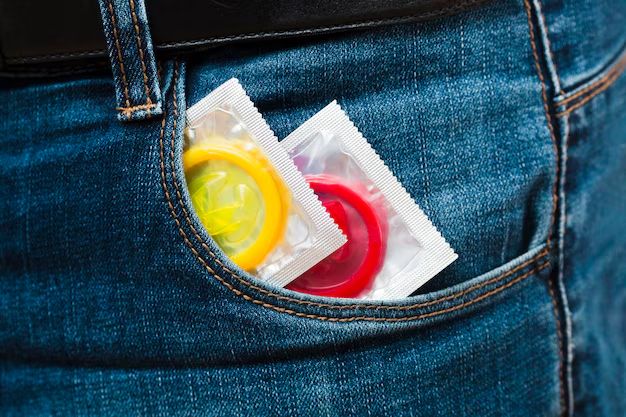
The National Agency for Food and Drug Administration and Control (NAFDAC) has recently warned Nigerians about the circulation of counterfeit Kiss brand condoms in major markets across the country.
Contents
Original DKT Kiss condoms
Fake Kiss condoms
In a public alert published on its website recently and referenced as Public Alert No. 042/2025, the agency said the warning followed information received from DKT International Nigeria, a non-governmental organisation involved in contraceptive social marketing and HIV/AIDS prevention.
NAFDAC stated, “The National Agency for Food and Drug Administration and Control is notifying the public about the sale and distribution of fake Kiss condoms in various Nigerian markets.
“The information was received from the MAH-DKT International Nigeria, a leading non-governmental organisation focused on contraceptive social marketing. Its mission is to provide Nigerians with affordable and safe options for family planning and HIV/AIDS prevention.
“The fake Kiss condoms have been reported to be found in Onitsha Market, Idumota Market, Trade Fair Market, and various markets in Kano, Abuja, Uyo, Gombe, Enugu, and others.”
READ ALSO:Married Man Denies Wife At Brazil Concert To Kiss Tems On Stage [VIDEO]
Kiss condom is a brand of male latex condoms designed to offer sexual protection, including the prevention of unwanted pregnancy and sexually transmitted infections such as HIV, gonorrhoea and syphilis.
To help consumers avoid counterfeit products, NAFDAC outlined key differences between original and fake Kiss condoms.
Original DKT Kiss condoms
The original product comes in a light red box pack with clear instructions printed on the lower part of the pack, including single-use warnings and storage and caution information. The box contains detailed medical device information, including MDSS GmbH, Germany, and a complete Nigerian address at Isolo Industrial Layout, Oshodi-Apapa Expressway.
The condom pack is light red, with the word “Kiss” closely written on six lines. The wallet outer pack is lighter red, carries the Oshodi-Apapa address, manufacturer details, and a clear product description beside the condom image. The hidden flap includes revision dates, medical device details, and caution information, while the wallet inner contains detailed instructions and eight bullet points under important notes.
READ ALSO:Lagos Names Mandy Kiss Anti-drug Abuse Ambassador
The original condom is large, oval-shaped, well-lubricated, and has a large teat end for semen collection.
Fake Kiss condoms
In contrast, fake Kiss condoms come in darker-coloured box packs with little or no additional information. Some boxes are plain white inside and lack condom images. The address is wrongly listed as 42, Montgomery Road, Yaba, Lagos, while the manufacturer’s address is incomplete or missing. Storage and caution information is absent.
The condom pack is darker, with “Kiss” loosely written on five lines and wide spacing. The condom strip is longer than the original. The wallet outer pack is also darker red, carries incorrect or missing addresses, lacks colour wave designs, and shows inconsistencies in barcode lines. Medical device and caution information are missing, and the hidden flap contains no details.
Inside the wallet, information is summarised with only six bullet points. The fake condom is thinner, round-shaped, less lubricated, and has a smaller teat end.
(TRIBUNE)
News
Lagos: Police Arrest 14 Suspected Traffic Robbers On Lekki-Epe Expressway

Fourteen persons suspected to be involved in traffic-related robbery have been arrested at various points along the Lekki-Epe Expressway in Lagos over the past two weeks.
The arrests were confirmed on Tuesday by the Lagos State Police Command spokesperson, SP Abimbola Adebisi, via a post on her official X handle, @AbimbolaShotayo.
According to her, operatives of the Command’s Tactical Squad based in Elemoro carried out the operations that led to the suspects’ apprehension.
READ ALSO:VIDEO: Chaos As Last-minute Shoppers Overwhelm Lagos Balogun Market
She explained that the arrests followed sustained patrols and intelligence-driven operations aimed at curbing criminal activities associated with traffic congestion and improving the safety of motorists and other road users along the busy corridor.
Adebisi noted that the development reflects the Command’s determination to strengthen security and uphold law and order on the Lekki-Epe axis, adding that the Tactical Squad has continued to proactively identify crime-prone areas and respond swiftly to threats posed by criminal elements.
She called on residents and commuters to support police efforts by providing timely and credible information that could assist in preventing and detecting crime.
READ ALSO:VIDEO: Chaos As Last-minute Shoppers Overwhelm Lagos Balogun Market
“Security is a shared responsibility. Members of the public are encouraged to stay alert and promptly report any suspicious movements or activities to the nearest police station,” she said.
The police spokesperson further reassured residents and road users of the Command’s commitment to maintaining aggressive patrols and security operations to protect lives and property in the area.
She reiterated the Command’s community policing message, “See Something, Say Something,” stressing the importance of cooperation between the police and the public in sustaining peace and security.

 News4 days ago
BREAKING: Anthony Joshua Involved In Road Accident
- News5 days ago
Ex-Edo Gov Obaseki Reacts As His Cousin Is Beaten, Stripped
- Politics4 days ago
You’re Not 001 – Wike Rubbishes Claims Of Fubara Being APC Leader In Rivers
- Politics4 days ago
Wike Speaks On Defecting To APC
- Politics4 days ago
JUST IN: INEC Excludes PDP From Ekiti Governorship Election
- Politics4 days ago
Go To Hell, You Didn’t Pay My School Fees – Wike Hits Seyi Makinde
- News4 days ago
Doris Ogala: How Pastor Chris Knelt Before Church, Begged For Forgiveness [Video]
- News4 days ago
NAF Neutralizes Bandits At Turba Hill, Kachalla Dogo Sule Camps
- News4 days ago
Nigerian Army Finally Reveals Details Of US Military-led Airstrikes In Sokoto
- Business4 days ago
Fuel Price Cut: NNPCL GCEO Ojulari Reveals Biggest Beneficiaries


