
Headline
Creativity: A To Z Of Britain’s King Charles III
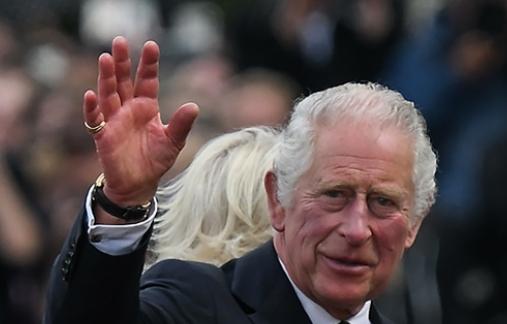
Here is an A to Z of the new King Charles III:
– A for action man –
Charles earned the nickname in his daredevil youth, jumping out of planes, escaping from submarines, windsurfing, playing polo and waterskiing.
– B for black spider –
Before becoming king, he bombarded government ministers with letters, dubbed the “black spider memos” for his messy annotations.
– C for Camilla –
Charles was devastated when, while away on naval service, she wed Andrew Parker Bowles in 1973. Charles turned to Camilla after his marriage to Diana collapsed. They married in 2005.
– D for Diana –
A badly-matched couple, their “fairytale” marriage fell apart in explosive fashion. They separated in 1992 and divorced in 1996, a year before her shock death in a car crash.
– E for environment –
A fervent environmentalist, Charles is driven by environmental preservation and organic farming. He was outspoken on climate change long before it became mainstream.
– F for faith –
The new head of the Church of England sees his role as defending the free practice of all faiths. Charles has studied Judaism and Islam and tries to encourage inter-faith dialogue.
– G for Gordonstoun –
Charles hated his years at the stark Scottish boarding school, describing his years there as a lonely “prison sentence”. Toughing it out for duty’s sake formed part of his character.
– H for homeopathy –
Charles is convinced by alternative medicine and even uses it on his farm animals. His outspoken views have often infuriated some in the scientific community.
READ ALSO: 10 Things Named After King Charles III
– I for income –
Before his accession, Charles’s money came from the Duchy of Cornwall, the heir to the throne’s private land and property portfolio. The surplus funded his family’s public, charitable and private activities and he voluntarily paid income tax.
– J for jubilee speeches –
His moving, rousing addresses closing Queen Elizabeth II’s 2002, 2012 and 2022 jubilee celebrations, in which he referred to her as “Mummy”, helped endear him to the nation.
– K for Knatchbull –
The one that got away. Encouraged by Lord Mountbatten, Charles proposed to Amanda Knatchbull, his second cousin and Mountbatten’s grand-daughter, in 1979, but she declined.
– L for lengthy wait –
Charles was the longest-serving heir apparent in British history, since the age of three in 1952, and the longest-serving prince of Wales, since the age of nine in 1958.
– M for Mountbatten –
The prince’s great uncle Louis Mountbatten was his mentor and closest confidant, guiding his early life. His assassination by Irish republican paramilitaries in 1979 left Charles distraught.
– N for Navy –
Charles served on the ships from 1971 to 1976, taking command of a coastal minehunter for his last 10 months. He served in the Caribbean and around the Pacific and learned to fly helicopters.
– O for offspring –
Charles was a more hands-on parent to Princes William and Harry than his own parents had been. However, he has grown estranged from Harry after he quit royal duties and moved to California, sniping at Charles on the way.
– P for Prince’s Trust –
Charles launched the Prince’s Trust with his £7,500 navy severance pay and the charity had helped more than a million disadvantaged youngsters by the time of his accession to the throne.
– Q for Queen Mother –
Charles adored his “darling grandmother”, queen Elizabeth, the queen mother. “For me, she meant everything”, he said in a moving tribute after her death in 2002.
– R for residences –
Charles will now be expected to move into Buckingham Palace, giving up his Clarence House official London residence. He also inherits the Sandringham estate in eastern England and Balmoral in the Scottish Highlands.
READ ALSO: King Charles Welcomed In Wales Amid Cheers, Protest
– S for style –
Old-fashioned for some, impeccably suave for others, Charles’s sartorial style is unwavering, perhaps because his outfits are the same: shoes from 1968, a coat from 1985 and immaculate double-breasted suits.
– T for Transylvania –
The king, who claims descent from Vlad the Impaler, bought and restored several properties in Romania to help preserve its stunning nature and unique rural traditions.
– U for university –
He went to Trinity College at the University of Cambridge, becoming the first heir to the throne to take a degree, graduating in 1970 with a 2:2. He switched from anthropology and archaeology to study history.
– V for Vision of Britain –
Charles’s 1989 book outlines his cherished architectural principles, calling for proportionate, aesthetic development in keeping with local tradition. He put his theories into practice, building Poundbury, a model suburb.
– W for Wales –
Queen Elizabeth II made Charles the Prince of Wales aged nine, and he learnt Welsh before his inauguration ceremony in 1969.
READ: Photos From King Charles’ Proclamation
– X for X-Rated –
A secretly-recorded 1989 phone call with Camilla, published in 1993, was deeply embarrassing after tabloid newspapers got a hold of it and published transcripts.
– Y for youth –
Charles thinks Britain could emulate Germany’s national community or military service, as part of his drive to unlock latent talent in the nation’s youngsters.
– Z for Zaza –
Also known as a gin and Dubonnet. The royals’ preferred cocktail before lunch. Former prime minister Tony Blair referred to them as “true rocket fuel”.
AFP/PUNCH



Headline
JAPA: Top Six Countries To Obtain Easiest Citizenship

As a Nigerian considering relocation plans, interest in countries with clear and less complicated citizenship pathways is a smart way to not just guarantee greener pastures, but also provide you with the opportunity to feel more at home in a foreign land. While some of the programmes are ancestry-based, others allow Nigerians with such a link to try other means.
Contents
1. Dominica
2. Ireland
3. Turkey
4. Portugal
5. Vanuatu
6. Italy
Though rules vary widely across borders, some nations stand out for offering citizenship through investment or family ties with fewer hurdles and faster processing timelines.
Below are the top six countries with the easiest citizenship:
1. Dominica
Dominica operates a citizenship-by-investment programme that allows applicants to qualify through a contribution to the government’s Economic Diversification Fund or by investing in approved real estate. Processing typically takes a few months. Citizens enjoy visa-free or visa-on-arrival access to over 140 countries, including the Schengen Zone. There is no residency requirement, and dual citizenship is permitted.
READ ALSO:Japa: 5 Affordable European Countries Nigerians Can Relocate To
2. Ireland
Ireland provides a clear citizenship pathway for individuals with Irish ancestry. Those with an Irish-born parent qualify automatically, while people with an Irish-born grandparent can apply through the Foreign Births Register. An Irish passport grants full European Union rights, including freedom of movement across EU countries. Dual citizenship is allowed, and there is no language requirement for applicants applying by descent.
3. Turkey
Turkey offers a fast-track citizenship option through investment. Foreign nationals who purchase qualifying real estate valued at a minimum of $400,000 can obtain citizenship within a few months. The programme does not require residency or renunciation of an existing nationality. Turkish passport holders have visa-free or visa-on-arrival access to several countries, with ongoing efforts to expand travel agreements.
4. Portugal
Portugal’s Golden Visa programme provides a residency-to-citizenship route for foreign investors. After five years of legal residence and meeting programme conditions, applicants may apply for citizenship. Approved investment options include venture capital funds and other qualifying assets. Successful applicants gain an EU passport, access to the Schengen Area, and dual citizenship, subject to passing a basic Portuguese language test.
READ ALSO:Japa: Lagos Suffers Deficit Of 30,000 Doctors, Commissioner Laments
5. Vanuatu
Vanuatu runs one of the world’s fastest citizenship programmes. Through its Development Support Programme, eligible applicants can receive citizenship in as little as two months after making the required financial contribution. The country offers visa-free access to over 100 destinations and has no tax on global income or capital gains. Residency requirements are minimal.
6. Italy
Italy grants citizenship by descent to individuals with an Italian parent or grandparent, following a 2025 legal update that tightened eligibility rules. Applicants must provide official documents proving a direct family link to an Italian ancestor. Italian citizenship comes with full EU rights, wide visa-free travel, and the ability to pass citizenship to future generations. Dual nationality is allowed, and no language test is required for descent-based applications.
(Tribune)
Headline
Japa: 5 Affordable European Countries Nigerians Can Relocate To
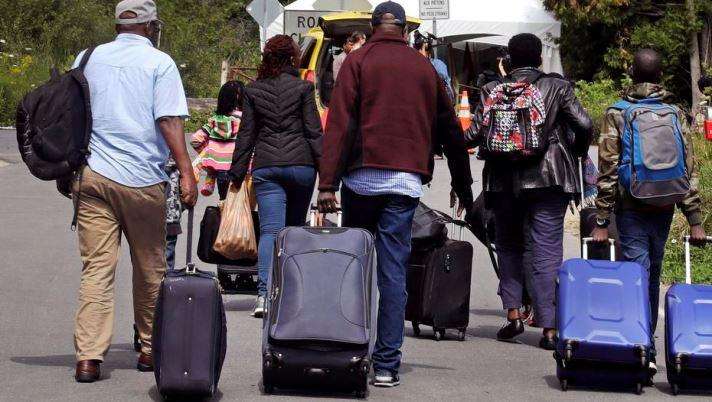
As economic pressures continue to mount, many Nigerians are increasingly exploring relocation as a path toward stability, better opportunities, and an improved quality of life. However, traditional destinations such as the United Kingdom, Canada, and the United States are becoming more difficult to access due to rising living costs and stricter visa policies.
Contents
1. Slovakia
2. Latvia
3. Portugal
4. Hungary
5. Georgia
But beyond these popular options, several lesser-known European countries are emerging as affordable and welcoming alternatives. Offering low tuition fees, flexible visa policies, and a reasonable cost of living, these nations are becoming attractive relocation choices for Nigerians seeking balance and opportunity.
In this article, Tribune Online highlights five budget-friendly countries Nigerians can consider for relocation:
1. Slovakia
Located in Central Europe, Slovakia combines stability, safety, and simplicity; three factors often missing in high-pressure relocation destinations.
READ ALSO:Top 11 Friendliest Countries To Visit
Though it may not feature prominently on social media relocation lists, Slovakia’s affordability and accessibility make it a hidden gem. Students enjoy low tuition fees, while residents benefit from proximity to major European cities like Vienna and Prague. For Nigerians seeking structure and affordability, Slovakia provides a peaceful yet practical alternative.
2. Latvia
The Baltic nation of Latvia is fast becoming a preferred destination for international students and skilled professionals. Known for its low living costs and straightforward residence procedures, Latvia offers a convenient entry point into the European Union.
Riga, its capital city, blends historic charm with modern infrastructure, providing an ideal environment for studying, working, or gradually transitioning to other parts of Europe.
3. Portugal
Situated on Europe’s western coast, Portugal is one of the continent’s most liveable and affordable countries. Known for its mild weather, safety, and reasonable living costs, Portugal offers a soft landing for Nigerians looking to relocate without excessive financial strain. The country’s friendly visa policies and welcoming atmosphere make it ideal for students, remote workers, and small business owners. Beyond its scenic beauty, Portugal provides what many Nigerians desire: peace of mind and an easier start abroad.
READ ALSO:10 Countries With The Strongest Global Reputation In 2025
4. Hungary
Hungary has quietly become a top choice for international students, offering quality education at affordable tuition rates. Living costs are significantly lower than in Western Europe, and cities like Budapest, Szeged, and Debrecen provide vibrant yet budget-friendly environments.
For Nigerians looking to relocate through education, Hungary offers a realistic and sustainable path toward long-term settlement in Europe.
5. Georgia
For Nigerians seeking an easy transition abroad, Georgia presents one of the smoothest relocation routes. The country allows Nigerians to stay visa-free for up to one year, eliminating embassy interviews and lengthy paperwork.
Located between Europe and Asia, Georgia offers a blend of natural beauty and affordability. Rent, transport, and food costs remain moderate, making it an excellent base for digital nomads and young professionals.
As migration trends evolve, success now depends on flexibility and strategic planning. While the dream of relocating abroad remains strong, the path doesn’t always have to lead through the UK or Canada. For Nigerians ready to look beyond the familiar, Europe’s quieter corners still offer accessible and rewarding opportunities.
Headline
Insecurity: US Congressman Riley Moore Reveals Trump’s Mission In Nigeria
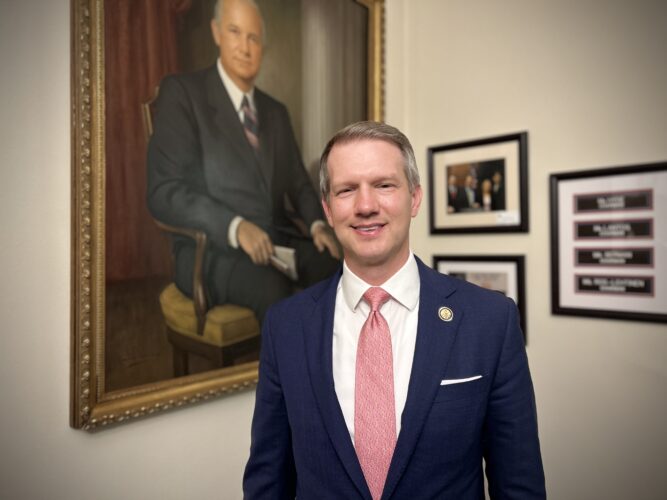
US Congressman Riley Moore has dismissed insinuations that President Donald Trump is attempting to bring war to Nigeria.
Moore made the remark in a post on his verified X handle on Monday.
His comments followed a US military airstrike on a terrorist enclave in north-west Nigeria on Christmas Day, reportedly carried out on the directive of President Trump.
“President Trump is not trying to bring war to Nigeria, he’s bringing peace and security to Nigeria and to the thousands of Christians who face horrific violence and death.
READ ALSO:Russia Calls up 135,000 Military Personnel
“The strikes against ISIS on Christmas, in coordination with the Nigerian government, have given hope to the Christians in Nigeria,” he said.
Recall that the lawmaker had previously stated that President Trump is focused on ending the killing of Christians in Nigeria.
It will be recalled that Moore led a US delegation on a fact-finding mission into alleged Christian genocide in Nigeria some weeks ago.
During his brief stay in the country, Moore travelled to Benue State, where he interfaced with religious and traditional leaders, as well as internally displaced persons.

 News5 days ago
PHOTOS: SGF George Akume Weds Ooni’s Ex-Queen
- News3 days ago
Ex-Edo Gov Obaseki Reacts As His Cousin Is Beaten, Stripped
- News2 days ago
BREAKING: Anthony Joshua Involved In Road Accident
- Politics2 days ago
You’re Not 001 – Wike Rubbishes Claims Of Fubara Being APC Leader In Rivers
- Politics2 days ago
Wike Speaks On Defecting To APC
- Politics2 days ago
JUST IN: INEC Excludes PDP From Ekiti Governorship Election
- Metro3 days ago
Obaseki Beaten, Stripped In Edo
- Entertainment5 days ago
I’ve Stopped Impregnating Women Anyhow – 2Baba
- News2 days ago
NAF Neutralizes Bandits At Turba Hill, Kachalla Dogo Sule Camps
- News2 days ago
Doris Ogala: How Pastor Chris Knelt Before Church, Begged For Forgiveness [Video]


