
Headline
Dairy Farm Explosion Kills 18,000 Cows In US
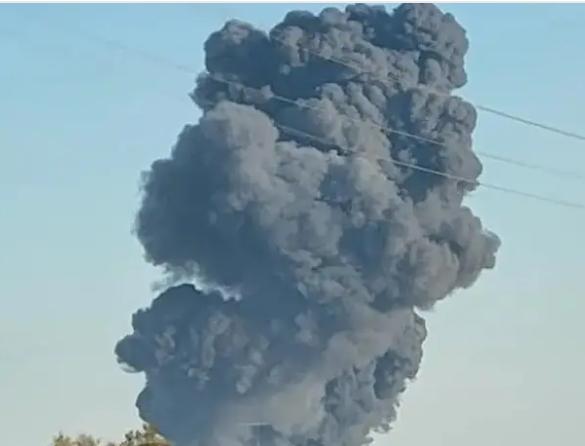
An explosion at South Fork Diary near the town of Dimmit, in Texas, the United States, has killed approximately 18,000 cows.
The blast which occurred earlier this week, according to local authorities, also left one person in critical condition.
According to BBC, authorities believed that machinery in the facility may have sparked methane gas.
The report said the Texas diary farm fire may be the largest ever happened in recent time.
READ ALSO: Property Destroyed, 20 Residents Displaced As Gas Explosion Rocks Port Harcourt
It added nearly three million farm animals died in fires across the US between 2018 and 2021.
Castro County Sheriff’s Office said they had received a report of a fire at the farm at about 19:21 on Monday (00:21 GMT Tuesday).
Photos posted by the Sheriff’s Office showed a huge plume of black smoke rising from the ground.
When police and emergency personnel arrived at the scene, they found one person trapped who had to be rescued and flown to hospital in critical condition.
READ ALSO: BREAKING: Many Feared Dead As Explosion Rocks Rivers
While the exact figure of cows that were killed by fire and smoke remains unknown, the Sheriff’s Office told the BBC that an “estimated 18,000 head of cattle” had been lost, BBC said.
Speaking to local news outlet KFDA, Sheriff Sal Rivera said that most of the cattle had been lost after the blaze spread to an area in which cows were held before being taken to a milking area and then into a holding pen.
“There’s some that survived,” he was quoted as saying. “There’s some that are probably injured to the point where they’ll have to be destroyed.”
Rivera told KFDA that investigators believed the fire might have started with a machine referred to as a “honey badger”, which he described as “vacuum that sucks the manure and water out”.
READ ALSO: Explosions, Gunshots Rock Rivers TV, Radio Stations
“Possibly [it] got overheated and probably the methane and things like that ignited and spread out and exploded,” he said.
In a statement sent to the BBC, the Washington DC-based Animal Welfare Institute said that – if confirmed – a death toll of 18,000 cows would be “by far” the deadliest barn fire involving cattle since it began keeping statistics in 2013.
“We hope the industry will remain focused on this issue and strongly encourage farms to adopt common sense fire safety measures,” said Allie Granger, policy associate for AWI’s farm animal program. “It is hard to imagine anything worse than being burned alive.”
According to the AWI, nearly 6.5 million farm animals have been killed in barn fires since 2013, of which about 6m were chickens and about 7,300 were cows.
Between 2018 and 2021, nearly 3 million farm animals died in fire, with 1.76m chickens dying in the six largest fires over that time period.



Headline
Insecurity: US Congressman Riley Moore Reveals Trump’s Mission In Nigeria

US Congressman Riley Moore has dismissed insinuations that President Donald Trump is attempting to bring war to Nigeria.
Moore made the remark in a post on his verified X handle on Monday.
His comments followed a US military airstrike on a terrorist enclave in north-west Nigeria on Christmas Day, reportedly carried out on the directive of President Trump.
“President Trump is not trying to bring war to Nigeria, he’s bringing peace and security to Nigeria and to the thousands of Christians who face horrific violence and death.
READ ALSO:Russia Calls up 135,000 Military Personnel
“The strikes against ISIS on Christmas, in coordination with the Nigerian government, have given hope to the Christians in Nigeria,” he said.
Recall that the lawmaker had previously stated that President Trump is focused on ending the killing of Christians in Nigeria.
It will be recalled that Moore led a US delegation on a fact-finding mission into alleged Christian genocide in Nigeria some weeks ago.
During his brief stay in the country, Moore travelled to Benue State, where he interfaced with religious and traditional leaders, as well as internally displaced persons.
Headline
Russia Calls up 135,000 Military Personnel
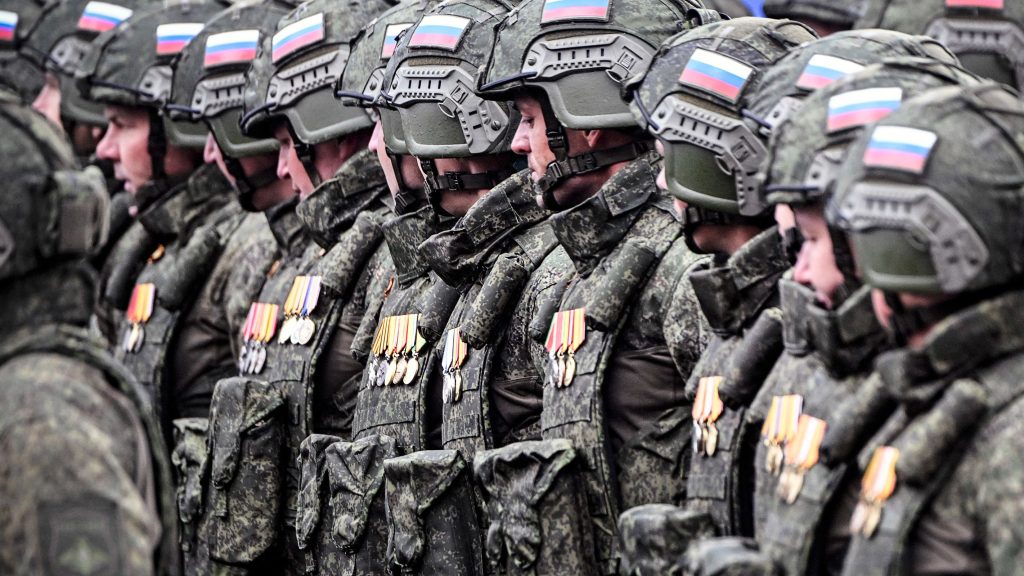
Russia has enlisted 135,000 conscripts for military service in 2026, following the conclusion of the autumn army draft by the Defense Ministry.
A statement on Monday said most personnel have been assigned to training units and military formations where they will “get a military specialty and learn to operate modern military hardware.”
The conscripts can choose to serve in any of the various military branches and armed services after an assessment of their health condition and the results of psychological examinations.
READ ALSO:Russian Strike On Odesa Region Kills Eight, Injures 27
The ministry disclosed that 680 recruits have joined scientific and research-production units, while 240 from the country’s national teams in Olympic disciplines joined sports companies.
However, military personnel who have served the established term of military service have been discharged and sent to their places of residence.
The latest enlistment confirms Russia is shoring up its troops deployed to the ongoing special military operation in Ukraine ahead of the new year.
READ ALSO:Putin Says Russia Ready For War, Blames Europe For Sabotaging Peace
A fortnight ago, European leaders reaffirmed their pledge to form a multinational force–under the aegis of the Coalition of the Willing–to assist Ukraine in securing land, skies, and seas.
The pledge is one of the six commitments the EU and heads of state developed for Ukraine’s security and economic recovery support measures.
In an interview with TASS on Sunday, Russian Foreign Minister Sergey Lavrov condemned Europe’s insistence on sending military forces to Ukraine.
“We have said many times that our Armed Forces would view them as a legitimate target,” he said, warning that anyone who attacks Russia would face “a devastating blow.”
Headline
How Our Airstrikes Stopped Christmas Attacks In Nigeria — US Lawmaker

Riley Moore, a member of the United States House of Representatives from West Virginia’s 2nd District, has linked the absence of Christmas attacks in Nigeria this year to US military airstrikes carried out against Islamist militants on Christmas Day.
In a post on his official X account on Saturday, Moore contrasted the situation with the past two Christmas seasons, during which he claimed Christians were killed in attacks across parts of Nigeria.
The lawmaker noted that this year’s response targeted extremist groups instead of marking another period of violence.
READ ALSO:Rep Moore Confirms 12 Tomahawk Missiles Launched In Sokoto
He added that US forces acted decisively against militants in coordination with the Nigerian government.
“For the past two Christmases, Christians have been murdered in Nigeria. This year, thanks to @POTUS, Radical Islamic Terrorists were on the receiving end of 12 Tomahawk missiles as a present.
“The successful strikes on ISIS, in coordination with the Nigerian government, are just the first step to secure the country and end the slaughter of our brothers and sisters in Christ,” Moore wrote.
US President Donald Trump said on Thursday that American forces had conducted deadly strikes against Islamic State terrorists in north-western Nigeria.
Trump, who spoke via his Truth Social platform, warned that more attacks would follow if the militants continued killing Christians, adding that the Department of War executed numerous “perfect strikes.”

 Headline4 days ago
JUST IN: US Forces Bomb Terrorists Camps In Nigeria
- News5 days ago
Okpebholo Slams ₦25bn Libel Suit On Edo PDP Chairman
- Headline4 days ago
US Dept Of War Shares Video Of Air Strikes In Nigeria
- News4 days ago
PHOTOS: SGF George Akume Weds Ooni’s Ex-Queen
- News23 hours ago
BREAKING: Anthony Joshua Involved In Road Accident
- News4 days ago
Shehu Sani Reacts To Trump’s Military Strikes In Nigeria
- News4 days ago
Trump’s Airstrikes: Halt Military Cooperation With US Immediately – Sheikh Gumi Tells Tinubu Govt
- Headline4 days ago
U.S. Lawmaker Reacts To Nigeria, U.S. Airstrikes
- News2 days ago
Ex-Edo Gov Obaseki Reacts As His Cousin Is Beaten, Stripped
- News5 days ago
YULETIDE: UBTH CMD Charges Nigerians To Be Hopeful In Coming Year


