

Business
Dangote Refinery Gets New CEO


The Dangote Petroleum Refinery and Petrochemicals has appointed David Bird, the former head of Oman’s Duqm Refinery, as its new Chief Executive Officer.
A report by S&P global on Friday said, Bird heads the refinery’s petroleum and petrochemicals division in a strategic move to overcome production challenges and advance its next wave of expansion.
Effective from July 2025, the former Shell head of operations at its Balau Pokom refinery stepped in as CEO of the Dangote Group’s fuels and petrochemicals business, which commissioned the world’s largest single-train refinery last year.
Our correspondent also observed that the CEO participated at the just concluded Dangote Leadership Development Program Graduation Ceremony.
The appointment signals the company’s renewed focus on scaling production, streamlining operations, and positioning itself as a dominant force in Africa’s refining and petrochemical landscape.
READ ALSO:Dangote Cement Gets New Chairman As Aliko Dangote Retires
The report read, “Nigeria’s Dangote Group has appointed the former head of Oman’s Duqm refinery as CEO of its petroleum and petrochemicals business as it strives to overcome production challenges and advance its next wave of expansion.”
It, however, noted that the Dangote Group founder Aliko Dangote, will remain as chairman of the refining business and CEO of the wider conglomerate, which is also active in cement, fertilizers and sugar refining.
The business is expected to tap Bird’s experience expanding the Duqm refinery and diversifying its crude slate as CEO of OQ8, a role he adopted months before the Omani complex began its first test runs in 2023.
Commenting on his appointment, Bird said his focus at Dangote will involve advancing the group’s footprint beyond the Nigerian market and across the African continent.
As CEO of the refining business, he will be responsible for ensuring maximum output and efficiency for the refinery, and aims to make the group a leader in the global market, a LinkedIn update noted.
READ ALSO:JUST IN: Dangote Refinery Hikes Petrol Ex-depot Price
The appointment comes after a string of unit upsets and “design issues” that have stalled the ramp-up process of the 650,000-b/d refinery, while its leadership has called out a hostile business environment for challenging its operations.
Since it was commissioned in January 2024, Dangote has quickly grown its market share in the Nigerian fuel sector, displacing large volumes of gasoline imports that the country once relied on.
However, Aliko Dangote has railed against “rent-seeking” trade partners and substandard fuel imports for putting strain on the business.
In a previous interview with Platts, Bird emphasised a trading-led approach to achieve a competitive edge in the refining sector, with a focus on high utilisation rates, efficiency and feedstock flexibility.
His approach aligns with a recent shift from the Dangote complex to process a wider range of crude grades, partially spurred by limited availability of the Nigerian oil it was designed to process.
READ ALSO:World Bank Appoints Africa’s Richest Man, Dangote
However, the Nigerian refinery is still obliged to sell fixed volumes of its oil products into the domestic crude market under a naira-based trade agreement with the Nigerian National Petroleum Company, a 7.2 per cent stakeholder in the business.
As the Dangote Group eyes its next wave of growth, it plans to expand the capacity of the Lagos refinery to 700,000 barrels per day, build out port infrastructure and establish foreign storage assets in Namibia and other countries.
In August, it is set to roll out its own distribution business with a fleet of 4,000 CNG-powered trucks.
Dangote Group officials have also shared ambitions to list the refining business on the London and Lagos stock exchanges, and Aliko Dangote reiterated plans to take the business public.
READ ALSO:Dangote Petrol: MRS Increases Fuel Price
After years of setbacks and budget challenges, the speed of the refinery’s ramp-up in 2024 caught many analysts by surprise, and the complex quickly began exerting pressure on global oil benchmarks as it began exporting its products.
Yet despite beginning test runs on its main gasoline outlet, the residue fluid catalytic cracker, in Q3 2024, the company has since suffered repeated outages on the unit in 2025, forcing it to rely on its lower-yield reformer and sacrifice output over extended periods.
Speaking to Platts earlier in July, a Dangote executive said the RFCC was running at 85 per cent. He denied reports that the company will undergo a planned turnaround on the unit in December.
According to S&P Global Commodities at Sea data, Nigeria exported some 220,000 b/d of petroleum products in July 2025, when outages at NNPC facilities made Dangote the country’s only active refiner.
The complex exported 30,000 b/d of residual fuel, a refining byproduct which would normally be kept on site for further processing in the RFCC under normal operations.
Exports continue to be dominated by jet fuel, which accounted for 45 per cent of total shipments, and gasoil with a 24 per cent share.


Business
Why We Sited Our Multi-Billion Naira Automobile Firm Branch in Benin – Skyewise Group CEO


Dr. Elvis Abuyere, Chief Executive Officer and Managing Director of Skyewise Group, an automobile firm, has explained the reason for establishing a branch of the company in Benin City, the Edo State capital, describing the ancient city as “a growing economy full of enormous potential for vibrant youth.”
He added that the company considers Edo State one of the most interesting states, noting that the decision aligns with its long-term vision.
Abuyere, who spoke in Benin on Monday while taking journalists on a tour of the new automobile facility, said:
“We started very small — from Abuja to Lagos and now Benin. It is a joy and privilege for us to have completed this amazing regional office with Skyewise Group.”
READ ALSO:BREAKING: Wike Picks Alabo George For Rivers Governorship
According to him, beyond the automobile business, Skyewise Group is in Benin to invest in real estate, logistics, youth empowerment, and credit management. “Aand also to lend our support to what the Edo State Government is doing, knowing the fact that there is an agenda,” he added.
The young CEO urged youths in Nigeria, particularly those in Edo State, to embrace entrepreneurship, stressing that “we believe it is the future of Africa,” especially Nigeria.
He said Nigeria stands as the giant of Africa and that its youth must take bold steps in the entrepreneurship landscape.
According to Abuyere, to ensure Edo youths actualise their entrepreneurial potential, the company has prepared soft loans to help them start businesses, adding that Skyewise Group is not limited to automobile operations.
READ ALSO:Senatorial Seat: Ogbakha-Edo Warns Against Imposition Of Candidates In Edo South
He said: “More importantly to us is youth empowerment. We want our youth to be empowered, and this is where the Skyewise Foundation comes in.
“We believe the future of Africa is entrepreneurship, and that future lies in the hands of the young people of Nigeria. We want to empower them to stand the test of time, build something meaningful, and reduce unemployment and insecurity in our land.
“I believe we need to begin taking bold steps by refining the mindset of our young people. We need to give them a sense of belonging and direction.
“We have been addressing the liquidity gap in society by providing microloans to support businesses in our environment and in Benin City.”
When asked why he chose Benin City for the multi-billion naira automobile firm, Abuyere noted: “I think this is the first automobile showroom in Edo State where you can see a car lifted from the ground floor to the first floor and beyond.”
Business
JUST IN: Nigerian Filling Stations Reduce Fuel Price After Hike

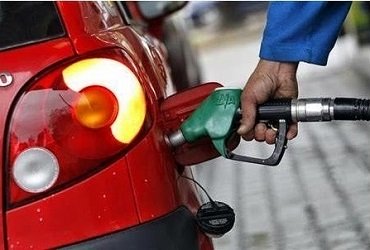
Nigerian filling stations reduced their Premium Motor Spirit price on Saturday, barely 24 hours after the hike.
Checks by DAILY POST showed that Ranoil, Empire Energy, and other filling stations in Abuja adjusted their petrol pumps to N1,365 and N1,375 per litre respectively, down from N1,440 per litre on Friday.
This means that petroleum marketers dropped their fuel price by N65 and N75 per litre. DAILY POST reports that the move was to attract patronage from customers.
Recall that three days ago, Nigerian filling stations had raised their petrol pump price to between N1,365 and N1,440 nationwide after Dangote Refinery and depot owners increased ex-depot prices to around N1,275 and N1,290 per litre.
According to DAILY POST, while the Nigerian National Petroleum Company Limited and MRS Bovas filling stations raised their petrol price to around N1,365 per litre, others adjusted theirs above N1,440 per litre.
READ ALSO:Drivers Protest Fuel Increase, Raise Fares in Benin
However, with the latest fuel price reduction by Ranoil and Empire Energy, the majority of filling station outlets now dispense petrol between N1,365 and N1,375 per litre.
This development comes as the ripple effect of crude oil prices continues to impact Nigeria’s domestic fuel price.
Brent and West Texas Intermediate crude rose to $114 and $105 per barrel before dropping to $108 and $101 after the filing of this report.
Business
Dangote Refinery Hikes Petrol Price
Dangote Refinery has increased the ex-depot price of petrol by N75.
The refinery announced the increase on Wednesday, hiking the the price from N1,200 to N1,275 per litre.
In the same way, coastal prices have gone up to N1,215 per litre.
READ ALSO:Dangote Sugar Announces South New CEO
This adjustment amid Brent crude trading at $114.80 per barrel marks a 3.15% increase.
DAILY POST reports that Brent crude has increased to $115 per barrel, while West Texas Intermediate rose to $103 per barrel on Wednesday.
-

 Politics4 days ago
2027: Tinubu’s Re-election May Put An End To Nigeria — Baba Ahmed Warns
-

 Metro5 days ago
I’m A Street Girl’ – Bimbo Ademoye Clashes With Area Boys [VIDEO]
-

 Politics5 days ago
Senatorial Seat: Ogbakha-Edo Warns Against Imposition Of Candidates In Edo South
-

 Politics4 days ago
BREAKING: 2027: Former Adamawa APC Guber Candidate, Aishatu Binani Defects To NDC
-

 Business3 days ago
JUST IN: Nigerian Filling Stations Reduce Fuel Price After Hike
-

 Entertainment4 days ago
Actress Eniola Badmus Gets New Federal Appointment
-

 News5 days ago
10 African Countries With Highest Petrol Prices In Prices In April 2026
-

 News1 day ago
BREAKING: Wike Picks Alabo George For Rivers Governorship
-

 News3 days ago
OPINION: Why South Africans Murder Nigerians In Cold Blood
-

 News4 days ago
2027: Pastor Adeboye Speaks On Nigeria’s Next President


