

Politics
Democracy: Where We Missed The Bus – Obasanjo

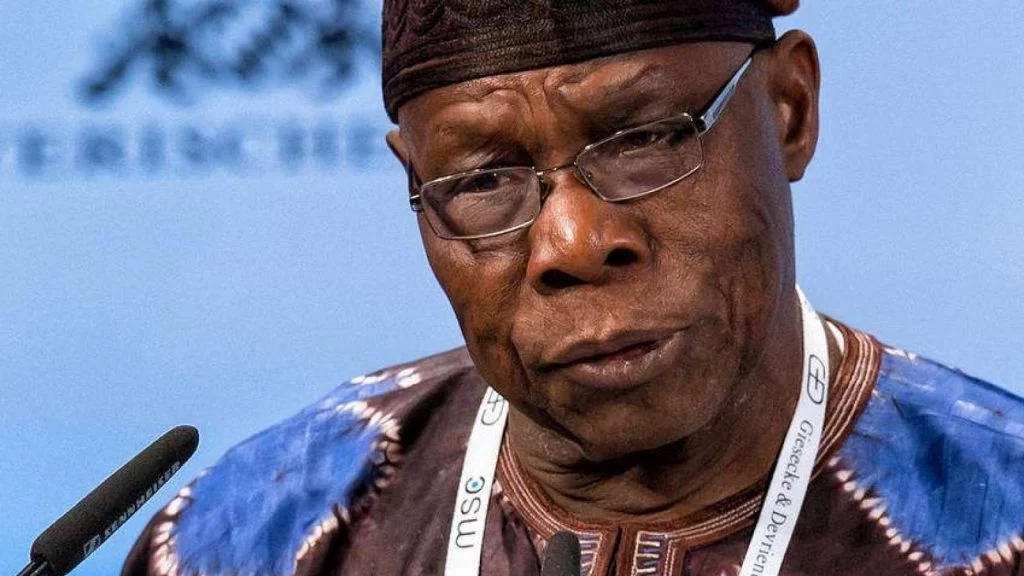


…Calls for a truly people oriented constitution
…Marvels at arrogance of incompetence and ignorance among leaders
Former President Olusegun of Obasanjo has said Nigeria’s democracy, after six decades of political independence, has remained stagnated, even deepened negativities, because leaders are not demonstrating capacities to provide transformative leadership that unites Nigerians.
Obasanjo, as Keynote Speaker, was among guests to Rivers state Governor Nyesom Wike Thursday in Port Harcourt where he reflected on “Respecting The Principles Of Democracy” at the Rivers State Government facilitated International Conference On “Deepening Democratic Culture And Institutions For Sustainable Development And Security In Nigeria”
Commending Wike for the gathering, Obasanjo said, “It has been a while since academics, politicians, policymakers and professionals from all over the world came together to discuss Nigeria. We sure need more opportunities to interrogate and understand our past and present, to design and plan our future”
In the highlights of his presentation, the former President attempted to to redirect stakeholders minds to where they missed the bus in the conviction that if the citizens were patient, humble, reflective, and willing, another bus (2023 elections) is just around the corner only if the people were ready to be active passengers.
He said though no two democracies were exactly alike, “However, citizens that live in democracies share common perspectives, expectations and commitments to basic tenets of democratic practice. And they may turn out to be beneficiaries or victims depending on the course of the process and practice of democracy.”
READ ALSO: No Leader Can Create New Nigeria Overnight – Obasanjo
Where We Miss The Bus
On Nigeria missing the bus, he said, “Our democracy has gone through twists, dives and turns since political independence. The best of our history has been the sustenance of democracy since the transfer of power to an elected government in 1999.
“However, there may be reasons to doubt how much lessons the leaders and followers have drawn from our past and how far they are willing to go to deepen, widen and strengthen democracy and democratic practice.
“The Constitution of the country provides the foundations that guide political activities. Democracy equally enables political actors to engage each other within set rules. But when actors confuse the beginning with the end, or adopt the infamous Machiavellian dictum that the end justifies the means, they get set for a race without boundaries, with no rules or where anything goes.
“An elite of commission agents, politicians, appointment hunters and influence peddlers is unlikely to appreciate the value of democracy and democratization. Everyone in this room, whether we admit it or not, is an expert in Nigerian politics.
“We all have opinions and we have prescriptions for all the problems of Nigeria. Yet, the country is not making progress. Most of us are experts in what we know little or nothing about and ignoramus in what is our duty and responsibility.
“We have tried all sorts of regimes, ideologies, planning strategies and personalities in power: the so-called new breed did not show that they were different. Equally, states run by professors, retired military officers and other professionals including teachers did not experience visible and substantial improvements.
READ ALSO: Insults, Lies Dominate Political Campaigns In Nigeria – Obasanjo
“True, there have been some outstanding leaders at various levels of power but no tree has ever made a forest; the good ones are few and far in between and did not form critical mass. The lack of conversations across fault-lines and primordial proclivities mean that our leaders are unable to share ideas and have durable and sustained policies for long enough time.
“This prevents useful cooperation, collaboration, stability and sustainability. It means whatever best practices are in one location remain there and may die there. If after six decades of political independence, our leaders are not showing clear capacities to provide transformative leadership that unites Nigerians and contains ethnic, religious, regional and clannish, selfish, even class proclivities, then, there is a problem.
“In fact, it is possible to declare that the ways in which we have practised our democracy have deepened contradictions, negative coalitions, distrust, disloyalty and unpatriotic tendencies within and between communities and constituencies all over the country.”
“We have tended so far to pursue the symptoms of the contradiction rather than focus on the causes and the disease remains stubbornly endemic. Unless we generate the courage and commitment to change course and do things better and differently, we may be heading for more trouble ahead.
“Democracy, when properly practised in the interest of peace, inclusion, national growth, development, security and stability, is supposed to address national problems, no matter how complex.
“In Nigeria, each new government behaves as if Nigeria is a newly found country. In fact, during campaigns, some leaders sound as if they plan to reinvent Nigeria and create new Nigerians overnight. That is because they miss the aspect of democracy that emphasizes continuity, stability and predictability.”
Prescriptions For Progressive Democracy
Going forward, Obasanjo said, “I marvel at the level of arrogance of incompetence and ignorance. The impunity is sickening. There are thousands of persons with integrity all over the country. Leaders need to identify and connect these persons with their communities and organisations to build a true national movement and commitment to democratic practice.
“Without reinventing the wheel therefore, let me state very clearly that the principles I have been talking about include, but certainly not limited to building and compacting a truly people-led and people-driven Constitution that they would own and defend against political predators of any form.
“This is the basic foundation that when you involve the people in the process, they understand it, make their inputs, see the document as their own; not only would they defend it, but it would also guide their political actions, alignments and realignments. Their welfare and well-being is involved and they can make meaningful contributions.”
The guest speaker noted that a new constitution should then be complemented by, “Citizen participation in rule-based political competition: How much internal democracy do the parties have; are the parties used to identify and train new leaders?”
He also recommended commitment to equality before the law and respect for human rights, tolerance and inclusion, accountability of leadership and public officials, respect for the constitution and the rule of law.
“By all means, these do not exhaust the tenets of democracy but they represent a good starting point. If a nation can get through these levels, all other tenets will be easy to achieve”, Obasanjo added.
Governor Wike in his remarks on the occasion, note that, “The efficiency of the judiciary in interpreting and enforcing the existing regulatory regime, including the laws, regulations and guidelines beyond reproach and the capacity and consistency of INEC and the Security Agencies to be firm, impartial and independent in the discharge of their functions are most crucial.
“Safeguarding and deepening our democracy lies with every citizen. We must have the courage to stand up for justice, the rule of law, an independent and courageous judiciary, and our rights and freedoms to vote and be voted in a transparent election.”
READ ALSO: ‘Keep Opinions To Self’, Buhari’s Media Team Slams Obasanjo
Former Governor of Ekiti State, Dr. Kayode Fayemi, Chairman of the occasion said, “Though, there are some political milestones achieved since1999, there is no doubt that we still have a longway to go in building a robust culture of power and politics that is both Democratic and sustaining.”
As part of the event, there was the unveiling of the book, “Bridging Rivers”, which captured the governorship legacy of Wike with the book launced under the chairmanship of former governor of Rivers State, Dr. Peter Odili.
VANGUARD




Politics
Peter Obi Meets US Consul General, Hopes For Credible Polls In 2027

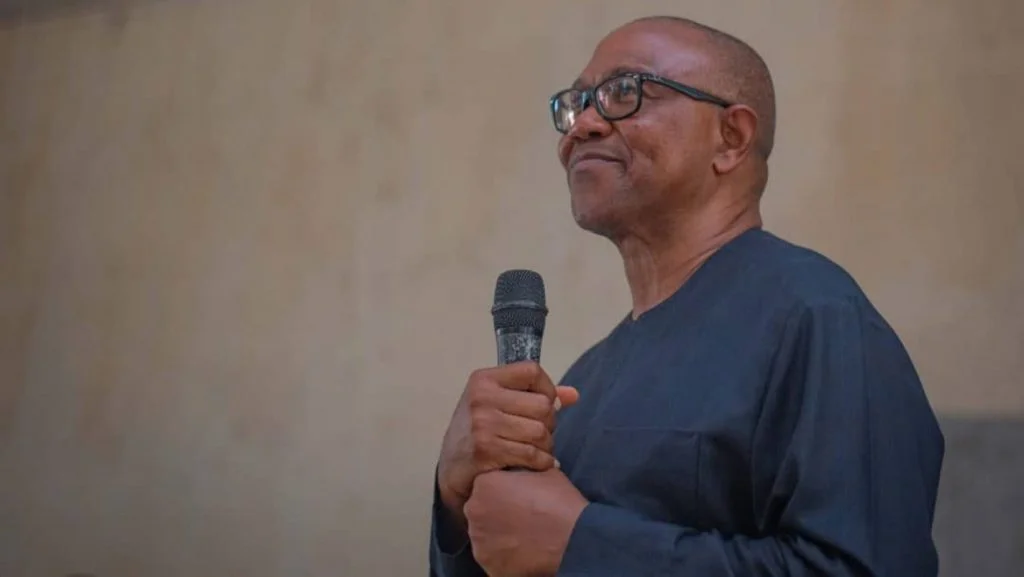
Chieftain of the Nigerian Democratic Congress, NDC, Peter Obi on Tuesday held a meeting with United States Consul General, Mr Rick Swart.
Obi made this known via his X handle.
READ ALSO:NDC Speaks On Peter Obi, Kwankwaso Joining Party
He said “This morning, in Lagos, I met with the U.S. Consul General, Mr Rick Swart, where we discussed strengthening the bilateral relationship. We focused on promoting credible elections in Nigeria, ensuring they are free from interference, and fostering a space where all political parties, especially opposition parties can thrive, and contribute.
“We also discussed trade and business opportunities between our countries. Accompanying me to the meeting was Dr Adefolaseye Adebomi Adebayo.
“The discussion was very productive, and we are hopeful that, moving forward, Nigeria’s elections will be even more credible and transparent.”
Politics
BREAKING: 17 ADC Reps Follow Join NDC

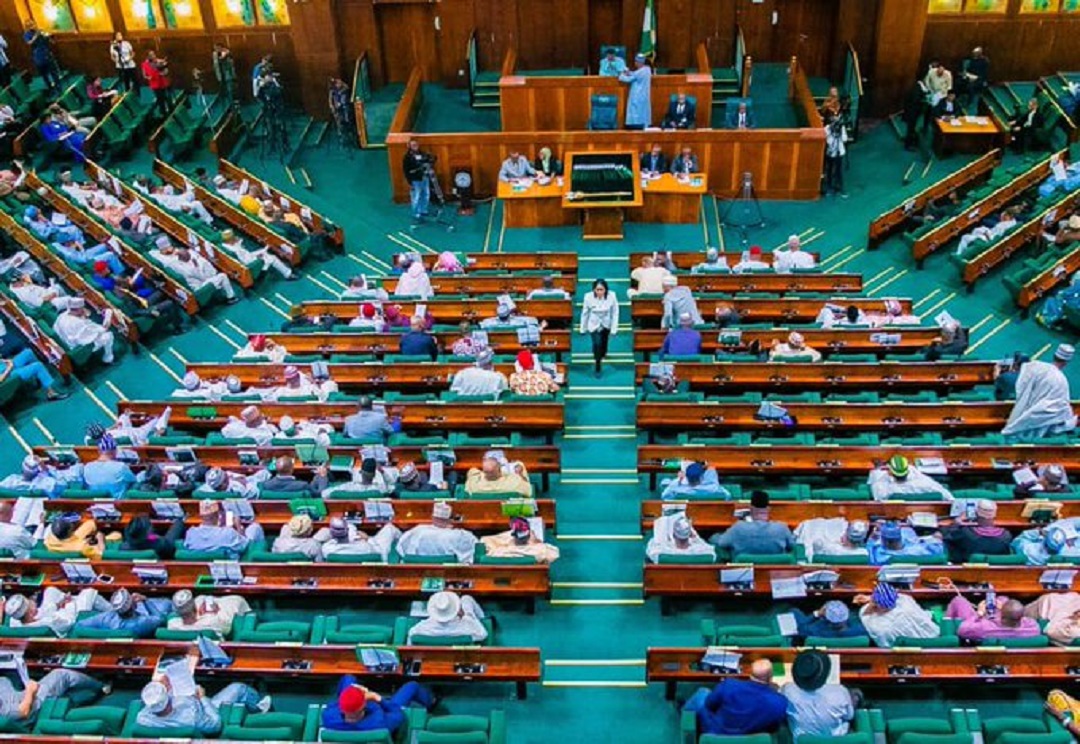
About 17 African Democratic Congress, ADC, lawmakers in the House of Representatives have defected to the Nigerian Democratic Congress, NDC.
This was disclosed by Speaker Abass Tajudeen on the floor of the House on Tuesday.
Tajudeen also announced the defection of Leke Abejide from the ADC to the All Progressives Congress, APC.
READ ALSO:JUST IN: Why I left ADC For NDC With Kwankwaso – Peter Obi Opens Up
Lawmakers who defected to the NDC include Yusuf Datti, Uchenna Okonkwo, Adamu Wakili, Thaddeus Attah, George Ozodinobi, Lilian Orogbu, Oluwaseyi Sowunmi, Peter Aniekwe, Mukhtar Zakari, George Oluwande and Munachim Umezuruike.
Others are Emeka Idu, Jesse Onuakalusi, Ifeanyi Uzokwe, Afam Ogene and Abdulhakeem Ado.
This comes barely a day after former presidential candidates Peter Obi and Rabiu Kwankwaso defected from the ADC to the NDC.
Obi and Kwankwaso have pledged to continue their pursuit for a better Nigeria in the NDC.
Politics
JUST IN: Why I left ADC For NDC With Kwankwaso – Peter Obi Opens Up

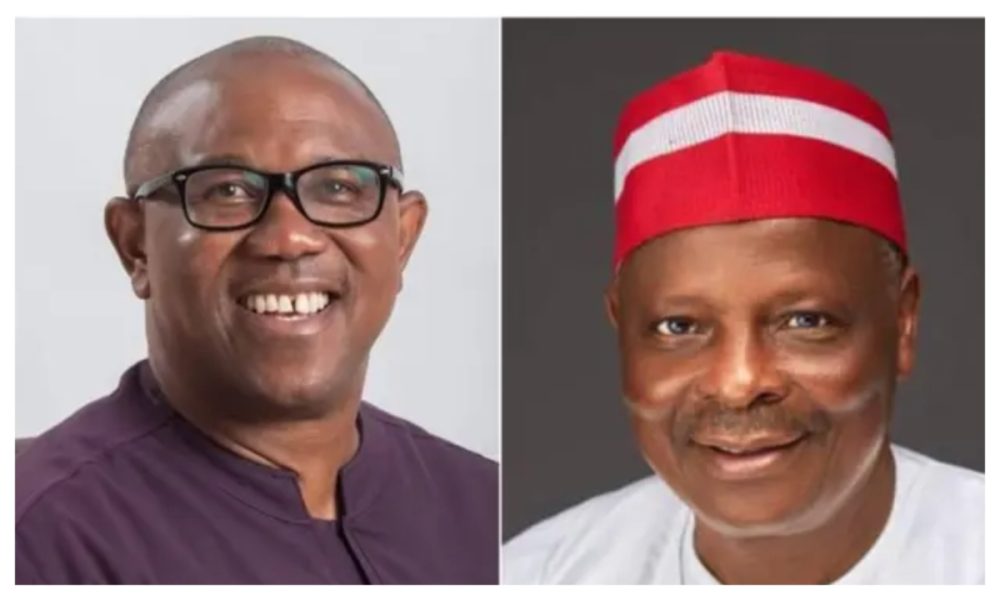
A former presidential candidate, Peter Obi, has given reasons why he resigned from the African Democratic Congress, ADC, to join the Nigerian Democratic Congress, NDC, alongside a former governor of Kano State, Rabiu Kwankwaso.
In a long post on X on Monday, Obi insisted it was not out of anger or ambition.
Rather, he said the move is a continuation of the quest to build a new Nigeria.
Obi wrote: “Yesterday, I formally joined the Nigerian Democratic Congress (NDC), alongside my dear brother, Engr. Dr Rabiu Musa Kwankwaso, with one clear purpose: to continue the struggle for a new Nigeria built on justice, competence, accountability, and compassion for the ordinary Nigerian.
READ ALSO:Peter Obi, Kwankwaso Formally Join NDC, Warn Members Against Litigation
“As I stated yesterday, this decision was not made out of anger, personal ambition, or convenience. It came after deep reflection on the present condition of our nation and the urgent need to rescue Nigeria from the dangerous path it is currently heading.
“Over the years, I have remained steadfast in my conviction that politics should never be about individuals, positions, or personal gain. It must be about the people, especially the millions of Nigerians who today can no longer afford necessities, whose businesses are collapsing, whose children are losing hope, and whose future is becoming increasingly uncertain.
“I left the ADC for the same reason I left the Labour Party: the severe, orchestrated litigation and internal crises deliberately designed to ensure that I, alongside many other notable individuals, do not effectively participate in the electoral process. I sincerely appreciate and remain deeply grateful to the Leadership of ADC for the opportunity to work together in pursuit of a better Nigeria. I am particularly grateful to ADC Chairman Senator David Mark for his exceptional Leadership. I also deeply appreciate my Leader and elder brother YE, Atiku Abubakar, as well as other respected leaders within the party.
“As we join the NDC, I sincerely appeal to the Nigerian Government against the encouragement of unresolved litigations and the infusion of crises within political parties. Democracy must never become a weapon against the people. A healthy democracy thrives on strong institutions, credible alternatives, and the freedom of citizens to make choices without intimidation, manipulation, or fear. Opposition parties must not be weakened or destroyed, because when democracy loses balance, the people ultimately suffer.
“Nigeria today is passing through one of the most difficult periods in its history. Poverty is rising. Hunger is widespread. Insecurity continues to threaten lives and livelihoods. Businesses are shutting down daily. Our young people are becoming discouraged, and many citizens have lost faith in the system. At a time like this, leadership must be driven not by propaganda or division, but by competence, capacity, character, and compassion.
READ ALSO:ADC Hails S’Court Verdict On Leadership, Demands INEC Chairman’s Resignation
“Our decision to join the NDC is therefore not an abandonment of values, but a continuation of the same mission we have always stood for: building a Nigeria where leadership is about service, where public resources are managed responsibly, where institutions function independently, and where every Nigerian, regardless of tribe, religion, region, or social status, can live with dignity, security, and hope.
“I remain committed to working with all Nigerians of goodwill across political, ethnic, and religious lines. The task before us is bigger than any individual or political party. It is about the future of our children and the survival of our dear nation.
“I thank Nigerians, especially our youths and women, for remaining peaceful, resilient, and hopeful despite the enormous challenges confronting the country. I urge you not to lose faith in Nigeria. Nations do not change because people surrender to hopelessness; they change because people continue to believe, continue to sacrifice, and continue to stand for what is right.”
-

 Politics4 days ago
2027: Tinubu’s Re-election May Put An End To Nigeria — Baba Ahmed Warns
-

 Politics5 days ago
BREAKING: 2027: Former Adamawa APC Guber Candidate, Aishatu Binani Defects To NDC
-

 Business4 days ago
JUST IN: Nigerian Filling Stations Reduce Fuel Price After Hike
-

 Politics5 days ago
Senatorial Seat: Ogbakha-Edo Warns Against Imposition Of Candidates In Edo South
-

 Entertainment5 days ago
Actress Eniola Badmus Gets New Federal Appointment
-

 News2 days ago
BREAKING: Wike Picks Alabo George For Rivers Governorship
-

 News3 days ago
OPINION: Why South Africans Murder Nigerians In Cold Blood
-

 Politics4 days ago
NDC Speaks On Peter Obi, Kwankwaso Joining Party
-

 News4 days ago
2027: Pastor Adeboye Speaks On Nigeria’s Next President
-

 Politics5 days ago
2027: Pondi, Otuaro, Other Delta South Stakeholders, Endorse Senator Joel-Onowakpo For Second Term
