
Headline
EFCC Talks Tough As NEITI Report Reveals $6bn, ₦66bn Debt In Oil, Gas Sector
…approves payment of over N1billion to FG due to recoveries from previous reports
Following the release of the Nigerian Extractive Industries Transparency Initiative (NEITI) 2022/2023 oil and gas sector report, the Economic and Financial Crimes Commission (EFCC) pledged on September 26 to address the findings, which indicate that the industry owes the Federal Government $6 billion and ₦66 billion.
During the report’s presentation in Abuja, EFCC Chairman Olanipekun Olukayode announced that he had approved the transfer of over ₦1 billion into the Federation Account on Wednesday, derived from funds recovered through previous NEITI audits.
He stated that the report has clarified the EFCC’s responsibilities moving forward.
Olukayode said: “Over the years as an anti-corruption agency in the country we are part of the success of the work of NEITI. Where the work stops at the level of presenting this report, then we take off from there to ensure that the recommendations therein and revelations therein particularly as relates to criminal infractions, and violation of our financial laws, it is taken up seriously.
“I am also happy to announce to you that as of yesterday (Wednesday), I still approved that over a billion so remitted to the Federal Government account as a result of the work of the last report of NEITI.
“Since then we have been making recoveries. We have cases in court we are prosecuting and with this report 2022 and 2023.
“We are also going to do everything within our power, deploying all our resources to ensure we implement the recommendations therein.”
READ ALSO: Lift Ban On Edo State Security Network, CSO Urges IGP
The NEITI report has disclosed that outstanding collectable revenues due to the Federal Government in the oil and gas industry as of June this year have risen to over $6.071 billion and N66.4 billion, respectively.
These figures were among crucial information and data contained in NEITI’s 2022 and 2023 Independent Oil and Gas Industry Report, released today in Abuja.
A breakdown shows that the outstanding liabilities were $6.049 billion and N65.9 billion in unpaid royalties and gas flare penalties, due to the Nigerian Upstream Petroleum Regulatory Commission as collectable revenues by August 31, 2024. The report also provides a detailed analysis of the information and data regarding who owes what in outstanding revenues due to the government.
A further breakdown shows outstanding petroleum profit taxes, company income taxes, withholding taxes, and VAT due to the Federal Inland Revenue Service, amounting to $21.926 million and N492.8 million as of June 2024.
On fuel importation, the latest NEITI report disclosed that a total of 23.54 billion litres of PMS (premium motor spirit) were imported into the country in 2022, while 20.28 billion litres were imported in 2023. This represents a reduction of 3.25 billion litres, or a 14% decline, following the removal of the subsidy.
A detailed 10-year trend analysis (2014–2023) in the NEITI report shows that the highest annual PMS importation into the country, 23.54 billion litres, was recorded in 2022, while the lowest, 16.88 billion litres, was recorded in 2017. The NEITI report also disclosed that a total of N15.87 trillion was claimed as under-recovery/price differentials between 2006 and 2023, with the highest amount, N4.714 trillion, recorded in 2022.
READ ALSO: JUST IN: INEC Presents Certificates Of Return To Okpebholo, Idahosa
On crude production, fiscalized crude production in 2022 stood at 490.945 million barrels, compared to 556.130 million barrels produced in 2021, representing an 11% decline. However, in 2023, NEITI’s independent report revealed total fiscalised production of 537.571 million barrels, a 46.626 million barrel or 9.5% increase from total production recorded in 2022. A 10-year trend (2014–2023) of fiscalised crude oil production in Nigeria shows the highest production volume of 798.542 million barrels was recorded in 2014, while the lowest, 490.945 million barrels, was recorded in 2022.
The NEITI report also provided detailed information and data on crude lifting. In 2022, total crude lifting was 482.074 million barrels compared to 551.006 million barrels lifted in 2021. In 2023, total crude lifting stood at 534.159 million barrels, representing an 11% increase of 58.08 million barrels.
On oil theft and crude losses, a total of 7.68 million barrels of crude were either stolen or lost in 2023, representing a significant drop of 79% (29.02 million barrels) compared to 36.69 million barrels either stolen or lost in 2022.
On overall revenue generation in the oil and gas industry, the report showed that material companies accounted for US$15.549 billion (96%) and non-material companies for US$695.604 million (4%) in revenues generated in 2022. In 2023, material companies accounted for US$21.415 billion (95%), and non-material companies accounted for US$1.238 billion (5%). The revenues came from 17 identified revenue streams, including proceeds from taxes, oil and gas sales, dividends from NLNG, royalty payments, signature bonuses, gas flare penalties, and concessions.
READ ALSO: JUST IN: Confusion Surrounds Yahaya Bello’s Status As EFCC Denies Arrest
NEITI’s independent industry report carefully reviewed and reported on all aspects of the regulatory framework for the oil and gas industry, including the legal framework, fiscal regime, roles of government entities and reforms, laws (PIA 2021), and regulations relating to addressing corruption risks in the oil and gas sector. The report also conducted an overview of the statutory procedures for the awards and transfers of licenses. It disclosed comprehensive information on property rights to oil and gas licenses and leases, including beneficial ownership information and public accessibility of contracts and licenses.
Other areas covered included disclosures on the participation of state-owned enterprises in the oil and gas sector, exploration, production levels, and the valuation of extractive output. A total of seventy-eight (78) companies in the oil and gas industry and nine (9) relevant government agencies that collect, keep custody, or manage oil and gas revenues were covered by the NEITI process.
Speaking at the public presentation of the report today in Abuja, the Secretary to the Government of the Federation, Sen. George Akume, reaffirmed “the unwavering commitment of the Federal Government of Nigeria to the principles of the Extractive Industries Transparency Initiative (EITI) being implemented in the country’s oil and gas sector by NEITI. We consider the EITI not only as a global standard for promoting transparency in the management of revenues from natural resources but also as a tool to strengthen public trust, accountability, and economic growth,” the SGF stated.
Sen. Akume, who also chairs the NEITI board, acknowledged that information and data provided by NEITI’s independent reports have consistently proven invaluable to the government. These reports have guided policy decisions, reforms, and measures that foster accountability, particularly in the oil and gas sector. In a sector where opacity could easily lead to leakages, inefficiencies, and corruption, NEITI has become an indispensable partner in ensuring that Nigerians are fully aware of how their commonwealth is managed.
READ ALSO: Man Declared Wanted For ‘Stealing Far’ Belonging To EFCC
He gave assurances that the government’s commitment to this process extends beyond simple endorsement. The Federal Government considers NEITI’s role as a beacon of transparency and accountability in the extractive industries, and the credibility of its reports serves as a foundation for formulating national policies, fighting corruption, revenue growth, and ensuring equitable distribution of revenues. The data contained in this report will inform critical government decisions moving forward, especially as we continue to prioritize resource management, revenue mobilization, and public accountability.
The SGF further emphasized, “As the Chairman of the NEITI Board, I stand before you today to underscore the Federal Government’s respect for NEITI’s independence. While my role as Chairperson is a testament to the importance the government places on NEITI, it also signifies the commitment to ensure that NEITI operates independently, without interference, as mandated by the EITI standard. It is our duty to safeguard this independence with great care and diligence, ensuring that NEITI can operate free from undue influence,” Akume concluded.
The Executive Secretary of NEITI, Dr. Orji Ogbonnaya Orji, explained that the preparation of the report followed a meticulous and transparent process in line with global Extractive Industries Transparency Initiative (EITI) standards. “A rigorous, multi-stakeholder approach was adopted, involving extensive collaboration with government agencies, extractive companies, civil society, and indigenous consultants. We ensured that all data was collected, validated, and reconciled in an open and transparent manner,” the NEITI Executive Secretary stated.
Orji added that the report provides valuable insights that will help guide policy, encourage robust public debate, and ultimately improve governance in the management of our natural resources. The report, as always, remains a vital tool for identifying leakages, improving revenue collection, and promoting resource management reforms.
Meanwhile, the House Committee on Petroleum (Downstream) Chairman, Hon. Nkechi Ugochinyere said he has presented a bill to the house recommending 4% revenue remittance to NEITI from fund recovered due to its audit reports.
Senate Committee on Petroleum (Downstream) Chairman, Senator Eteng Williams called for accurate data from the industry.
He also sought action on the data, stressing there must be increased crude oil production.
NATION



Headline
Russia, China Afraid Of US Under My Administration — Trump
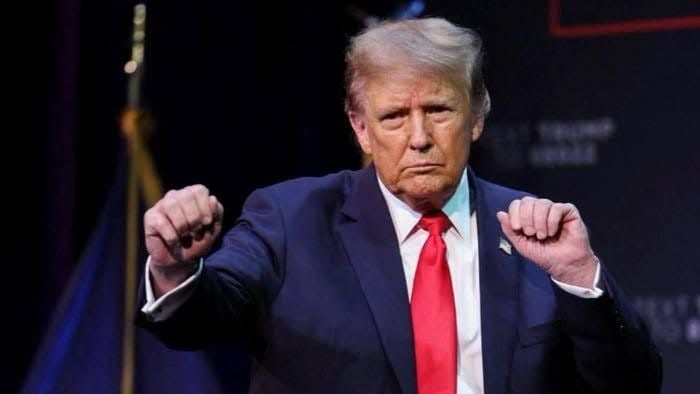
United States President, Donald Trump, has said Russia and China fear the United States because of the strength of his administration, arguing that American global influence is driven primarily by its military power and leadership.
Trump, in a post on Truth Social on Wednesday stated that rival powers would not take NATO seriously without the United States, claiming the alliance lacks deterrent force in the absence of American involvement.
He expressed doubts about whether NATO members would come to the aid of the US in a real crisis, despite Washington’s continued commitment to the alliance.
READ ALSO:Trump To Withdraw US From 66 UN, International Organisations
The president credited his leadership with rebuilding the US military during his first term and sustaining its strength, describing this as the key reason adversaries show respect and caution toward the country.
He maintained that America’s military dominance has played a central role in preserving global stability and saving lives.
Trump also argued that his administration forced NATO members to increase defence spending, saying many allies had previously failed to meet financial commitments while relying heavily on the US.
READ ALSO:Insecurity: US Congressman Riley Moore Reveals Trump’s Mission In Nigeria
He added that his actions helped prevent further escalation in Eastern Europe and contributed to the resolution of multiple conflicts.
According to Trump, the United States remains the only nation that commands genuine fear and respect from both Russia and China, a position he attributed to his administration’s approach to defence, diplomacy, and global leadership.
“He wrote partly, “The only Nation that China and Russia fear and respect is the DJT REBUILT U.S.A. MAKE AMERICA GREAT AGAIN!!! President DJT.”
Headline
Trump To Withdraw US From 66 UN, International Organisations
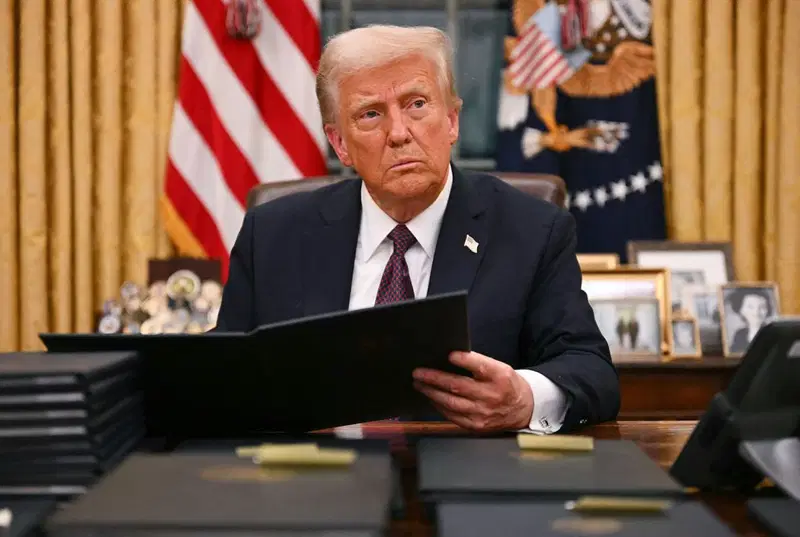
United States President, Donald Trump, has announced plans to withdraw the US from 66 United Nations and international organisations, including key global bodies focused on climate change, peace and democracy.
The decision was disclosed in a presidential memorandum released by the White House on Wednesday evening, following a review of which “organizations, conventions, and treaties are contrary to the interests of the United States.”
According to Trump, the move will see the US end its participation in the affected organisations and cut all related funding.
A list shared by the White House showed that 35 of the organisations are non-UN bodies, including the Intergovernmental Panel on Climate Change (IPCC), the International Institute for Democracy and Electoral Assistance, and the International Union for Conservation of Nature.
READ ALSO:Trump’s Airstrikes: Halt Military Cooperation With US Immediately – Sheikh Gumi Tells Tinubu Govt
Although listed as a non-UN body by the White House, the IPCC is a United Nations organisation that brings together leading scientists to assess climate change evidence and provide periodic reports to guide political leaders.
The memorandum also announced the US withdrawal from 31 UN entities, including the UN Framework Convention on Climate Change (UNFCCC), the UN Democracy Fund, and the UN Population Fund (UNFPA), which focuses on maternal and child health.
Several of the targeted UN bodies are involved in protecting vulnerable groups during armed conflicts, including the UN Office of the Special Representative of the Secretary-General for Children and Armed Conflict.
Reacting to the announcement, UN spokesperson Stephane Dujarric said in a note to correspondents on Wednesday evening that the organisation expected to issue a response by Thursday morning.
Despite repeatedly stating his desire to limit US involvement in UN forums, Trump has continued to exert influence on international decision-making.
READ ALSO:Trump Using FBI To ‘Intimidate’ Congress, US Lawmakers Cry Out
In October last year, he threatened to impose sanctions on diplomats who formally adopted a levy on polluting shipping fuels that had already been agreed to at an earlier meeting, a move that stalled the deal for 12 months.
The Trump administration also sanctioned UN special rapporteur Francesca Albanese after she released a report detailing the role of international and US companies in Israel’s genocidal war on Gaza.
During his first term in 2017, Trump similarly threatened to cut aid to countries that supported a draft UN resolution condemning the US decision to recognise Jerusalem as Israel’s capital.
As a permanent member of the UN Security Council, the US wields significant influence at the United Nations, including veto power, which it has repeatedly used to block efforts to end Israel’s war on Gaza before later mediating a ceasefire.
(Aljazeera)
Headline
UK Supported US Mission To Seize Russian-flagged Oil Tanker – Defense Ministry
The British Ministry of Defence said on Wednesday that it provided support to the United States in its operation to seize a Russian-flagged oil tanker in the North Atlantic.
US seized the tanker, which was being shadowed by a Russian submarine on Wednesday, after pursuing it for more than two weeks across the Atlantic as part of Washington’s efforts to block Venezuelan oil exports.
According to Britain, its armed forces gave pre-planned operational support, including basing following a US request for assistance.
READ ALSO:UK Introduces Powers To Seize Phones, SIM Cards From Illegal Migrants
The UK also said a military vessel provided support for the US forces pursuing the tanker, and the Royal Air Force provided surveillance support from the air.
Defence Secretary John Healey stated that the operation targeted a vessel with a nefarious history linked to Russian and Iranian sanctions evasion networks.
“This action formed part of global efforts to crack down on sanctions busting,” he said in a statement.
READ ALSO:Venezuelan Deportees: US Embassy Gives Reason For Reducing Visa Validity For Nigerians
According to him, the US was Britain’s closest defence and security partner.
“The depth of our defence relationship with the US is an essential part of our security, and today’s seamlessly executed operation shows just how well this works in practice,” he added.
The British government said that the Bella-1 tanker, now renamed Marinera, is sanctioned by the US under its counter-Iran sanctions,
The MoD statement said the support was provided in full compliance with international law.

 News4 days ago
What I Saw After A Lady Undressed Herself — Pastor Adeboye
- Headline4 days ago
PROPHECY: Primate Ayodele Reveals Trump’s Plot Against Tinubu
- Metro4 days ago
Armed Robbers Shot PoS Operator To Death In Edo
- Metro3 days ago
AAU Disowns Students Over Protest
- Metro4 days ago
Joint Task Force Kills 23 Bandits Fleeing Kano After Attacks
- Politics4 days ago
2027: Rivers APC Pledges To Follow Wike’s Instructions
- Business3 days ago
NNPCL Reduces Fuel Price Again
- Metro3 days ago
Edo: Suspected Kidnappers Kill Victim, Hold On To Elder Brother
- Metro3 days ago
Nine Soldiers Feared Dead In Borno IED Explosion
- Metro4 days ago
Gunmen Demand N200m Ransom For Kidnapped Brothers In Edo


