
Headline
Electoral Bill: 23 CSOs Threaten Drastic Measures, Mass Protest
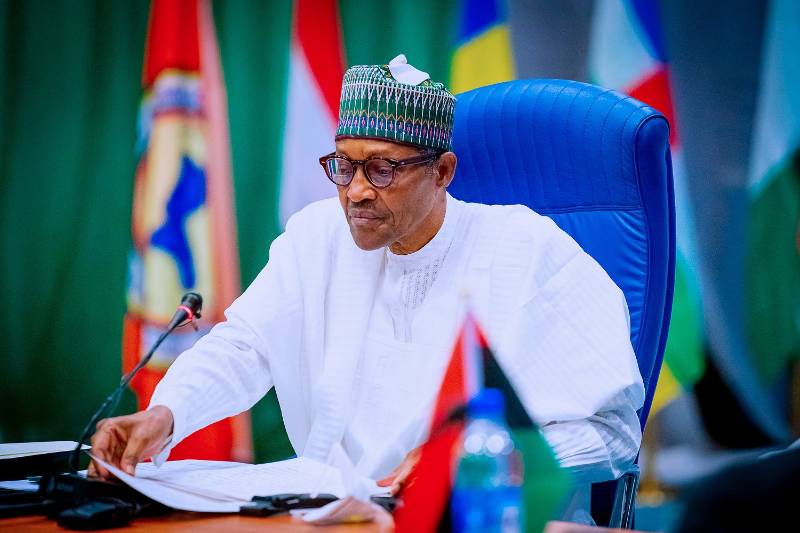
Hopes that the President Muhammadu Buhari would assent to the Electoral Act Amendment Bill continued to diminish as 23 civil rights organizations on Friday, expressed fear that the same fate that befell previous attempts to amend Nigeria’s election law awaits this latest version.
Their fears came about three days to the deadline for the Independent National Electoral Commission to release the Notice of Election for the 2023 general elections.
The CSOs recalled that since 2018 President Buhari had refused to sign the proposed amendments to the nation’s electoral laws on five occasions; and till now, has not hinted at any possibility of giving his assent to the electoral bill since he received the newest form of the document transmitted to him by the National Assembly on January 31, 2022.
During a press conference in Abuja on the imperative of a timely assent to the Electoral Bill 2022, the civil society groups warned that any further delay on the part of the President to give assent to the Bill would certainly occasion logistical, financial, and programmatic difficulties that could threaten the integrity of the off-cycle elections in Ekiti, Osun and the 2023 general election.
The CSOs included Nigeria Civil Society Situation Room, Yiaga Africa, Partners for Electoral Reform, International Press Centre, Institute for Media and Society, Nigerian Women Trust Fund, The Albino Foundation, Centre for Citizens with Disability, Premium Times Centre for Investigative Journalism, Transition Monitoring Group, CLEEN Foundation, and Civil Society Legislative Advocacy Centre.
Others were the Labour Civil Society Coalition, Women Advocates Research and Documentation Centre, Nigeria Network of Non-Governmental Organizations, Inclusive Friends Association, Enough is Enough, The Electoral Hub, Centre for Liberty, Take Back Nigeria Movement, International Peace and Civic Responsibility Centre, 100 Women Lobby Group, and Women in Politics Forum.
The 23 CSOs in their recommendations said, “We call on President Buhari to, upon return from Brussels, sign the Electoral Bill into law on or before 22nd February 2022 to enable INEC to issue Notice of Election and release the timetable and schedule of activities for the 2023 general election.
“Further amendments to the Electoral Bill 2022 can be proposed after assent has been granted. It is within the President’s prerogative to propose amendments after signing the bill as he did in the case of the Petroleum Industry Bill and 2022 Appropriation bill, an act that attracted commendation.
READ ALSO: ‘Indaboski: Why Nigerians Will Never Forget Buhari’ – Femi Adesina
“The National Assembly should ensure gazetted copies of the Electoral Act 2022 are available to citizens as soon as the bill is signed into law.”
As of the time of this report, the CSOs have commenced an emergency meeting which, according to a source, would lead to mass protest.
“We can’t rule out mass protest because we have exhausted every mechanism, including lobbying. We’re frustrated, we’ll communicate the media the next line of action”, a member of the CSOs said.
PUNCH.

Headline
UK Introduces Powers To Seize Phones, SIM Cards From Illegal Migrants

The United Kingdom has rolled out expanded enforcement powers allowing authorities to confiscate mobile phones and SIM cards from migrants who enter the country illegally.
The new measures, which do not require an arrest, came into force on Monday at the Manston migrant processing centre in Kent and represent a significant tightening of border controls.
According to the Home Office, the powers are intended to support intelligence-gathering operations aimed at disrupting criminal networks that organise and profit from dangerous Channel crossings.
Officials at the centre are equipped with technology that enables them to extract and analyse data from seized devices, a move the government says will help track and dismantle smuggling rings.
READ ALSO:Russia-Ukraine War: Pope Leo Calls For Global Christmas Truce
Under the revised rules, migrants are permitted to be asked to remove outer garments if there is suspicion that phones are being concealed.
In certain circumstances, officers may also check mouths for hidden SIM cards or small electronic items.
The National Crime Agency said information recovered from devices could accelerate investigations and improve the effectiveness of action against organised crime groups.
Border Security Minister Alex Norris said the policy was necessary to regain control of the UK’s borders and confront human trafficking operations.
“We are committed to restoring order and tackling the people-smuggling gangs behind this lethal trade,” Norris said.
READ ALSO:
“These stronger laws give authorities the tools to disrupt, intercept and dismantle these networks more quickly and effectively,” he added.
The legislation also introduces tougher criminal penalties linked to illegal crossings.
Individuals found storing or supplying boat engines for unauthorised journeys could face prison terms of up to 14 years, while those involved in researching equipment or plotting routes may be liable to sentences of up to five years.
Government officials stressed that the powers would be exercised with discretion.
READ ALSO:UK Unveils Record-breaking Bid For 2035 Women’s World Cup
The Minister for Migration and Citizenship, Mike Tapp, said devices could be returned depending on individual circumstances and the relevance of the information obtained.
“If a device may contain intelligence that helps combat smuggling, it is right that it can be seized,” Tapp said, adding that the approach would not undermine compassion toward migrants.
However, humanitarian organisations have expressed unease about the impact of the policy.
The Refugee Council warned that mobile phones often serve as vital lifelines for migrants, enabling contact with family members and access to support services, and urged authorities to ensure the measures are applied in a proportionate and humane manner.
Headline
PROPHECY: Primate Ayodele Reveals Trump’s Plot Against Tinubu

Primate Ayodele and Tinubu, Tinubu’s rice palliative, Primate Ayodele to Tinubu
Tinubu and Primate Ayodele
The leader of INRI Evangelical Spiritual Church, Primate Elijah Ayodele, has warned President Bola Ahmed Tinubu that US President Donald Trump is after removing him from office.
This comes amid the removal of Vanezuelan President Nicolás Maduro by Donald Trump.
Primate Ayodele, in a statement signed Sunday by his media aide, Osho Oluwatosin, made it known that the US President has ‘caged’ Tinubu and his plan is to ultimately see that he is removed from office.
READ ALSO:Primate Ayodele Releases Fresh Prophecies On FIRS, FAAN, Others
He stated that the support the US is giving Nigeria to fight insecurity isn’t for nothing other than ways to penetrate the government.
“Trump is adamant to remove President Tinubu. America will be part of those who will be against Tinubu. You may not see it as I am being shown, and that’s why I am saying Trump is after removing Tinubu, that’s it and nothing more.”
The cleric made it known that, despite US’ help, Nigeria will continue to fight insecurity, but the ulterior motive of the US President isn’t about ending insecurity in the country.
READ ALSO:Guber Polls: Primate Ayodele Releases Prophecies On Anambra, Ekiti, Osun
“Nigeria will still continue to fight insecurity, but either they fight it or not, Trump is focused on removing Tinubu from office, but he doesn’t know it yet. He isn’t after ending insecurity in the country, he knows what he wants and won’t stop at nothing towards achieving it.”
He urged the president to take a bold political step to overcome the plans of the US president; otherwise, he will end up succeeding with his plans.
“Tinubu must take a very bold step to overcome the plans of Trump, because he has caged him already. Tinubu must not relent his efforts and bring up strategies for him to succeed otherwise, he would be at the losing end while his defeat would be celebrated,” he added.
Headline
JAPA: Top Six Countries To Obtain Easiest Citizenship

As a Nigerian considering relocation plans, interest in countries with clear and less complicated citizenship pathways is a smart way to not just guarantee greener pastures, but also provide you with the opportunity to feel more at home in a foreign land. While some of the programmes are ancestry-based, others allow Nigerians with such a link to try other means.
Contents
1. Dominica
2. Ireland
3. Turkey
4. Portugal
5. Vanuatu
6. Italy
Though rules vary widely across borders, some nations stand out for offering citizenship through investment or family ties with fewer hurdles and faster processing timelines.
Below are the top six countries with the easiest citizenship:
1. Dominica
Dominica operates a citizenship-by-investment programme that allows applicants to qualify through a contribution to the government’s Economic Diversification Fund or by investing in approved real estate. Processing typically takes a few months. Citizens enjoy visa-free or visa-on-arrival access to over 140 countries, including the Schengen Zone. There is no residency requirement, and dual citizenship is permitted.
READ ALSO:Japa: 5 Affordable European Countries Nigerians Can Relocate To
2. Ireland
Ireland provides a clear citizenship pathway for individuals with Irish ancestry. Those with an Irish-born parent qualify automatically, while people with an Irish-born grandparent can apply through the Foreign Births Register. An Irish passport grants full European Union rights, including freedom of movement across EU countries. Dual citizenship is allowed, and there is no language requirement for applicants applying by descent.
3. Turkey
Turkey offers a fast-track citizenship option through investment. Foreign nationals who purchase qualifying real estate valued at a minimum of $400,000 can obtain citizenship within a few months. The programme does not require residency or renunciation of an existing nationality. Turkish passport holders have visa-free or visa-on-arrival access to several countries, with ongoing efforts to expand travel agreements.
4. Portugal
Portugal’s Golden Visa programme provides a residency-to-citizenship route for foreign investors. After five years of legal residence and meeting programme conditions, applicants may apply for citizenship. Approved investment options include venture capital funds and other qualifying assets. Successful applicants gain an EU passport, access to the Schengen Area, and dual citizenship, subject to passing a basic Portuguese language test.
READ ALSO:Japa: Lagos Suffers Deficit Of 30,000 Doctors, Commissioner Laments
5. Vanuatu
Vanuatu runs one of the world’s fastest citizenship programmes. Through its Development Support Programme, eligible applicants can receive citizenship in as little as two months after making the required financial contribution. The country offers visa-free access to over 100 destinations and has no tax on global income or capital gains. Residency requirements are minimal.
6. Italy
Italy grants citizenship by descent to individuals with an Italian parent or grandparent, following a 2025 legal update that tightened eligibility rules. Applicants must provide official documents proving a direct family link to an Italian ancestor. Italian citizenship comes with full EU rights, wide visa-free travel, and the ability to pass citizenship to future generations. Dual nationality is allowed, and no language test is required for descent-based applications.
(Tribune)

 Headline2 days ago
PROPHECY: Primate Ayodele Reveals Trump’s Plot Against Tinubu
- News2 days ago
What I Saw After A Lady Undressed Herself — Pastor Adeboye
- Metro2 days ago
Armed Robbers Shot PoS Operator To Death In Edo
- Metro1 day ago
AAU Disowns Students Over Protest
- Politics2 days ago
Why Kano Governor Postponed Formal Defection To APC
- Metro2 days ago
Joint Task Force Kills 23 Bandits Fleeing Kano After Attacks
- Metro1 day ago
Edo: Suspected Kidnappers Kill Victim, Hold On To Elder Brother
- Entertainment2 days ago
Anthony Joshua Returns To UK In Private Jet
- Metro2 days ago
Gunmen Demand N200m Ransom For Kidnapped Brothers In Edo
- Politics2 days ago
2027: Rivers APC Pledges To Follow Wike’s Instructions


