

News
FCT Residents Turn To Firewood, Charcoal As Cooking Gas Prices Hit N2,000/kg

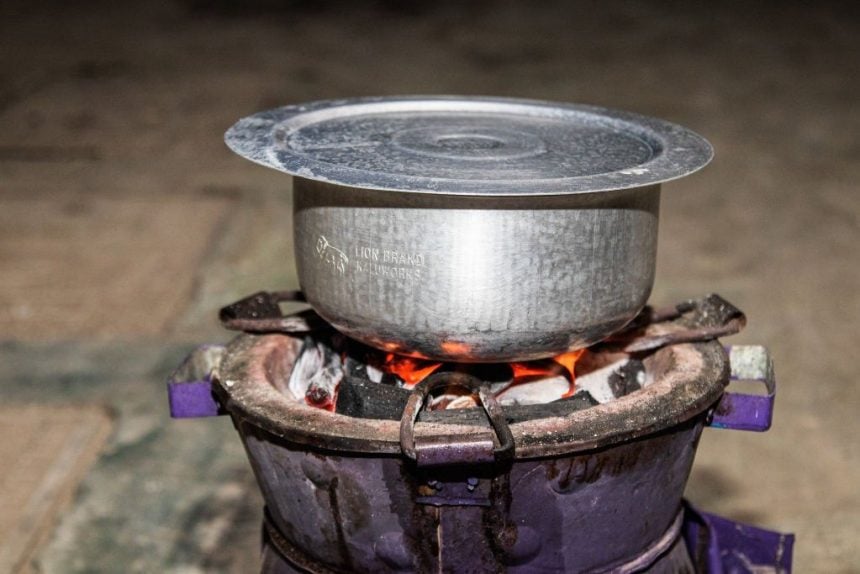


The rising cost of cooking gas is forcing many households and businesses in the Federal Capital Territory (FCT) to switch to charcoal and firewood.
The News Agency of Nigeria (NAN) reports that the price of cooking gas in the FCT has increased from about N1,200 per kilogram to N2,000 per kilogram in recent months.
Industry operators have linked the increase to supply shortages, higher depot costs, foreign exchange challenges, and rising transportation expenses.
Residents and gas vendors who spoke with NAN on Sunday said many people are now turning to cheaper cooking alternatives.
A food vendor in Gwarimpa, Abuja, Mrs Mayo Akinpelu, said she stopped using cooking gas after repeated price increases made it too costly for her business.
According to her, she switched to firewood and charcoal because they are cheaper and can be bought in smaller quantities.
“Refilling my gas cylinder became difficult because the price kept rising. I could no longer afford it and still make reasonable profit. Right now, 12.5kg of LPG goes for N25,000.
“Firewood and charcoal are not as convenient as gas, but they help me reduce costs and keep my business running,” she said.
Akinpelu added that although customers sometimes complain about delays, the alternative fuels are now her only practical option.
Another food vendor in Dutse, Bwari Area Council, Ms Victory Samson, said the increase has affected her earnings.
READ ALSO: Tinubu Signs Executive Order To Protect Nigeria’s Oil & Gas Revenue
“It has affected a lot; my profit margin has reduced. The government should help and bring the price back to normal,” Samson said.
In Kubwa, business owner Mrs Grace Oluwatimilehin said she was surprised by the latest increase.
“I filled my cylinder at N1,600 per kg the last time, but when I went back yesterday, the price had risen to N2,000 per kg.
“I now use electric hot plates for cooking and sometimes rely on charcoal and firewood instead of gas,” she said.
Mrs Abike Ojo, a mother of one, said the steady increase in gas prices is putting pressure on her household budget.
“The last time I bought gas, it was N1,500 per kg, but my most recent purchase cost N2,000.
“If prices keep rising, I may stop using gas entirely because it has become too expensive,” she said.
She called on the government to intervene, warning that rising gas costs could further increase household expenses.
A gas vendor in Kubwa, Mr Bamishile Bolanle, confirmed that gas now sells for N2,000 per kilogram.
“The increase has affected business because people’s purchasing power has dropped significantly.
READ ALSO:Why Cooking Gas Prices Are Rising – Marketers
“From what we observe, the major issue is product scarcity, although we do not know the exact cause,” Bolanle said.
Another gas vendor in Dei-Dei, Mr Alfred Orshio, said the increase has led to a drop in customer patronage.
“Earlier this year, we sold gas for N1,200 per kg. It later rose to N1,400, then N1,800, and now N2,000.
“I cannot blame customers for buying less. Filling a 12kg cylinder now costs about N25,000,” Orshio said.
Meanwhile, charcoal sellers say demand has increased as more people move away from cooking gas.
A charcoal distributor in Kubwa, Mrs Amina Yakubu, said:
“Patronage has increased recently, and I believe it is because of the rising cost of cooking gas.
“I buy a bag of charcoal for N6,500 and sell it to my customers for N8,000.”
Another charcoal vendor, Mrs Saratu Ibrahim, also reported increased sales.
“Business is moving very fast. What used to take more than a week to sell now takes just two days.
“However, many people have joined the charcoal business.
READ ALSO: Why We Rejected Govt’s Plan To Sell Assets – PENGASSAN President
“I was the first seller on this street, but there are now more than five charcoal vendors here,” she said.
Firewood seller Mr Taninu Ibrahim also said demand has risen as more households and food vendors look for cheaper cooking options.
He noted that higher demand has also pushed up firewood prices.
“More people now buy firewood because cooking gas has become too expensive for many families and small businesses.
“Before now, customers got six pieces of firewood for N1,000. Today, the same amount buys only four pieces,” he said.
Ibrahim attributed the increase to higher demand and transportation costs, adding that sales remain strong despite the price rise.
As cooking gas prices continue to climb, more residents and business owners are adopting alternative cooking methods, raising concerns about the cost of living in the FCT.
Stakeholders have called on the government to help stabilise prices, while vendors warn that continued scarcity and weak purchasing power could further reduce gas consumption and business activity.




News
Group Commends COREN For Training Engineers In Engineering Failure, Forensic Investigation In Nigeria


Foundation for the Development of Shira Community (FODESCO) in Shira Local Government Area of Bauchi state has commended the Council for the Regulation of Engineering in Nigeria (COREN) for conducting a pioneer training on Engineering Failure and Forensic Investigation (EFFI) for 50 licensed engineering practitioners across the country.
Engr. Shehu Wakili, the Chairman of the Foundation made the commendation in an interview with newsmen on Friday.
According to him, the training which was conducted by COREN in collaboration with the Nigerian Building and Road Research Institute (NBRRI) and the Chartered Institute of Forensic and Certified Fraud Investigators of Nigeria (CIFCFIN), was to equip engineers and professionals from academia, industry, and government MDAs with practical skills to investigate infrastructure failures and prevent recurring building collapses.
READ ALSO: ICPC, COREN Working To Curb Quackery In Engineering — Don
He added that the training was also to build a pool of trained specialists who could investigate building collapses and other engineering failures, determine their root causes, and recommend measures to prevent recurrence, saying that the trainees would form part of a register of trained and certified forensic engineering investigators.
He further lauded COREN for the subsequent induction of its member, Engr. Abdullahi Muhammad MNSE, who among the 50 participants, hails from Bauchi state as a Chartered Engineering Forensic and Failure Investigator (CEFFI), certified by CIFCFIN.
“FODESCO is proud of him and wishes him well in all his endeavours”, he prayed.
Wakili, also the Chairman, Nigerian Society of Engineers (NSE), Bauchi state chapter, revealed that the training covered failure analysis, forensic investigation methodologies, risk assessment, and professional reporting.
“This initiative supports broader efforts by COREN and the National Assembly to enforce stricter building codes, identify quackery, and ensure accountability across the construction sector,” he said.
News
NBS: Lagos, Rivers, Enugu Top List As States Generated N5.15trn In 2025

The National Bureau of Statistics (NBS) has disclosed that 36 states and the FCT generated a total of ₦5.15 trillion in 2025, indicating a growth rate of 40.93 percent from ₦3.65 trillion recorded in 2024.
NBS stated on Thursday citing the Nigeria Revenue Service ( NRS) as source of its information that Lagos emerged top on the list of states with the highest revenue generation in the sum of ₦1.77 trillion.
“Followed by Rivers state ₦428.42 billion and Enugu with IGR record of ₦406.77 billion in the period referenced.”
The. Bureau said Yobe, Ebonyi and Sokoto states reported the least revenues with ₦16.01 billion, ₦17.18 billion and ₦20.48 billion, respectively.
READ ALSO: Trump Bans CNN, Others From White House Coverage, Gives Reason
According to NBS, Pay As You Earn (PAYE) was the most tax revenue recorded during the period, valued at ₦2.64 trillion, representing 69.51 percent of the total tax revenue collected, while capital gains tax was the least with ₦12.40 billion while the share of total tax revenue to total IGR was 73.64 percent nationally.
“Other states and their share of IGR are FCT – N356.34 billion, Ogun – N252.36 billion, Delta – N202.49 billion, Edo – N132.21 billion, Oyo – N103.25 billion and Kano – N102.26 billion.
“Ten other states in lowest category of IGR include Yobe – N16.01 billion, Ebonyi – N17.18 billion, Sokoto – N20.48 billion, Taraba – N28.16 billion ; Benue – N29.57 billion, Zamfara – N30.07 billion, Kebbi – N31.23 billion, Nasarawa – N32.57 billion, Adamawa – N33.76 billion andcBorno – N36.36 billion “.
READ ALSO: Nigeria’s Economy Grew By 3.13% In Q1 2025 — NBS
NBS noted that the states generated their most and least revenue from taxes and other government sources. “PAYE was the dominant revenue source nationally, generating N2.64 trillion and accounting for 69.51% of total tax revenue for the year.
“Other sources included direct assessment, road taxes, stamp duties, withholding taxes and capital gains tax, which was the smallest contributor at N12.40 billion,” the Bureau stated.
News
Judge Orders Trump White House To Restore Access To Banned Media Outlets


A US federal judge has ordered the Trump administration to temporarily restore White House access to journalists from CNN, MS NOW and Politico after the three news organisations challenged their exclusion from the presidential complex.
US District Judge Timothy Kelly issued a 14-day temporary restraining order early Thursday, directing the White House to immediately return, reinstate and restore the press credentials of journalists from the three outlets.
The ruling followed a lawsuit filed on Monday by CNN, MS NOW and Politico, which challenged President Donald Trump’s decision to bar their reporters from the White House.
Trump announced the ban on September 18, accusing the outlets of repeatedly publishing what he described as “FAKE NEWS” and negative coverage of his administration.
READ ALSO: US: White House Launches Trump TV After CNN, Others’ Ban Backfires
The three organisations argued that the administration’s action violated their First Amendment rights and deprived their journalists of due process under the Fifth Amendment.
In his ruling, Kelly said the outlets were likely to succeed in showing that their press credentials had been revoked without constitutionally adequate due process.
The judge also rejected the administration’s argument that national security concerns justified the restrictions.
“The record lacks factual support for defendants’ contention that the revocation of plaintiffs’ hard passes will in fact protect national security or that national security will be endangered if the court orders their passes reinstated while this litigation proceeds,” Kelly wrote.
READ ALSO: Trump Bans CNN, Others From White House Coverage, Gives Reason
He also noted that Trump had focused on the outlets’ reporting when announcing the ban rather than national security concerns.
“Certainly, that is not what President Trump said when he announced that he was ‘banning’ plaintiffs from the White House—instead, he focused on the alleged lack of truthfulness and negativity of plaintiffs’ reporting,” the judge wrote.
The administration had argued in court that access to the White House was a privilege rather than a right and that the outlets’ reporting raised concerns about national security and professionalism.
The Justice Department is expected to appeal the ruling.
READ ALSO: Trump Launches Task Force To Tackle Birth Tourism, Revokes Over 600 Visas
Trump had previously said he would probably allow the three organisations back into the White House if a court ruled against his decision.
The dispute began when reporters from CNN, MS NOW and Politico were turned away from the White House after their press credentials were revoked.
The decision also affected the White House television pool. CNN had been scheduled to travel with Trump to New York for the United Nations General Assembly as part of the pool, but its removal led the other participating television networks to suspend the pool in solidarity.
READ ALSO: Trump Confirms Secret Plane Swap Over Possible Iranian Missile Threat
Other media organisations also joined the legal challenge indirectly by filing a friend-of-the-court brief supporting the three outlets.
The case now moves forward with the temporary restraining order in place for 14 days. During that period, the court is expected to consider whether longer-lasting relief should be granted.
The ruling comes as Trump faces a series of high-profile events at the White House, including his scheduled meeting with Chinese President Xi Jinping.
The administration and the three news organisations are expected to continue their legal arguments as the court considers the broader dispute over press access and the constitutional rights of journalists covering the president.
(TimeMagazine)
-

 News4 days ago
BREAKING: Tinubu Extends Working Vacation
-

 Headline4 days ago
How To Format An Academic CV For US Master’s, PhD Applications
-

 News4 days ago
Benue Govt Suspends Muslim Pilgrims Welfare Board Chairman, Secretary
-

 News3 days ago
OPINION: The Stranger In APC’s Kitchen
-

 Entertainment4 days ago
Why Funke Akindele Was Not At My Movie Premiere – Kamo State
-

 Politics4 days ago
Crisis Rocks NDC Over Obi-Kwankwaso Campaign Council
-

 Sports4 days ago
5 Football Players Who Excelled In Multiple Positions
-

 News5 days ago
[OPINION] Wike-APC: Fights Always End Adultery
-

 News4 days ago
FULL LIST: Names Of 37 Illegal Miners Who Died In NSCDC Custody
-

 Headline4 days ago
Italy PM Meloni Announces Plan To Ban Niqabs, Burqas In Schools
