
Headline
FG Blocks N83bn Protest Funds, Arrests Political Collaborators
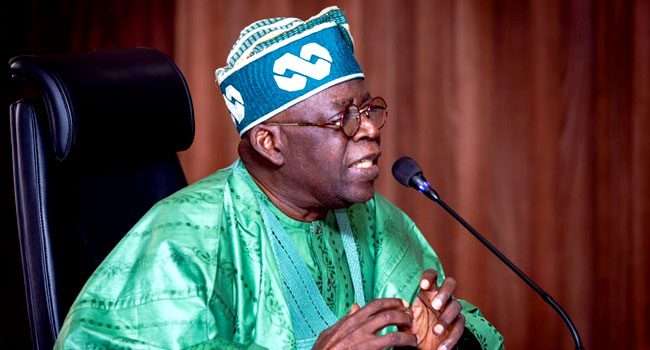
The Federal Government has traced at least N83 billion in cryptocurrency and fiat money channelled towards the recent nationwide protests, The PUNCH reports.
They include $50m of cryptocurrency — $38m of which were blocked in four cryptocurrency wallets — and N4bn contributed by various political actors in Abuja, Kano, Kaduna and Katsina.
This was part of a presentation by the National Security Adviser, Nuhu Ribadu, at the inaugural meeting of the Council of State convened by President Bola Tinubu at the Aso Rock Villa, Abuja.
According to multiple sources with knowledge of Tuesday’s meeting proceedings, Ribadu, who presented on the topic ‘The Nationwide Protest As It Affects National Security,’ also revealed that an European has been identified as the mastermind of the proliferation of foreign flags during the protests and will soon be declared wanted by the Police.
One of the sources, who spoke on condition of anonymity because he was not authorised to speak on the matter, disclosed that local conspirators traced to capital city Abuja, Kaduna and Kano have been arrested.
“In his presentation, the NSA said the government was able to trace $50m to crypto wallets that were made as donations to the protests. They succeeded in blocking four of those wallets containing $38m.
“They also found out that some political actors contributed N4bn to fund the protests,” one of the sources told The PUNCH.
READ ALSO: Obasanjo Absent As Jonathan, Buhari Attend Council Of State Meeting In Aso Rock
The PUNCH had reported on Tuesday that President Tinubu convened the Council of State meeting to discuss, among other matters, the recent #EndBadGovernance protests, national security, the economy and food security.
The Council comprises the President (who serves as its chairman), the Vice President, all former Presidents and Heads of State, all former Chief Justices of Nigeria, the Senate President, the Speaker of the House of Representatives, the Attorney-General of the Federation, the Secretary to the Government of The Federation and all state governors.
Former Presidents Goodluck Jonathan and Muhamamdu Buhari attended the inaugural Council meeting, while former Heads of State, General Yakubu Gowon (retd.) and General Abdulsalami Abubakar (retd.), joined virtually alongside governors of Abia, Adamawa and Akwa Ibom State.
However, former President Olusegun Obasanjo and former Head of State General Ibrahim Babangida (retd.) did not attend the meeting.
Tuesday’s gathering came days after Nigerians, mostly youths, hit the roads in Abuja for a one-million-man march. The march, which climaxed with a low turnout, marked the 10th day of the nationwide protest against the rising cost of living in the country.
On August 1, the opening day of the nationwide protest, demonstrations declined into destruction of property and loss of lives, especially in the North, leading to at least 17 reported deaths during the “days of rage.”
READ ALSO: Obasanjo Absent As Jonathan, Buhari Attend Council Of State Meeting In Aso Rock
On August 3, just two days into the demonstrations, viral photos and videos showed demonstrators waving the flags in Kano State and chanting in Hausa, “We don’t want bad government.”
In Kaduna, a state in the north west, protesters were also seen waving the Russian flag and reciting in Hausa, “Welcome, Russia; Welcome, Russia.” Russia, an Eastern power which is currently mired in a proxy war with the West, has been blamed for several unconstitutional changes of government in West African countries such as Niger, Mali and Burkina Faso, among others.
The Nigerian military said the use of Russian flags during the protests was a treasonable offence, adding that it was investigating those behind the move and would “take serious action” against them.
While addressing the nation in a broadcast on August 4, President Tinubu warned demonstrators not to “let the enemies of democracy use you to promote an unconstitutional agenda that will set us back on our democratic journey.”
The PUNCH reported earlier that security agencies had identified at least four politicians from Katsina, Kaduna and Kano states, who, they said, promoted the use of the Russian flag among demonstrators with the intent to spark unconstitutional regime change.
Another source privy to the discussions at the Council of State meeting told our correspondent that these local actors have been arrested, with the foreign mastermind on the run.
Council of State meeting
The source said, “The NSA also briefed the Council that there was some element of foreign interference in the protest, that they found out that some foreigners fueled the protests. It was not just about Nigerians protesting against hardship.
READ ALSO: National Anthem Recitation: Fresh Protest Looms Over Controversial Bill
“A foreign agent had been found to be connected to it and would soon be declared wanted by the Police. The police will make the announcement this week.
“This agent is a person of interest with his Nigerian collaborators; most of them have been arrested. They are looking for him. But his collaborators in Abuja, Kaduna, Kano and Katsina have been arrested. The NSA also confirmed that eight people died during the protests.”
Meanwhile, the Minister of Solid Minerals Development, Mr. Dele Alake, said no political actor would be allowed to instigate an unconstitutional regime change. He described the #EndBadGovernance protests as an attempt to achieve regime change, saying any such changes must be made through the ballots, not through insurrection.
“Any change of government has to be through the ballots and not through the barrel of the gun or insurrection or any other unconstitutional means,” Alake stated while briefing State House correspondents after the Council of State meeting at the Villa on Tuesday.
He added, “Matters of state were discussed in a robust and frank manner. The National Security Adviser was also on hand to present the security situation of the country. He informed the Council of State about the pre-, during and post-event of the last protests, which I do not call a protest. I call it a movement to effect a regime change by force, which was resisted.
“The Council thanked Nigerians at large for resisting any unconstitutional move to change the government. If anybody is not satisfied with the government, there is always an election coming, so you wait for the election and cast your vote.
READ ALSO: Policeman Dies As Gunmen Bomb Checkpoint, One Injured
“The NSA briefed the Council on the security situation and allayed fears. He spoke about the tightness of the security around the country and also reassured all and sundry that nobody would be allowed to truncate our hard-earned democracy. And he reassured us of the readiness of all security agencies in the country to secure our territorial integrity and protect Nigeria’s democracy.”
The cabinet member confirmed an earlier report by The PUNCH, stating that he and his counterparts from various ministries briefed the Council on seven areas: The Nationwide Protest as it Affects National Security; the State of the Economy; Food Security, Availability and Affordability; Milestones in the Solid Minerals Sector; Budgeting and Planning for Sustained Development; Milestones in the Road Sector and Leading a Strong Industrial Base for Transformation and Growth.
“Some of us ministers were invited to make presentations on our road map and what we’ve achieved, as well as the prospects and the challenges in our various ministries.
“And so, me, the Coordinating Minister of the Economy and the Finance minister, Mr Wale Edun, were there to make a presentation.
“The Minister of Budget was also there, he made his presentation. The Minister of Works also made a presentation and so did the Minister of Industry, Trade and Investment and the Minister of Agriculture,” he stated.
On his part, Finance minister Wale Edun told journalists that his data-based presentation at the Council meeting showed attendees Nigeria’s inflation rate, which he said was too high by Tinubu’s reckoning, was reducing steadily.
READ ALSO: Residents Protest, Burn Tyres In Osun Community Over Alleged Imposition Of Monarch
“In my case, we updated them on the economy, how much progress has been made in terms of the macroeconomic policies being followed under the leadership of President Bola Tinubu, and these policies are anchored on his eight priority areas and the results to date have been very encouraging.
“We looked at the data of this half year for which data was available, compared to the first and second quarters of 2023. And in broad terms, the economy is growing. The balance of payments, in particular, the trade and current account balances, are in surplus.
“The exchange rate is stabilising, and inflation, though uncomfortably high for the liking of Mr. President and his team, is slowing, and it is set to fall. But in particular, there has been support for the economy from investors, by way of portfolio investors and domestic investors, who are participating in important private-public partnerships, particularly the infrastructure sector and foreign direct investment, which is beginning to recover; I would say so.”
Edun noted that the takeaway from his presentation was that “we have exports, goods exports, non-oil exports, at $55bn last year with tremendous room to grow. And we reported an optimistic outlook for the Nigerian economy and society in general due to prospects for economic growth and progress.”
He said the service sector, particularly the outsourcing industry, was highlighted as a sector with high prospects for growth in the near future.
The Chairman of the Nigeria Governors’ Forum, Governor AbdulRahman AbdulRazaq, announced that the Council of State unanimously passed a vote of confidence on President Tinubu.
READ ALSO: Protest: President’s Speech Shows No Empathy, Sympathy, Says Gov Mohammed
“The high note of the meeting was a unanimous passage of a vote of confidence on President Bola Tinubu, GCFR, Commander in Chief of the Nigerian Armed Forces,” AbdulRazaq, the Governor of Kwara State, said.
“Members, especially those of the Nigerian Governors’ Forum, were satisfied with the presentation by the members of the Federal Executive Council, and after that meeting, there was an executive session between members of the NGF and Mr President, and frank and fruitful discussions were held between both parties.
“I’m glad to say we are on the right track. And to say in the same vein, members of the NGF, like the members of the Council of State, also passed a vote of confidence on Mr. President.”
The Council was last held 18 months ago – February 10, 2023 – under former President Muhammadu Buhari. At the time, Buhari had convened the meeting to discuss the 2023 elections, the crisis emanating from the new naira policy and fuel scarcity.
The National Council of State is a constitutional organ of the Nigerian government that advises the executive on policy-making, among other functions. Its largely advisory role is to guide the President in decision-making processes on national security, appointments and economic policies.
At the President’s behest, the Council meets to deliberate on crucial national issues, including—but not limited to—national security, economic challenges and the appointment of key public officials like the chairman and members of the Independent National Electoral Commission, the National Population Commission and the Police Service Commission.
Additionally, the Council advises on the exercise of the President’s powers regarding pardons and commutations. The meetings are typically convened by the President and are not held regularly but are instead called as needed, especially when the country faces significant challenges that require input from past and present leaders. Though not binding, the Council’s recommendations often influence presidential decisions.
PUNCH



Headline
Coup: Guinea-Bissau Junta Releases Six Held Opposition Politicians
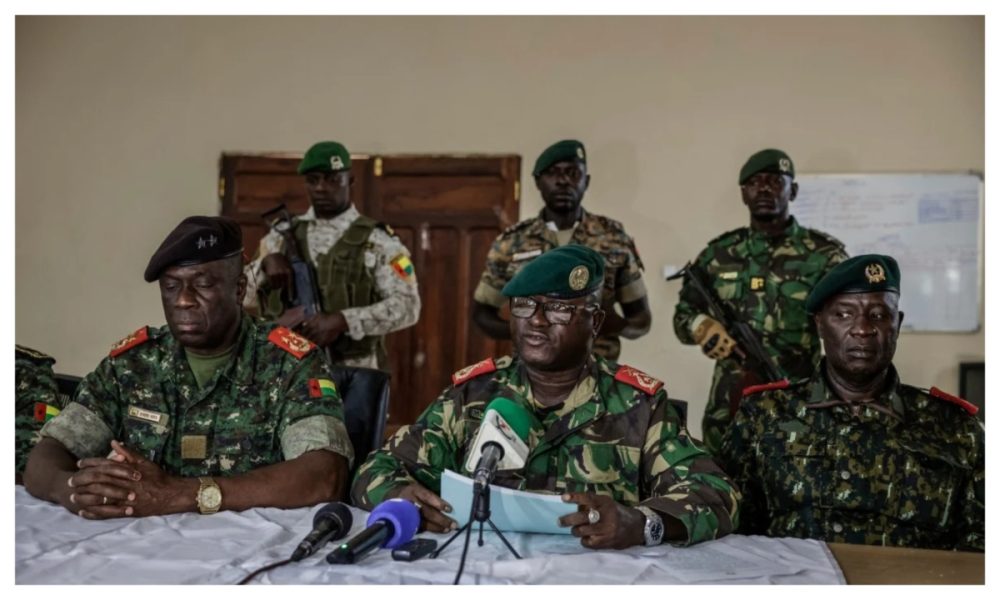
Guinea-Bissau’s ruling junta on Tuesday released six members of the political opposition who had been detained since a coup last month.
The six freed opposition members are said to be close associates of Domingos Simoes Pereira, head of the PAIGC party that led the country to independence in 1974.
Pereira has been in custody since the coup.
In a statement by the High Military Command, the junta’s governing body, the releases are described as a sign of good faith and a step towards the return to constitutional normality and respect for international rights.
READ ALSO:Why West African Troops Overturned Benin’s Coup But Watched Others Pass
The army seized power on 26 November after ousting outgoing President Umaro Sissoco Embalo in the wake of a presidential vote.
After taking over, the military suspended the electoral process and announced it would take control of the West African country for a period of one year.
Recall that another opposition candidate, Fernando Dias, took refuge in Nigeria’s embassy, which granted him asylum, while Embalo fled the country after being briefly detained by the military at the time of the coup.
Meanwhile, Senegal’s Foreign Minister, Cheikh Niang, led a delegation to Guinea-Bissau, where he met with detained opponents and requested their release.
Headline
7 Territories Still Under Colonial Rule

Even though most nations became independent in the last century, some territories are still ruled by other nations.
Contents
1. Western Sahara
2. Guam
3. American Samoa
4. United States Virgin Islands
5. Falkland Islands / Malvinas
6. Gibraltar
7. Bermuda
Many of them remain on the United Nations list of non-self-governing territories, meaning they have not completed the process of decolonization. These places usually depend on bigger countries for laws, passports, defence, or political control.
In this article, Nigerian Tribune highlights 7 territories still under colonial rule:
READ ALSO:Nigeria Ranks World’s 102nd Happiest Nation, US, Germany Not Among 20 Top Counties
1. Western Sahara
Western Sahara remains one of the world’s biggest unresolved colonial issues. Morocco controls most of the territory, but the Polisario Front wants independence for the Sahrawi people. The UN is still trying to help both sides agree on a peaceful solution.
2. Guam
Guam is an important US territory in the Pacific, used heavily for American military operations. The US oversees its defence and foreign relations.
People living there are US citizens, but they cannot vote in presidential elections and do not have full representation in Congress.
READ ALSO:FULL LIST: US To Review Green Cards From 19 ‘Countries Of Concern’ After Washington Shooting
3. American Samoa
American Samoa has more local control than Guam, but the United States still decides immigration, defence, and foreign affairs.
Residents are considered US nationals and must apply if they want full citizenship.
4. United States Virgin Islands
The US Virgin Islands have their own legislature, but the United States makes major constitutional and political decisions. The territory depends heavily on US federal support.
5. Falkland Islands / Malvinas
The Falkland Islands remain controlled by the United Kingdom (UK), but Argentina has long disputed this claim, having been in control of the Islands for a few years before 1833.
The people living there voted strongly to stay British, yet the sovereignty dispute continues to appear in the UN.
READ ALSO:Six Countries With Highest Number Of Billionaires In 2025
6. Gibraltar
Gibraltar sits at the Southern tip of Spain. The United Kingdom controls it, but Spain insists the territory belongs to them.
Gibraltarians have repeatedly voted in favour of remaining British, but the dispute is still discussed within the UN Decolonisation Committee.
7. Bermuda
Bermuda is a British Overseas Territory situated in the North Atlantic Ocean. Although it manages most of its own internal affairs and enjoys a strong economy with modern facilities, the United Kingdom still handles its defence and represents it in global matters.
Headline
Russia-Ukraine War: Pope Leo Calls For Global Christmas Truce
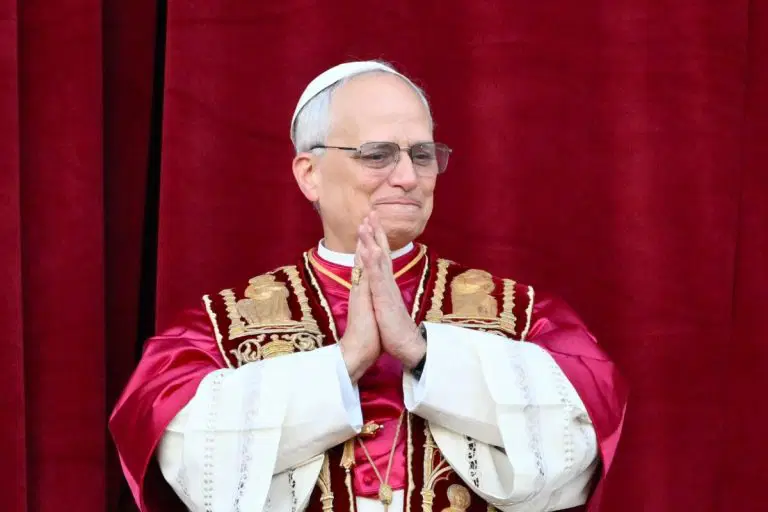
Pope Leo XIV on Tuesday renewed his call for a global truce on Christmas Day, saying he felt “great sadness” after Russia “apparently rejected a request” for a pause in fighting.
Speaking to reporters at his residence in Castel Gandolfo near Rome, the Pope urged all sides involved in conflict to observe at least one day of peace.
“I am renewing my request to all people of goodwill to respect a day of peace — at least on the feast of the birth of our Saviour,” Leo said.
Recall that Russia invaded Ukraine in February 2022 and has repeatedly turned down calls for a ceasefire, arguing that any pause would give Ukraine a military advantage.
READ ALSO:Russian Strikes Kill Five In Ukraine, Cause Power Outages
“Among the things that cause me great sadness is the fact that Russia has apparently rejected a request for a truce,” the pope said.
Referring to conflicts worldwide, Leo added, “I hope they will listen and there will be 24 hours of peace in the whole world.”
The appeal came as fighting continued in eastern Ukraine. On Tuesday, Ukrainian forces withdrew from a town after heavy battles with Russian troops. Russian strikes killed three civilians and left thousands without power during winter temperatures.
READ ALSO:Trump Blasts Ukraine For ‘Zero Gratitude’ Amid Talks To Halt War
There was no indication of progress toward ending the war after separate meetings last weekend in Miami between the United States officials and negotiators from Russia and Ukraine. The conflict is nearing four years with no settlement in sight.
Earlier this month, Pope Leo met Ukrainian President Volodymyr Zelensky. When asked whether he would accept Zelensky’s invitation to visit Ukraine, the pope said, “I hope so,” while noting that it was not possible to say when such a visit could happen.
Leo also warned that efforts to secure peace without European diplomatic involvement were “unrealistic”, expressing optimism that President Donald Trump’s proposed peace plan could bring a “huge change” to the transatlantic alliance.

 News3 days ago
PHOTOS: New Era In Furupagha-Ebijaw As Okpururu 1 Receives Staff Of Office
- News2 days ago
UBTH CMD Marks 120 Days In Office, Expresses Commitment To Providing Conducive Working Environment
- News3 days ago
OPINION: Gumi And His Terrorists
- News3 days ago
FG Declares Public Holidays For Christmas, New Year Celebrations
- News3 days ago
FIRS Confirms NIN As Tax ID
- Metro2 days ago
Fintiri Pardons Man Sentenced To Death For ‘Killing Herdsman In Self-defence’, Others
 News3 days ago
OPINION: My Man Of The Season
- News3 days ago
OPINION: Christmas And A Motherless Child
- News3 days ago
KWAM 1 Withdraws From Awujale Race, Ends Court Challenge
- Metro2 days ago
Petrol Tanker Crashes Into Akpabio’s Convoy, Kills Police Dispatch Rider


