
News
FG Promises 20-hour Daily Power Supply
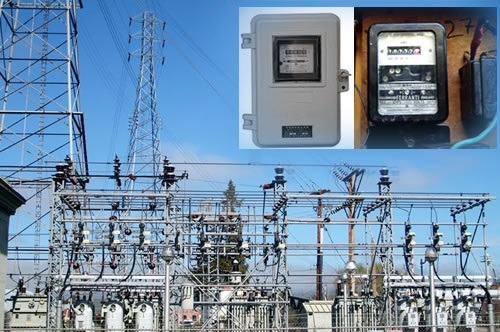
The Federal Government has revealed plans to provide Nigerians with at least 20 hours of daily electricity by 2027.
However, it has conditioned this target on sufficient investment in Nigeria’s oil and gas sector, which it has said is currently far below expectations.
The Special Adviser to the President on Energy, Olu Verheijen, made this statement at the Energy Week in Cape Town, South Africa, in a release by the State House Director of Information and Publicity, Abiodun Oladunjoye, on Thursday.
“By 2027, Nigeria aims to ensure 20 hours of electricity daily for consumers in urban areas and industrial hubs,” Verheijen said.
The statement is titled, ‘At African Energy Week in Cape Town, Olu Verheijen Invites Global Players to Invest in Nigeria’s Energy Sector.’
Verheijen’s comments come amid the frequent collapse of Nigeria’s national power grid, which has led to widespread blackouts across the country.
The grid collapsed on Tuesday, marking the 10th such incident since January 2024. The Federal Government has attributed these recurring collapses to ageing infrastructure, inadequate maintenance, and insufficient investment in the power sector.
Despite having an installed capacity of approximately 12,500 megawatts, Nigeria often generates only a fraction of this, leaving many areas without reliable electricity.
At the Energy Week, Verheijen told participants about efforts by the Tinubu administration to revitalise the nation’s power sector, with plans to provide more reliable electricity access for the 86 million Nigerians currently underserved.
She said the scheme aims to improve revenue assurance and collection.
Other key measures include tackling legacy debt, deploying seven million smart meters to reduce losses, and expanding off-grid solutions for remote communities.
READ ALSO: Sex Tape: Equatorial Guinea To Install Surveillance Cameras In Offices
Highlighting recent macroeconomic reforms, such as the removal of the petrol subsidy and foreign exchange liberalisation, she expressed confidence that Nigeria is poised for unprecedented growth.
“Under President Tinubu’s leadership, Nigeria is championing reforms to unlock its vast economic potential and create jobs,” she said, inviting foreign partners to participate in Nigeria’s next chapter of growth.
While discussing the recent reforms implemented by President Bola
Tinubu’s administration to attract investment, Verheijen noted that the country has historically underperformed in oil and gas production despite its wealth in the sector.
She referenced how countries like Brazil, which have only 30 per cent of Nigeria’s oil reserves, have outperformed Nigeria by producing 131 per cent more than the country’s current output.
“Despite our abundant resources, we have underperformed against our potential. For example, Brazil holds only 30 per cent of Nigeria’s oil reserves but produces 131 per cent more. This is largely due to under-investment,” she said.
She lamented that since 2016, Nigeria has attracted only 4 per cent of African oil and gas investments, while investment has surged in other, less resource-rich nations.
“Since 2016, Nigeria has managed to attract only 4 per cent of total investments in oil and gas, while less-resourced countries in Africa have enjoyed a larger share.
READ ALSO: National Grid Collapses Second Time In Three Days
“When we analysed investment data, we also found that, between 2013, when Nigeria’s last deepwater project reached FID, and now, International Oil Companies (IOCs) operating in Nigeria have committed more than $82bn in deepwater investments in other countries they deemed to be more attractive destinations for their capital,” she told the audience.
Recognising this trend, the presidential aide highlighted efforts by President Tinubu’s administration to enact reforms aimed at reshaping Nigeria’s investment landscape.
She cited the government’s introduction of fiscal incentives targeting deep offshore and non-associated gas projects, marking the first time Nigeria has outlined a fiscal framework specifically for deepwater gas.
In efforts to enhance the upstream oil and gas sector, she said her office has collaborated closely with the office of the National Security Adviser to create and distribute focused Security Directives, leveraging insights gathered from on-the-ground operators.
Furthermore, Verheijen revealed steps to streamline approval processes by clearly defining the regulatory scopes involved.
This initiative, she said, aims to significantly reduce the extended project timelines that have historically plagued the industry, as well as the high-cost premiums associated with operating in Nigeria.
READ ALSO: JUST IN: National Power Grid Collapses Again
“Our target is to shorten the contracting timelines from an extensive 38 months to just 135 days, while also working to eliminate the 40 per cent cost premium that currently exists within the Nigerian petroleum industry,” she added.
The presidential aide also revealed efforts by the current President Tinubu administration to further open up the oil and gas sector for larger investments with a set of clear fiscal incentives for non-associated gas and deep offshore oil and gas exploration and production.
“This is the first time that Nigeria is outlining a fiscal framework for deepwater gas since exploration in the basin commenced in 1991,” she said.
According to her, amongst other initiatives, there has been a focus on midstream and downstream investments in compressed natural gas, liquefied petroleum gas, and electric vehicles as part of the Presidential Gas for Growth Initiative.
She added that the administration has also worked to streamline regulatory processes, shorten project timelines, and reduce the high-cost premium of operating in Nigeria.
“We have also introduced fiscal incentives to catalyse investments in the midstream and downstream sectors, including compressed natural gas, liquefied petroleum gas, and mini-liquefied natural gas.
READ ALSO: JUST IN: Blackout As National Grid Collapses Again
“These align with the broader Presidential Gas for Growth Initiative, which seeks to enable the displacement of PMS and diesel in three key sectors: heavy transport, decentralised power generation, and cooking. These incentives are also stimulating demand for electric vehicles.
“Our goal is to eliminate the 40 per cent cost premium within the Nigerian petroleum industry and cut down contracting timelines from 38 months to 135 days,” Verheijen stated.
She said the government has unlocked over $1bn across the energy value chain, with two more major investment projects expected by mid-2025.
“We are also facilitating the transfer of onshore and shallow water assets to local companies with the capacity to grow production while supporting the transition of International Oil Companies with resilient capital into deep offshore and integrated gas.
“We have unlocked over $1 billion in investments across the value chain and by the middle of 2025, we expect to see FID on two more projects, including a multibillion-dollar deepwater exploration project, which will be the first of its kind in Nigeria in over a decade – one of many to come,” Verheijen explained.



News
Six Corps Members Receive N10m Grants To Boost Agribusiness
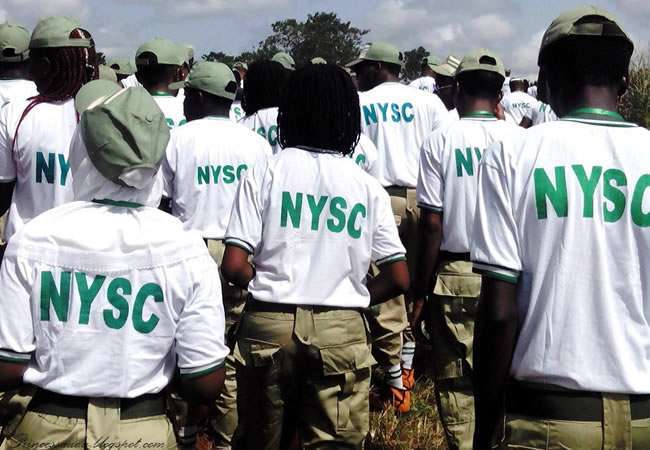
Six members of the National Youth Service Corps (NYSC) have received a total of N10 million in grants to expand their agribusiness ventures under the Farmers for the Future Programme.
The programme was organised on Monday by the British American Tobacco Nigeria Foundation (BATNF) in collaboration with the NYSC to encourage young Nigerians to embrace agriculture and develop sustainable businesses.
Presenting the cheques to the beneficiaries in Abuja, the NYSC Director-General, Brigadier General Olakunle Nafiu, urged Corps members to maximise the opportunities provided by the service year by venturing into commodity marketing and other viable businesses.
Nafiu said agribusiness remained a viable avenue for young people to build sustainable enterprises, create employment and generate wealth.
READ ALSO: NYSC Swears In 1,600 Corps Members In Bauchi
He also stressed the importance of value addition to the success and sustainability of business ventures, while commending BATNF for placing Nigerian youths at the centre of its entrepreneurship initiatives through value-chain development, employment creation and its partnership with the NYSC.
“I charge you to spread the news around. We have seen the outcome, and it is a good idea,” he said.
The beneficiaries are Dominic Olufemi (FC/25C/1143), who received N3 million; Temitope Adewole (ED/26A/2251), N2 million; Abdulwaheed Bala (ED/25B/1402), N2 million; Olanike Mayungbe (OG/26B/1037), N1 million; Kingsley Udoeyen (KG/26A/1735), N1 million; and Lorember Lorsue (JG/25B/1742), N1 million.
Speaking on the selection process, the Acting Director, Skills Acquisition and Entrepreneurship Development (SAED), Mrs Winifred Shopeka, said the programme began with an online registration portal through which Corps Members engaged in agribusiness submitted their business plans.
READ ALSO: NCCSALW Deploys NYSC Members In Fight Against Illegal Arms In Northeast
She said nearly 3,000 Corps members applied and underwent a rigorous selection process that produced 20 finalists.
According to her, the finalists participated in a boot camp and a final pitching session, which produced the 10 best presenters before the six ultimate winners were selected.
Shopeka said the beneficiaries had also been mentored and attached to established market operators to assist them in marketing their products.
She added that Corps Members who did not make the final stage of the competition were also trained by BATNF.
The BATNF Team Lead, Mr Oludare Odusanya, congratulated the beneficiaries and urged Corps Members engaged in agribusiness to master the fundamentals and acquire the knowledge and skills necessary to succeed.
“We are happy with our collaboration with the NYSC, and it will continue,” he said.
READ ALSO: NYSC Lauds Gov. Mohammed’s Intervention In Fence Collapse
Odusanya explained that BATNF was an independent organisation established to contribute to poverty reduction in Nigeria through sustainable agricultural practices and other interventions.
He said the Farmers for the Future Programme was instituted in collaboration with the NYSC to encourage Corps Members to venture into agribusiness and become job creators.
He added that the beneficiaries would be attached to mentors who would guide them towards achieving success in their respective businesses.
According to him, the programme has, since its inception, continued to enhance the entrepreneurial capacity of Corps Members.
News
CBN Reduces Interest Rate To 23%
The Central Bank of Nigeria (CBN) on Tuesday announced the reduction of the interest rate, also known as Monetary Policy Rate (MPR) to 23 percent.
Briefing the media in Abuja, the Governor of the CBN, Mr. Olayemi Cardoso, said at the 307th MPC meeting held on September 22, 2026 agreed the resetting of the MPR and recaliberation of the monetary policy market.
According to Cardoso, the committe is satisfied with the disinflation progress, adding that members noted stable banking sector following successful recapitalisation.
READ ALSO: CBN Monetary Tightening Worsening Nigeria’s N50tn Development Finance Gap – Group
Meanwhile, according to Nigerian Tribune, reports that that the MPC, at its 306th meeting in July 2026, disclosed its resolution to retain the interets at 26.5 percent.
According to the Governor of the CBN, Olayemi Cardoso, “the Committee’s decision to maintain the current policy stance followed a thorough assessment of the balance of risks. Although headline inflation moderated marginally in June 2026, global uncertainties have heightened, due mainly to the renewed hostilities in the Middle East.
“In view of the evolving developments, maintaining a cautious monetary policy stance remains appropriate. In arriving at its decision, the Committee noted the recent resurgence of hostilities in the Middle East, with particular attention to its spillover effects on global energy prices and the potential pass-through to domestic inflation.”
News
NURTW: KWAM1 Settles Long-time Rift Between MC Oluomo, Tafa Sego
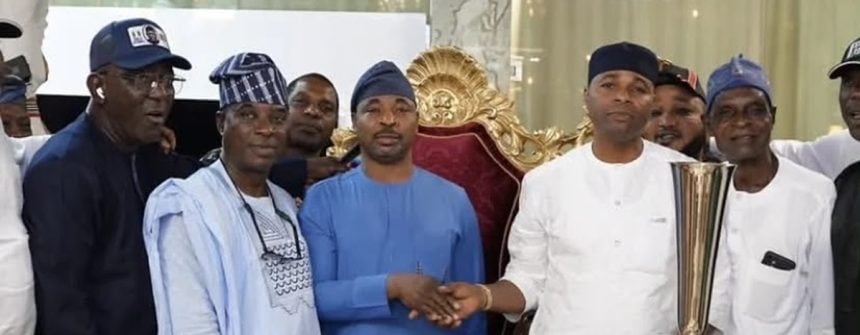
Nigerian Fuji musician, Wasiu Ayinde Marshal, popularly known as KWAM1, has brokered a peace deal between the National Union of Road Transport Workers (NURTW) National President, Musiliu Akinsanya, popularly known as MC Oluomo, and the Lagos State Chairman of the union, Mustapha Adekunle, aka Tafa Sego.
The reconciliation took place at Ojusagbola in Ijebu, Ogun State, where several NURTW chieftains gathered for the meeting.
The development was announced on Tuesday on KWAM1’s digital media page on Instagram, alongside photographs from the meeting.
According to the post, the two union leaders have resolved their differences after years of strained relations.
READ ALSO: Why FG Named KWAM 1 Aviation Security Ambassador — Keyamo
“After years of an age-long rift, MC Oluomo and Tafa Sego have finally settled their differences. And from what we know now, this is final,” the post said.
The musician was said to have intervened as the Mayegun of Yorubaland, with the aim of bringing an end to the longstanding disagreement between the two NURTW figures.
“K1 acted in his role as the Mayegun of Yorubaland by seeking an end to the long-standing rift, once and for all,” it said.
The post also described the meeting as a significant step beyond previous public displays of reconciliation.
READ ALSO: FG Gives KWAM 1 Aviation Appointment, After Airport Incident
“This time, it was not just another handshake for the cameras. The two old friends and colleagues came together at Ojusagbola, with King Wasiu Ayinde Marshal (K1) playing the peacemaker.”
Both MC Oluomo and Tafa Sego were reported to be pleased with the outcome of the intervention.
“Both parties are delighted about the new development,” the post said.
The two men had previously been allies and prominent figures within the Lagos NURTW before their relationship became strained amid disagreements linked to leadership of the union in the state.

 News3 days ago
BREAKING: Tinubu Extends Working Vacation
- News5 days ago
Six Hidden Health Benefits Of Unsweetened Zobo
- News5 days ago
Jehovah’s Witnesses Announce New Position On Blood Transfusion Policy
- News5 days ago
2027: Step-by-step Guide To Applying For INEC Ad Hoc Staff Recruitment
- News5 days ago
How 36 Nigerian States Got Their Names
- Headline5 days ago
Nigerian Man Jailed After Masturbating In Front Of Woman On UK Train
- Headline3 days ago
How To Format An Academic CV For US Master’s, PhD Applications
- News5 days ago
Stop Acid Reflux Pain: Foods You Must Ban From Your Kitchen
- Business5 days ago
Naira Appreciates Against Dollar At Official FX Market
- Headline5 days ago
Nigerian Woman Arrested, Charged Over Illegal Voting In US


