
News
FIFA’s Use Of Kebbi Stadium In Banner Sparks Outrage, Funding Row
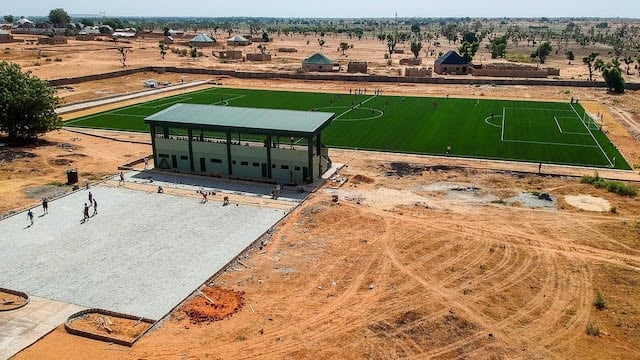
Global football body FIFA has stirred a storm of reactions across Nigeria after showcasing the Birnin Kebbi Stadium project in Kebbi State — a facility co-funded with the Nigeria Football Federation — on its official social media pages.
FIFA on Saturday used an image of the project, dating back to 2023, as the new profile banner on its official X (formerly Twitter) and Facebook accounts.
The image, showing a half-furnished stadium in Birnin Kebbi, quickly went viral.
Built under the FIFA Forward Programme, the stadium was meant to symbolise progress in grassroots football. But as the photo circulated online, fans flooded social media with outrage and speculation.
Some netizens interpreted FIFA’s post as a subtle jab at the NFF, following recent allegations of fund mismanagement.
The uproar comes just days after football critic Chinedu Mobike, via his official Instagram handle #c_mobike, on October 23, 2025, accused the NFF of squandering millions of dollars meant for infrastructure projects, including its twin project in Delta State.
READ ALSO:JUST-IN: NFF Pulls Out Super Eagles From AFCON Qualifier After Libya Airport Nightmare
Mobike, in his viral video, claimed that FIFA gave the NFF “1.2 million dollars for two stadiums” — one in Kebbi and another in Ugborodo, Delta State — which, he alleged, “till today did not see daylight.”
Comparing Nigeria’s FIFA-funded projects with those of other nations, Mobike alleged that while “other countries used the funds to truly develop football, Nigeria produced nothing to show.
“The NFF should sit up…There are no active projects promoting football or sports in Nigeria,” Mobike said.
According to The PUNCH, the next day, Friday, October 24, 2025, the NFF issued an official statement, which it described as a “fresh clarification to misinformation” by some social media users (names not mentioned) who claimed the NFF “collects millions of dollars from FIFA annually to misappropriate.”
The statement, retrieved from the NFF website, was titled: “NFF: Monies received from FIFA & CAF are for specific purposes, and audited in every cycle.”
While Mobike’s video reignited calls for reform, the hashtag #SaveNigerianFootball has been trending on X, as users express frustration and hope that collective pressure might finally bring transparency to Nigerian football governance.
READ ALSO:SWAN Orders Nationwide Boycott Of NFF Activities
In its October 24 statement, the NFF firmly denied any wrongdoing, explaining that every dollar received from FIFA or CAF is tied to a specific purpose and audited annually.
“The monies meant for development purposes are tied to specific projects.
“FIFA Forward funds are properly specified and under strict adherence to financial regulations, compliance, monitoring, and auditing at every stage,” the NFF said.
The Federation cited ongoing FIFA Forward projects such as the NFF/FIFA Players’ Hostel and new training pitches at the MKO Abiola National Stadium, stressing that every phase is verified before funds are released directly to FIFA-approved consultants.
Dismissing the viral reports as “fictitious figures,” the NFF added that those spreading misinformation “would find no reason to seek clout if they had any idea how much it costs to organise a single match of any of the national teams.”
But the clarification failed to calm the storm.
READ ALSO:JUST IN: NFF Appoints New Super Eagles Coach
Instead, FIFA’s quiet profile update on Saturday reignited debate, with many Nigerians reading it as a silent but deliberate signal.
Many questioned how long it would take to fully complete a mini-stadium project that came to light in May 2023, after the groundbreaking event in September 2020 by the former Kebbi governor, Abubakar Atiku Bagudu.
In December 2023, it was reported that Kebbi State Governor Nasir Idris unveiled the FIFA/NFF-backed stadium project, saying it was designed to “boost the morale of youths in the state.”
He noted that the project cost $1,183,000, with the state government donating four hectares of land and paying ₦19 million in compensation to landowners.
Earlier, in May 2023, FIFA described the Kebbi project as part of its commitment to grassroots football, writing on its website InsideFIFA: “It is no surprise, then, that Birnin Kebbi, the capital of Kebbi, was chosen back in 2020 as the site for the construction of an artificial football pitch now available for young boys and girls to use.
READ ALSO:JUST IN: NFF Appoints New Super Eagles Coach
“Meanwhile, a second pitch is under construction in Ugborodo… these two ambitious projects have received around USD 2 million in funding from FIFA through its Forward Programme.”
Online Reactions
Social media erupted with interpretations and comparisons.
Some users viewed FIFA’s action as subtle recognition rather than mockery. One X user, @Poka741997, wrote: “FIFA updating their header is symbolic. It’s recognition for Nigeria, even if the stadium’s budget is modest by international standards.”
Others saw it as a global embarrassment.
User #_AsiwajuLerry commented: “FIFA changed their Twitter header to the $1.2m stadium built by the NFF. Global shame.”
READ ALSO:Joy As NFF Gifts Super Eagles Coach, Finidi George Car Worth N125m
Echoing that sentiment, #OyokunyiOkon added: “This is embarrassing. The NFF should be ashamed that FIFA is showcasing a $1.2 million ‘stadium’ in Kebbi that clearly reflects misplaced priorities and poor accountability.”
Comparing Nigeria’s project to Senegal’s 50,000-seat Stade Abdoulaye Wade, user #FemiOguntayo2 remarked: “Nigerians want to build a world-class stadium with $1.2m… Haba! We know NFF is corrupt but haba na…
“This is Stade Blaise Sené (also known as Stade du Sénégal or Abdoulaye Wade National Stadium) in Diamniadio, Senegal. Its total construction cost was $270 million, funded largely by the Senegalese government and built by Turkey’s Summa Construction Company. FIFA’s way of mocking the NFF. How did they spend $1.2m on that stadium? Exposing the kwaruption in the NFF?”
Another user, #mario99amr29, suggested FIFA’s post was deliberate: “We know what’s at play.
“If FIFA can display this at the expense of other successful projects, maybe it’s a subtle callout. Nigeria vs Kenya: A case study.”
As of press time, FIFA had yet to issue any official comment explaining the use of the Kebbi stadium image on its banner. PUNCH



News
Migration Agency Warns Migrants Against Irregular Travel Routes
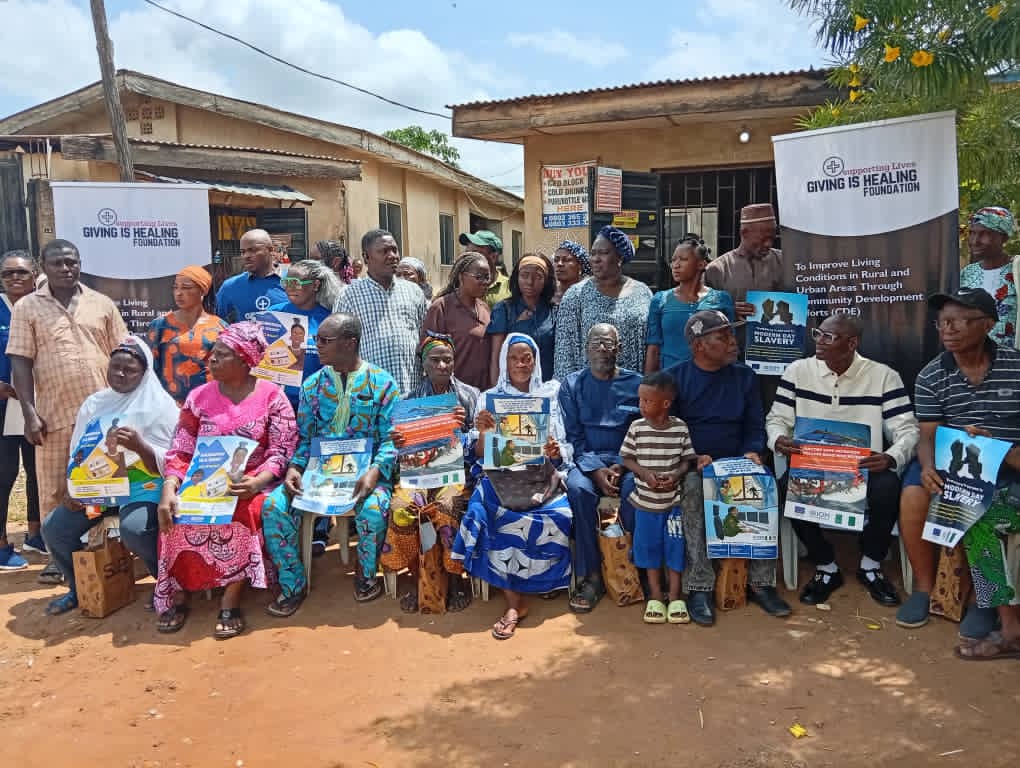
The International Organisation for Migration (IOM), in collaboration with Giving is Healing Foundation, has sensitised residents of Ayobo in Alimosho Local Government Area of Lagos State on the dangers of irregular migration and the need to embrace legal travel procedures.
Speaking during a sensitisation programme held at Megida Ifelodu Community Development Association in Ayobo, the founder of Giving is Healing Foundation, Mr. Gbolahan Ayediran, warned intending migrants against using illegal travel routes.
Ayediran said many Nigerians desire to migrate abroad in search of better opportunities but often ignore proper procedures, thereby exposing themselves to several dangers.
“Lots of people want to migrate and most of them do it in the wrong direction. The reason for the programme is for us to advise people on how they can migrate in the right way. As much as migration is their right, they should do it correctly,” he said.
READ ALSO:How Wike Rescued Me From Political Oblivion — Oshiomhole
He advised intending travellers to obtain the necessary travel documents before embarking on any journey, noting that such documents include international passports, visas, flight tickets and yellow cards, depending on the destination country.
According to him, migrants should also gather adequate information about their destination countries to enable them make informed decisions before travelling.
Ayediran further highlighted some of the dangers associated with irregular migration, including abuse, exploitation, discrimination and forced labour.
Also speaking, the Chairman of Megida Ifelodu Community Development Association, Elder Mathews Amusan, commended the organisers for enlightening members of the community on safe migration practices.
READ ALSO: He Can’t Fix His Party Let Alone Nigeria – Oshiomhole Blasts Atiku
He urged residents planning to travel abroad to always follow legal migration procedures to avoid falling victim to human trafficking and other migration-related challenges.
One of the participants, Mr. Kolawole Adenoko, said the programme enlightened him on the dangers of irregular migration and the importance of travelling through the proper channels.
He added that he would also educate his relatives and friends on the risks associated with illegal migration.
News
Shatta Wale Bailed Burna Boy From Ghana Prison After Arrest For Smoking Weed – Captan
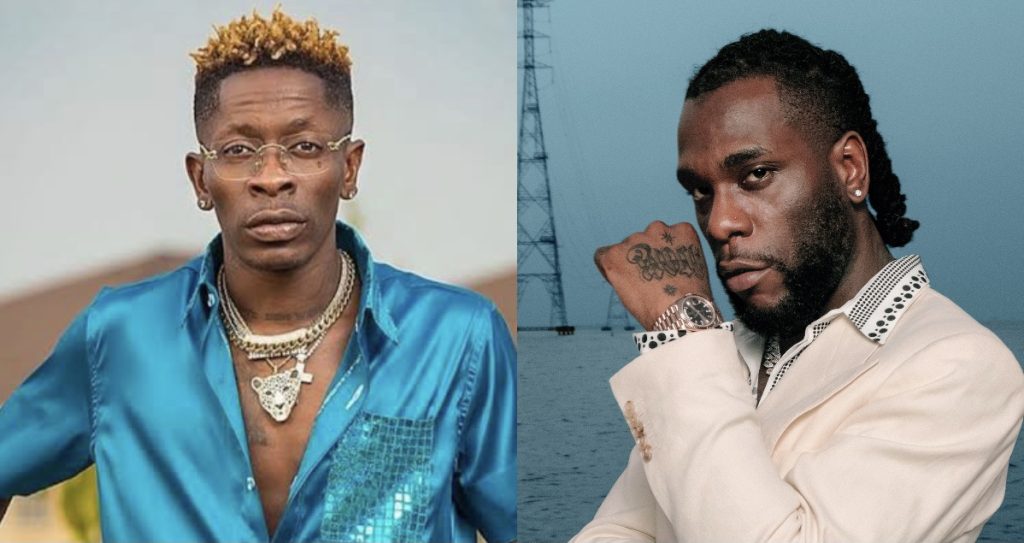
Ghanian singer, Captan, has claimed that his former record label boss, Shatta Wale, once bailed Nigerian singer Burna Boy out of prison in Ghana after he was allegedly arrested for smoking weed.
Speaking in a recent podcast interview, Captan claimed that Shatta Wale sent him and others to free Burna Boy from police custody.
He also claimed that Shatta Wale and his group once accommodated Burna Boy when he was being hunted by some dangerous men.
READ ALSO: Wale Edun Opens Up After Sack
Captan said, “I once bailed Burna Boy out of prison in Ghana when he was arrested for smoking weed. Shatta Wale sent me and some guys to go and free him from police custody.
“There was a time we also accommodated him when some people were after his life. We helped him settle the case.”
He added that he and Burna Boy are no longer in good terms after the Nigerian artist’s fallout with his mentor, Shatta Wale.
He, however, said he and Shatta Wale are open to reconciling with Burna Boy if he asks for it.
Watch the video here
News
Children’s Day: Chaos At Ogbe Stadium As Dozens Faint
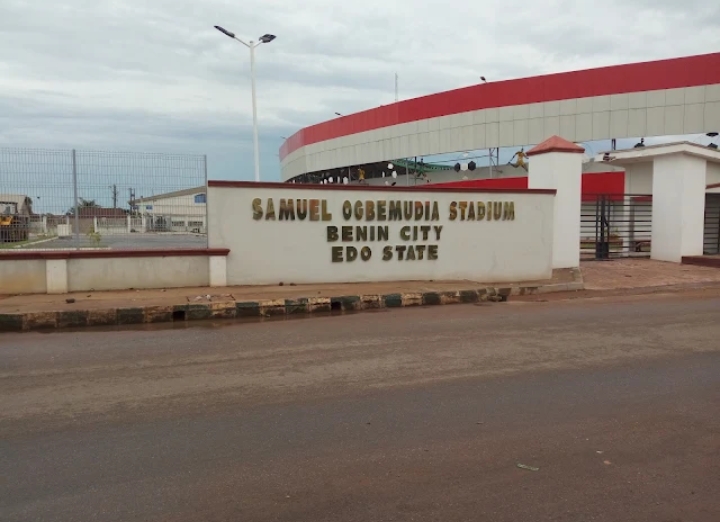
Chaos erupted on Wednesday during the Children’s Day celebration as dozens of students reportedly collapsed following a stampede triggered by the use of pepper spray.
The event,
organised by the Edo State Ministry of Education at the Samuel Ogbemudia Stadium was disrupted after some male students of Ihogbe College allegedly made uncompromising advances towards female students at the venue.
A parent who identified himself as Oboh Emmanuel said, “the behaviour of those uncultured students attracted the attention of bouncers stationed at the stadium as they rebuked the male students.”
Oboh said the affected students later regrouped and attacked the bouncers, leading to a confrontation within the crowded arena.
READ ALSO:Children’s Day: Edo Commits To Child Protection
It was gathered that in the ensuing confusion, the bouncers were reported to have deployed pepper spray in an area occupied by a large number of students.
Several students, particularly female students, reportedly fainted after inhaling the substance, while others sustained injuries after being stepped on during the ensuing melee.
The panic was said to have spread across the stadium as students, teachers and parents scampered for safety.
Many of the affected students were reportedly rushed to the Edo Specialist Hospital for medical attention.
READ ALSO: Egor LG Chair, Ogbemudia, Vice, Osawe Impeached
Reacting to the incident, Chief Press Secretary to Governor Monday Okpebholo, Dr Patrick Ebojele, said the security personnel that fired the tear gas had been detained.
He said all the students, except two, that were rushed to the hospital have been discharged.
Ebojele stated that doctors wanted to observe the students till tomorrow before allowing them to go home.
“The two students are not seriously injured. Doctors want to observe them overnight. Permanent Secretary, Ministry of Education is still at the hospital. The man who used pepper spray has been detained.
“The incident did not happen the way it is being exaggerated. All modalities were put in place to ensure the children enjoyed their day.”

 Headline4 days ago
Woman Passes Out After Receiving 100 Strokes Of Cane
- Headline4 days ago
JUST IN: White House Locked Down Briefly As Gunman Opens Fire At Security Checkpoint
- News3 days ago
More Pain For Nigerians As Cooking Gas Price Increases Nationwide
- Politics3 days ago
Two Masked Men Gun Down Politician In His Rivers State Hotel
- Metro4 days ago
Police Reject N500m Bribe, Recover N7.8bn Illicit Drugs In Lagos
- News3 days ago
FG Declares Two Days Public Holiday For Eid-el Kabir Celebration
- Politics3 days ago
‘Tinubu’s Borrowing In 24 Months Surpasses 55 Years’ Debt Record’
- Politics2 days ago
Court Clears Goodluck Jonathan To Contest 2027 Presidential Election
- News5 days ago
TCN Seeks Edo Govt, Community Support Against Power Infrastructure Vandalism
- News3 days ago
OPINION: Boko Haram Comes South


