
Headline
Five Factors That May Affect Outcome Of 2023 Presidential Election
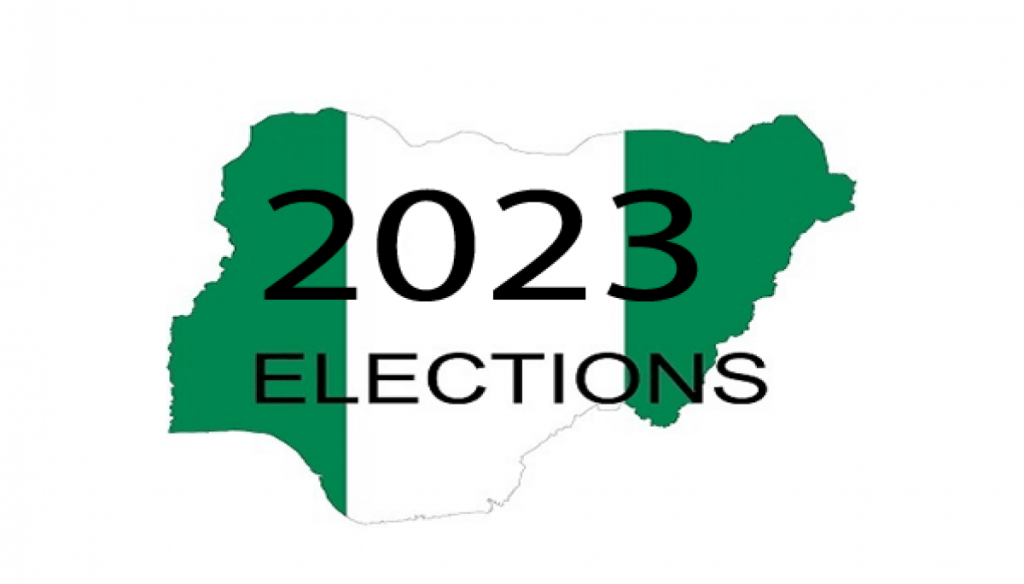
In a few hours from now, 87,209,007 Nigerians will troop to 176, 606 polling units across the country to elect a new President in a presidential election that marks 24 years of uninterrupted democratic experience in Nigeria.
As of February 5, being the deadline for the collection of the Permanent Voter Cards nationwide, 6,259,229 registered voters did not turn up to collect theirs to qualify to vote.
Indeed, Nigerians are looking at electing the next president who will take over on May 29, 2023 upon the completion of the two tenures of President Muhammadu Buhari.
A breakdown of the total eligible voter figure by states by the Independent National Electoral Commission showed that Lagos State has the highest number of collected PVCs with 6,214,970, followed by Kano State with 5,594,193; Kaduna State, 4,164,473, while Ekiti State has the least with 958,052.
There are 18 candidates from different political parties jostling for the position seat but the top four leading candidates are Atiku Abubakar of the Peoples Democratic Party; Bola Tinubu of the All Progressives Congress, Peter Obi of the Labour Party and Rabiu Musa Kwankwaso of the New Nigeria People’s Party.
In this report, The PUNCH critically assesses five major factors that could decide the outcome of tomorrow’s election:
1. Ethnicity and regionalism
From time past, Nigerians have always played the ethnic and regional cards in elections. In fact, it has always been the case of “the person is our son, let him do it”. Not a few Nigerians believe that electing someone from their region or ethnic group will bring massive development to them.
READ ALSO: PHOTOS: Elections: Customers Besiege Banks For Cash In Abeokuta
Since the advent of the Fourth Republic in 1999, there has been an unwritten law that presidential power should rotate every eight years between the North and South, political leaders are agreed that due to the heterogeneous nature of the country, power rotation arrangement had become necessary to address complaints of marginalisation and domination, and to give equal power to ethnic groups.
Zoning has worked well leading to a seamless transfer of power by former president, Olusegun Obasanjo who ruled for eight years, to Musa Yar’ Adua, a Northerner.
This is what brought about the clamour for ‘Emilokan’ (a terminology indicating that it is the time of Yoruba) by the APC’s candidate who publicly said he supported Buhari to emerge as the President.
The South East is not also backing down in their agitation for the presidency because they believe that they have been sidelined well enough since the return of civil rule in 1999.
It is believed this was what led for the call for secession and the call by the apex socio-cultural group, Ohanaeze Ndigbo, that endorsed the Labour Party’s candidate.
2. Religion
Religion is also an important factor that will determine the outcome of Saturday’s election. Since 1999, there has always been a balance in the selection of President and Vice President of all the parties in power.
For instance, if the presidential candidate is a Muslim, he will ensure to choose a Christian as his running mate.
READ ALSO: Rethink Your Choices, Oyedepo Tells Nigerians On Presidential Election
While the North is predominantly Muslim, the South is predominantly Christian.
This balance was however upset when Tinubu, a Yoruba Muslim, chose Kashim Shettima, a Kanuri Muslim and former governor of Borno State, as his running mate.
This action led to widespread condemnation from many Nigerians and Christian bodies.
So, as it stands now, many voters may have to pitch their tent with people of their religious inclination.
3. Possible emergence of third force party
Prior to this dispensation, Nigeria’s political space had been dominated by the PDP until February 2013 when the Action Congress of Nigeria, the Congress for Progressive Change, and the All Nigeria Peoples Party along with a breakaway faction of the All Progressives Grand Alliance formed a coalition and established the APC.
The newly formed coalition defeated the incumbent President, Goodluck Jonathan thus heralding an era of a two-party dominant state. Saturday’s election however could change the narrative with the LP and NNPP looking towards changing the electoral dynamics.
Obi’s supporters popularly called the ‘Obidient’ Movement chiefly constituted by the youths believe that the Labour Party candidate will bring about great change to the country’s political space.
Obi’s candidacy has been endorsed by Ohanaeze Ndigbo, and some influential non-Igbo groups and individuals, including former president Olusegun Obasanjo.
Another candidate is the NNPP’s Kwankwaso, the founder of the Kwankwasiya movement, who is regarded as a grassroots organiser. He is believed to be popular with ordinary people in the North but is thought to lack a strong following in the South.
4. Money
With the persistent cash crunch experienced currently in the country, vote-buying may mitigate the outcome of Saturday’s presidential election.
Nigeria is not yet ripe for a democratic election uninfluenced by vote-trading as it has become an important factor that reinvigorates voters to come out to their polling units.
Recently, some party chairmen of one of the political parties were reported to be clamouring for mobilisation fees from the presidential candidate or they would truncate the elections.
Despite measures to improve the transparency of the electoral system, it is likely that money will remain a big factor in the 2023 elections.
5. Fear of violence
Nigeria’s political history is replete with accounts of violent election conduct and behaviours by actors at election venues.
READ ALSO: Nigeria Decides 2023: NCP Endorses Tinubu Ahead Of Saturday’s Election
The 2023 general election is itself foreshadowed by rising insecurity in many parts of the country. The obvious outcome is that voters could be too scared to come out to exercise their franchise leading to high voter apathy.
In fact, some local governments in Borno and Zamfara states have created super camps for indigenes that have been displaced from their homes in order not to deprive them of their right to vote.
In some other places, some people might not come out because of the fear of being attacked when the result is not going the way of the areas of the dominant party.



Headline
Six-year-old Nigerian Girl Dies After Fall From Apartment In Canada

A six-year-old Nigerian girl has died after falling from a high-rise residential building in Toronto, Canada, in a tragic incident that has left the community in shock.
Reports indicate that her mother was in Nigeria at the time of the incident.
The incident occurred at an apartment complex on Chalkfarm Drive in North York, close to Jane Street, at about 8:15 p.m.
Toronto Police Service said officers responded to a report described as “unknown trouble” and later found the child unresponsive on the ground outside the building.
Residents of the building described the girl as cheerful and familiar within the community, saying her death had deeply unsettled neighbours.
READ ALSO:Man With Lengthy Criminal Record Shoots Nigerian To Death Inside Bus In Canada
One resident told CP24 that the child was regularly seen playing around the premises.
“She used to come here all the time and play… she was a lively kid. It’s very, very sad,” the neighbour said.
Another resident said the news had been devastating for people living in the building, adding that the girl was a familiar face during daily routines such as school runs.
“It’s crazy that I will never see this child again. I see her every morning. It’s heartbreaking,” the resident said.
According to neighbours, the girl had been staying with a family friend who lives on the top floor of the building while her mother was away in Nigeria.
READ ALSO:Man With Lengthy Criminal Record Shoots Nigerian To Death Inside Bus In Canada
Some residents also questioned how the incident occurred, noting that the building is fitted with window safety features designed to prevent full opening.
“To be fair, they do have precautions on these windows to make sure these things don’t happen,” one resident said.
Another added that the windows are secured and cannot be fully opened, further adding to uncertainty surrounding the circumstances.
The property management company, Greenwin, which manages the building at 200 Chalkfarm Drive, described the incident as “deeply saddening,” adding that its thoughts are with the child’s family.
READ ALSO:Travel Chaos: Air Canada Shut Down By Flight Attendant Strike
The company confirmed that emergency responders attended the scene promptly and said it is fully cooperating with investigators.
It declined to comment on the condition or inspection history of the windows, citing an ongoing investigation.
Police in Toronto said the case is not being treated as suspicious at this stage, though investigations are continuing pending autopsy results.
Headline
US Govt Finally Releases Files On UFOs, Alien Life
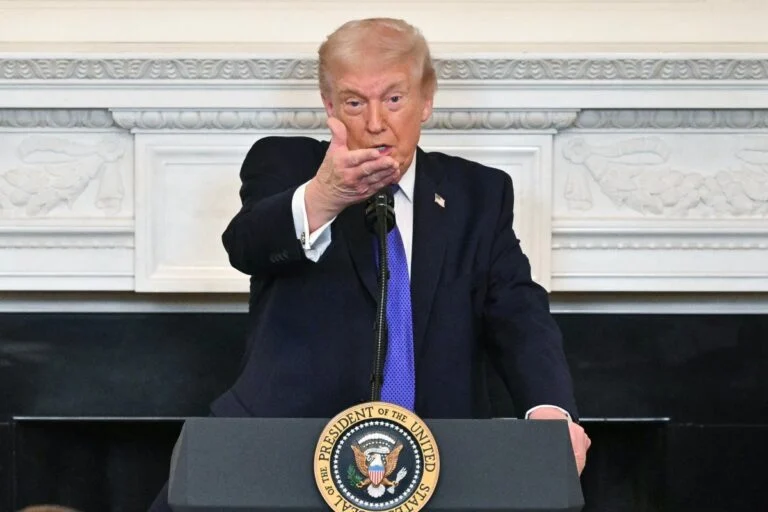
President Donald Trump’s administration has released a batch of previously unseen files, videos and photographs on Unidentified Anomalous Phenomena, UAP.
The government described the development as part of a push for greater transparency on government-held information about extraterrestrial-related sightings.
According to Fox News, the White House said the materials, drawn from across multiple government agencies, have been made publicly accessible without security clearance requirements.
Officials said the release is intended to allow the public to review the information and draw their own conclusions.
READ ALSO:Trump Bows To Pressure, Deletes Post Depicting Self As Jesus
“The latest UAP videos, photos, and original source documents from across the entire United States government are all in one place,” the White House said, adding that past administrations had sought to limit public disclosure.
The release is part of a programme identified as the Presidential Unsealing and Reporting System for UAP Encounters, PURSUE, which officials say will continue with further disclosures.
Among the initial materials are images reportedly linked to Apollo 12 and Apollo 17 space missions, including a photograph from the lunar surface showing three small dots in the sky.
The release also includes transcripts of communications from Apollo 17, in which crew members described observing bright, fast-moving particles or fragments outside their spacecraft.
READ ALSO:Trump Tired Of War In Iran – Shehu Sani
In one exchange, astronauts described seeing “very bright particles” and “jagged, angular fragments” while in orbit, comparing the appearance to fireworks.
Trump previously said he would support declassifying government files related to UFOs and UAPs, following renewed public interest in the subject.
He had earlier directed federal agencies to begin identifying and releasing relevant documents.
Headline
Strait Of Hormuz: Pakistan Thanks Trump For Pausing ‘Project Freedom’
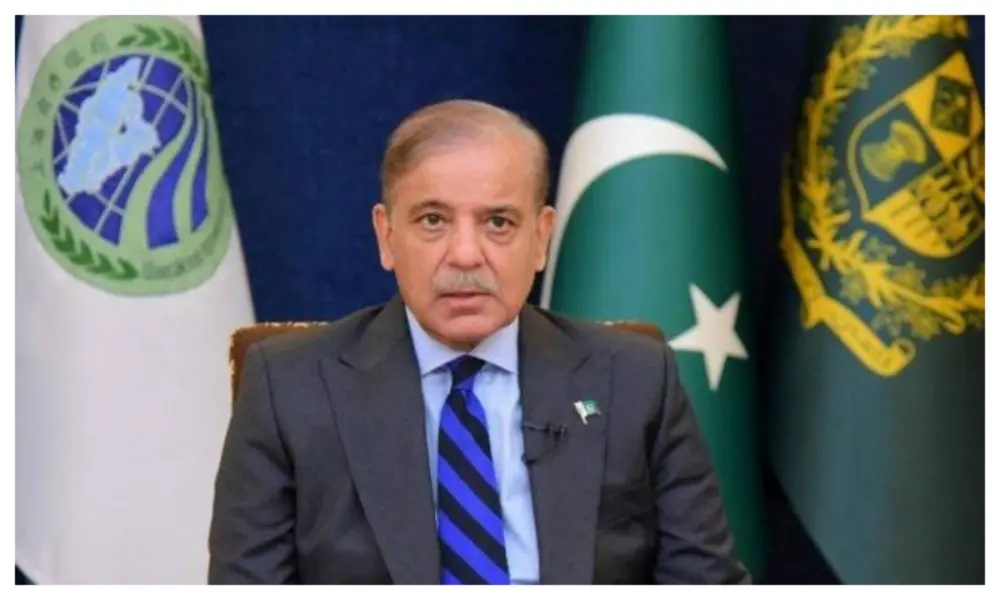
Pakistani Prime Minister Shehbaz Sharif on Wednesday expressed gratitude to United States President Donald Trump for temporarily pausing ‘Project Freedom’, an initiative to secure shipping through the Strait of Hormuz.
In a statement posted on X, Sharif thanked Trump for pausing the “Project Freedom” mission, praising him for his courageous leadership and timely announcement.
According to him, Trump’s decision was made in response to requests from Pakistan, Saudi Arabia and other brotherly countries.
READ ALSO: Oil Prices Drop After Iran Reopens Strait Of Hormuz
He added that the pause would go a long way towards advancing regional peace, stability and reconciliation during the sensitive period.
“Pakistan remains firmly committed to supporting all efforts that promote restraint and a peaceful resolution of conflicts through dialogue and diplomacy.
“We are very hopeful that the current momentum will lead to a lasting agreement that secures durable peace and stability for the region and beyond,” Sharif said.

 News5 days ago
BREAKING: Wike Picks Alabo George For Rivers Governorship
- Business4 days ago
Why We Sited Our Multi-Billion Naira Automobile Firm Branch in Benin – Skyewise Group CEO
- Politics5 days ago
JUST IN: Why I left ADC For NDC With Kwankwaso – Peter Obi Opens Up
- Politics4 days ago
BREAKING: 17 ADC Reps Follow Join NDC
- Business3 days ago
Again, Dangote Refinery Hikes Fuel Price
- Entertainment5 days ago
Why I Stopped Attending Church Service – Funke Akindele
- News3 days ago
Xenophobic Attacks: Nigerian Students To Picket MTN, MultiChoice, Other Businesses
- News4 days ago
OPINION: APC’s Politics Of Consensus
- Entertainment5 days ago
‘My Mum Started Quoting Bible’ — Shank Sparks Debate After Tattoo Confession
- News3 days ago
IGP Orders Officers Display Name Tag On Uniform, Gives Update On State Police


