
Headline
Foreign Creditors May Seize Presidential Jets Over Accumulated Debts
…Aviation Experts React
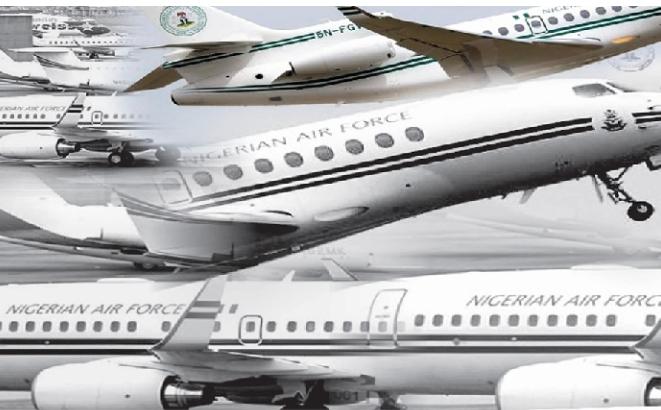
Aircraft in the Presidential Air Fleet are at the risk of being impounded by foreign creditors, according to The PUNCH.
Findings indicated that the PAF was indebted to several service providers for various upgrades carried out on the 10 aircraft in the fleet to meet the required airworthiness.
The PAF provides secure airlift to the President, the Vice-President, their immediate families and other top government officials.
However, due to inadequate funding, it was gathered that some installations on the aircraft had again been postponed to 2023.
The PAF Commander, Air Vice Marshal Abubakar Abdullahi, who stated these in his budget defence presentation at the National Assembly, also complained that only N1.5bn was allocated for the maintenance of the aircraft out of the proposed N4.5bn.
According to report, the budgetary allocation to the PAF had risen by 121 per cent in eight years.
Findings indicate that the President, Major General Muhammadu Buhari (retd.), had since 2016 allocated N81.80bn for the PAF maintenance and foreign trips.
The amount includes N62.47bn for the operation and maintenance of the PAF, N17.29bn for foreign and local trips, and N2.04bn earmarked for other related expenses.
The Presidency has maintained 10 aircraft since the inception of the Buhari regime in May 2015.
They are Boeing Business Jet (Boeing 737-800 or NAF 001), one Gulfstream G550, one Gulfstream V (Gulfstream 500), two Falcons 7X, one Hawker Siddeley 4000, two AgustaWestland AW139 helicopters and two AgustaWestland AW101 helicopters.
READ ALSO: Pictorial: Actress Rita Dominic Marries Lover In UK
Though Buhari promised to reduce the size of the fleet as part of his pledge to cut the cost of governance, checks revealed that his regime had failed to live up to this promise.
However, the National Security Adviser, Maj. Gen. Babagana Monguno (retd), delivered the two AgustaWestland AW101 VIP helicopters in the presidential fleet to the Air Force.
But addressing the House Committee on National Security and Intelligence during the budget defence session, the fleet commander explained that the average age of the PAF aircraft was 11 years and in aviation, the cost of maintenance increases proportionally with the age of the aircraft.
Based on the fleet’s experience, Abdullahi explained that the cost of maintaining each aircraft was between $1.5m and $4.5m, depending on the level of maintenance due.
Additionally, the commander revealed that 2023, being an election year, would translate to more missions and spares’ requests for the aircraft due to increased usage.
He also told the lawmakers that the N250m approved for aviation fuel out of the requested N4bn was grossly inadequate; reminding them that aviation fuel, which sold at an average cost of N390 per litre in January, was now being dispensed at N915 per litre.
The fleet commander argued that the N8.072bn allocated for the fleet in the 2023 budget out of the proposed N15.5bn was inadequate to cater for the needs of the fleet.
He, therefore, pleaded for an upward review of the budget.
In the 2022 budget, the PAF proposed N19.4bn, but only N12.4bn was appropriated out of which N11.13bn (98.07 per cent of the total approval) had been released as of October.
Abdullahi stated, “It is pertinent for this honourable committee to note that for successive years, the fleet has been grossly underfunded, which has made it difficult to operate. From the fleet’s records, debts from preceding years are usually carried over into the following budget year and it is becoming a tradition.
“Permit me to also state that most of these debts are owed to service providers overseas. Considering that over 85 per cent of the fleet’s expenditure is forex transactions, the actual budget figure in dollar terms is further diminished.
“The fleet is currently indebted to some of its service providers due to insufficient funding from budgetary allocations and the situation makes it bad for planning. As stated earlier, we currently have to have some mandatory upgrades done on our aircraft so as to meet airworthiness requirements.”
READ ALSO: Igbos Inaugurate Biafra House In US, Give Reasons
Highlighting the aircraft upgrades that had been paused due to paucity of funds, the air vice marshal disclosed that two of the fleet’s Falcon 7X aircraft with registration number 5N-FGU and 5N-FGV were due for upholstery refurbishment to give the 11-year-old planes a new look.
Abdullahi added, “They are projected for refurbishment in their next maintenance due in December 2022 and July 2023, respectively, which will cost $2.5m each. Furthermore, the fleet’s personnel and aviation insurance premium for the year 2022 amounting to $5.1m is also due for renewal in February 2023. The fleet may not be able to fund these due to a shortfall in the budget.
“The consequences of underfunding the fleet could have adverse effects on safety operations. It may also lead to our nation being embarrassed in the international community either through seizure of the PAF aircraft at foreign airports or maintenance facilities. Moreover, other states may deny the PAF aircraft necessary over-flight permits for foreign missions.”
The senior air force officer noted that aircraft maintenance accounted for 46 per cent of the overall budget proposal and was integral to the overhead cost, adding that the shortfall in the overhead greatly affected aircraft maintenance activities in the fleet.
From the releases made so far, 14 capital projects out of 22 line items were said to have been completed 100 per cent, while the remaining eight are ongoing.
In its 2023 overhead estimates, the fleet plans to spend N1.5bn on aircraft maintenance; N256m on international travels; N200m on international transport and training; N96m on electricity; N160m on refreshment; N100m on maintenance of office and residential buildings; N28m on local travels; and N25m on local training, among others.
The fleet commander disclosed that some mandatory upgrades were carried out on credit based on the fleet’s longstanding relationships with the maintenance companies, while others have been moved to the 2023 budget.
He stated, “This committee may wish to note that the quality of aircraft maintenance conducted is directly proportional to flight safety and its critical importance cannot be emphasized.
“The fleet is mindful of the meagre financial resources in the face of competing national demands. Thus, be assured that this budget is on a need-only basis. Nonetheless, if the fleet is to meet up with its statutory obligation, there will be a need for the budget appropriation to be reviewed upward to meet PAF’s requirements.”
Aviation experts react
Commenting on the PAF’s indebtedness to foreign service providers, the Chief Executive Officer, Top Brass Aviation, Captain Roland Iyayi, said the presidential jets were seen as sovereign entities of Nigeria, noting that it would be difficult to seize them.
“I don’t know if that will be easy enough; if it was another asset of Nigeria, it is different, but a presidential jet; it’s like saying a country wants to seize the United States President’s aircraft over debt. It is considered an extension of the sovereignty of the state; so, that may not be as easy as it sounds,” he stated
Similarly, the Secretary-General Aviation Round Table, Olumide Ohunayo, said it would be difficult to seize the presidential jets because they were seen as diplomatic property.
READ ALSO: Controversy Trails Unveiling Of New Currency Redesign
He, however, noted that those who maintained the aircraft could refuse to release them if they were not paid for services rendered.
The aviation expert stated, “Aside that, you will need a top government official or the approval of the court where the aircraft has landed to remove the diplomatic immunity.
“In such a case, the government of the country where the aircraft has landed will be involved before a judgment can be taken. For a company to do that against Nigeria, it will also need the judgment of that country where the aircraft is. This cannot happen when the President or any government official is on a visit to another country. It can only happen when the aircraft is going for maintenance.”
PUNCH



Headline
UK Supported US Mission To Seize Russian-flagged Oil Tanker – Defense Ministry

The British Ministry of Defence said on Wednesday that it provided support to the United States in its operation to seize a Russian-flagged oil tanker in the North Atlantic.
US seized the tanker, which was being shadowed by a Russian submarine on Wednesday, after pursuing it for more than two weeks across the Atlantic as part of Washington’s efforts to block Venezuelan oil exports.
According to Britain, its armed forces gave pre-planned operational support, including basing following a US request for assistance.
READ ALSO:UK Introduces Powers To Seize Phones, SIM Cards From Illegal Migrants
The UK also said a military vessel provided support for the US forces pursuing the tanker, and the Royal Air Force provided surveillance support from the air.
Defence Secretary John Healey stated that the operation targeted a vessel with a nefarious history linked to Russian and Iranian sanctions evasion networks.
“This action formed part of global efforts to crack down on sanctions busting,” he said in a statement.
READ ALSO:Venezuelan Deportees: US Embassy Gives Reason For Reducing Visa Validity For Nigerians
According to him, the US was Britain’s closest defence and security partner.
“The depth of our defence relationship with the US is an essential part of our security, and today’s seamlessly executed operation shows just how well this works in practice,” he added.
The British government said that the Bella-1 tanker, now renamed Marinera, is sanctioned by the US under its counter-Iran sanctions,
The MoD statement said the support was provided in full compliance with international law.
Headline
Russia Deploys Navy To Guard Venezuelan Oil Tanker Chased By US In Atlantic
Russia has deployed naval assets to escort a sanctioned oil tanker across the Atlantic following reported moves by the United States to seize the vessel.
US forces were said to be preparing to board the ship, which has a history of transporting Venezuelan crude oil and was last believed to be sailing between Scotland and Iceland.
CBS News reported that Russia stepped in to protect the tanker, raising the prospect of a direct confrontation between the two powers at sea.
READ ALSO:Russia Calls up 135,000 Military Personnel
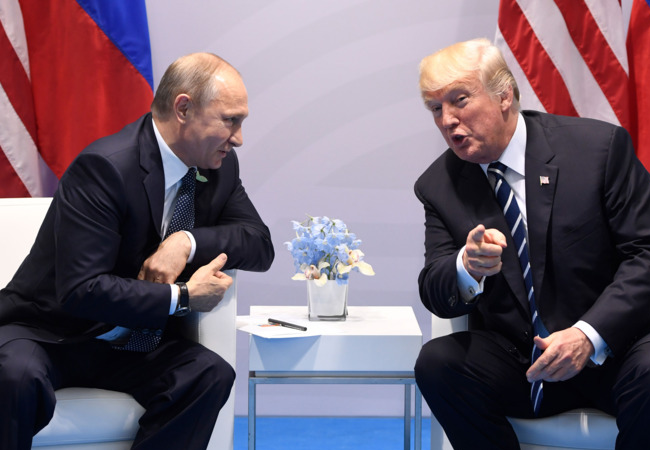
By sending naval ships into the North Atlantic, Russian President Vladimir Putin is signalling to United States President Donald Trump that any US action would carry consequences, coming after the US president threatened that he might use the military to seize Greenland.
The tanker, currently empty, previously operated under the name Bella 1. Last month, the US Coast Guard attempted to board it in the Caribbean with a warrant over alleged breaches of US sanctions and claims that it had shipped Iranian oil.
The vessel later changed course, renamed itself Marinera and reportedly reflagged from Guyana to Russia.
READ ALSO:Venezuela Frees Eight Opposition Leaders
Trump last month said he had ordered a ‘blockade’ of sanctioned oil tankers entering and leaving Venezuela, a policy the government in Caracas branded ‘theft’.
Ahead of the US seizure of ousted Venezuelan leader Nicolás Maduro on Saturday, Trump accused the country’s government of using ships to smuggle drugs into the United States.
Two US officials told CBS News on Tuesday that American forces were planning to board the Marinera, adding that Washington would prefer to seize the tanker rather than sink it.
Russia’s Foreign Ministry said it expects Western countries to respect principles of freedom of navigation.
(Daily Mail News)
Headline
UK Introduces Powers To Seize Phones, SIM Cards From Illegal Migrants
The United Kingdom has rolled out expanded enforcement powers allowing authorities to confiscate mobile phones and SIM cards from migrants who enter the country illegally.
The new measures, which do not require an arrest, came into force on Monday at the Manston migrant processing centre in Kent and represent a significant tightening of border controls.
According to the Home Office, the powers are intended to support intelligence-gathering operations aimed at disrupting criminal networks that organise and profit from dangerous Channel crossings.
Officials at the centre are equipped with technology that enables them to extract and analyse data from seized devices, a move the government says will help track and dismantle smuggling rings.
READ ALSO:Russia-Ukraine War: Pope Leo Calls For Global Christmas Truce
Under the revised rules, migrants are permitted to be asked to remove outer garments if there is suspicion that phones are being concealed.
In certain circumstances, officers may also check mouths for hidden SIM cards or small electronic items.
The National Crime Agency said information recovered from devices could accelerate investigations and improve the effectiveness of action against organised crime groups.
Border Security Minister Alex Norris said the policy was necessary to regain control of the UK’s borders and confront human trafficking operations.
“We are committed to restoring order and tackling the people-smuggling gangs behind this lethal trade,” Norris said.
READ ALSO:
“These stronger laws give authorities the tools to disrupt, intercept and dismantle these networks more quickly and effectively,” he added.
The legislation also introduces tougher criminal penalties linked to illegal crossings.
Individuals found storing or supplying boat engines for unauthorised journeys could face prison terms of up to 14 years, while those involved in researching equipment or plotting routes may be liable to sentences of up to five years.
Government officials stressed that the powers would be exercised with discretion.
READ ALSO:UK Unveils Record-breaking Bid For 2035 Women’s World Cup
The Minister for Migration and Citizenship, Mike Tapp, said devices could be returned depending on individual circumstances and the relevance of the information obtained.
“If a device may contain intelligence that helps combat smuggling, it is right that it can be seized,” Tapp said, adding that the approach would not undermine compassion toward migrants.
However, humanitarian organisations have expressed unease about the impact of the policy.
The Refugee Council warned that mobile phones often serve as vital lifelines for migrants, enabling contact with family members and access to support services, and urged authorities to ensure the measures are applied in a proportionate and humane manner.

 News3 days ago
What I Saw After A Lady Undressed Herself — Pastor Adeboye
- Headline3 days ago
PROPHECY: Primate Ayodele Reveals Trump’s Plot Against Tinubu
- Metro3 days ago
Armed Robbers Shot PoS Operator To Death In Edo
- Metro2 days ago
AAU Disowns Students Over Protest
- Metro2 days ago
Nine Soldiers Feared Dead In Borno IED Explosion
- Metro3 days ago
Joint Task Force Kills 23 Bandits Fleeing Kano After Attacks
- Business2 days ago
NNPCL Reduces Fuel Price Again
- Politics3 days ago
2027: Rivers APC Pledges To Follow Wike’s Instructions
- Entertainment3 days ago
PHOTOS: Anthony Joshua Makes First Social Media Post After Surviving Deadly Car Crash
- Metro2 days ago
Edo: Suspected Kidnappers Kill Victim, Hold On To Elder Brother


