

Business
Forex Scarcity Sends Naira Tumbling Unprecedentedly

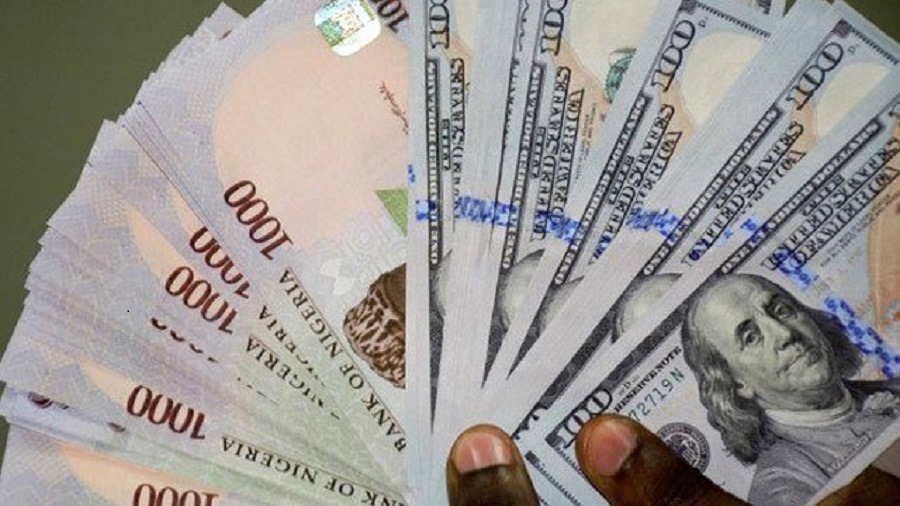


There are indications that exchange rate crises that trailed the foreign exchange market reforms in June 2023 may linger further as supply gap led to further depreciation of Naira in the parallel market yesterday to N930/ $1, down from N925 mid last week.
However, the exchange rate improved week-on-week in the Investors and Exporters (I&E) window to N758.1 from N775.6.
The prevailing exchange rates indicates a rising parallel market premium which is the gap between the parallel market rate and that of the I&E window.
The gap, as at last week Wednesday, was N153.41 per dollar, but has risen to N171.9 per dollar by yesterday, a development which has created a huge incentive for round-tripping and arbitraging in the foreign exchange market ecosystem.
READ ALSO: Naira Gains At Investors, Exporters Window
Moreover, market observers have also noted that the Bureau de Changes, BDCs, have not helped the market as envisaged a month ago when the segment was re-admitted into the Central Bank Of Nigeria, CBN, official trading window for the purpose of opening the market to more independent forex supply and better access for individual retail end users.
The BDCs have, instead, lamented that the renewed depreciation of the local currency was mainly due to the scarcity of the foreign currencies.
A BDC operator told Vanguard that the scarcity is so much that ‘‘even some Nigerians are unable to withdraw forex from their domiciliary accounts in banks”.
He said the lifting of the ban by the CBN on sales of forex to BDC operators has failed to help resolve the scarcity as the banks are not selling to the BDCs.
READ ALSO: Naira Tumbles Against Dollar As CBN Vows BDC Operators Clampdown
Data from FMDQ showed that the market opened at N761.24 to the dollar, recording a high of N807.15 and a low of N738.
A total of $42.26 million was traded in foreign exchange at the I&E window.
On Tuesday, CBN said a review of the change in the forex regime showed that banks are in a position to profit from its potential to significantly increase the naira value of banks’ foreign currency (FCY) assets and liabilities.
The apex bank directed deposit money banks, DMBs, to stop utilising gains from the revaluation of the naira to pay dividends or finance operations.
Some financial market analysts
CBN should reduce BDCs through mergers, acquisition—Prof Uwalake
Commenting on the renewed depreciation of the naira even with the lifting of ban on sale of forex to BDCs, Prof Uche Uwaleke, President. Association of Capital Market Academics of Nigeria, ACMAN said: “Recall that the ban was placed in the first place due to the abuses associated with the selling of Forex to BDCs due to their large and unmanageable number.
READ ALSO: Naira Appreciates As NNPCL Boosts Forex Supply With $3bn Loan
‘‘If the CBN has established a need to resume such sales, then it should first trim the over 5000 BDCs to a controllable number of less than 1000 through a regulatory-induced merger and acquisition.
‘‘It is only then that the CBN can be in a position to effectively supervise the BDCs else the CBN ends up going round in circles.”
Allocation of forex to BDCs may not address scarcity- Adonri
Also commenting, David Adonri, analyst and Executive Vice Chairman at Highcap Securities Limited, said: “Since BDCs are authorized retail dealers licensed by CBN, sale of forex to them is in order.
‘‘However, CBN should endeavor to sell to all its authorized buyers at the prevailing open market price in order to avoid rent seeking abuses. This U-turn may not address scarcity but provide a level playing field for participants in the foreign exchange market.”
READ ALSO: CBN May Lose Control Of The Naira
I doubt there will be any improvement Chiazor
Another financial expert, Victor Chiazor, Head of Research and Investment at FSL Securities Limited, said: “The CBN’s decision to lift the ban on sale of Forex to BDCs would have aided liquidity in the FX market if the CBN actually had enough FX in its vaults.
‘‘But I doubt there will be any change to the current pressure on the Naira.
“The case today is that our FX reserves which is at around $33 billion while the net liquid position is far lower, which means that in real terms the CBN does not have the required FX liquidity to meet the current FX demand, not also forgetting the existing backlog of FX payments owed to businesses.”
VANGUARD




Business
Why We Sited Our Multi-Billion Naira Automobile Firm Branch in Benin – Skyewise Group CEO


Dr. Elvis Abuyere, Chief Executive Officer and Managing Director of Skyewise Group, an automobile firm, has explained the reason for establishing a branch of the company in Benin City, the Edo State capital, describing the ancient city as “a growing economy full of enormous potential for vibrant youth.”
He added that the company considers Edo State one of the most interesting states, noting that the decision aligns with its long-term vision.
Abuyere, who spoke in Benin on Monday while taking journalists on a tour of the new automobile facility, said:
“We started very small — from Abuja to Lagos and now Benin. It is a joy and privilege for us to have completed this amazing regional office with Skyewise Group.”
READ ALSO:BREAKING: Wike Picks Alabo George For Rivers Governorship
According to him, beyond the automobile business, Skyewise Group is in Benin to invest in real estate, logistics, youth empowerment, and credit management. “Aand also to lend our support to what the Edo State Government is doing, knowing the fact that there is an agenda,” he added.
The young CEO urged youths in Nigeria, particularly those in Edo State, to embrace entrepreneurship, stressing that “we believe it is the future of Africa,” especially Nigeria.
He said Nigeria stands as the giant of Africa and that its youth must take bold steps in the entrepreneurship landscape.
According to Abuyere, to ensure Edo youths actualise their entrepreneurial potential, the company has prepared soft loans to help them start businesses, adding that Skyewise Group is not limited to automobile operations.
READ ALSO:Senatorial Seat: Ogbakha-Edo Warns Against Imposition Of Candidates In Edo South
He said: “More importantly to us is youth empowerment. We want our youth to be empowered, and this is where the Skyewise Foundation comes in.
“We believe the future of Africa is entrepreneurship, and that future lies in the hands of the young people of Nigeria. We want to empower them to stand the test of time, build something meaningful, and reduce unemployment and insecurity in our land.
“I believe we need to begin taking bold steps by refining the mindset of our young people. We need to give them a sense of belonging and direction.
“We have been addressing the liquidity gap in society by providing microloans to support businesses in our environment and in Benin City.”
When asked why he chose Benin City for the multi-billion naira automobile firm, Abuyere noted: “I think this is the first automobile showroom in Edo State where you can see a car lifted from the ground floor to the first floor and beyond.”
Business
JUST IN: Nigerian Filling Stations Reduce Fuel Price After Hike

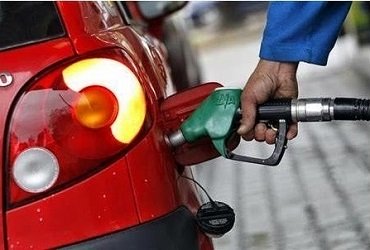
Nigerian filling stations reduced their Premium Motor Spirit price on Saturday, barely 24 hours after the hike.
Checks by DAILY POST showed that Ranoil, Empire Energy, and other filling stations in Abuja adjusted their petrol pumps to N1,365 and N1,375 per litre respectively, down from N1,440 per litre on Friday.
This means that petroleum marketers dropped their fuel price by N65 and N75 per litre. DAILY POST reports that the move was to attract patronage from customers.
Recall that three days ago, Nigerian filling stations had raised their petrol pump price to between N1,365 and N1,440 nationwide after Dangote Refinery and depot owners increased ex-depot prices to around N1,275 and N1,290 per litre.
According to DAILY POST, while the Nigerian National Petroleum Company Limited and MRS Bovas filling stations raised their petrol price to around N1,365 per litre, others adjusted theirs above N1,440 per litre.
READ ALSO:Drivers Protest Fuel Increase, Raise Fares in Benin
However, with the latest fuel price reduction by Ranoil and Empire Energy, the majority of filling station outlets now dispense petrol between N1,365 and N1,375 per litre.
This development comes as the ripple effect of crude oil prices continues to impact Nigeria’s domestic fuel price.
Brent and West Texas Intermediate crude rose to $114 and $105 per barrel before dropping to $108 and $101 after the filing of this report.
Business
Dangote Refinery Hikes Petrol Price


Dangote Refinery has increased the ex-depot price of petrol by N75.
The refinery announced the increase on Wednesday, hiking the the price from N1,200 to N1,275 per litre.
In the same way, coastal prices have gone up to N1,215 per litre.
READ ALSO:Dangote Sugar Announces South New CEO
This adjustment amid Brent crude trading at $114.80 per barrel marks a 3.15% increase.
DAILY POST reports that Brent crude has increased to $115 per barrel, while West Texas Intermediate rose to $103 per barrel on Wednesday.
-

 Politics4 days ago
2027: Tinubu’s Re-election May Put An End To Nigeria — Baba Ahmed Warns
-

 Metro5 days ago
I’m A Street Girl’ – Bimbo Ademoye Clashes With Area Boys [VIDEO]
-

 Politics5 days ago
BREAKING: 2027: Former Adamawa APC Guber Candidate, Aishatu Binani Defects To NDC
-

 Politics5 days ago
Senatorial Seat: Ogbakha-Edo Warns Against Imposition Of Candidates In Edo South
-

 Business3 days ago
JUST IN: Nigerian Filling Stations Reduce Fuel Price After Hike
-

 Entertainment4 days ago
Actress Eniola Badmus Gets New Federal Appointment
-

 News5 days ago
10 African Countries With Highest Petrol Prices In Prices In April 2026
-

 News2 days ago
BREAKING: Wike Picks Alabo George For Rivers Governorship
-

 News3 days ago
OPINION: Why South Africans Murder Nigerians In Cold Blood
-

 News4 days ago
2027: Pastor Adeboye Speaks On Nigeria’s Next President
