
Headline
French Star Writer Seeks Porn Movie Ban

French literary star Michel Houellebecq is seeking a ban on a sexually explicit film awaiting release and featuring the writer, his lawyers said Tuesday.
The global bestselling author also wants the trailer for the movie, “Kirac 27” by Dutch filmmaker Stefan Ruitenbeek, taken down, they said.
The trailer, released in January, shows a shirtless Houellebecq kissing a young woman in bed.
It contains an off-camera commentary by Ruitenbeek saying that Houellebecq had written to him saying that his honeymoon in Morocco had been called off after his wife had “spent a month booking prostitutes”.
READ ALSO: Rivers Govt Reapproves Stadium For Atiku’s Campaign
Houellebecq and his wife, Lysis, “discovered with shock and disgust” that the trailer contained “serious and false statements which violently attacked their dignity,” their lawyers Angelique Beres and Maia Kantor said in a statement.
The couple had launched legal proceedings, “civil and criminal,” to ban the film, scheduled for release in March, and the trailer with its “defamatory” commentary, they said.
They want to “put an end to these attacks immediately” by removing the trailer from all internet platforms and banning the director and his team from showing the film, “or any other images they may have of the Houellebecqs”.
In a message to the director seen by AFP, Houellebecq said that the trailer was an attack on his honour and his personal life and, “worst of all” on his wife, who he said was “devastated by the lies” in the clip.
Ruitenbeek meanwhile told the Vice news site last week that the idea to shoot a porn movie had come from Houellebecq and his wife after they had seen “Honeypot”, a previous film by the “Kirac” collective.
“That made them want to do something similar,” he said in an interview with the site, quoting Lysis Houellebecq as telling Ruitenbeek that if he wanted to do something for her husband “you’ll have to turn him into a porn star”.
A first scene was shot the next day with Houellebecq and a young woman called Jini van Rooijen who works with the director and “adores Houellebecq”, Ruitenbeek said.
“It was incredible, they did all kinds of positions,” he said.
Shooting went on for six days in Amsterdam in Paris, and also included scenes of Houellebecq discussing philosophy with sexual partners, four in total, and restaurant visits, the director said.
Houellebecq is a controversial writer, and often accused of tapping into right-wing fears over Islam in France.
READ ALSO: Shehu Sani Adopts Abandoned Two-week-old Baby
The Union of Mosques in France told AFP last month it was suing Houellebecq for discrimination, hate speech and inciting violence in remarks to an interviewer.
In 2015, Houellebecq published the international headline-grabbing “Submission” about a Muslim winning the presidency.
He was tipped as a contender for the Nobel Literature Prize last year, although it ultimately went to Annie Ernaux of France who called Houellebecq’s ideas “completely reactionary and anti-feminist”.
AFP



Headline
JAPA: Top Six Countries To Obtain Easiest Citizenship

As a Nigerian considering relocation plans, interest in countries with clear and less complicated citizenship pathways is a smart way to not just guarantee greener pastures, but also provide you with the opportunity to feel more at home in a foreign land. While some of the programmes are ancestry-based, others allow Nigerians with such a link to try other means.
Contents
1. Dominica
2. Ireland
3. Turkey
4. Portugal
5. Vanuatu
6. Italy
Though rules vary widely across borders, some nations stand out for offering citizenship through investment or family ties with fewer hurdles and faster processing timelines.
Below are the top six countries with the easiest citizenship:
1. Dominica
Dominica operates a citizenship-by-investment programme that allows applicants to qualify through a contribution to the government’s Economic Diversification Fund or by investing in approved real estate. Processing typically takes a few months. Citizens enjoy visa-free or visa-on-arrival access to over 140 countries, including the Schengen Zone. There is no residency requirement, and dual citizenship is permitted.
READ ALSO:Japa: 5 Affordable European Countries Nigerians Can Relocate To
2. Ireland
Ireland provides a clear citizenship pathway for individuals with Irish ancestry. Those with an Irish-born parent qualify automatically, while people with an Irish-born grandparent can apply through the Foreign Births Register. An Irish passport grants full European Union rights, including freedom of movement across EU countries. Dual citizenship is allowed, and there is no language requirement for applicants applying by descent.
3. Turkey
Turkey offers a fast-track citizenship option through investment. Foreign nationals who purchase qualifying real estate valued at a minimum of $400,000 can obtain citizenship within a few months. The programme does not require residency or renunciation of an existing nationality. Turkish passport holders have visa-free or visa-on-arrival access to several countries, with ongoing efforts to expand travel agreements.
4. Portugal
Portugal’s Golden Visa programme provides a residency-to-citizenship route for foreign investors. After five years of legal residence and meeting programme conditions, applicants may apply for citizenship. Approved investment options include venture capital funds and other qualifying assets. Successful applicants gain an EU passport, access to the Schengen Area, and dual citizenship, subject to passing a basic Portuguese language test.
READ ALSO:Japa: Lagos Suffers Deficit Of 30,000 Doctors, Commissioner Laments
5. Vanuatu
Vanuatu runs one of the world’s fastest citizenship programmes. Through its Development Support Programme, eligible applicants can receive citizenship in as little as two months after making the required financial contribution. The country offers visa-free access to over 100 destinations and has no tax on global income or capital gains. Residency requirements are minimal.
6. Italy
Italy grants citizenship by descent to individuals with an Italian parent or grandparent, following a 2025 legal update that tightened eligibility rules. Applicants must provide official documents proving a direct family link to an Italian ancestor. Italian citizenship comes with full EU rights, wide visa-free travel, and the ability to pass citizenship to future generations. Dual nationality is allowed, and no language test is required for descent-based applications.
(Tribune)
Headline
Japa: 5 Affordable European Countries Nigerians Can Relocate To
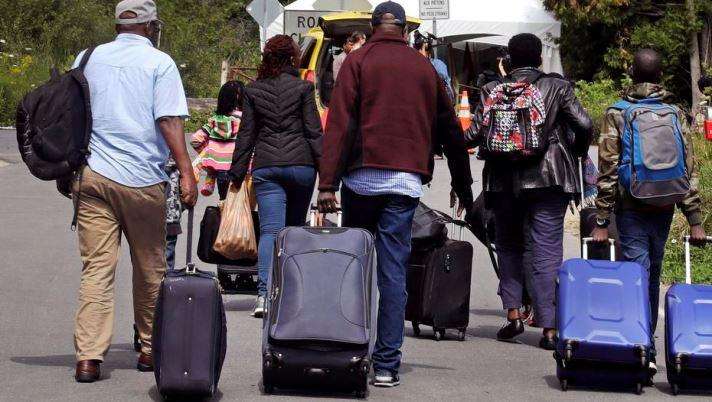
As economic pressures continue to mount, many Nigerians are increasingly exploring relocation as a path toward stability, better opportunities, and an improved quality of life. However, traditional destinations such as the United Kingdom, Canada, and the United States are becoming more difficult to access due to rising living costs and stricter visa policies.
Contents
1. Slovakia
2. Latvia
3. Portugal
4. Hungary
5. Georgia
But beyond these popular options, several lesser-known European countries are emerging as affordable and welcoming alternatives. Offering low tuition fees, flexible visa policies, and a reasonable cost of living, these nations are becoming attractive relocation choices for Nigerians seeking balance and opportunity.
In this article, Tribune Online highlights five budget-friendly countries Nigerians can consider for relocation:
1. Slovakia
Located in Central Europe, Slovakia combines stability, safety, and simplicity; three factors often missing in high-pressure relocation destinations.
READ ALSO:Top 11 Friendliest Countries To Visit
Though it may not feature prominently on social media relocation lists, Slovakia’s affordability and accessibility make it a hidden gem. Students enjoy low tuition fees, while residents benefit from proximity to major European cities like Vienna and Prague. For Nigerians seeking structure and affordability, Slovakia provides a peaceful yet practical alternative.
2. Latvia
The Baltic nation of Latvia is fast becoming a preferred destination for international students and skilled professionals. Known for its low living costs and straightforward residence procedures, Latvia offers a convenient entry point into the European Union.
Riga, its capital city, blends historic charm with modern infrastructure, providing an ideal environment for studying, working, or gradually transitioning to other parts of Europe.
3. Portugal
Situated on Europe’s western coast, Portugal is one of the continent’s most liveable and affordable countries. Known for its mild weather, safety, and reasonable living costs, Portugal offers a soft landing for Nigerians looking to relocate without excessive financial strain. The country’s friendly visa policies and welcoming atmosphere make it ideal for students, remote workers, and small business owners. Beyond its scenic beauty, Portugal provides what many Nigerians desire: peace of mind and an easier start abroad.
READ ALSO:10 Countries With The Strongest Global Reputation In 2025
4. Hungary
Hungary has quietly become a top choice for international students, offering quality education at affordable tuition rates. Living costs are significantly lower than in Western Europe, and cities like Budapest, Szeged, and Debrecen provide vibrant yet budget-friendly environments.
For Nigerians looking to relocate through education, Hungary offers a realistic and sustainable path toward long-term settlement in Europe.
5. Georgia
For Nigerians seeking an easy transition abroad, Georgia presents one of the smoothest relocation routes. The country allows Nigerians to stay visa-free for up to one year, eliminating embassy interviews and lengthy paperwork.
Located between Europe and Asia, Georgia offers a blend of natural beauty and affordability. Rent, transport, and food costs remain moderate, making it an excellent base for digital nomads and young professionals.
As migration trends evolve, success now depends on flexibility and strategic planning. While the dream of relocating abroad remains strong, the path doesn’t always have to lead through the UK or Canada. For Nigerians ready to look beyond the familiar, Europe’s quieter corners still offer accessible and rewarding opportunities.
Headline
Insecurity: US Congressman Riley Moore Reveals Trump’s Mission In Nigeria

US Congressman Riley Moore has dismissed insinuations that President Donald Trump is attempting to bring war to Nigeria.
Moore made the remark in a post on his verified X handle on Monday.
His comments followed a US military airstrike on a terrorist enclave in north-west Nigeria on Christmas Day, reportedly carried out on the directive of President Trump.
“President Trump is not trying to bring war to Nigeria, he’s bringing peace and security to Nigeria and to the thousands of Christians who face horrific violence and death.
READ ALSO:Russia Calls up 135,000 Military Personnel
“The strikes against ISIS on Christmas, in coordination with the Nigerian government, have given hope to the Christians in Nigeria,” he said.
Recall that the lawmaker had previously stated that President Trump is focused on ending the killing of Christians in Nigeria.
It will be recalled that Moore led a US delegation on a fact-finding mission into alleged Christian genocide in Nigeria some weeks ago.
During his brief stay in the country, Moore travelled to Benue State, where he interfaced with religious and traditional leaders, as well as internally displaced persons.

 News5 days ago
PHOTOS: SGF George Akume Weds Ooni’s Ex-Queen
- News3 days ago
Ex-Edo Gov Obaseki Reacts As His Cousin Is Beaten, Stripped
- News2 days ago
BREAKING: Anthony Joshua Involved In Road Accident
- Politics2 days ago
Wike Speaks On Defecting To APC
- Politics2 days ago
JUST IN: INEC Excludes PDP From Ekiti Governorship Election
- Politics2 days ago
You’re Not 001 – Wike Rubbishes Claims Of Fubara Being APC Leader In Rivers
- Metro3 days ago
Obaseki Beaten, Stripped In Edo
- News2 days ago
NAF Neutralizes Bandits At Turba Hill, Kachalla Dogo Sule Camps
- Entertainment5 days ago
I’ve Stopped Impregnating Women Anyhow – 2Baba
- News2 days ago
Doris Ogala: How Pastor Chris Knelt Before Church, Begged For Forgiveness [Video]


