
News
From Obasanjo To Tinubu: How Nigeria’s Petrol Prices Have Changed Since 1999
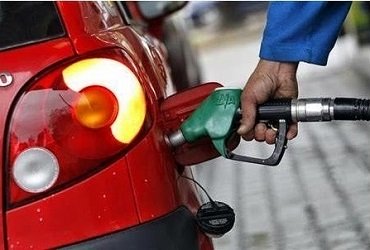
A litre of petrol sold for N20 in Nigeria in 1999. More than two decades later, petrol prices have crossed N1,000 per litre in several parts of the country, with prices varying according to location, marketer and prevailing market conditions.
The journey from N20 to more than N1,000 has been shaped by more than inflation.
Over the past 27 years, Nigeria’s petrol market has gone through government-controlled pricing, repeated subsidy reforms, foreign exchange pressures, fuel shortages, attempts at deregulation and, more recently, a transition towards market-driven pricing.
The history of petrol prices also mirrors the changing value of the naira and the growing cost of maintaining subsidised fuel prices.
Obasanjo and the era of frequent price hikes (1999–2007)
When Olusegun Obasanjo assumed office in May 1999, petrol was selling for about N20 per litre.
The price soon became a major policy issue as the administration sought to reduce the cost of petroleum subsidies and move towards liberalisation of the downstream sector.
In June 2000, the government increased the pump price from N20 to N30 per litre. The decision triggered strong opposition and nationwide labour action, forcing the government to reduce the price to N22.
The price was subsequently increased to N26 in January 2002 and N42 in 2003.
In 2004, there were two further increases from N42 to N50 on May 29 and from N50 to N65 on August 25.
The final increase under Obasanjo came on May 27, 2007, when the price rose from N65 to N75 per litre.
The increases were closely linked to the government’s attempt to reduce the gap between regulated pump prices and the cost of supplying imported petroleum products.
READ ALSO: Fuel Crisis: Details Of Tinubu, APC Governors’ Meeting Emerge
The International Monetary Fund estimated Nigeria’s domestic petroleum subsidy at N117.1 billion in 2002, equivalent to 2.1 per cent of GDP.
By the end of Obasanjo’s presidency, the official petrol price had risen from N20 to N75 per litre.
Yar’Adua and the rare price drop (2007–2010)
Umaru Musa Yar’Adua inherited a petrol price of N75 per litre in 2007 but reversed the increase shortly after assuming office, reducing it to N65.
The reduction was significant because it demonstrated that petrol prices under Nigeria’s regulated system could move in either direction depending on government policy.
The N65 price remained in place during the rest of Yar’Adua’s presidency and continued into the early period of Goodluck Jonathan’s administration.
Jonathan and the 2012 subsidy battles (2010–2015)
Goodluck Jonathan’s presidency produced one of the most dramatic episodes in Nigeria’s petrol pricing history.
On January 1, 2012, the government announced the removal of the petrol subsidy, causing the official pump price to jump from N65 to N141 per litre.
The increase triggered nationwide protests and a prolonged strike by organised labour. The protest movement became known as #OccupyNigeria.
Following the widespread opposition, the government reduced the official price to N97 per litre.
In January 2015, amid a sharp fall in international crude oil prices, the government reduced the petrol price again, from N97 to N87 per litre.
The episode highlighted the dilemma that would continue to define Nigeria’s petrol policy: keeping fuel prices low required substantial government spending, while attempts to remove subsidies often triggered public resistance.
READ ALSO: Dangote Refinery Increases Fuel Price, Resumes Naira Sales
Nigeria’s dependence on imported refined petroleum products also meant that movements in the naira could significantly affect the cost of supplying petrol.
Buhari era (2015–2023)
Muhammadu Buhari inherited an official petrol price of N87 per litre in 2015.
In May 2016, amid severe fuel shortages and foreign exchange pressures, the government increased the official pump price to N145 per litre.
The administration later moved towards a more market-oriented pricing system.
The COVID-19 pandemic brought another major change. As global crude oil prices collapsed in 2020, the government reduced the petrol price from N145 to N125 per litre in March.
However, N125 did not remain the price throughout the year. Further adjustments followed as global oil prices and domestic supply conditions changed, with retail prices eventually rising to around N162 by the end of 2020.
The subsidy issue also returned.
The IMF said Nigeria had removed the petrol price cap in June 2020 but did not fully implement a market-based pricing mechanism. It said implicit subsidies re-emerged from 2021 as the difference between the cost of imported fuel and regulated pump prices widened.
According to the IMF, the implicit subsidy was estimated at N1.912 trillion in 2021, with the Nigerian National Petroleum Company (NNPC) bearing the cost through the revenue it otherwise would have remitted to the Federation Account.
By the end of Buhari’s administration in 2023, the official pump price was around N185 to N195 per litre.
Tinubu era of full deregulation and N1,000+ era (2023–present)
President Bola Tinubu’s administration introduced the most significant shift in petrol pricing policy in recent years.
READ ALSO: Why I Want To Restore Fuel Subsidy — Atiku
In his May 29, 2023 inaugural address, Tinubu said the petrol subsidy regime could no longer be justified because of its rising cost and the need to redirect public resources towards infrastructure, education, healthcare and other priorities.
The announcement was followed by a sharp increase in petrol prices, with NNPC retail prices rising from about N185 to the N488-per-litre range in Lagos and other rates in different parts of the country.
The subsidy decision coincided with a major foreign exchange reform.
On June 14, 2023, the Central Bank of Nigeria adopted a willing-buyer, willing-seller model and consolidated the country’s previously segmented foreign exchange market.
The subsequent depreciation of the naira increased the cost of imported petrol and contributed to further pump-price increases.
By 2024, petrol prices had risen sharply amid foreign exchange pressures, supply constraints and changes in the cost of imported products.
In September 2024, for example, NNPC increased its Lagos pump price to N950 per litre, while prices in some northeastern states reached N1,019.
By October, reports put NNPC prices at about N998 per litre in Lagos and more than N1,000 in some other locations.
The emergence of the Dangote Refinery also began changing the structure of the market.
Commercial petrol production from the refinery introduced locally refined gasoline into a market that had for years depended heavily on imports. However, domestic refining has not eliminated price fluctuations because petrol prices continue to be affected by crude oil prices, exchange rates, logistics, refining costs and competition among suppliers.
Petrol prices in 2026
The price story has continued to change under Tinubu.
By 2026, petrol prices were no longer moving according to a single nationwide official price. Competition among NNPCL, Dangote-linked marketers and other retailers increasingly produced different prices at different filling stations.
READ ALSO: 10 African Countries With Highest Petrol Prices In Prices In April 2026
NBS’s PMS Price Watch continues to track average prices paid by consumers across the states. Its February 2026 report put the national average retail price at N1,051.47 per litre.
By September 2026, pump prices had risen again in some locations. Reports on September 1 put NNPCL prices at N1,299 per litre in Lagos and as much as N1,345 in parts of Abuja.
This means that the most accurate way to describe the current market is not to give one nationwide figure, but to say that petrol is selling for more than N1,000 per litre in several locations, with significant variations between states, marketers and filling stations.
What the price history reveals
The rise from N20 to over N1,000 reflects a convergence of market forces: fluctuating global crude benchmarks, severe naira devaluation, the removal of state subventions, and distribution logistics.
In Nigeria, petrol prices influence the broader economy. Higher fuel costs drive up transportation fares, which immediately inflates food prices and consumer goods. Small businesses reliant on generators face surging operational expenses, squeezing household disposable income across the board.
Conversely, maintaining low pump prices required billions of dollars in state spending, funds diverted away from infrastructure, healthcare, and education. Ultimately, the history of Nigeria’s petrol pricing is not merely about rising numbers at the pump; it is a story of how the cost of energy has shifted from government balance sheets directly onto businesses and citizens.
(TRIBUNE)



News
Six Corps Members Receive N10m Grants To Boost Agribusiness
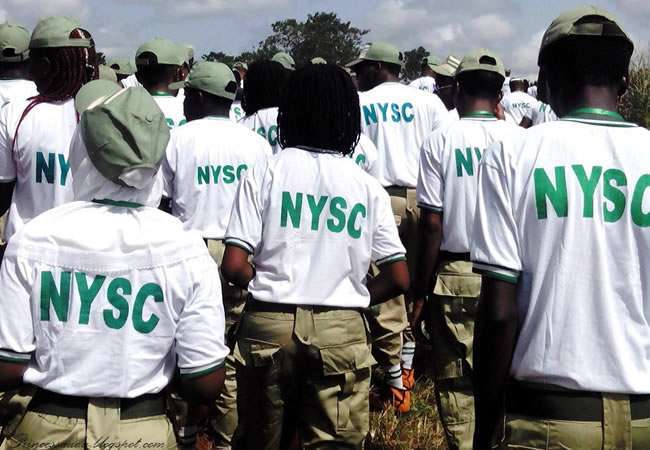
Six members of the National Youth Service Corps (NYSC) have received a total of N10 million in grants to expand their agribusiness ventures under the Farmers for the Future Programme.
The programme was organised on Monday by the British American Tobacco Nigeria Foundation (BATNF) in collaboration with the NYSC to encourage young Nigerians to embrace agriculture and develop sustainable businesses.
Presenting the cheques to the beneficiaries in Abuja, the NYSC Director-General, Brigadier General Olakunle Nafiu, urged Corps members to maximise the opportunities provided by the service year by venturing into commodity marketing and other viable businesses.
Nafiu said agribusiness remained a viable avenue for young people to build sustainable enterprises, create employment and generate wealth.
READ ALSO: NYSC Swears In 1,600 Corps Members In Bauchi
He also stressed the importance of value addition to the success and sustainability of business ventures, while commending BATNF for placing Nigerian youths at the centre of its entrepreneurship initiatives through value-chain development, employment creation and its partnership with the NYSC.
“I charge you to spread the news around. We have seen the outcome, and it is a good idea,” he said.
The beneficiaries are Dominic Olufemi (FC/25C/1143), who received N3 million; Temitope Adewole (ED/26A/2251), N2 million; Abdulwaheed Bala (ED/25B/1402), N2 million; Olanike Mayungbe (OG/26B/1037), N1 million; Kingsley Udoeyen (KG/26A/1735), N1 million; and Lorember Lorsue (JG/25B/1742), N1 million.
Speaking on the selection process, the Acting Director, Skills Acquisition and Entrepreneurship Development (SAED), Mrs Winifred Shopeka, said the programme began with an online registration portal through which Corps Members engaged in agribusiness submitted their business plans.
READ ALSO: NCCSALW Deploys NYSC Members In Fight Against Illegal Arms In Northeast
She said nearly 3,000 Corps members applied and underwent a rigorous selection process that produced 20 finalists.
According to her, the finalists participated in a boot camp and a final pitching session, which produced the 10 best presenters before the six ultimate winners were selected.
Shopeka said the beneficiaries had also been mentored and attached to established market operators to assist them in marketing their products.
She added that Corps Members who did not make the final stage of the competition were also trained by BATNF.
The BATNF Team Lead, Mr Oludare Odusanya, congratulated the beneficiaries and urged Corps Members engaged in agribusiness to master the fundamentals and acquire the knowledge and skills necessary to succeed.
“We are happy with our collaboration with the NYSC, and it will continue,” he said.
READ ALSO: NYSC Lauds Gov. Mohammed’s Intervention In Fence Collapse
Odusanya explained that BATNF was an independent organisation established to contribute to poverty reduction in Nigeria through sustainable agricultural practices and other interventions.
He said the Farmers for the Future Programme was instituted in collaboration with the NYSC to encourage Corps Members to venture into agribusiness and become job creators.
He added that the beneficiaries would be attached to mentors who would guide them towards achieving success in their respective businesses.
According to him, the programme has, since its inception, continued to enhance the entrepreneurial capacity of Corps Members.
News
CBN Reduces Interest Rate To 23%
The Central Bank of Nigeria (CBN) on Tuesday announced the reduction of the interest rate, also known as Monetary Policy Rate (MPR) to 23 percent.
Briefing the media in Abuja, the Governor of the CBN, Mr. Olayemi Cardoso, said at the 307th MPC meeting held on September 22, 2026 agreed the resetting of the MPR and recaliberation of the monetary policy market.
According to Cardoso, the committe is satisfied with the disinflation progress, adding that members noted stable banking sector following successful recapitalisation.
READ ALSO: CBN Monetary Tightening Worsening Nigeria’s N50tn Development Finance Gap – Group
Meanwhile, according to Nigerian Tribune, reports that that the MPC, at its 306th meeting in July 2026, disclosed its resolution to retain the interets at 26.5 percent.
According to the Governor of the CBN, Olayemi Cardoso, “the Committee’s decision to maintain the current policy stance followed a thorough assessment of the balance of risks. Although headline inflation moderated marginally in June 2026, global uncertainties have heightened, due mainly to the renewed hostilities in the Middle East.
“In view of the evolving developments, maintaining a cautious monetary policy stance remains appropriate. In arriving at its decision, the Committee noted the recent resurgence of hostilities in the Middle East, with particular attention to its spillover effects on global energy prices and the potential pass-through to domestic inflation.”
News
NURTW: KWAM1 Settles Long-time Rift Between MC Oluomo, Tafa Sego
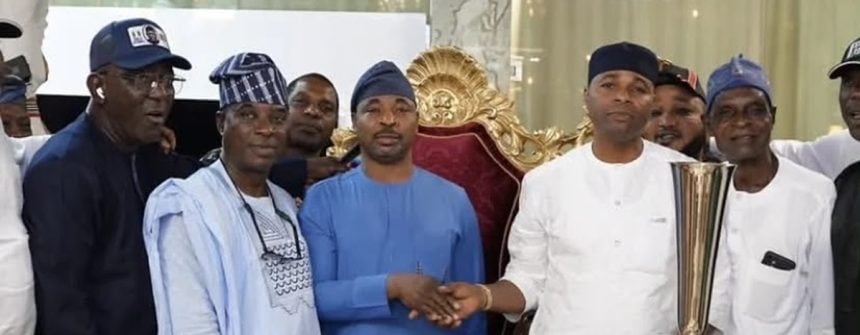
Nigerian Fuji musician, Wasiu Ayinde Marshal, popularly known as KWAM1, has brokered a peace deal between the National Union of Road Transport Workers (NURTW) National President, Musiliu Akinsanya, popularly known as MC Oluomo, and the Lagos State Chairman of the union, Mustapha Adekunle, aka Tafa Sego.
The reconciliation took place at Ojusagbola in Ijebu, Ogun State, where several NURTW chieftains gathered for the meeting.
The development was announced on Tuesday on KWAM1’s digital media page on Instagram, alongside photographs from the meeting.
According to the post, the two union leaders have resolved their differences after years of strained relations.
READ ALSO: Why FG Named KWAM 1 Aviation Security Ambassador — Keyamo
“After years of an age-long rift, MC Oluomo and Tafa Sego have finally settled their differences. And from what we know now, this is final,” the post said.
The musician was said to have intervened as the Mayegun of Yorubaland, with the aim of bringing an end to the longstanding disagreement between the two NURTW figures.
“K1 acted in his role as the Mayegun of Yorubaland by seeking an end to the long-standing rift, once and for all,” it said.
The post also described the meeting as a significant step beyond previous public displays of reconciliation.
READ ALSO: FG Gives KWAM 1 Aviation Appointment, After Airport Incident
“This time, it was not just another handshake for the cameras. The two old friends and colleagues came together at Ojusagbola, with King Wasiu Ayinde Marshal (K1) playing the peacemaker.”
Both MC Oluomo and Tafa Sego were reported to be pleased with the outcome of the intervention.
“Both parties are delighted about the new development,” the post said.
The two men had previously been allies and prominent figures within the Lagos NURTW before their relationship became strained amid disagreements linked to leadership of the union in the state.

 News2 days ago
BREAKING: Tinubu Extends Working Vacation
- News3 days ago
Six Hidden Health Benefits Of Unsweetened Zobo
- News5 days ago
Edo: Council Chairman Under Fire For Threatening Commercial Drivers Who Refuse To Wear APC Insignia
- News5 days ago
Edo: Ekpeson Redeems N20m Pledge To Family Of Fallen Soldier
- News3 days ago
2027: Step-by-step Guide To Applying For INEC Ad Hoc Staff Recruitment
- News5 days ago
OPINION: Nigerian Pastors, Imams And Their Sex Sermon Obsession
- News3 days ago
Jehovah’s Witnesses Announce New Position On Blood Transfusion Policy
- News3 days ago
How 36 Nigerian States Got Their Names
- Headline2 days ago
How To Format An Academic CV For US Master’s, PhD Applications
- News5 days ago
Otuaro Harps On Academic Excellence As Another 31 PAP Scholarship Beneficiaries Leave For UK


