
News
FULL LIST: 10 Countries Where Valentine’s Day Is Not Celebrated

February has traditionally been recognised as the month of love, highlighted by Valentine’s Day on the 14th.
It’s commonly associated with expressions of love and affection, particularly romantic love.
People often exchange gifts such as chocolates, flowers, and cards, with their loved ones on this day.
It has its origins in both Christian and ancient Roman traditions, but today it is celebrated in many countries around the world, often with various customs and traditions.
It is usually the Day every celebrant is identified by the dominant colour red – a typical symbol of love.
READ ALSO: $6.2m Fraud: Presidency Asks INTERPOL To Arrest Three Suspects
However in some countries, PUNCH Online notes that the celebration of Valentine’s Day conflicts with traditional customs or religious beliefs.
For example, in some Islamic countries, there are concerns that Valentine’s Day promotes Western values and may contradict Islamic teachings.
In some countries, there may be historical or political factors at play. For instance, in countries with authoritarian governments, the celebration of Valentine’s Day might be restricted or discouraged as it is seen as a symbol of Western influence.
Also, in regions facing social or economic challenges, the focus may be on more pressing issues rather than on celebrating a romantic holiday.
Additionally, the commercialisation of Valentine’s Day can be seen as excessive or inappropriate in certain cultures or communities.
READ ALSO: Nigerian Breweries Hikes Prices Of Beer As Production Costs Soar
Some individuals simply may not find Valentine’s Day relevant to their lives or may not prioritize celebrating romantic relationships in this particular way.
Cultural attitudes toward love and relationships vary widely, and not everyone feels compelled to participate in Valentine’s Day festivities.
Overall, the reasons for not celebrating Valentine’s Day can be complex and multifaceted, influenced by cultural, religious, historical, and personal factors.
Find the list of 10 countries where Valentine’s Day is not widely celebrated:



News
MOWAA: Okpehbolo Receives Edo Assembly Resolution Indicting Obaseki

Edo State Governor, Monday Okpebholo, received report and resolutions of the Edo State House of Assembly which indicted former Governor Godwin Obaseki on the Museum of West African Art (MOWAA) and the Radisson Hotel projects.
Recall that the Edo Assembly raised a five-man committee to investigate funding and ownership of both projects following a request by Governor Okpebholo.
Okpebholo, who spoke after receiving the report said its findings and recommendations would be fully implemented.
Okpebholo said the Economic and Financial Crimes Commission (EFCC) would be invited to further examine issues raised in the recommendations.
READ ALSO:MOWAA: Why I Will Not Appear Before Edo Assembly Panel — Obaseki
According to him, the Edo State Government has significant stakes in the MOWAA and Radisson Blu hotel having invested ₦3.8bn respectively in both projects.
He said changes in the structure and nomenclature of the MOWAA project made the investigation unavoidable.
Okpebholo said it was unacceptable to suggest Edo State has only 10 per cent stake in the Radisson Blu hotem despite investing over ₦28bn.
“Edo State has spent over ₦3.8 billion on this project, yet some people are saying the state has no stake in it. That is totally unacceptable. I will work with your recommendations and forward them to the relevant authorities to investigate what truly happened. We will also involve the EFCC.
READ ALSO:MOWAA Controversy: Edo Assembly Threatens Arrest Warrant On Obaseki, Others
“Our investment in this project is over ₦28 billion. We must invite the EFCC to step in and determine if this is how businesses are conducted in Nigeria,” he said.
In its recommendations passed by the Assembly, the five-man committee headed by Hon Addeh Isibor, urged the Edo State Government to take possession of both projects.
It asked Governor Okpebholo to contract competent hands to complete renovation of the Hotel and take all steps to put the Hotel to use.
The recommendations urged the Edo State Government to revoke “the fraudulent Certificate of Occupancy to the property issued in the name of Hospitality Investment and Management Company Limited and revert same to the Edo State Government that purchased the property.
READ ALSO:Edo Assembly Charges Contractor Handling Ekekhuan Road To Accelerate Work
“That the Edo State Government initiate legal action and work with relevant Anti-graft Agencies to retrieve both the complete statement of account and the balance of the Seventeen Billion, Five Hundred Million Naira (N17,500,000,000.00) Bond proceeds still in the possession of the Escrow Agents. Meristen Trustees Limited and Emerging Africa Trustees Limited.
“The title to the MOWAA Property having never been revoked, same remains the property of the Central Hospital, Benin City
“That the Edo State Government immediately takes all necessary step to put the property to good use in the best and overriding public interest of the people of Edo State.”
Speaker of the Assembly, Hon. Blessing Agbebaku, said the facts about MOWAA and Radisson Blu Hotel were now clearly documented in resolutions and outcomes.
News
Sheikh Gummi Sues Two Over Alleged False Facebook Publication

Prominent Islamic scholar, Sheikh Ahmad Gummi, has approached the Chief Magistrate Court in Kaduna, seeking the issuance of a criminal direct complainant summons against two Facebook users over alleged criminal conspiracy, attempt to cause public disturbance and criminal defamation.
The application, filed at the Chief Magistrate Court sitting on Ibrahim Taiwo Road, Kaduna, listed the defendants as George Udom and Bello Isiaka.
According to him, the defendants allegedly published a “Breaking News” statement on their respective Facebook pages on December 23, 2025, between 7:00 am and 10:00 am, attributed to him, threatening that the family of the Minister of Defence, General Christopher Musa, would be eliminated if military operations against bandits were not stopped.
Gummi alleged that the publication was falsely attributed to him, as his photograph was allegedly used alongside the statement, giving the impression that he issued the threat against the Defence Minister.
READ ALSO:Nigeria Army Alone Cannot Defeat Bandits — Sheikh Gumi
The Islamic scholar stated that following the publication, he received numerous phone calls from concerned members of the public who believed he authored the statement and was attempting to intimidate the Minister of Defence in the discharge of his official duties.
He further maintained that the publication portrayed him as a troublemaker and a threat to public peace, despite his long-standing reputation as a cleric known for preaching peace and harmony within and outside Nigeria.
The complainant argued that the alleged publication was capable of inciting public disorder in Kaduna State, particularly Southern Kaduna, and could expose him to danger by presenting him as a prime suspect in the event of any attack on the Defence Minister’s family.
READ ALSO:Insecurity: What Sheikh Gumi Told Me After Visiting Bandits Hideouts — Obasanjo
He also contended that the actions of the defendants amounted to an attempt to cause public disturbance and criminal defamation of his character.
Dr Gummi told the court that the alleged acts contravened Sections 59, 57, 372, 116 and 117 of the Kaduna State Penal Code Law, 2017.
The application, dated December 24, 2025, was filed by a team of lawyers led by Suleiman Danlami Lere, with the complainant urging the court to summon the defendants to answer to the allegations.
News
JUST IN: Kano Lawmaker, Sarki Aliyu Daneji, Dies Hours After Colleague’s Passing
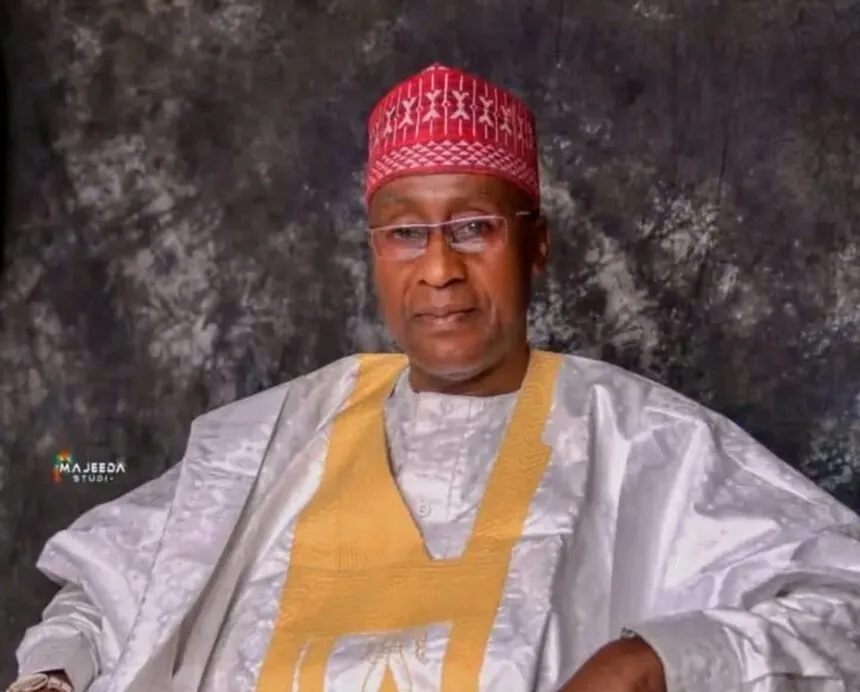
Hon. Sarki Aliyu Daneji, the lawmaker representing Kano Municipal in the Kano State House of Assembly, died on Wednesday, barely hours after the death of his colleague, Hon. Aminu Sa’adu Ungogo.
The Director-General, Media and Public Relations, Government House, Kano, Sanusi Bature Dawakin Tofa, confirmed Daneji’s death to journalists in Kano.
Daneji’s demise came shortly after the passing of Hon. Ungogo, who was the Chairman of the House Committee on Appropriations and represented Ungogo Local Government in the Assembly. Ungogo, a member of the New Nigeria Peoples Party (NNPP), reportedly died after a brief illness.
READ ALSO:JUST IN: Former Edo Information Commissioner Is Dead
He was said to have been at the Kano State House of Assembly earlier in the day, attending a committee meeting before his death.
The sudden loss of the two lawmakers within a short interval has thrown the Kano State House of Assembly into mourning, with colleagues, party members and constituents expressing shock and grief over the tragic development.

 News2 days ago
PHOTOS: New Era In Furupagha-Ebijaw As Okpururu 1 Receives Staff Of Office
- Metro4 days ago
JUST IN: Former Edo Information Commissioner Is Dead
- News5 days ago
Former Delta North senator Peter Nwaoboshi Dies
- News1 day ago
UBTH CMD Marks 120 Days In Office, Expresses Commitment To Providing Conducive Working Environment
- News2 days ago
FG Declares Public Holidays For Christmas, New Year Celebrations
- News4 days ago
Coordinator, Edo First Lady Office, Majority Leader, Rights Lawyer, Others Bag 2025 Leadership Award
- Metro4 days ago
She Grabs, Pulls My Manhood Anytime We Fight — Husband
- News5 days ago
[OPINION] Tinubu: Ade Ori Okin Befits KWAM 1, Not Awujale Crown
- News2 days ago
OPINION: Gumi And His Terrorists
- Metro4 days ago
Why I Charged My Husband Money For Sex —Woman


