
Headline
FULL LIST: 2024 Nobel Prize Winners, Groundbreaking Contributions
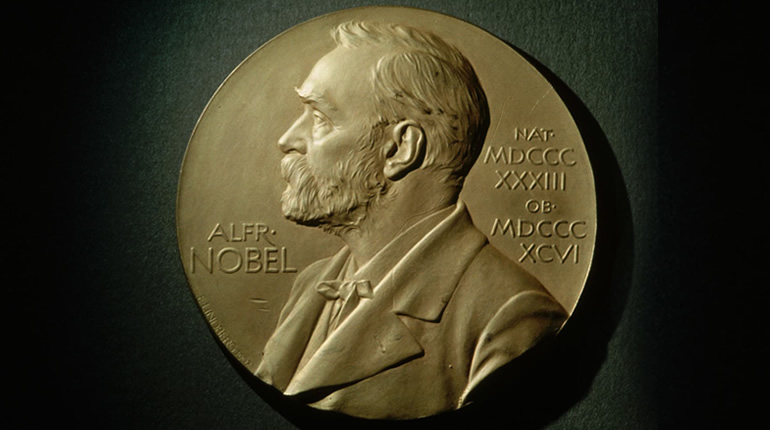
The Nobel Prizes, established by the will of Alfred Nobel, continue to recognise the most outstanding achievements across various fields.
Spanning six prize categories—Physics, Chemistry, Physiology or Medicine, Literature, Peace, and Economic Sciences—the Nobel Prizes are announced every October and presented in a grand ceremony on 10 December.
In 2024, the laureates honoured will have made remarkable contributions to humanity, advancing knowledge and innovation.
This year’s winners have pushed the boundaries of science, deepened our understanding of the world, and driven social change through their work, says the organising body.
The 2024 Nobel Prize announcements kicked off on Monday, October 7, with one prize revealed each day through Friday, October 11. The final announcement, for the Economics prize, was made earlier today, Monday.
Chair of the Nobel Committee, The Swedish Academy, Anders Olsson, made the announcements, as obtained from its official website.
Below is the full list of the 2024 Nobel Prize winners and a look into their groundbreaking innovations:
Physics:
The Royal Swedish Academy of Sciences awarded the 2024 Nobel Prize in Physics to John J. Hopfield and Geoffrey E. Hinton “for foundational discoveries and inventions that enable machine learning with artificial neural networks.”
This year’s two Nobel Prize laureates in physics have used tools from physics to develop methods that are the foundation of today’s powerful machine learning.
John Hopfield created an associative memory that can store and reconstruct images and other types of patterns in data.
Geoffrey Hinton invented a method that can autonomously find properties in data, and perform tasks such as identifying specific elements in pictures.
Chemistry:
The 2024 Nobel Prize in Chemistry was awarded for groundbreaking work on proteins, life’s essential chemical tools.
Half of the prize goes to David Baker for his pioneering work in computational protein design, while the other half is shared by Demis Hassabis and John M. Jumper for their breakthrough in protein structure prediction.
READ ALSO: Frustration As Fuel Sells Between N1150 And N1500 Per Litre In Bayelsa
David Baker has achieved the remarkable feat of designing entirely new proteins, using the 20 amino acids that typically make up these molecules.
His creations have vast potential applications, including pharmaceuticals, vaccines, nanomaterials, and sensors.
Meanwhile, Demis Hassabis and John Jumper made a major advancement in 2020 with their development of AlphaFold2, an AI model that predicts the complex 3D structures of proteins based on their amino acid sequences.
This solved a 50-year-old problem in biology, enabling scientists to predict the structure of nearly all known proteins and further research in areas like antibiotic resistance and plastic-degrading enzymes.
These discoveries open up incredible possibilities for science and medicine, enhancing our ability to understand life at a molecular level and design proteins that benefit humankind.
Physiology or Medicine:
The 2024 Nobel Prize in Physiology or Medicine was awarded to Victor Ambros and Gary Ruvkun for their discovery of microRNA and its crucial role in post-transcriptional gene regulation.
Their groundbreaking research unveiled a new class of tiny RNA molecules that play a pivotal role in regulating gene activity, which is essential for the proper development and functioning of multicellular organisms, including humans.
Gene regulation allows different cell types, like muscle and nerve cells, to have distinct characteristics despite containing the same genetic instructions.
Ambros and Ruvkun’s discovery of microRNA introduced a new dimension to this process, showing how these small molecules help control which genes are active in each cell.
Today, it is known that the human genome codes for over 1,000 microRNAs, which are fundamental to the regulation of gene expression, shaping the development and function of organisms.
READ ALSO: Nigeria Is Well Placed To Be West Africa’s Tech Hub Says HP Executive
Literature:
The 2024 Nobel Prize in Literature was awarded to South Korean author Han Kang for her “intense poetic prose that confronts historical traumas and exposes the fragility of human life.”
Born in Gwangju in 1970 and later moving to Seoul, Han Kang grew up in a literary family, with her father being a well-known novelist.
Her career began in 1993 with the publication of poems in the magazine Literature and Society, and her prose debut followed in 1995 with the short story collection Love of Yeosu.
Han Kang’s international breakthrough came with The Vegetarian (2007), a novel exploring the violent consequences of a woman’s refusal to conform to societal norms.
Her work often intertwines mental and physical pain, reflecting a deep connection to Eastern philosophies.
Han’s prose is marked by a unique sensitivity to the relationship between body and soul, the living and the dead, and the invisible rules that govern life.
Through her poetic and experimental style, she confronts historical trauma and human fragility, making her a significant voice in contemporary literature.
Peace:
The 2024 Nobel Peace Prize was awarded to Nihon Hidankyo, the Japanese organisation representing atomic bomb survivors (Hibakusha) from Hiroshima and Nagasaki.
This grassroots movement has been recognised for its tireless advocacy for a world free of nuclear weapons and for effectively conveying the catastrophic humanitarian consequences of nuclear warfare through personal testimonies.
READ ALSO: CNG: NNPC Signs Gas Supply Deal For $3.3bn Methanol Plant In Bayelsa
Since the atomic bombings in 1945, Hibakusha have played a crucial role in establishing a powerful international norm, known as the “nuclear taboo,” which deems the use of nuclear weapons morally unacceptable.
Despite the significant progress made in raising awareness about the dangers of nuclear weapons, the Nobel Committee warns that this taboo is currently under threat as nuclear powers modernise their arsenals and new nations seek to acquire nuclear capabilities.
The committee acknowledges the Hibakusha’s vital contributions to this cause and honours their commitment to peace, emphasising that no nuclear weapon has been used in war for nearly 80 years.
As the Hibakusha age, it is imperative that their experiences and messages are preserved and passed on to future generations, ensuring the continued fight for nuclear disarmament.
The award to Nihon Hidankyo aligns with Alfred Nobel’s vision of recognising those whose efforts significantly benefit humanity, joining a legacy of previous laureates dedicated to nuclear disarmament.
Economic Sciences:
The 2024 Nobel Prize in Economic Sciences was awarded to Daron Acemoglu, Simon Johnson, and James Robinson for their groundbreaking research on the role of institutions in shaping the wealth and development of nations.
Their work emphasises that institutions established to exploit the masses hinder long-term economic growth, while inclusive institutions that uphold economic freedoms and the rule of law foster prosperity.
Despite short-term gains for elites under extractive systems, the transition to inclusive institutions is blocked due to a “commitment problem” — elites fear they will lose economic power and that promises of reform won’t be honoured.
The laureates’ model identifies three key components: the struggle over resource allocation and political power, the potential for mass mobilisation as a threat to the ruling elite, and the difficulty of credible commitments.
Their work explains why some countries oscillate between democracy and authoritarianism and why elites may block technological progress to maintain control.
This insight sheds light on the persistent inequality between countries with inclusive institutions and those without.
Nobel Foundation
The Nobel Foundation, responsible for managing Nobel’s fortune, ensures that his vision—”to reward those who, during the preceding year, shall have conferred the greatest benefit to humankind”—is realised.
Since the first awards in 1901, the Nobel Prizes and the Economic Sciences Prize have been awarded 623 times to 1,004 laureates, with a total of 969 individuals and 27 organisations having been honoured.
Each year, the selection process begins with thousands of academicians, scientists, and parliamentary members worldwide submitting nominations.
These nominations must have remained confidential for 50 years, preserving the integrity and mystique of the Nobel process. Details gathered from the Nobel Prize website were revealed to PUNCH Online.

Headline
U.S. Lawmaker Reacts To Nigeria, U.S. Airstrikes
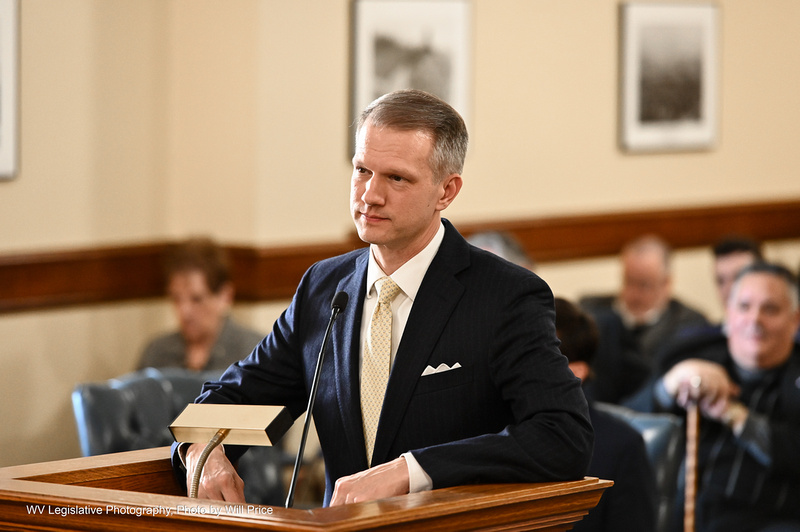
United States Congressman, Riley Moore, has stated that President Donald Trump is determined to put an end to the killing of Christians in Nigeria, warning that further action may follow if the violence persists.
Moore made the statement on Friday via his official X handle.
According to the lawmaker, the strike represents the first step in addressing what he described as the ongoing slaughter of Christians and the broader security crisis affecting Nigerians across religious and ethnic lines.
READ ALSO:US Dept Of War Shares Video Of Air Strikes In Nigeria
“President Trump has been clear that the killing of Christians in Nigeria must end,” he said.
He that the administration’s resolve on the matter should not be underestimated.
“As I stated at the outset: Do not test President Trump‘s resolved in this matter.
READ ALSO:JUST IN: US Forces Bomb Terrorists Camps In Nigeria
“Tonight’s strike in coordination with the Nigerian government is just the first step to ending the slaughter of Christians and the security crisis affecting all Nigerians,” he said.
He stressed that the operation signals a stronger stance by the United States in support of Nigeria’s efforts to tackle terrorism and violent extremism, noting that further measures could be taken if the situation does not improve.
Headline
US Dept Of War Shares Video Of Air Strikes In Nigeria

A video footage of the US military air strikes in Nigeria has emerged.
The video was released by the US Department of War following its air strikes against terrorists in Sokoto.
Earlier, the US secretary of War, Pete Hegseth had confirmed that military air strikes hit terrorists in Nigerians, saying it was deadly.
Later on, the US. African Command, confirmed that it conducted the attacks described as very deadly by President Donald Trump.
Trump said he was only keeping the promise he made earlier last month to strike the terrorists he believes are killing innocent Christians.
READ ALSO:JUST IN: US Forces Bomb Terrorists Camps In Nigeria
Although described as powerful and deadly, the casualty caused by the attack is yet to be released.
Explaining further, security expert, Brant Philip, said the strikes may have been launched “from the USS Paul Ignatius, using a Tomahawk missile.”
The Nigerian government through its ministry of foreign affairs has also confirmed that the strikes were successful.
Watch video here
Headline
JUST IN: US Forces Bomb Terrorists Camps In Nigeria
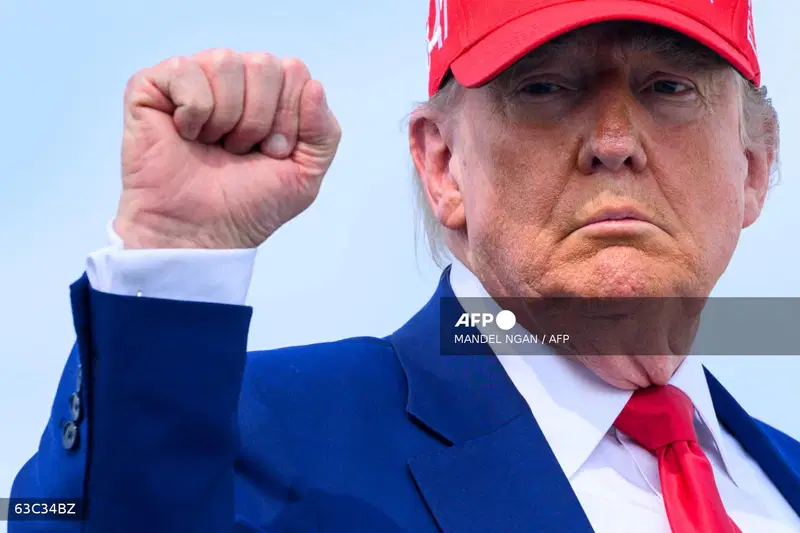
United States President Donald Trump said US forces conducted deadly strikes against Islamic State terrorists in northwestern Nigeria, and vowed more attacks if the militants keep killing Christians.
“I have previously warned these Terrorists that if they did not stop the slaughtering of Christians, there would be hell to pay, and tonight, there was,” Trump posted on his Truth Social platform, adding that “the Department of War executed numerous perfect strikes.”
READ ALSO:JUST IN: Kano Lawmaker, Sarki Aliyu Daneji, Dies Hours After Colleague’s Passing
Trump stated that the Department of War “executed numerous perfect strikes, as only the United States is capable of doing. Under my leadership, our Country will not allow Radical Islamic Terrorism to prosper.”
The US president wished everyone Merry Christmas, “including the dead Terrorists, of which there will be many more if their slaughter of Christians continues.”
Details later.

 News4 days ago
PHOTOS: New Era In Furupagha-Ebijaw As Okpururu 1 Receives Staff Of Office
- News3 days ago
UBTH CMD Marks 120 Days In Office, Expresses Commitment To Providing Conducive Working Environment
- News4 days ago
OPINION: Gumi And His Terrorists
- News3 days ago
FIRS Confirms NIN As Tax ID
- News4 days ago
FG Declares Public Holidays For Christmas, New Year Celebrations
- Metro3 days ago
Fintiri Pardons Man Sentenced To Death For ‘Killing Herdsman In Self-defence’, Others
- News4 days ago
OPINION: Christmas And A Motherless Child
- News2 days ago
JUST IN: Kano Lawmaker, Sarki Aliyu Daneji, Dies Hours After Colleague’s Passing
 News4 days ago
OPINION: My Man Of The Season
- News3 days ago
KWAM 1 Withdraws From Awujale Race, Ends Court Challenge


