
Headline
FULL LIST: Agencies That May Be Scrapped Based On Oronsaye 800-page Report
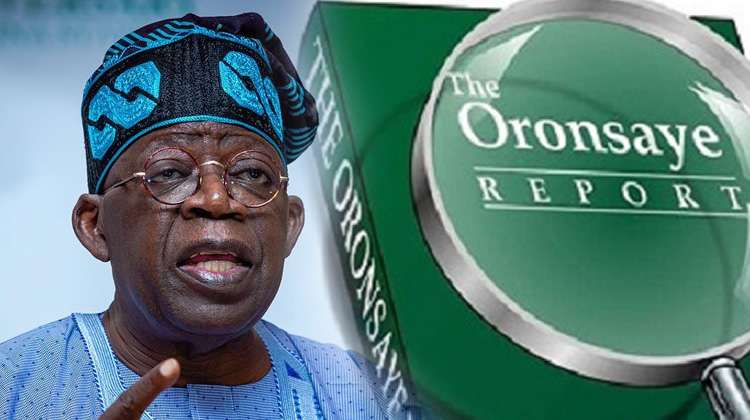
President Bola Tinubu has ordered the full implementation of the Oronsaye report.
As a result, the government announced the merging, subsuming, scrapping, and relocation of several agencies.
In 2011, President Goodluck Jonathan established the Presidential Committee on Restructuring and Rationalisation of Federal Government Parastatals, Commissions, and Agencies, with Mr. Steve Oronsaye as the Chairman.
Coming from a private sector background, Oronsaye transitioned into the civil service at a senior level and ascended to the position of Head of the Civil Service of the Federation.
Submitted in 2012, the Oronsaye report highlighted the existence of 541 Federal Government parastatals, commissions, and agencies, both statutory and non-statutory.
The 800-page report recommended the reduction of statutory agencies from 263 to 161, scrapping 38 agencies, merging 52, and reverting 14 to departments in different ministries.
A previous investigation by The PUNCH found that the Nigerian government has the potential to save more than N241bn if the recommendations are put into action.
READ ALSO: 20 Insights Into Oronsaye Report As EFCC, FRSC, Others Set For Merger
Below is a list of some of the agencies that may be scrapped if the Oronsaye report is fully implemented as ordered by President Tinubu:
One of the key suggestions in the report is the consolidation of the Code of Conduct Bureau, Economic and Financial Crimes Commission, and Independent Corrupt Practices and other Related Offences Commission into a single agency.
Additionally, the report recommended the elimination of the Fiscal Responsibility Commission and the National Salaries, Income and Wages Commission, with their responsibilities being incorporated into the Revenue Mobilisation, Allocation and Fiscal Commission.
The Salaries and Wages Income Commission is likely to face a similar fate..
38 Federal Agencies were recommended for abolition, including the Public Complaints Commission, National Poverty Eradication Programme, Utilities Charges Commission, National Agency for the Control of HIV/AIDS, National Intelligence Committee, and more.
National Agency for the Control of HIV/AIDS be merged as a Department under the Centre for Disease Control in the Federal Ministry of Health.
The merger of National Emergency Management and the National Commission for Refugees, Migrants, and Internally Displaced Persons.
READ ALSO: JUST IN: Tinubu Orders Full Implementation Of Oronsanye Report
The Directorate of Technical Cooperation in Africa be abolished and its functions, along with those of the Technical Aids Corps, transferred to an appropriate Department in the Ministry of Foreign Affairs.
Infrastructure Concessionary and Regulatory Commission be subsumed in the Bureau of Public Enterprises for greater synergy and their enabling laws amended accordingly.
It was suggested that the Nigerian Airspace Management Agency, Nigerian Civil Aviation Authority, and the Nigerian Metrological Agency should be combined into a new entity called the Federal Civil Aviation Authority, with their laws adjusted to accommodate the merger.
The committee suggested merging the Nigerian Investment Promotion Council with the Nigerian Export Promotion Council to enhance resource management and utilisation.
The committee suggested repealing the enabling law of the National Commission for Nomadic Education and transferring the Commission’s activities to the Universal Basic Education Commission.
The National Council of Arts and Culture will combine with the National Theatre and the National Troupe to form a single organisation.
READ ALSO: Peter Obi Knocks Tinubu Over Arrest Of BDC Operators
The National Agency for Science and Engineering Infrastructure be merged with National Centre for Agricultural Mechanization and Project Development Institute
The committee suggested that the National Hajj Commission of Nigeria and the Nigerian Christian Pilgrims Commission be abolished, with the government focusing solely on offering consular services and vaccinations to prospective pilgrims.
The Nigerian Communications Commission, the Nigerian Broadcasting Commission and the regulatory functions of the Nigerian Postal Services were recommended by the committee to be merged.
The National Information Technology Development Agency to be fused into the Ministry of Communication Technology
Nigerian Television Authority, Federal Radio Corporation of Nigeria & Voice of Nigeria into the Federal Broadcasting Corporation of Nigeria.
The Nigerian Army University to be merged with the Nigerian Defence Academy; to function as a faculty with the the Nigerian Defence Academy.
Air Force institute of Technology also to function as faculty within Nigerian Defence Academy.
Debt Management Office to become an extra-ministerial department in the Federal Ministry of Finance Public Health Department to return to the Federal Ministry of Health
The Nigerian Investment Promotion Council was recommended to merge with the Nigerian Export Promotion Council to enhance resource management and utilisation.
One important recommendation from the committee was to stop providing government funding to professional bodies and councils. Therefore, it is necessary to revise the Professional Bodies (Special Provisions) Act of 1972, which requires the government to offer financial assistance to these organisations.
The list comprises various professional councils and boards in Nigeria, such as the Teachers Registration Council of Nigeria, Computer Professionals Council of Nigeria, Advertising Practitioners Council of Nigeria, Nigeria Press Council, Architects Registration Council, Council for Registered Engineers of Nigeria, Estate Surveyors’ Registration Board, Town Planners Council, Nigerian Builders Council, Quantity Surveyors’ Registration Board of Nigeria, and Council of Nigerian Mining Engineers and Geoscientists.



Headline
Indian Court Denies Bail To Nigerian Man Over Drug Charges
A court in India has denied bail to a 44-year-old Nigerian national, Cristian Soporuchukwu, who is currently facing drug trafficking charges in the country.
Cristian Soporuchukwu initially entered India on a business visa but was later arrested over allegations of involvement in the sale of hard drugs.
Reports indicated that after arriving in India, Soporuchukwu travelled through Goa, Delhi, and Mumbai, where he allegedly established links with suspected drug traffickers.
READ ALSO:Indian National Arraigned In Lagos Over Alleged N22m Supermarket Fraud
He was accused of purchasing MDMA crystals and distributing them to college students and information technology workers.
According to reports, operatives of the Beguru Police arrested Cristian Soporuchukwu in April 2025 for allegedly selling MDMA crystals around Begur Lake and the AECS Layout Road area.
The New Indian Express reported that the High Court of Karnataka subsequently dismissed the Nigerian’s bail application.
READ ALSO:NDLEA Intercepts Indian Lady With 72 Parcels Of Heroin ON n Chocolate Wraps
“The anti-narcotics wing seized about 1 kg of MDMA crystals, a pocket weighing machine, 10 zip-lock covers, a mobile phone and a scooter from him,” the report stated.
Justice V. Srishananda, while ruling on the bail application, reportedly held that errors relating to the grounds of arrest could not automatically justify bail in serious narcotics-related offences under the Narcotic Drugs and Psychotropic Substances, NDPS, Act.
The court further noted that Cristian Soporuchukwu had allegedly overstayed his visa in India, according to the report.
Headline
Strait Of Hormuz: US Announces Sanctions Against Iran

The United States Treasury has announced sanctions against Iran’s Persian Gulf Strait Authority.
Treasury Secretary, Scott Bessent, said this in a statement on Wednesday.
The statement extended the threat of sanctions to anyone paying the fees, saying they may be providing support to and receiving services from Iran’s Revolutionary Guards, and therefore may be exposed to sanctions risk.
READ ALSO:Strait Of Hormuz: Pakistan Thanks Trump For Pausing ‘Project Freedom’
“The Iranian military’s latest attempt to extort global maritime trade is proof that Economic Fury has left the regime desperate for cash.
“Treasury has deprived the Iranian regime of revenue for their weapons programs, terrorist proxies, and nuclear ambitions,” Bessent said.
Bessent added that the US has succeeded in disrupting tens of billions of dollars’ worth of revenue from being accessible to Tehran.
Headline
US Launches New Airstrikes On Iran
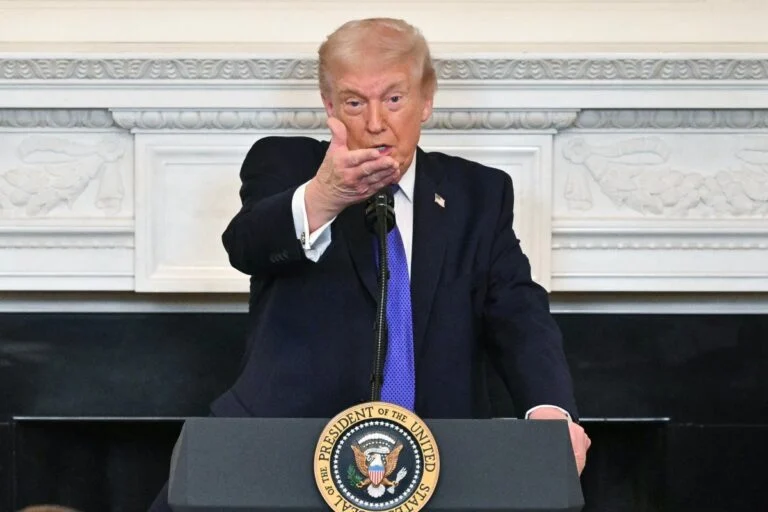
The United States has launched new airstrikes in southern Iran.
The strike shot down four one-way attack drones that posed a threat around the Strait of Hormuz and then a ground control site.
A US official revealed that American forces struck an Iranian ground control station in Bandar Abbas that was about to launch a fifth drone.
READ ALSO:US Restricts Entry Routes For Travellers From DRC, Uganda, South Sudan Over Ebola Outbreak
The official described the strikes as purely defensive, saying the US intended to maintain the ceasefire.
Report says this is the second time in three days that the US has carried out self-defense strikes against Iranian military targets in southern Iran.
Recall that on Monday the US carried out airstrikes against Iranian missile locations and boats that US Central Command said were preparing to launch mines in the Strait of Hormuz.

 Headline4 days ago
Woman Passes Out After Receiving 100 Strokes Of Cane
- Headline4 days ago
JUST IN: White House Locked Down Briefly As Gunman Opens Fire At Security Checkpoint
- Politics5 days ago
Warri Ijaw Hail INEC Delineation Report, Call For Additional Electoral Wards, Others
- Politics3 days ago
Two Masked Men Gun Down Politician In His Rivers State Hotel
- Metro4 days ago
Police Reject N500m Bribe, Recover N7.8bn Illicit Drugs In Lagos
- News3 days ago
More Pain For Nigerians As Cooking Gas Price Increases Nationwide
- News5 days ago
Alleged Terrorism: Court Rejects Defendant’s Bid To Travel Abroad
- Politics5 days ago
What I’ll Do As President Of Nigeria — Amaechi
- News3 days ago
FG Declares Two Days Public Holiday For Eid-el Kabir Celebration
- Politics3 days ago
‘Tinubu’s Borrowing In 24 Months Surpasses 55 Years’ Debt Record’


