
Headline
FULL LIST: Not American Or British, See 2024 World’s Most Powerful Passports
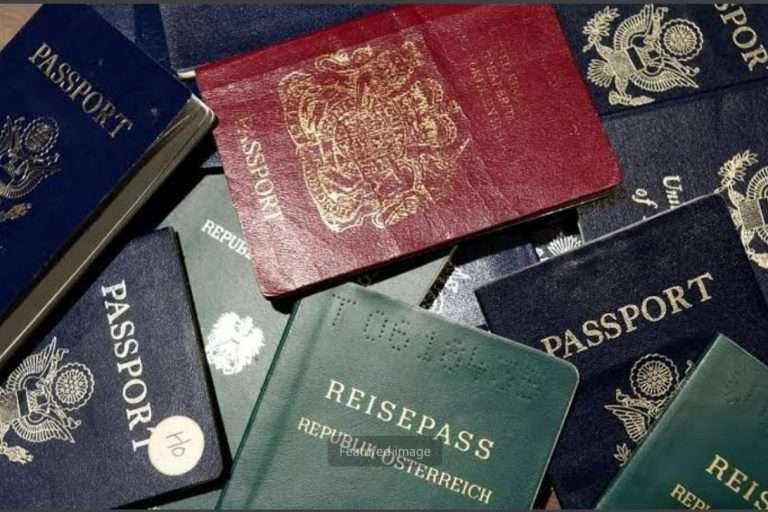
Henley Passport Index has listed the most powerful passports in the world on Thursday.
HPI is a global passport-ranking website with an original, authoritative ranking of all the world’s passports according to the number of destinations their holders can access without a prior visa.
Their index is often based on exclusive data from the International Air Transport Association (IATA) – the largest, most accurate travel information database – and enhanced by Henley & Partners’ research team.
According to the passport ranking website, four European countries have moved up to share the top spot on the 2024 index.
“Residents of France, Germany, Italy, and Spain now have visa-free access to 194 of 227 destinations, three more than last year.
READ ALSO: FULL LIST: 45 Visa-free Countries Nigerians Passport Can Travel To In 2024
“South Korea, Sweden, and Finland all climbed one spot to take joint second place, with access to 193 locations. Austria, Denmark, Ireland, and the Netherlands shared third place, allowing travel to 192 places.”
“The U.K. now ranks joint fourth (access to 191 destinations), while the U.S. retained joint seventh place (188 destinations). A decade ago, the two countries shared the top spot. And comparing this year’s list to the 2014 ranking reveals some other major shifts.”
A report by Times revealed that: “The United Arab Emirates was the fastest climber over the past decade, jumping to 11th place and offering access to 183 destinations without a visa. And China, up two spots this year to land in 62nd place, has visa-free access to 85 destinations — almost twice as many as 10 years ago.”
It added that the chairman of immigration consultancy Henley & Partners, Dr. Christian Kaelin, said that while the general trend over the years had been toward greater travel freedom, the gap between those at either end of the list was wider than ever.
READ ALSO: Facts To Know About The Africa Cup Of Nations
“The average number of destinations travelers are able to access visa-free has nearly doubled from 58 in 2006 to 111 in 2024,” he said.
“However, as we enter the new year, the top-ranked countries are now able to travel to a staggering 166 more destinations visa-free than Afghanistan, which sits at the bottom of the ranking with access to just 28 countries without a visa.”
Recall that for the past five years, Singapore and Japan have boasted the world’s most powerful travel documents, granting their citizens access to more countries without a prior visa than anyone else.
See the full list below:
France
Germany
Italy
Japan
Singapore
Spain
Finland
South Korea
Sweden
Austria
Denmark
Ireland
Netherlands
Belgium
Luxembourg
Norway
Netherlands
United Kingdom
Greece
Malta
Switzerland
Australia
Czechia
New Zealand
Poland
Canada
Hungary
United States
Estonia
Lithuania
Latvia
Slovakia
Slovenia
Iceland
United Arab Emirates
Cyprus
Liechtenstein
Malaysia
Bulgaria
Croatia
Romania
Monaco
Chile
Argentina
Brazil
San Marino
Andorra
Hong Kong (SAR China)
Brunei
Israel
Barbados
Mexico
Bahamas
St. Kitts and Nevis
St. Vincent and the Grenadines
Vatican City
Seychelles
Uruguay
Antigua and Barbuda
Costa Rica
Trinidad and Tobago
Mauritius
Panama
Grenada
St. Lucia
Ukraine
Paraguay
Dominica
Macao (SAR China)
Taiwan (Chinese Taipei)
Peru
Serbia
Guatemala
El Salvador
Columbia
Honduras
Solomon Islands
Samoa
Nicaragua
Tonga
Tuvalu
North Macedonia
Marshall Islands
Montenegro
Venezuela
Kiribati
Albania
Micronesia
Palau Islands
Moldova
Bosnia and Herzegovina
Georgia
Russian Federation
Türkiye
Qatar
South Africa
Belize
Kuwait
Timor-Leste
Ecuador
Maldives
Vanuatu
Bahrain
Botswana
Fiji
Guyana
Jamaica
Nauru
Oman
Saudi Arabia
China
Papua New Guinea
Bolivia
Thailand
Belarus
Suriname
Lesotho
Namibia
eSwatini
Indonesia
Kazakhstan
Kenya
Malawi
Dominican Republic
Kosovo
Tanzania
Azerbaijan
Morocco
Tunisia
Zambia
The Gambia
Cape Verde Islands
Philippines
Uganda
Armenia
Sierra Leone
Ghana
Rwanda
Zimbabwe
Kyrgyzstan
Cuba
Benin
Mongolia
Mozambique
India
Uzbekistan
Gabon
Sao Tome and Principe
Tajikistan
Burkina Faso
Madagascar
Cote d’Ivoire
Guinea
Mauritania
Togo
Equatorial Guinea
Senegal
Niger
Algeria
Cambodia
Guinea-Bissau
Mali
Bhutan
Central African Republic
Chad
Comoro Islands
Egypt
Haiti
Jordan
Vietnam
Angola
Cameroon
Congo (Rep)
Turkmenistan
Burundi
Laos
Liberia
Djibouti
Myanmar
Ethiopia
Congo (Dem. Rep.)
South Sudan
Iran
Lebanon
Nigeria
Sudan
Eritrea
Sri Lanka
Bangladesh
North Korea
Libya
Nepal
Palestinian Territory
Somalia
Yemen
Pakistan
Iraq
Syria
Afghanistan



Headline
U.S. Lawmaker Reacts To Nigeria, U.S. Airstrikes

United States Congressman, Riley Moore, has stated that President Donald Trump is determined to put an end to the killing of Christians in Nigeria, warning that further action may follow if the violence persists.
Moore made the statement on Friday via his official X handle.
According to the lawmaker, the strike represents the first step in addressing what he described as the ongoing slaughter of Christians and the broader security crisis affecting Nigerians across religious and ethnic lines.
READ ALSO:US Dept Of War Shares Video Of Air Strikes In Nigeria
“President Trump has been clear that the killing of Christians in Nigeria must end,” he said.
He that the administration’s resolve on the matter should not be underestimated.
“As I stated at the outset: Do not test President Trump‘s resolved in this matter.
READ ALSO:JUST IN: US Forces Bomb Terrorists Camps In Nigeria
“Tonight’s strike in coordination with the Nigerian government is just the first step to ending the slaughter of Christians and the security crisis affecting all Nigerians,” he said.
He stressed that the operation signals a stronger stance by the United States in support of Nigeria’s efforts to tackle terrorism and violent extremism, noting that further measures could be taken if the situation does not improve.
Headline
US Dept Of War Shares Video Of Air Strikes In Nigeria

A video footage of the US military air strikes in Nigeria has emerged.
The video was released by the US Department of War following its air strikes against terrorists in Sokoto.
Earlier, the US secretary of War, Pete Hegseth had confirmed that military air strikes hit terrorists in Nigerians, saying it was deadly.
Later on, the US. African Command, confirmed that it conducted the attacks described as very deadly by President Donald Trump.
Trump said he was only keeping the promise he made earlier last month to strike the terrorists he believes are killing innocent Christians.
READ ALSO:JUST IN: US Forces Bomb Terrorists Camps In Nigeria
Although described as powerful and deadly, the casualty caused by the attack is yet to be released.
Explaining further, security expert, Brant Philip, said the strikes may have been launched “from the USS Paul Ignatius, using a Tomahawk missile.”
The Nigerian government through its ministry of foreign affairs has also confirmed that the strikes were successful.
Watch video here
Headline
JUST IN: US Forces Bomb Terrorists Camps In Nigeria

United States President Donald Trump said US forces conducted deadly strikes against Islamic State terrorists in northwestern Nigeria, and vowed more attacks if the militants keep killing Christians.
“I have previously warned these Terrorists that if they did not stop the slaughtering of Christians, there would be hell to pay, and tonight, there was,” Trump posted on his Truth Social platform, adding that “the Department of War executed numerous perfect strikes.”
READ ALSO:JUST IN: Kano Lawmaker, Sarki Aliyu Daneji, Dies Hours After Colleague’s Passing
Trump stated that the Department of War “executed numerous perfect strikes, as only the United States is capable of doing. Under my leadership, our Country will not allow Radical Islamic Terrorism to prosper.”
The US president wished everyone Merry Christmas, “including the dead Terrorists, of which there will be many more if their slaughter of Christians continues.”
Details later.

 News4 days ago
PHOTOS: New Era In Furupagha-Ebijaw As Okpururu 1 Receives Staff Of Office
- News3 days ago
UBTH CMD Marks 120 Days In Office, Expresses Commitment To Providing Conducive Working Environment
- News4 days ago
OPINION: Gumi And His Terrorists
- News3 days ago
FIRS Confirms NIN As Tax ID
- News4 days ago
FG Declares Public Holidays For Christmas, New Year Celebrations
- Metro3 days ago
Fintiri Pardons Man Sentenced To Death For ‘Killing Herdsman In Self-defence’, Others
 News3 days ago
OPINION: My Man Of The Season
- News4 days ago
OPINION: Christmas And A Motherless Child
- News2 days ago
JUST IN: Kano Lawmaker, Sarki Aliyu Daneji, Dies Hours After Colleague’s Passing
- Metro3 days ago
Petrol Tanker Crashes Into Akpabio’s Convoy, Kills Police Dispatch Rider


