
News
FULL LIST: Presidency Releases Tinubu’s Appointees To Date, N’West Leads, S’West With Highest Juicy Positions
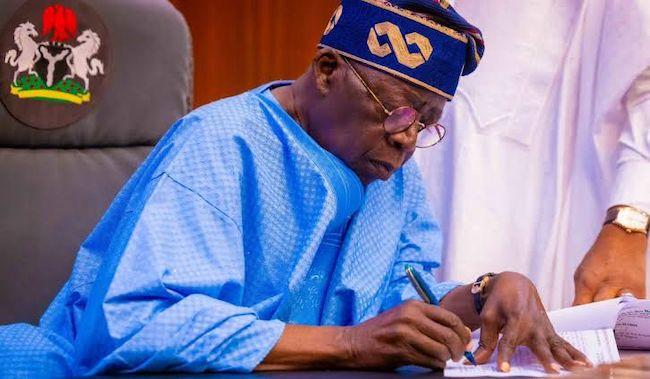
The Presidency, through Sunday Dare, Special Adviser to the President on Information and Strategy, has provided a list of the President’s appointments to date as it tries to defend alleged lopsided appointments.
In the list, South West has 29 appointees of the President as against 24 stated by Dare.
For instance, Femi Gbajabiamila, who is one of the first appointees of the President, appointed as Chief Of Staff on Friday, June 2, 2023, was not mentioned in the list.
The South East has fewer appointments.
Also, it appears that the West Eest, where the President comes from, has the majority of the key appointments into ‘juicy’ positions.
Here is the list of Tinubu’s appointments to day:
South West:
1. Bosun Tijani
Minister of Communications, Innovation and Digital Economy
2. Wale Edun
Minister of Finance and Coordinating Minister of the Economy
3. Bunmi Tunji-Ojo
Minister of Interior
4. Adebayo Adelabu
Minister of Power
5. Dele Alake
Minister of Solid Minerals Development
6. Dr. Jumoke Oduwole
Minister of Industry, Trade and Investment
7. Adegboyega Oyetola
Minister of Marine & Blue Economy
8. Olayemi Cardoso
CBN Governor
9. Lieutenant General Taoreed Lagbaja
Chief of Army Staff
10. Kayode Egbetokun
Inspector General of Police
11. Zaccheus Adedeji
Chairman, FIRS
12. Adeola Ajayi
Director General of the Department of State Services (DSS)
13. Bashir Adewale Adeniyi
Comptroller-General of Customs
14. Olanipekun Olukoyede
Chairman of the Economic and Financial Crimes Commission (EFCC)
15. Kayode Isiak Opeifa
Managing Director, Nigeria Railway Corporation
16. Oluwasegun Faleye
Managing Director/Chief Executive Officer of the Nigeria Social Insurance Trust Fund
17. Vincent Olatunji
(NSITF)
18. Raji Kazeem Kolawole
Managing Director /CEO, Nigerian Communications Satellite Limited (NIGCOMSAT)
19. Bayo Onanuga
Director General, National Board for Technology Incubation (NBTI)
20. Sunday Dare
Special Adviser on Information and Strategy
21. Tope Kolade Fasua
Special Adviser on Public Communications Orientation
22. Peju Adedajo
Special Adviser to the President on Economic Matters (Office of the VP)
23. Temitola Asekunle-Johnson
Senior Special Assistant to the President on Investment & Privatisation (Office of VP)
24. Mariam Temitope
Senior Special Assistant to the President, Job Creation & NSMEs (Office of VP)
25. Tunde Rahman
Senior Special Assistant to the President, Regional Development Programmes
26. Moremi Ojudu
SSAP on Community Engagement
27. Tope Ajayi
SSA, Media and Public Affairs
28. Segun Dada
Special Assistant, Social Media
29. Demola Oshodi
SSA, Protocol
READ ALSO: ‘We Are Sorry’ – Presidency Apologises Over Errors In Federal Appointments List
North Central:
1. Shuaibu Audu
Minister of Steel Development
2.Muhammed Idris
Minister of Information
3. Zaphanian Jisalo
Minister of Special Duties
4. Lateef Fagbemi
Minister of Justice
5. Joseph Utsev
Minister of Water Resources and Sanitation
6. Nentawe Yilwatde
Minister of Humanitarian Affairs and Poverty Reduction
7. Imaan Sulaiman Ibrahim
Minister of State, Police Affairs
8. Aliyu Sabi Abdullahi
Minister of State, Agriculture and Food Security
9. Bashir Bayo Ojulari
GMD, NNPC Limited
10. Ambassador Mohammed Mohammed
Director General, National Intelligence Agency
11. Dr. Idris A. Sulaimon
Director General, Nigerian Broadcasting Commission (NBC)
12. Dr. Ahmed Abubakar Audi Commandant General, Nigeria Security and Civil Defence Corps
13. Engr. Jaji O. Abdulganiyu Controller General of the Federal Fire Service
14. Kemi Nandap
Comptroller-General of the Nigeria Immigration Service
15. Haruna Y. Usman
Chairman, Upper Niger River Basin Development Authority
16. Dangajere Shuaibu Bawa Jaja Managing Director, Upper Niger River Basin Development Authority
17. Dr. Amos Gizo Yadukso
Chairman, Lower Benue River Basin Development Authority
18. Engr. Ninga Terese
Managing Director, Lower Benue River Basin Development Authority
19. Abiodun Essiet SSAP on Community Engagement
20. Gimba Kakanda
Senior Special Assistant to the President, Research and Analytics (Office of the VP)
21. Isaq Ahmed Ningi,
Senior Special Assistant to the President on Digital media & Emergency Management
22. Mr. Aliyu Audu,
Special Assistant to the President, Public Affairs
23. Sen. Ibrahim Oloriege
Chairman, NHIA
24. Tunde Ajibulu,
Deputy Executive Secretary (Services), UBEC
25. Sunday Sylva Togo Echono Executive Secretary, TETFUND
North East:
1. Abubakar Kyari
Minister of Agriculture and Food Security
2. Idi Mukhtar Maiha
Minister of Livestock Development
3. Sa’idu Alkali
Minister of Tranportation
4. Yusuf Tuggar
Minister of Foreign Affairs
5. Muhammad Ali Pate
Coordinating Minister of Health and Social Welfare
6. Ibrahim Gaidam
Minister of Police Affairs
7. Uba Maigari Ahmadu
Minister of State for Regional Development
8. Ahmadu Musa Kida
NNPCL Non-executive Chairman.
9. Nuhu Ribadu
National Security Adviser
10. Mohammed Buba Marwa Chairman, National Drug Law Enforcement Agency
11. Hajiya Hafsat Bakari
CEO, Nigeria Financial Intelligence Unit
12. Prof. Abdu Dauda
Chairman, Chad Basin Development Authority
13. Tijjani Musa Tumsa
Managing Director, Chad Basin Development Authority
14. Alh. Sanusi Mohammed Babantanko
Chairman, Upper Benue River Basin Development Authority
15. Abdulhamid Yahaya Abba SSAP on Community Engagement
16. Dr. Bala Mohammed
Deputy Governor, CBN
17. Aliyu Modibbo Umar
Special Adviser (SAD), General Duties
18. Sadiq Wanna Special Adviser (SAD), to the President on Power Infrastructure (Office of the VP)
19. Usman Muhammad
SSA to the President on Administration & Office Accommodation (Office of the VP)
20. Nasir Yammama
Senior Special Assistant to the President on Innovation (Office of the VP)
21. Bashir Maidugu
Deputy State House Counsel (Senior Special Assistant to the President)
22. Dr. Daniel Bwala,
Special Adviser on Media and Policy Communications
23. Mr. Francis Adah Abah
Personal Assistant to the President, Special Duties
24. Mumuni Dagazau
Executive Vice President for Downstream
READ ALSO: U.S, China Tariff War Could Slash Trade By 80%, Okonjo-Iweala Warns
North West:
1. Mohammed Badaru Abubakar Minister of Defence
2. Hannatu Musawa
Minister of Art, Culture and the Creative Economy
3. Ahmed Dangiwa
Minister of Housing and Urban Development
4. Bello Goronyo
Minister of State for Water Resources
5. Yusuf Tanko Sununu
Minister of State for Education
6. Bello Matawalle
Minister of State for Defence
7. Hajiya Hafsat Bakari
CEO, Nigeria Financial Intelligence Unit
8. General Christopher Gwabin Musa Chief of Defence Staff
9. Air Marshal Hasan Bala Abubakar Chief of Air Staff
10. Haliru Nababa
Controller General of the Nigerian Correctional Service
11. Shehu Usman Mohammed Corps Marshal of the Federal Road Safety Commission
12. Aminu Maida
EVC, Nigerian Communications Commission (NCC)
13. Kashifu Inuwa Abdullahi Director-General, National Information Technology Development Agency (NITDA)
14. Brig Gen YD Ahmed
Director-General, National Youth Service Corps
15. Mohammed Buba Marwa Chairman, National Drug Law Enforcement Agency
16. Abdullahi U. Ganduje
Chairman, Federal Airport Authority of Nigeria (FAAN)
17. H. E. Abdullahi U. Ganduje Chairman, Federal Airport Authority of Nigeria
18. Dr. Musa Adamu Aliyu
Chairman, Independent Corrupt Practices and Other Related Offences Commission
19. Nasiru Gawuna
Chairman, Federal Mortgage Bank of Nigeria
20. Musa Sarkin Adar
Chairman, National Inland Waterways Authority
21. H. E. Nasiru Gawuna
Chairman, Federal Mortgage Bank of Nigeria
22. H.E Aminu Bello Masari
Chairman, TETFUND
23. Alh. Bashir Usman Gumel Chairman, Federal Medical Centre, Yola
24. Dr. Mohammed Gusau Hassan Chairman, Federal Medical Centre Birnin Kudu
25. Isa Sadiq Achida
Chairman, Raw Materials Research and Development Council
26. Amb. Abubakar Shehu Wurno Chairman, Sokoto-Rima River Basin Development Authority
27. Major Gen. Jubril Abdulmalik Secretary, Civil Defence, Immigration and Prisons Services Board
28. Dr Mohammed Mohammed Aminu
Registrar/Chief Executive Officer (NABTEB)
29. Abdullahi Tanko Yakassai SSAP on Community Engagement
30. Sani Dattijo
Deputy Governor, CBN
31. Rukaiya El-Rufai
Special Adviser to President on NEC & Climate Change (Office of the VP)
32. Hakeem Baba Ahmed
Special Adviser (SAD), on Political Matters (Office of VP)
33. Muhammad Bulama
Senior Special Assistant to the President on Politics/Special Duties (office of the VP)
34. Zainab Yunusa
Senior Special Assistant to the President on NEC (Office of the VP)
35. Abdulaziz Abdulaziz
Senior Special Assistant to the President, Print Media
36. Ibrahim Masari
SSA Politics
READ ALSO: Ibas Shuns Court Order Appoints 23 LGA Administrators In Rivers, New RSIEC Management [FULL LIST]
South South:
1. Festus Keyamo
Minister of Aviation and Aerospace Development
2. Ekperipe Ekpo
Minister of State, Gas Resources
3. Heineken Lokpobiri
Minister of State, Petroleum Resources
4. John Enoh
Minister of State, Industry, Trade and Investment
5. Nyesom Wike
Minister of Federal Capital Territory
6. Abubakar Momoh
Minister of Regional Development
7. Vice Admiral Emmanuel Ikechukwu Ogalla
Chief of Naval Staff
8. Major General Emmanuel Undiandeye
Chief of Defence Intelligence
9. Emomotimi Agama
Director General, Securities and Exchange Commission (SEC)
10. Mrs. Glory Ekpo Oho
Managing Director, Cross River Basin Development Authority
11. Sen. Magnus Abe
Chairman, National Agency for the Great Green Wall
12. Chief (Barr.) Ebikemi Boi Bosin Chairman, Niger Delta Basin Development Authority
13. Hon. Amgbare Ebitimi
Managing Director, Niger Delta Basin Development Authority
14. Mr. Saleh Abubakar
Director-General, National Agency for the Great Green Wall (NAGGW)
15. Dr. Dakorinama Alabo George Director-General, Border Communities Development Agency (BCDA).
16. Gift Johnbull SSAP on Community Engagement
17. Emem Nnana Usoro
CBN Deputy Governor
18. O’tega Ogra SSA, Digital/New Media to the President
19. Mrs. Linda Nwabuwa Akhigbe SSA, Strategic Communications
20. Rowland Ewubare
Group Chief Operating Officer, NNPCL
21. Nosa Asemota
Special Assistant, Visual Communications to the President
22. Prof. Nenibarini Zabbey
Project Coordinator, HYPREP
South East:
1. Dr. Doris Anite Uzoka
Minister of State for Finance
2. Bianca Ojukwu
Minister of State for Foreign Affairs
3. Nkeiru Onyejiocha
Minister of State for Labour
4. Sen. Dave Umahi
Minister of Works
5. Dr. Uche Nnaji
Minister of Science and Technology
6. Uzoma Nwagba
MD, Credicorp
7. Rt. Hon. Emeka Nduka
Managing Director, Anambra-Imo River Basin Development Authority
8. Adesua Dozie
Company Secretary and Chief Legal Officer, NNPCL
9. Hon. Mark Okoye
MD/CEO, South-East Development Commission (SEDC)
10. Philip Ikeazor
Deputy Governor for Financial System Stability, CBN
11. Sophia Mbakwe
Executive Vice President of Business Services, NNPCL
12. Mr. John Ugochukwu Uwajumogu Special Adviser, Industry, Trade and Investment
13. Chioma Nweze
SSAP on Community Engagement
14. Kingsley Stanley Nkwocha SSA to the President, Media and Communication (Office of VP)
15. Kingsley Uzoma
SSA to the President on Agribusiness & Productivity Enhancement (Office of VP)
16. Mr. Fredrick Nwabufo
SSA to the President on Public Engagement



News
Children’s Day: Chaos At Ogbe Stadium As Dozens Faint
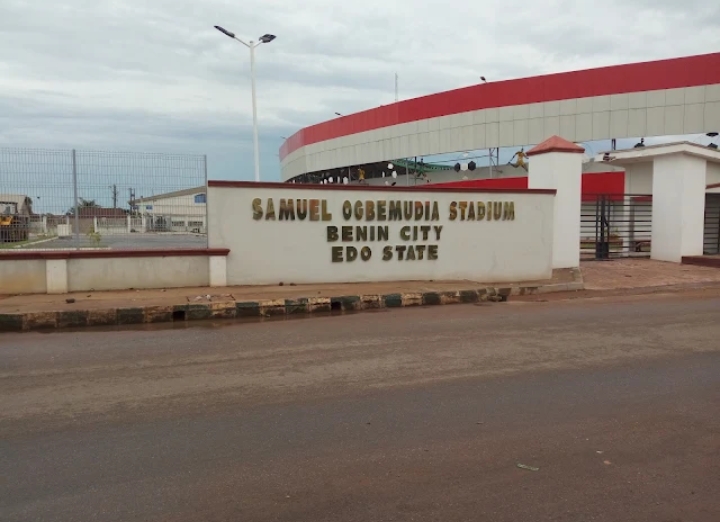
Chaos erupted on Wednesday during the Children’s Day celebration as dozens of students reportedly collapsed following a stampede triggered by the use of pepper spray.
The event,
organised by the Edo State Ministry of Education at the Samuel Ogbemudia Stadium was disrupted after some male students of Ihogbe College allegedly made uncompromising advances towards female students at the venue.
A parent who identified himself as Oboh Emmanuel said, “the behaviour of those uncultured students attracted the attention of bouncers stationed at the stadium as they rebuked the male students.”
Oboh said the affected students later regrouped and attacked the bouncers, leading to a confrontation within the crowded arena.
READ ALSO:Children’s Day: Edo Commits To Child Protection
It was gathered that in the ensuing confusion, the bouncers were reported to have deployed pepper spray in an area occupied by a large number of students.
Several students, particularly female students, reportedly fainted after inhaling the substance, while others sustained injuries after being stepped on during the ensuing melee.
The panic was said to have spread across the stadium as students, teachers and parents scampered for safety.
Many of the affected students were reportedly rushed to the Edo Specialist Hospital for medical attention.
READ ALSO: Egor LG Chair, Ogbemudia, Vice, Osawe Impeached
Reacting to the incident, Chief Press Secretary to Governor Monday Okpebholo, Dr Patrick Ebojele, said the security personnel that fired the tear gas had been detained.
He said all the students, except two, that were rushed to the hospital have been discharged.
Ebojele stated that doctors wanted to observe the students till tomorrow before allowing them to go home.
“The two students are not seriously injured. Doctors want to observe them overnight. Permanent Secretary, Ministry of Education is still at the hospital. The man who used pepper spray has been detained.
“The incident did not happen the way it is being exaggerated. All modalities were put in place to ensure the children enjoyed their day.”
News
Okpebholo Salutes Edo Muslims, Seeks Continued Support, Prayers
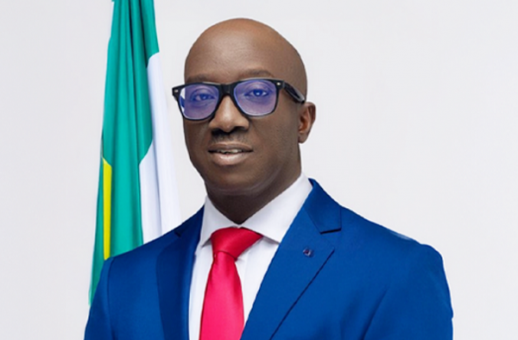
Governor Monday Okpebholo of Edo State has urged Muslims and all Nigerians to continue to pray for peace, unity and progress in the country even as they celebrate the annual Eid-al-Adha
The governor, who was represented by his deputy, Dennis Idahosa, stated this during the annual Eid-al-Adha celebration with Muslim faithfuls held at Government House in Benin City.
He reiterated his administration’s commitment to fairness, inclusivity and equal opportunities for all citizens irrespective of religion and tribe.
READ ALSO:ADC Penetrates Okpebholo’s District As Defections Strengthen Party in Edo Central
According to him, the present administration remains determined to building a government that reflects the diversity of Edo State, noting that competent and qualified Muslims have continued to play vital roles in his government because of their capacity, integrity and commitment to service.
“As a government, we remain committed to fairness, inclusivity and equal opportunity for every Edo citizen, irrespective of religion, ethnicity or political affiliation. This is why quality and competent Muslims are serving in key positions in our administration.”
Okpebholo appreciated the Muslim community in Edo State for their unwavering support and continuous prayers for his administration, noting that such prayers and support have contributed immensely to the peace and steady development being witnessed across the state.
READ ALSO:Okpebholo Felicitates Muslims On Eid-el-Fitr Celebration
He then called on all Nigerians to use the occasion of Eid-al-Adha to pray for the administration of President Bola Ahmed Tinubu, stressing that the country needs collective prayers, unity and cooperation to overcome its present economic and security challenges.
“I urge all Muslims and indeed all Nigerians to use this occasion to pray for our dear nation and for the administration of President Bola Ahmed Tinubu. Nigeria needs our collective prayers, unity and support as we strive to overcome our challenges and build a more prosperous future for all.”
In his remarks, the Chief Imam of Edo State, Abdulfatai Enabulele, applauded the governor for what he described as remarkable developmental strides recorded in less than two years in office.
The cleric commended the administration for ongoing infrastructural development and efforts geared towards improving governance in the state, but appealed to the government to revisit and complete some abandoned projects inherited from the previous administration for the benefit of the people.
News
Children’s Day: Edo Commits To Child Protection
The Edo State Government has reaffirmed its commitment to protecting the rights of children, promoting quality education, and strengthening sports development across the state.
This assurance was given by the governor of Edo State, Monday Okpebholo, during the 2026 Children’s Day Celebration and Governor’s Cup Finale held on Wednesday at the Samuel Ogbemudia Stadium, Benin City.
Addressing pupils, students and teachers,
the governor described children as the pride of Edo State and the future of the nation.
The governor, represented by his deputy, Dennis Idahosa,
noted that the annual celebration provides an opportunity to honour their dreams, talents, and limitless potential.
READ ALSO:Eid-el-Kabir: Edo Deputy Gov Solicits prayers For Okpebholo
Speaking on this year’s Children’s Day theme, “Choose Kindness, Reject Bullying,” the governor said the message was timely and significant, as it emphasizes the need to create safe, supportive, and inclusive environments for children both in schools and communities.
He stated that bullying in all forms — physical, verbal, emotional, or online — has no place in society, adding that the Edo State Government remains fully committed to protecting the rights and dignity of every child.
According to him, the administration will continue to strengthen policies and programmes that promote child protection, discipline, mutual respect, and positive learning environments across schools in the State.
The governor urged children to embrace kindness, compassion, teamwork, and respect for one another, stressing that true strength lies not in intimidation but in empathy, good character, and mutual understanding.

 Metro5 days ago
My Husband Abandoned Me On Our Wedding Night To Attend Political Meeting, I Want Our Marriage Dissolved
- Headline4 days ago
Woman Passes Out After Receiving 100 Strokes Of Cane
- Headline4 days ago
JUST IN: White House Locked Down Briefly As Gunman Opens Fire At Security Checkpoint
- Politics5 days ago
Warri Ijaw Hail INEC Delineation Report, Call For Additional Electoral Wards, Others
- Politics3 days ago
Two Masked Men Gun Down Politician In His Rivers State Hotel
- News3 days ago
More Pain For Nigerians As Cooking Gas Price Increases Nationwide
- Metro5 days ago
My Wife Stop Cooking My Food, Beats Me Black And Blue All the Time, Man Tells Court
- News5 days ago
Alleged Terrorism: Court Rejects Defendant’s Bid To Travel Abroad
- Politics5 days ago
What I’ll Do As President Of Nigeria — Amaechi
- Politics3 days ago
‘Tinubu’s Borrowing In 24 Months Surpasses 55 Years’ Debt Record’


