
Headline
FULL NAMES: Mamu, 14 Others, BDCs Indicted For Terrorism Financing
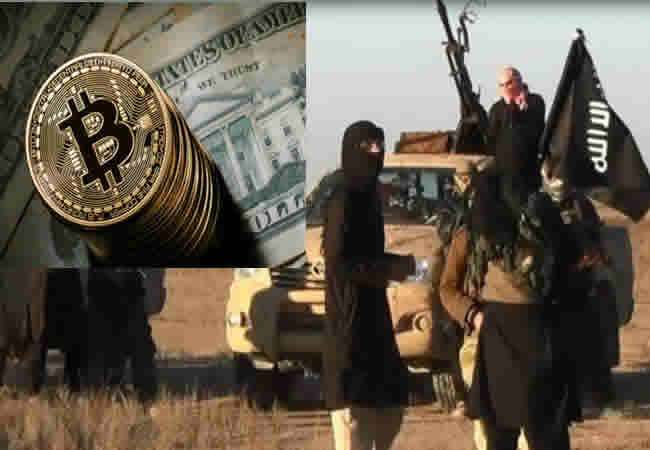
Following the directive of the Federal Government, the Nigerian Sanctions Committee on Monday, March 18, revealed the identities of 15 entities including nine individuals and six Bureau De Change firms that have been sanctioned over alleged terrorism financing.
The nine individuals under sanctions are
1. Tukur Mamu
2. Yusuf Ghazali
3. Muhammad Sani
4. Abubakar Muhammad
5. Sallamudeen Hassan
6. Adamu Ishak
7. Hassana-Oyiza Isah
8. Abdulkareem Musa,
9. Umar Abdullahi
The six BDCs and firms are
10. West and East Africa General Trading Company Limited
11. Settings Bureau De Change Limited
12. G. Side General Enterprises
13. Desert Exchange Ventures Limited
14. Eagle Square General Trading Company Limited
15. Alfa Exchange BDC.
READ ALSO: JUST IN: NLC Shuts LP Secretariat, Demands Abure’s Sacking
Details of the development were revealed by the Nigerian Financial Intelligence Unit, in an email sent to The PUNCH correspondent on Tuesday night, entitled “Designation of Individuals and Entities for March 18, 2024.”
The document revealed that the Nigeria Sanctions Committee met on March 18, 2024, where specific individuals and entities were recommended for sanction following their involvement in terrorism financing.
“The Honourable Attorney General of the Federation, with the approval of the President, has thereupon designated the following individuals and entities to be listed on the Nigeria Sanctions List,” the document read in part.
Top of the list of individuals named in the document was a Kaduna-based publisher, Tukur Mamu, who is currently being tried by the Federal Government for allegedly aiding the terrorists who attacked the Abuja-Kaduna train in March 2022.
According to the document, Mamu “participated in the financing of terrorism by receiving and delivering ransome payments over the sum of $200,000 US in support of ISWAP terrorists for the release of hostages of the Abuja-Kaduna train attack.”
The document said one of the individuals is “the suspected attacker of the St. Francis Catholic Church Owo, Ondo State on June 5, 2022, and the Kuje Correctional Centre, Abuja, on July 5, 2022.”
Another was described as “a member of the terrorist group Ansarul Muslimina Fi Biladissudam, the group is associated with Al-Qaeda in the Islamic Maghreb.
READ ALSO: Poor Planning Bane Of Nigeria’s Socioeconomic Problems, Says Obaseki
“The subject was trained and served under Muktar Belmokhtar, aka One Eyed Out, led Al-Murabtoun Katibat of AQIM in Algeria and Mali.”
The NFIU said the individual “specialises in designing terrorist clandestine communication code and he is also Improvised Explosive Device expert.
“The subject was also a gatekeeper to ANSARU leader, Mohammed Usman aka Khalid Al-Bamawi. Equally, he was a courier and travel guide to AQIM Katibat in the desert of Algeria and Mali. He is into carpentry. Subject fled Kuje correctional centre on July 5, 2022. He is currently at large.”
Another was identified as “a senior commander of the Islamic State of West Africa Province Okene.”
The agency said the individual “came into limelight in 2012 as North Central wing of Boko Haram.
“The group is suspected of the attacks carried out around Federal Capital Territory and the South West Geographical Zone, including the June 5, 2022 attack on St. Francis Catholic Church, Owo, Ondo State.”
Another was described as “a financial courier to ISWAP Okene. She is responsible for the disbursement of funds to the widows/wives of the terrorist fighters of the group.”
READ ALSO: 23-year-old Secondary School Students Arrested In Military Uniform With Firearms
According to the document, another of the individuals “in 2015, transferred N60m to terrorism convicts.”
He was also said to have “received a sum of N189m between 2016 and 2018.”
The same person is said to “own entities and business reported in the UAE court judgment as facilitating the transfer of terrorist funds from Dubai to Nigeria.”
Another individual was said to have “received a total of N57m from between 2014 and 2017.”
Another was said to have “had a total inflow of N61.4 bn and a total outflow of N51.7bn from his accounts.”
The document further revealed that, in accordance with Section 54 of the Terrorism (Prevention and Prohibition) Act, 2022, institutions and individuals are required to:
“(a) immediately, identify and freeze, without prior notice, all funds, assets, and any other economic resources belonging to the designated persons and entities in your possession and report same to the Sanctions Committee;
“(b) report to the Sanctions Committee any assets frozen or actions taken in compliance with the prohibition requirements.
READ ALSO: Ex-US VP Pence Declines To Endorse Trump For President
“(c) immediately file a Suspicious Transactions Report to the NFIU for further analysis on the financial activities of such an individual or entity; and
“(d) report as a Suspicious Transactions Report to the NFIU, all cases of name matching in financial transactions prior to or after receipt of this List. ”
It said, “The freezing obligation required above shall extend to
“(a) all funds or other assets that are owned or controlled by the designated persons and entities, and not only those that are tied to a particular act, plot, or threat of terrorism or terrorism financing;
“(b) those funds or other assets that are wholly or jointly owned or controlled, directly or indirectly, by designated persons or entities;
“(c) the funds or other assets derived or generated from funds or other assets owned or controlled directly or indirectly by designated persons or entities; and
“(d) funds or other assets of persons and entities acting on behalf of, or at the direction of designated persons or entities.”



Headline
UK Supported US Mission To Seize Russian-flagged Oil Tanker – Defense Ministry
The British Ministry of Defence said on Wednesday that it provided support to the United States in its operation to seize a Russian-flagged oil tanker in the North Atlantic.
US seized the tanker, which was being shadowed by a Russian submarine on Wednesday, after pursuing it for more than two weeks across the Atlantic as part of Washington’s efforts to block Venezuelan oil exports.
According to Britain, its armed forces gave pre-planned operational support, including basing following a US request for assistance.
READ ALSO:UK Introduces Powers To Seize Phones, SIM Cards From Illegal Migrants
The UK also said a military vessel provided support for the US forces pursuing the tanker, and the Royal Air Force provided surveillance support from the air.
Defence Secretary John Healey stated that the operation targeted a vessel with a nefarious history linked to Russian and Iranian sanctions evasion networks.
“This action formed part of global efforts to crack down on sanctions busting,” he said in a statement.
READ ALSO:Venezuelan Deportees: US Embassy Gives Reason For Reducing Visa Validity For Nigerians
According to him, the US was Britain’s closest defence and security partner.
“The depth of our defence relationship with the US is an essential part of our security, and today’s seamlessly executed operation shows just how well this works in practice,” he added.
The British government said that the Bella-1 tanker, now renamed Marinera, is sanctioned by the US under its counter-Iran sanctions,
The MoD statement said the support was provided in full compliance with international law.
Headline
Russia Deploys Navy To Guard Venezuelan Oil Tanker Chased By US In Atlantic
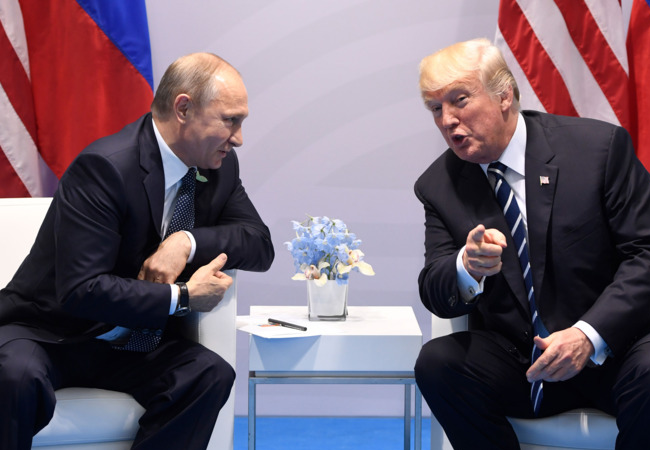
Russia has deployed naval assets to escort a sanctioned oil tanker across the Atlantic following reported moves by the United States to seize the vessel.
US forces were said to be preparing to board the ship, which has a history of transporting Venezuelan crude oil and was last believed to be sailing between Scotland and Iceland.
CBS News reported that Russia stepped in to protect the tanker, raising the prospect of a direct confrontation between the two powers at sea.
READ ALSO:Russia Calls up 135,000 Military Personnel
By sending naval ships into the North Atlantic, Russian President Vladimir Putin is signalling to United States President Donald Trump that any US action would carry consequences, coming after the US president threatened that he might use the military to seize Greenland.
The tanker, currently empty, previously operated under the name Bella 1. Last month, the US Coast Guard attempted to board it in the Caribbean with a warrant over alleged breaches of US sanctions and claims that it had shipped Iranian oil.
The vessel later changed course, renamed itself Marinera and reportedly reflagged from Guyana to Russia.
READ ALSO:Venezuela Frees Eight Opposition Leaders
Trump last month said he had ordered a ‘blockade’ of sanctioned oil tankers entering and leaving Venezuela, a policy the government in Caracas branded ‘theft’.
Ahead of the US seizure of ousted Venezuelan leader Nicolás Maduro on Saturday, Trump accused the country’s government of using ships to smuggle drugs into the United States.
Two US officials told CBS News on Tuesday that American forces were planning to board the Marinera, adding that Washington would prefer to seize the tanker rather than sink it.
Russia’s Foreign Ministry said it expects Western countries to respect principles of freedom of navigation.
(Daily Mail News)
Headline
UK Introduces Powers To Seize Phones, SIM Cards From Illegal Migrants
The United Kingdom has rolled out expanded enforcement powers allowing authorities to confiscate mobile phones and SIM cards from migrants who enter the country illegally.
The new measures, which do not require an arrest, came into force on Monday at the Manston migrant processing centre in Kent and represent a significant tightening of border controls.
According to the Home Office, the powers are intended to support intelligence-gathering operations aimed at disrupting criminal networks that organise and profit from dangerous Channel crossings.
Officials at the centre are equipped with technology that enables them to extract and analyse data from seized devices, a move the government says will help track and dismantle smuggling rings.
READ ALSO:Russia-Ukraine War: Pope Leo Calls For Global Christmas Truce
Under the revised rules, migrants are permitted to be asked to remove outer garments if there is suspicion that phones are being concealed.
In certain circumstances, officers may also check mouths for hidden SIM cards or small electronic items.
The National Crime Agency said information recovered from devices could accelerate investigations and improve the effectiveness of action against organised crime groups.
Border Security Minister Alex Norris said the policy was necessary to regain control of the UK’s borders and confront human trafficking operations.
“We are committed to restoring order and tackling the people-smuggling gangs behind this lethal trade,” Norris said.
READ ALSO:
“These stronger laws give authorities the tools to disrupt, intercept and dismantle these networks more quickly and effectively,” he added.
The legislation also introduces tougher criminal penalties linked to illegal crossings.
Individuals found storing or supplying boat engines for unauthorised journeys could face prison terms of up to 14 years, while those involved in researching equipment or plotting routes may be liable to sentences of up to five years.
Government officials stressed that the powers would be exercised with discretion.
READ ALSO:UK Unveils Record-breaking Bid For 2035 Women’s World Cup
The Minister for Migration and Citizenship, Mike Tapp, said devices could be returned depending on individual circumstances and the relevance of the information obtained.
“If a device may contain intelligence that helps combat smuggling, it is right that it can be seized,” Tapp said, adding that the approach would not undermine compassion toward migrants.
However, humanitarian organisations have expressed unease about the impact of the policy.
The Refugee Council warned that mobile phones often serve as vital lifelines for migrants, enabling contact with family members and access to support services, and urged authorities to ensure the measures are applied in a proportionate and humane manner.

 News3 days ago
What I Saw After A Lady Undressed Herself — Pastor Adeboye
- Headline3 days ago
PROPHECY: Primate Ayodele Reveals Trump’s Plot Against Tinubu
- Metro3 days ago
Armed Robbers Shot PoS Operator To Death In Edo
- Metro2 days ago
AAU Disowns Students Over Protest
- Metro2 days ago
Nine Soldiers Feared Dead In Borno IED Explosion
- Politics3 days ago
2027: Rivers APC Pledges To Follow Wike’s Instructions
- Business2 days ago
NNPCL Reduces Fuel Price Again
- Metro2 days ago
Edo: Suspected Kidnappers Kill Victim, Hold On To Elder Brother
- Metro3 days ago
Joint Task Force Kills 23 Bandits Fleeing Kano After Attacks
- Entertainment3 days ago
PHOTOS: Anthony Joshua Makes First Social Media Post After Surviving Deadly Car Crash


