

News
FULL TEXT: Kukah’s Easter Message To Buhari

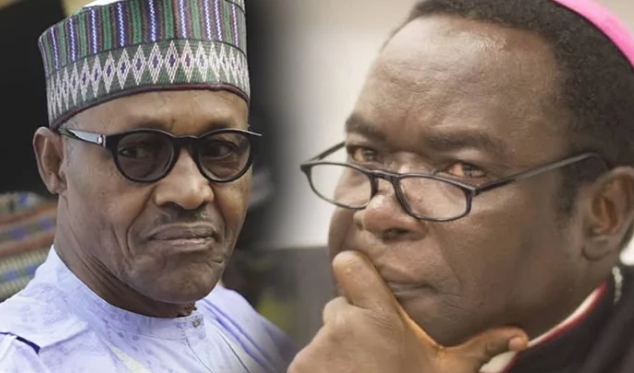


TO MEND A BROKEN NATION: THE EASTER METAPHOR (ON NIGERIA): (Easter Message by Bishop Matthew Hassan Kukah, Diocese of Sokoto
1: Hello brothers and sisters in Christ, men and women of goodwill everywhere, I send you hearty greetings and felicitations as we celebrate the risen Christ. Easter is here again. For all Christians, Easter is a metaphor for our lives as individuals, families, communities or nations. Easter is a metaphor for how shame, scandal, powerlessness, weakness, and opprobrium suddenly transform into glory, honour, pre-eminence, laudation and applause. It is a fulfilment of what the Master himself had foretold when He said, ‘Unless a grain of wheat falls on the ground and dies, it remains only a single grain, but if it dies, it bears much fruit’ (Jn. 12: 24). And the Psalmist had said, ‘Those who sow in tears will sing when they reap.’ (Ps. 126:5).
2: The crucifixion and resurrection of Jesus are central to the Christian faith and yet, as St Paul said, ‘We preach Christ crucified, a scandal to the Jews and nonsense to the Gentiles’ (1 Cor. 1: 23). St Paul continues: ‘What seems to be God’s foolishness is wiser than human wisdom and God’s weakness is stronger than human strength’ (1 Cor. 1:25). Without the claims of the resurrection of Jesus Christ, millions of people would be Christian today. As with the times of Jesus, the very idea is preposterous and incomprehensible yet St. Paul still insists that ‘If Christ has not been raised, then our faith is a delusion and we are still in our sins’ (1 Cor. 15:17). It is faith in the resurrection of Christ that inspires us Christians to hold firmly to the fact that, like the people of Israel, our dry bones shall rise again (Ez. 37: 11).
3: Our dear country, Nigeria, still totters and wobbles as we screech towards a dangerous and avoidable canyon of dry bones. Nonetheless, we still cling to hope, a hope in the resurrected Christ, knowing as St. Paul; said, ‘this hope does not disappoint us’ (Rm.5:5). Nigerians can no longer recognise their country which has been battered and buffeted by men and women from the dark womb of time. It is no longer necessary to ask how we got here. The real challenge is how to find the slippery rungs on the ladder of ascent so we can climb out. Yet, we ask, ascend to where? For us as Christians, ascent is to the loving embrace of the resurrected Christ who is Lord of history.
4: One would be tempted to ask, what is there to say about our tragic situation today that has not been said? Who is there to speak that has not spoken? Like the friends of Job, we stare at an imponderable tragedy as the nation unravels from all sides. The government has slid into hibernation mode. It is hard to know whether the problem is that those in power do not hear, see, feel, know, or just don’t care. Either way, from this crossroad, we must make a choice, to go forward, turn left or right or return home. None of these choices are easy, yet, guided by the light of the risen Christ, we can reclaim our country from its impending slide to anarchy.
5: The greatest challenge now is how to begin a process of reconstructing our nation hoping that we can hang on and survive the 2023 elections. The real challenge before us now is to look beyond politics and face the challenge of forming character and faith in our country. Here, leaders of religion, Christianity and Islam, need to truthfully face the role of religion in the survival of our country. The Nigerian Constitution has very clearly delineated the fine boundaries between religion and politics. Yet many politicians continue to behave as if they are presiding over both the political and the spiritual realms in their states rather than governing in a Democracy.
READ ALSO: Again, Kukah Lambasts Buhari, Says ‘You’ve Destroyed Nigeria, Divided Nigerians’
6: This conflict between Caesar and God is inbuilt in faith and is part of world history. Many religious leaders often measure their power by how close they are to Caesar, yet Caesar’s embrace is often full of thorns. The challenge is for the religious leader to know that both Caesar and those he represents are answerable to God who created them. The welfare of citizens constitutes the cornerstone for measuring the legitimacy of any political leader. As such, religious leaders must focus more on the issues of welfare, safety and security of ordinary citizens. They must raise their voice when these rights are being trampled upon. A leader must know when to call Caesar a fox and not a horse (Lk. 13:32).
7: The greatest challenge for Nigeria is not even the 2023 elections. It is the prospects for the reconciliation of our people. Here, the Buhari administration sadly has divided our people on the basis of ethnicity, religion, and region, in a way that we have never witnessed in our history. This carefully choreographed agenda has made Nigerians vulnerable and ignited the most divisive form of identity consciousness among our people. Years of friendships, cultural exchange, and collaboration built over time have now come under serious pressure from stereotyping. Notwithstanding these challenges, religious leaders must recover and deploy their moral authority and avoid falling victim to the schemes of politicians and their material enticements.
8: Today, the values of Interfaith dialogue have come under severe strain and pressure with extremists from both sides of our faiths denigrating the idea of dialogue with their counterparts of other faiths. Ignorance and miseducation have combined with prejudice to create the falsehood that somehow, one religion is superior to the others. With so many ill equipped fraudsters posing as religious leaders, there is an obsession with defaming the others and widening our differences.
9: Religious leaders must face the reality that here in Nigeria and elsewhere around the world, millions of people are leaving Christianity and Islam. While we are busy building walls of division with the blocks of prejudice, our members are becoming atheists but we prefer to pretend that we do not see this. We cannot pretend not to hear the footsteps of our faithful who are marching away into atheism and secularism. No threats can stop this, but dialogue can open our hearts.
10: Thank God, in the last few years, we have had some good news from outside the shores of Nigeria. The most noteworthy is the initiative undertaken by both Pope Francis and the Grand Imam of Al-Azhar Mosque, Egypt, Shaikh Mohammed Al-Tayeb in 2019, when both of them met and signed the Document on Human Fraternity. Pope Francis followed up with the publication of an Encyclical titled, Fratelli Tutti, We are all Brothers, in 2020. The following year, the United Nation’s General Assembly declared February 4, World Day of Fraternity. Both leaders agreed that: ‘We need to develop the awareness that nowadays, we are either all saved together or no one is saved. Poverty, decadence, and suffering in one part of the earth are a silent breeding ground for problems that will end up affecting our entire planet.’
11: We need to start thinking of a Nigeria beyond banditry and kidnapping and the endless circles of violence that have engulfed our communities and nation. We cannot continue to pretend that there are no religious undertones to the violence in the name of God that has given our religions a bad name. The way out is for the state to enforce the secular status of the Nigerian state so as to give citizens the necessary freedoms from the shackles of semi-feudal confusion over the status of religion and the state in a plural Democracy. We must be ready to embrace modernity and work out how to preserve our religions and cultures without turning religion into a tool for tyranny, exclusion, and oppression.
READ ALSO: Nigeria Decomposing Under Buhari – Kukah Declares
12: In finding our way forward, the President must concede that it is within his powers to decide how we are going to end the war that has engulfed and is tearing down our nation. It seems that the federal government has shown far greater commitment to integrating so called repentant terrorists than getting our children back from kidnappers or keeping our universities open. Earlier last month, Operation Safe Corridor announced that it had graduated 599 members of various terrorist groups who have acquired new skills and are now ready to be integrated into society. The total comes to over a thousand now. It is plausible to note that the programme involves pyscho-social support, rehabilitation, vocational training, skill acquisition and start-ups. Despite all this, the larger issue is that their various communities have expressed their reluctance to receive their erring sons back. Nigerians have no access to the transcripts of the texts of the confessions of these terrorists not to talk of evidence of their commitment to not sin again. We have only the words of the terrorists and the same military that they have been fighting a war with. It speaks volumes when the President and his military hierarchy choose to believe these young men who took up arms and for years waged war against their country, killed, maimed and wasted thousands of lives, destroyed entire communities and now, they are being housed, fed, clothed with public funds. All this while their victims have been forced to make the various IDP camps their new homes! Where is the justice for the victims and the rest of the country they have destroyed?
13: As a priest, I cannot be against a repentant sinner or criminals changing their ways. After all, the doors of forgiveness must always remain open. However, in this case, Nigerians have very little information as to the entire rehabilitation processes. Have these terrorists felt the heat or have they seen the light or, is their repentance a mere strategic and tactical repositioning? So far, we have no evidence that these terrorists have been able to confront their victims not to talk of seeking forgiveness from them. Something is wrong. We see these terrorists adorned in our national colours in their green and white kaftans, trousers, and looking like heroes of the state! Are we to assume that they have become acknowledged models for Nigerian youth? Perhaps the next graduating set might be treated to Presidential handshakes, receptions at the villa with full national colours!
14: Only last week, as if in delayed solidarity, the Jama’atu Nasril Islam, JNI, in a Statement stated that: ‘It appears that the continuous callous acts of mayhem, killings and arson happening almost on daily or weekly bases around us; either within communities or on the roads we ply, has automatically reset our human psyche that we now have accepted such dastardly acts as part of our lives, to the extent that we no longer feel it….Any government that is incapable of protecting the lives of its citizens has lost the moral justification of being there in the first place….our humanity is being eroded and that erosion is become a new normal.’ Similarly, the Northern Elders Forum, NEF, and the House of Representatives have finally called on the President to resign since, in their view it is now clear that he cannot protect his citizens. This has come three years after the Catholic Bishops’ Statement issued on April 26th, 2018 made the same call that was greeted with cynicism.
15: The challenge of fixing this broken nation is enormous and, as I have said, requires joint efforts. With everything literally broken down, our country has become one big emergency national hospital with full occupancy. Our individual hearts are broken. Our family dreams are broken. Homes are broken. Churches, Mosques, infrastructure are broken. Our educational system is broken. Our children’s lives and future are broken. Our politics is broken. Our economy is broken. Our energy system is broken. Our security system is broken. Our Roads and Rails are broken. Only corruption is alive and well. So, we ask with the Psalmist, We look up to the hills, from where shall come our help? Our help shall come from the name of the Lord (Ps. 121:2).
16: 2023 beckons and the stage is set. The challenge is whether we have learnt any lessons from the tragedy that has afflicted us in the last few years. The Presidency of Nigeria is not a human right based on ethnic, religious or regional sentiments. The next President of Nigeria must be a man or woman with a heart, a sense of empathy and a soul on fire that can set limits to what human indignities visited on citizens that he or she can tolerate. We have no need for any further empty messianic rhetoric laced with deceitful and grandiose religiosity. We need someone who can fix our broken nation, rid our people of the looming dangers of hunger and destitution. Our Presidential aspirants must show evidence from their legacies and antecedents that they know the country well enough and its severe wounds. Whoever wants to govern us must illustrate that he or she understands what has turned our nation into a national hospital and show us plans for our discharge from this horror. Support for INEC and its infrastructure is fundamental to a free and fair election and we condemn in very strong terms all those criminals who continue to threaten the society with violence. They should meet the full force of the law.
READ ALSO: See What Bishop Kukah Told US Congress About Buhari Govt
17: I thank the President for accepting the report of the Committee on the Prerogative of Mercy and granting pardon to over 150 Nigerians serving various terms of imprisonment. The more serious challenge is to immediately free all innocent Nigerians who are held captive and whose only crime is that they are living in Nigerians. With the news of the purchase of new sophisticated weapons, we hope that the President and the military will quickly roll out a strategy for routing this cancer that has afflicted our country. The general feeling is that the military has the capacity to end this tragedy. In reality, the military cannot fire beyond the radar set by their commander-in-chief. If the President can end this tragedy, he will immediately get the support of all citizens and hopefully leave office witih his head held high.
18: We cannot end this Message without sparing a thought for the untold sufferings being experienced by the people of Ukraine as a result of the invasion of their country by Russia. We turn in prayer to the Lord to touch the hearts and minds of those in power and in position to reverse this avoidable loss of human lives. May the spirit of the resurrected Christ and the appeals of all men and women of good will help to bring an end to this human tragedy.
19: Finally, in the last few years, my Messages have been borne out of a sense of moral revulsion over how life has been destroyed in my country. No country anywhere in the world is undergoing these self-inflicted wounds, citizens randomly murdering innocent citizens and getting away with it. For me as a Christian, there is a minimum threshold of human indignity that I can live with because the reason why Jesus came is so that all of us will have life and have it to the full (Jn. 10:10). We must shout at what diminishes any and every life in our society. Once human dignity is respected and restored, we will change our tone, but for now, our voice must have a sense of urgency. We Christians believe that to redeem the world, Christ allowed His body to be broken. We know He can heal out broken nation. May the light of His resurrection scatter the clouds and rout the men of evil, inspire a new birth in our dear nation and restore us to wholeness. A happy Easter to you all.




News
Xenophobic Attacks: Oshiomhole Tells FG To Retaliate Against South African Companies In Nigeria

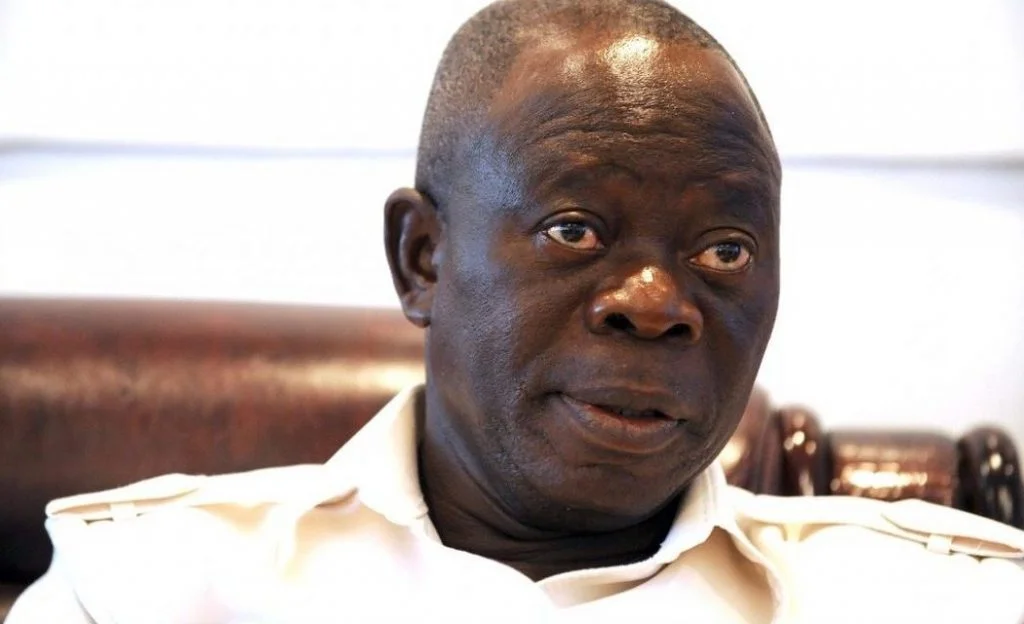
Senator Adams Oshiomhole has called on the Federal Government to retaliate against South African businesses operating in Nigeria following the recent attacks on Nigerians in South Africa.
Speaking during plenary on Tuesday, Oshiomhole said the Federal Government should consider revoking the working license of South African owned companies such as MTN and DSTV.
He argued that Nigeria must respond firmly to what he described as persistent hostility against its citizens.
READ ALSO:South Africa To Investigate ‘Mystery’ Of Planeload Of Palestinians
“I am not going to shed tears. If you hit me, I hit you. I think it is appropriate in diplomacy. It is an economic struggle,” Oshiomhole said.
He argued that while some South Africans accuse Nigerians of taking their jobs, Nigerians should return home and take over employment opportunities created by major South African companies operating in the country, including MTN and DSTV.
“When we hit back, the President of South Africa will not only talk but will also go on his knees to recognise that Nigeria cannot be intimidated.
READ ALSO:South African Ambassador Found Dead Outside Paris Hotel
“We will not condone any life being lost. If a crime has been committed under the South African law they have the right to bring any such person to justice, but to kill our people as if we are helpless, we will not allow that,” Oshiomhole added.
DAILY POST reports that several Nigerians in South Africa have reportedly been attacked, and their businesses destroyed, in ongoing xenophobic attacks in the country.
News
IGP Orders Officers Display Name Tag On Uniform, Gives Update On State Police

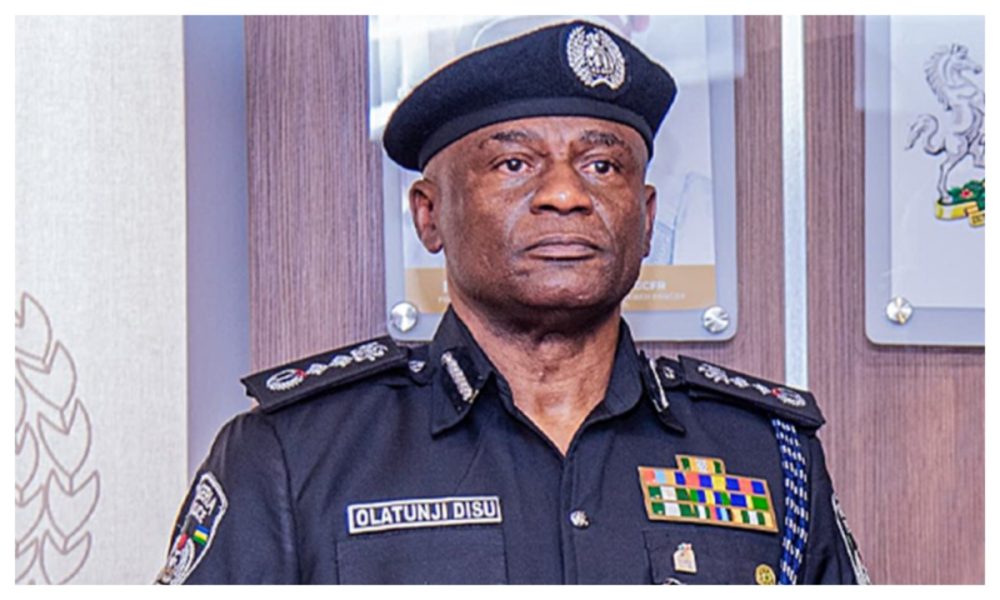
The Inspector General of Police, IGP, Tunji Disu, has ordered all police personnel to always have their name tags on their uniforms for easy identification.
Disu disclosed that only police personnel who are undercover are exempted from displaying their name tags.
Speaking on Tuesday, Disu said: “All police officers should have their name tags. All of us on the high table have our names apart from the undercover among us so if you look at all the Commissioners of Police we have our name tags, so it’s not our standard.
READ ALSO:
“All the Commissioners of Police are here and that is why we called this meeting, we have list of things like this that we will want to discuss with the Commissioners of Police, we have told them earlier and we will still let them know that every that happens within their area of jurisdiction falls under their control.”
On the issue of state police, the IGP said: “Since we got the signal that the Federal Government of Nigeria intend to establish State Police and since we are the federal police, we decided to take the bull by the horn and put down our own side of what we believe on how the state police should be run.
“A lot of things were taken into consideration, a lot of comparative analysis was done and it has been transmitted to the National Assembly.”
News
Court Orders SERAP To Pay DSS Operatives N100m For Defamation
The High Court of the Federal Capital Territory has ordered a non-governmental organization, the Socio-Economic Rights and Accountability Project, SERAP, to pay N100 million as damaged to two operatives of the Department of the State Services, DSS, for unjustly defaming them in some publications.
The court also ordered SERAP to tender public apologies to the defamed officers,
Sarah John and Gabriel Ogundele, in two national newspapers, two television stations and its website.
Besides, the organization was also ordered to pay the two operatives N1 million as cost of litigation and 10 percent post-judgment interest annually on the judgment sum until it’s fully liquidated.
Justice Yusuf Halilu of the High Court of the Federal Capital Territory gave the order on Tuesday while delivering judgment in a N5.5 billion defamation suit instituted against SERAP by the DSS operatives.
The judge found SERAP liable for unjustly defaming the two DSS operatives with allegations that they unlawfully invaded its Abuja office, harassed and intimidated its staff, in September 2024.
READ ALSO:How We Arrested Terror Suspect Who Threatened To Kill Students, Teachers In Abuja — DSS
In the offending publication on its website and Twitter handle, SERAP alleged that the two operatives unlawfully invaded and occupied its office with sinister motives.
The judge held that the publication was in bad taste especially from an organization established to promote transparency and accountability, as nothing in the publication was found to be truthful.
The DSS staff had listed SERAP as 1st defendant in the suit marked CV/4547/2024. SERAP’s Deputy Director, Kolawole Oluwadare, was listed as the 2nd defendant.
In the suit, the claimants – Sarah John and Gabriel Ogundele – accused the two defendants of making false claims that they invaded SERAP’s Abuja office on September 9, 2024..
Counsel to the DSS, Oluwagbemileke Samuel Kehinde, had while adopting his final address in the mater urged the judge to grant all the reliefs sought by his client in the interest of justice.
READ ALSO:DSS Arrests Suspected Gunrunner, Recovers 832 Rounds Of Ammunition
He admitted that although the names of the two claimants were not mentioned in the defamation materials, they had however established substantial circumstances that they are the ones referred to in the published defamation article by SERAP on its website.
The counsel submitted that all ingredients of defamation have been clearly established and the offending publication referred to the two officials of the secret police.
However, SERAP, through its counsel, Victoria Bassey from Tayo Oyetibo, SAN, law firm, asked the court to dismiss the suit on the ground that the two claimants did not establish that they were the ones referred to in the alleged defamation materials.
She said that SERAP used “DSS officials” in the alleged offending publication, adding that the two claimants must establish that they are the ones referred to before their case can succeed.
Similar arguments were canvassed by Oluwatosin Adefioye who stood for the second defendant, adding that there was no dispute in the September 9, 2024 operation of DSS in SERAP’s office.
READ ALSO:Alleged Cyberstalking: DSS Plays Video Evidence In Sowore’s Trial
He said that since SERAP in the publication did not name any particular person, the claimants must plead special circumstances that they were the ones referred to as the DSS officials.
Besides, he said that there is no organization by name Department of State Services in law, hence, DSS cannot claim being defamed adding that the only entity known to law is National Security Agency.
The claimants had in the suit stated that the alleged false claim by SERAP has negatively impacted on their reputation.
The DSS also stated, in the statement of claim, that, in line with the agency’s practice of engaging with officials of non-governmental organisations operating in the FCT to establish a relationship with their new leadership, it directed the two officials – John and Ogunleye – to visit SERAP’s office and invite them for a familiarization meeting.
The claimants added that in carrying out the directive, John and Ogunleye paid a friendly visit to SERAP’s office at 18 Bamako Street, Wuse Zone 1, Abuja on September 9 and met with one Ruth, who upon being informed about the purpose of the visit, claimed that none of SERAP’s management staff was in the country and advised that a formal letter of invitation be written by the DSS.
READ ALSO:DSS, Police Partner NCCSALW To End Terrorism, Mop Up Illegal Arms
John and Ogundele, who claimed that their interactions with Ruth were recorded, said before they immediately exited SERAP’s office, Ruth promised to inform her organisation’s management about the visit and volunteered a phone number – 08160537202.
They said it was surprising that, shortly after their visit, SERAP posted on its X (Twitter) handle – @SERAPNigeria – that officers of the DSS are presently unlawfully occupying its office.
The claimant added, “On the same day, the defendants also published a statement on SERAP’s website, which was widely reported by several media outfits, falsely alleging that some officers from the DSS, described as “a tall, large, dark-skinned woman” and “a slim, dark skinned man,” invaded their Abuja office and interrogated the staff of the first defendant (SERAP).
John and Ogundele stated that “due to the false statements published by the defendants, the DSS has been ridiculed and criticised by international agencies such as the Amnesty International and prominent members of the Nigerian society, such as Femi Falana (SAN)”.
“Due to the false statements published by the defendants, members of the public and the international community formed the opinion that the Federal Government is using the DSS to harass the defendants.”
READ ALSO:SERAP To Court: Stop CBN From ‘Implementing ‘Unlawful, Unjust ATM Fee Hike’
They added that the defendants’ statements caused harm to their reputation because the staff and management of the DSS have formed the opinion that the claimants did not follow orders and carried out an unsanctioned operation and are therefore, incompetent and unprofessional.
The claimants therefore prayed the court for the following reliefs: “An order directing the defendants to tender an apology to the claimants via the first defendant’s (SERAP’s) website, X (twitter) handle, two national daily newspapers (Punch and Vanguard) and two national news television stations (Arise Television and Channels Television) for falsely accusing the claimants of unlawfully invading the first defendant’s office and interrogating the first defendant’s staff.
“An order directing the defendants to pay the claimants the sum of N5 billion as damages for the libellous statements published about the claimants.
“Interest on the sum of N5b at the rate of 10 percent per annum from the date of judgment until the judgment sum is realised or liquidated.
“An order directing the defendants to pay the claimants the sum of N50 million as costs of this action.”
-

 Politics3 days ago
2027: Tinubu’s Re-election May Put An End To Nigeria — Baba Ahmed Warns
-

 Metro4 days ago
I’m A Street Girl’ – Bimbo Ademoye Clashes With Area Boys [VIDEO]
-

 News5 days ago
VIDEO: Moment S’Court Recognises David Mark-led ADC Leadership
-

 Politics4 days ago
Senatorial Seat: Ogbakha-Edo Warns Against Imposition Of Candidates In Edo South
-

 Politics4 days ago
BREAKING: 2027: Former Adamawa APC Guber Candidate, Aishatu Binani Defects To NDC
-

 Business3 days ago
JUST IN: Nigerian Filling Stations Reduce Fuel Price After Hike
-

 Entertainment4 days ago
Actress Eniola Badmus Gets New Federal Appointment
-

 Metro5 days ago
Robbers Raid Imo Catholic Church, Steal Holy Communion Materials
-

 News4 days ago
10 African Countries With Highest Petrol Prices In Prices In April 2026
-

 Metro5 days ago
VIDEO: Policemen Filmed Assaulting Individual In Viral Clip
