
Headline
Google Agrees To Settle $5bn Consumer Privacy Lawsuit
Google has agreed to settle a consumer privacy lawsuit seeking at least $5 billion in damages over allegations it tracked users’ data who thought they were browsing privately.
In a court filing, the judge confirmed that lawyers for Google reached a preliminary agreement to settle the class action lawsuit – originally filed in 2020 – which claimed that “millions of individuals” had likely been affected.
Lawyers for the plaintiffs were seeking at least $5,000 for each user it said had been tracked by the firm as they visited Google Analytics or Ad Manager in “private browsing mode” while not logged into their Google account.
This would have amounted to at least $5 billion.
READ ALSO: Why You Need To Take Lots Of Pictures Before January – Comedian AY
Google and lawyers for the consumers did not immediately respond to a request for comment.
The lawsuit, filed in a California court, claimed Google’s practices had infringed on users’ privacy by “intentionally” deceiving them.
The original complaint alleged that Google and its employees had been given the “power to learn intimate details about individuals’ lives, interests, and internet usage.”
“Google has made itself an unaccountable trove of information so detailed and expansive that George Orwell could never have dreamed it,” it added.
No figure was given for the preliminary settlement between the parties.
READ ALSO: Asake Tops List If Most Searched Nigerian Artistes In Google
A formal settlement is expected for court approval by February 24, 2024.
PUNCH Online reported in 2018 that European consumer groups on criticised Google for breaching personal data protection rules, citing how the location of smartphone users was continuously tracked.
Meanwhile, in a separate report earlier, our correspondent reported in 2017 that consumer activists launched a lawsuit accusing Google of illegally collecting data on more than five million British iPhone users, who could possibly see a payout reaching into the hundreds of millions.
A campaign group dubbed ‘Google You Owe us’ says the tech giant owes consumers “trust, fairness and money” after unlawfully placing cookies on mobile phones between 2011 and 2012.
READ ALSO: NiMet Predicts Three-day Dust Haze, Sunshine
In 2022, PUNCH Online also reported that Google had agreed to settle a landmark privacy case with 40 US states over accusations that the search engine giant misled users into believing location tracking had been switched off on their devices.
A statement said it was the largest multi-state privacy settlement by state authorities in US history and included a binding commitment for improved disclosures by Google, this was according to AFP.
AFP



Headline
How Our Airstrikes Stopped Christmas Attacks In Nigeria — US Lawmaker
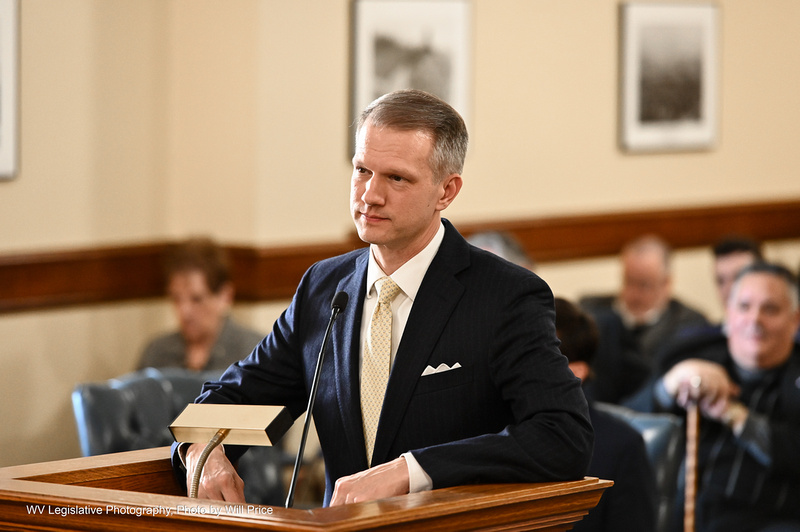
Riley Moore, a member of the United States House of Representatives from West Virginia’s 2nd District, has linked the absence of Christmas attacks in Nigeria this year to US military airstrikes carried out against Islamist militants on Christmas Day.
In a post on his official X account on Saturday, Moore contrasted the situation with the past two Christmas seasons, during which he claimed Christians were killed in attacks across parts of Nigeria.
The lawmaker noted that this year’s response targeted extremist groups instead of marking another period of violence.
READ ALSO:Rep Moore Confirms 12 Tomahawk Missiles Launched In Sokoto
He added that US forces acted decisively against militants in coordination with the Nigerian government.
“For the past two Christmases, Christians have been murdered in Nigeria. This year, thanks to @POTUS, Radical Islamic Terrorists were on the receiving end of 12 Tomahawk missiles as a present.
“The successful strikes on ISIS, in coordination with the Nigerian government, are just the first step to secure the country and end the slaughter of our brothers and sisters in Christ,” Moore wrote.
US President Donald Trump said on Thursday that American forces had conducted deadly strikes against Islamic State terrorists in north-western Nigeria.
Trump, who spoke via his Truth Social platform, warned that more attacks would follow if the militants continued killing Christians, adding that the Department of War executed numerous “perfect strikes.”
Headline
U.S. Lawmaker Reacts To Nigeria, U.S. Airstrikes
United States Congressman, Riley Moore, has stated that President Donald Trump is determined to put an end to the killing of Christians in Nigeria, warning that further action may follow if the violence persists.
Moore made the statement on Friday via his official X handle.
According to the lawmaker, the strike represents the first step in addressing what he described as the ongoing slaughter of Christians and the broader security crisis affecting Nigerians across religious and ethnic lines.
READ ALSO:US Dept Of War Shares Video Of Air Strikes In Nigeria
“President Trump has been clear that the killing of Christians in Nigeria must end,” he said.
He that the administration’s resolve on the matter should not be underestimated.
“As I stated at the outset: Do not test President Trump‘s resolved in this matter.
READ ALSO:JUST IN: US Forces Bomb Terrorists Camps In Nigeria
“Tonight’s strike in coordination with the Nigerian government is just the first step to ending the slaughter of Christians and the security crisis affecting all Nigerians,” he said.
He stressed that the operation signals a stronger stance by the United States in support of Nigeria’s efforts to tackle terrorism and violent extremism, noting that further measures could be taken if the situation does not improve.
Headline
US Dept Of War Shares Video Of Air Strikes In Nigeria
A video footage of the US military air strikes in Nigeria has emerged.
The video was released by the US Department of War following its air strikes against terrorists in Sokoto.
Earlier, the US secretary of War, Pete Hegseth had confirmed that military air strikes hit terrorists in Nigerians, saying it was deadly.
Later on, the US. African Command, confirmed that it conducted the attacks described as very deadly by President Donald Trump.
Trump said he was only keeping the promise he made earlier last month to strike the terrorists he believes are killing innocent Christians.
READ ALSO:JUST IN: US Forces Bomb Terrorists Camps In Nigeria
Although described as powerful and deadly, the casualty caused by the attack is yet to be released.
Explaining further, security expert, Brant Philip, said the strikes may have been launched “from the USS Paul Ignatius, using a Tomahawk missile.”
The Nigerian government through its ministry of foreign affairs has also confirmed that the strikes were successful.
Watch video here

 News5 days ago
UBTH CMD Marks 120 Days In Office, Expresses Commitment To Providing Conducive Working Environment
- Metro5 days ago
Fintiri Pardons Man Sentenced To Death For ‘Killing Herdsman In Self-defence’, Others
- News4 days ago
JUST IN: Kano Lawmaker, Sarki Aliyu Daneji, Dies Hours After Colleague’s Passing
- News4 days ago
FULL LIST: Churches That Don’t Celebrate Christmas
- Metro5 days ago
Petrol Tanker Crashes Into Akpabio’s Convoy, Kills Police Dispatch Rider
- Headline2 days ago
JUST IN: US Forces Bomb Terrorists Camps In Nigeria
- News3 days ago
Okpebholo Slams ₦25bn Libel Suit On Edo PDP Chairman
- Business5 days ago
Naira Records Significant Appreciation Against US Dollar
- Politics5 days ago
PDP Crisis: INEC Rejects Turaki-led NWC
- Headline2 days ago
US Dept Of War Shares Video Of Air Strikes In Nigeria


