
Headline
Google Drops Pledge Not To Use AI For Weapons

The technology giant had rewritten the principles that guide its development and use of AI which is published online, but a section pledging not to develop tech that cause or are likely to cause harm has now been removed.
That section said the firm would not pursue applications in the areas of weapons or “that gather or use information for surveillance violating internationally accepted norms”.
Instead, the new principles feature a section on responsible development and deployment which implement “appropriate human oversight, due diligence,feedback mechanisms to align with user goals, social responsibility, and widely accepted principles of international law and human rights.”
In a blog post, Google senior vice president James Manyika and Sir Demis Hassabis, who lead the firm’s AI lab, Google DeepMind, said the company needed to update its AI principles as they had been first published in 2018 and the technology has “evolved rapidly” since then.
READ ALSO: US Judge Declares Google Search Dominance Unlawful
“Billions of people are using AI in their everyday lives. AI has become a general-purpose technology, and a platform which countless organisations and individuals use to build applications,” they said.
“It has moved from a niche research topic in the lab to a technology that is becoming as pervasive as mobile phones and the internet itself; one with numerous beneficial uses for society and people around the world, supported by a vibrant AI ecosystem of developers.”
They said this had meant increased international collaborative efforts on common principles, which the blog post said Google was encouraged by.
But Manyika and Hassabis said “global competition” for AI leadership was taking place within an “increasingly complex geopolitical landscape”.
READ ALSO: Google Shares Slide On Spending Plans Despite Sales Jump
“We believe democracies should lead in AI development, guided by core values like freedom, equality, and respect for human rights,” they said.
“And we believe that companies, governments, and organisations sharing these values should work together to create AI that protects people, promotes global growth, and supports national security.”
There is an ongoing debate among AI experts, governments, regulators, tech firms and academics about how the development powerful emerging technology should be monitored or regulated.
Previous international summits have seen countries and tech firms sign non-binding agreements to develop AI “responsibly”, but no binding international law on the issue is yet in place.
READ ALSO: Iran Hackers Target Harris And Trump Campaigns – Google
In the past, Google’s contracts to provide technology, such as cloud services, to the U.S. and Israeli military have sparked internal protests from employees.
James Fisher, chief strategy officer at AI firm Qlik, said Google’s decision was concerning, and highlighted the need for countries such as the UK to push for more international governance.
“Changing or removing responsible AI policies raises concerns about how accountable organisations are for their technology, and around the ethical boundaries of AI deployment,” he told the PA news agency.
“AI governance will of course need to flex and evolve as the technology develops, but adherence to certain standards should be a non-negotiable.
READ ALSO: Google To Link Africa, Australia With Landmark Umoja Cable
“For businesses, this decision shows we are likely to face a complex AI landscape going forwards, where ethical considerations are weighed up against industry competition and geopolitics.
“For the UK, which has attempted to position itself as a leader in AI safety and regulation, this decision only makes it more important to put robust, enforceable AI governance frameworks in place.
“The UK’s ability to balance innovation with ethical safeguards could set a global precedent, but it will require collaboration between government, industry and international partners to ensure AI remains a force for good,”Fisher said.



Headline
How Our Airstrikes Stopped Christmas Attacks In Nigeria — US Lawmaker
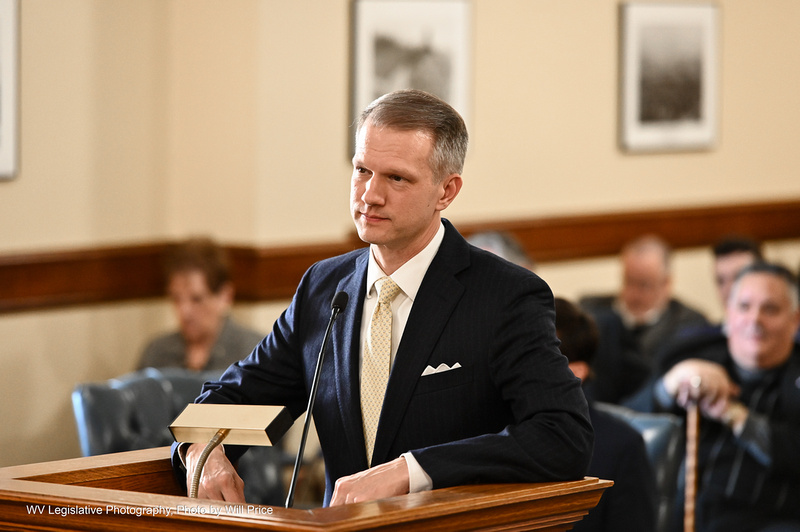
Riley Moore, a member of the United States House of Representatives from West Virginia’s 2nd District, has linked the absence of Christmas attacks in Nigeria this year to US military airstrikes carried out against Islamist militants on Christmas Day.
In a post on his official X account on Saturday, Moore contrasted the situation with the past two Christmas seasons, during which he claimed Christians were killed in attacks across parts of Nigeria.
The lawmaker noted that this year’s response targeted extremist groups instead of marking another period of violence.
READ ALSO:Rep Moore Confirms 12 Tomahawk Missiles Launched In Sokoto
He added that US forces acted decisively against militants in coordination with the Nigerian government.
“For the past two Christmases, Christians have been murdered in Nigeria. This year, thanks to @POTUS, Radical Islamic Terrorists were on the receiving end of 12 Tomahawk missiles as a present.
“The successful strikes on ISIS, in coordination with the Nigerian government, are just the first step to secure the country and end the slaughter of our brothers and sisters in Christ,” Moore wrote.
US President Donald Trump said on Thursday that American forces had conducted deadly strikes against Islamic State terrorists in north-western Nigeria.
Trump, who spoke via his Truth Social platform, warned that more attacks would follow if the militants continued killing Christians, adding that the Department of War executed numerous “perfect strikes.”
Headline
U.S. Lawmaker Reacts To Nigeria, U.S. Airstrikes
United States Congressman, Riley Moore, has stated that President Donald Trump is determined to put an end to the killing of Christians in Nigeria, warning that further action may follow if the violence persists.
Moore made the statement on Friday via his official X handle.
According to the lawmaker, the strike represents the first step in addressing what he described as the ongoing slaughter of Christians and the broader security crisis affecting Nigerians across religious and ethnic lines.
READ ALSO:US Dept Of War Shares Video Of Air Strikes In Nigeria
“President Trump has been clear that the killing of Christians in Nigeria must end,” he said.
He that the administration’s resolve on the matter should not be underestimated.
“As I stated at the outset: Do not test President Trump‘s resolved in this matter.
READ ALSO:JUST IN: US Forces Bomb Terrorists Camps In Nigeria
“Tonight’s strike in coordination with the Nigerian government is just the first step to ending the slaughter of Christians and the security crisis affecting all Nigerians,” he said.
He stressed that the operation signals a stronger stance by the United States in support of Nigeria’s efforts to tackle terrorism and violent extremism, noting that further measures could be taken if the situation does not improve.
Headline
US Dept Of War Shares Video Of Air Strikes In Nigeria

A video footage of the US military air strikes in Nigeria has emerged.
The video was released by the US Department of War following its air strikes against terrorists in Sokoto.
Earlier, the US secretary of War, Pete Hegseth had confirmed that military air strikes hit terrorists in Nigerians, saying it was deadly.
Later on, the US. African Command, confirmed that it conducted the attacks described as very deadly by President Donald Trump.
Trump said he was only keeping the promise he made earlier last month to strike the terrorists he believes are killing innocent Christians.
READ ALSO:JUST IN: US Forces Bomb Terrorists Camps In Nigeria
Although described as powerful and deadly, the casualty caused by the attack is yet to be released.
Explaining further, security expert, Brant Philip, said the strikes may have been launched “from the USS Paul Ignatius, using a Tomahawk missile.”
The Nigerian government through its ministry of foreign affairs has also confirmed that the strikes were successful.
Watch video here

 Metro5 days ago
Fintiri Pardons Man Sentenced To Death For ‘Killing Herdsman In Self-defence’, Others
- News4 days ago
JUST IN: Kano Lawmaker, Sarki Aliyu Daneji, Dies Hours After Colleague’s Passing
- News4 days ago
FULL LIST: Churches That Don’t Celebrate Christmas
- Metro5 days ago
Petrol Tanker Crashes Into Akpabio’s Convoy, Kills Police Dispatch Rider
- Headline3 days ago
JUST IN: US Forces Bomb Terrorists Camps In Nigeria
- Business5 days ago
Naira Records Significant Appreciation Against US Dollar
- News3 days ago
Okpebholo Slams ₦25bn Libel Suit On Edo PDP Chairman
- Politics5 days ago
PDP Crisis: INEC Rejects Turaki-led NWC
- News5 days ago
OPINION: The Day Friendship Died
- Headline2 days ago
US Dept Of War Shares Video Of Air Strikes In Nigeria


