
Politics
Gov’ship Polls: How We Will Transmit Results – INEC

The Independent National Electoral Commission, INEC, has revealed how polling unit results will be transmitted during the governorship elections across the states of the federation on Saturday.
INEC Chairman, Information and Voter Education Committee, Festus Okoye, disclosed this while speaking on Arise TV on Friday.
Okoye said the commission had learnt valuable lessons from the February 25 presidential and National Assembly elections.
“The law as of today prescribes a dual mode of either transmission of results or transfer of results,” Okoye said.
READ ALSO: Gov’ship Polls: APC, NNPP In Fight To Finish In Kano
He said when polls closed at the level of the various units, the Presiding Officer who superintended the polling unit would enter the scores of the various political parties in form EC8A which is the polling unit level result.
He said, “The PO will sign that particular result sheet and stamp it, the PU agent or party agent if available will also countersign and copies will be given to them and the police.
“That original result will be what will be scanned and uploaded to our INEC Result Viewing Portal for public viewing. Not only that, the accreditation data that has arisen from that polling unit will also be uploaded, but the physical result and the BVAS itself will also be taken to the Registration Area Collation centre.”
According to him, the Collation Officer will have the benefit of seeing the original results and the BVAS itself and have the benefit of looking at the accreditation data as transmitted, and the result sheet as transmitted from the polling unit. That is the dual mode that the law has prescribed for the commission and that is the mode that we’re going to use for the purpose of this election.
Speaking on real-time IREV delivery on Saturday, Okoye said results would be transmitted as soon as the polls closed from various polling units.
READ ALSO: Prof Facing N1.4bn Fraud Case Gets N1m Bail
“The commission is determined to improve on its previous performance. What we have done is to learn valuable lessons from previous elections that we conducted, and we’re going to put those lessons into our planning purposes and processes, and into our deployment purposes,” Okoye said.
Speaking on the commission’s preparedness, Okoye said, “As of today, what we’re having is what we call state assembly and governorship elections.
“In all the states of the federation, both the Bimodal Voter Accreditation System machines and all the sensitive election materials have left the Central Bank and the various state offices of the federation.
“We want to ensure that all polling units open on time. Secondly, we made sure that we reconfigured all the BVAS that will be used for this particular election in terms of making sure that the BVAS perform optimally and also making sure that some of the challenges we had in the previous elections do not reoccur.”
He added that INEC had also given refresher training to all categories of staff that would be involved in the elections.
He said the country would be having 28 governorship elections and 993 state assembly constituency elections, saying “It’s a huge election and INEC will be paying very close attention to what is going on in the various states.”



Politics
PDP Reacts To Fubara’s Defection To APC
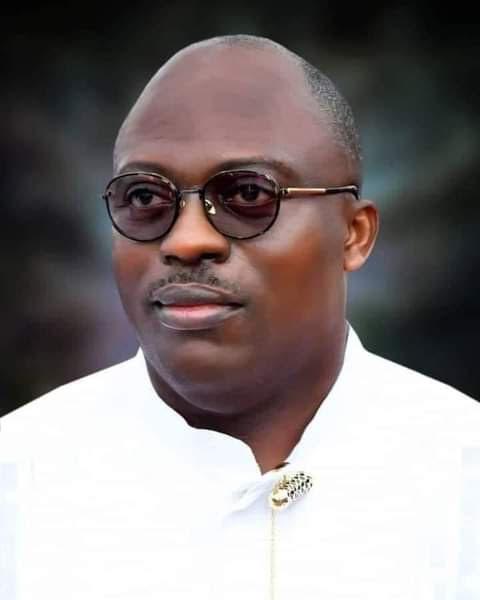
The Kabiru Turaki-led Peoples Democratic Party (PDP) has reacted to the defection of Rivers State Governor, Siminalayi FubaraGovernor, Siminalayi Fubara, to the ruling All Progressives Congress (APC), describing the move as a “self-inflicted injury” and a culmination of choices the governor “willingly embraced.”
Fubara on Tuesday defected from the PDP to the ruling APC.
He announced his decision during a stakeholders’ meeting held at the Government House in Port Harcourt on Tuesday. Fubara joins several of his colleagues who have also switched to the APC this year.
Recently, 17 members of the House of Assembly, loyal to former Governor Nyesom Wike and led by Speaker Martin Amaewhule, announced their defection from the PDP to the APC, thereby altering the balance of power in the legislature.
READ ALSO:JUST IN: Fubara Dumps PDP For APC
In a statement issued Tuesday night by National Publicity Secretary, Ini Ememobong, the PDP said Fubara’s exit merely affirmed the legal maxim volenti non fit injuria—”to one who is willing, no harm is done.”
According to the PDP, the governor’s political troubles and eventual departure were products of his own decisions.
“Everyone who has followed developments that culminated in this uneventful defection will recall that the Governor willingly travelled the path that took him to this destination,” the statement read.
“Having done so voluntarily, he cannot turn around and accuse our party or any person or group of failing to protect him.”
The party insisted that at every stage of the crisis that engulfed Rivers politics over the past year, civil society groups, democratic actors and Nigerians across political divides stood in Fubara’s defence until he “capitulated.”
READ ALSO:Fubara Names New Rivers SSG
It added that rather than blame others, the governor should acknowledge the support he enjoyed before choosing his new path.
Expressing concern about what it described as Fubara’s political capitulation, the PDP warned against the “Stockholm Syndrome”, a condition in which a victim develops affection for their oppressor—suggesting that the governor may have succumbed to pressures from forces aligned with the Federal Government.
“In all, despite these, we pity the Governor and wish him well,” the party added.
READ ALSO:BREAKING: Gov Fubara Dissolves Rivers Pension Board
The PDP further used the development to highlight what it called the “dysfunctional nature of Nigeria’s democracy,” lamenting a political environment where individuals wield power beyond institutions and allegedly deploy federal might to overwhelm opponents.
It warned that such tendencies threaten democratic stability and should be condemned by all well-meaning Nigerians.
With Fubara’s defection, the opposition party renewed its accusation that the ruling APC is bent on creating a one-party state and shrinking Nigeria’s political space.
“Democracy is under severe attack,” the statement noted, urging Nigerians and the international community to resist what it called a slide toward electoral authoritarianism.
Politics
JUST IN: Fubara Dumps PDP For APC
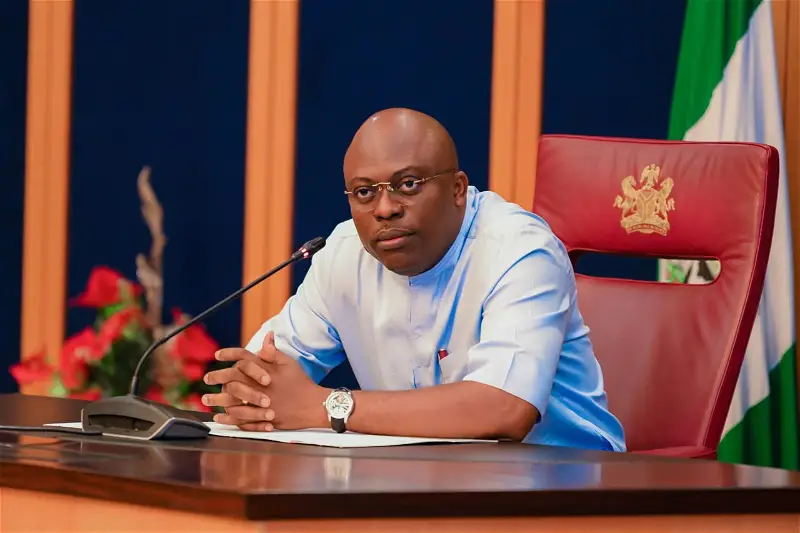
Governor Siminalayi Fubara of Rivers State has defected to the All Progressives Congress, APC, dumping the Peoples Democratic Party, PDP.
Fubara announced this at a stakeholders meeting at the government house in Port Harcourt.
“We can’t support President (Tinubu) if we don’t fully identify with him, not just backyard support.
“Our decision this evening is that we are moving to the APC,” Fubara said as he announced his defection from the PDP to the APC.
READ ALSO:JUST IN: Tinubu Holds Closed-door Meeting With Rivers, Ebonyi Govs
The development comes amid political tension in the oil rich Niger Delta state.
Recall that President Bola Tinubu on Monday
held confidential discussions the with the Governor.
The engagement, held at the State House in Abuja, came against the backdrop of escalating political friction in Rivers State and ongoing uncertainties regarding Fubara’s standing within the PDP.
Politics
Tinubu, Six APC Governors Hold Closed-door Meeting At Aso Villa
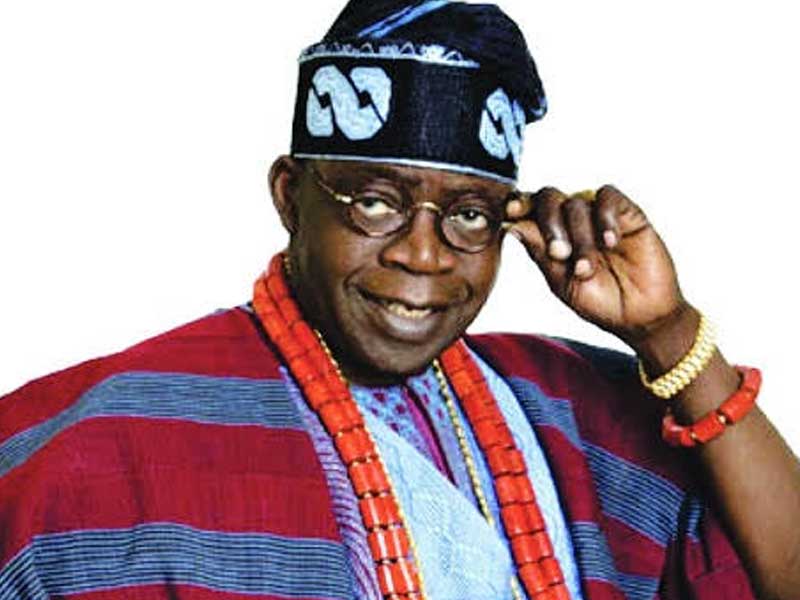
President Bola Ahmed Tinubu on Monday met with six governors elected on the platform of the All Progressives Congress (APC) in a closed-door session at the State House, Abuja.
The purpose of the meeting was not immediately disclosed, and details of its agenda remained unclear at press time.
In attendance were governors Umar Namadi (Jigawa), Monday Okpebholo (Edo), Biodun Oyebanji (Ekiti), Usman Ododo (Kogi,) Aliyu Sokoto (Sokoto) and Dr. Nasir Idris (Kebbi), who arrived at the Presidential Villa separately.
The meeting, held in the President’s office, lasted almost two hours.
Although no Presidency official offered insight into the agenda, the consultations come amid rising security concerns across the country and ongoing political engagements within the ruling party.
The governors declined to speak to journalists after the meeting.
READ ALSO:JUST IN: Navy Officer Who Had Altercation With Wike Reportedly Escapes Assassination Attempt
President Tinubu has recently intensified his focus on national security by convening a series of high-level meetings involving key security stakeholders, including the service chiefs of the Army, Navy, and Air Force, as well as intelligence coordinators and senior officials from various security agencies.
This increased engagement comes in response to a worrying upsurge in banditry, kidnappings, and violent crimes that have spread across multiple regions, causing widespread public concern and escalating pressure on the federal government for urgent and effective intervention.
These strategic meetings, frequently conducted in secrecy to ensure confidentiality and candid discussion, have aimed to undertake a comprehensive review of ongoing security operations nationwide.
Discussions have prioritised enhancing coordination and communication among military, police, and intelligence units to foster a more unified and cohesive response to security challenges.
In addition, the sessions have explored innovative and tactical measures that leverage intelligence gathering, rapid deployment, and community engagement to dismantle criminal networks and restore order.
READ ALSO:JUST IN: Tinubu Holds Closed-door Meeting With Rivers, Ebonyi Govs
Throughout these consultations, President Tinubu has underscored that safeguarding the lives and property of Nigerians is paramount.
He has called on the security apparatus to move beyond reactive measures and adopt more preventive, intelligence-driven strategies that anticipate threats before they escalate.
The administration’s renewed approach signals a commitment to reinforcing national security architecture and improving the operational effectiveness of all agencies involved in the fight against crime and insurgency across Nigeria.
In other news, the National Security Adviser (NSA), Nuhu Ribadu, has expressed optimism that the security challenges – terrorism, banditry, kidnapping, and other violent crime – Nigeria has been facing for almost three decades now will be overcome.
READ ALSO:Tinubu Submits Fresh Ambassadorial List To Senate, Ibas, Dambazau Make Cut
The NSA described those behind the “painful and unnecessary” challenges as “evil” and vowed they would be defeated.
Ribadu made remarks during the opening of a one-day dialogue organised by the National Peace Committee, in partnership with the delegation of the European Union to Nigeria and the U.S., on “a whole-of-Society Approach to the Prevention of Violence and Conflict in Northern Nigeria,” on Thursday in Abuja.
“This (security challenges) also shall pass. We are going through tough times. This will also go.
“But it’s very, very painful, what we are going through. It’s unnecessary.
They are very unfair to us, those who are responsible for this. They are evil.
“But they will be defeated. It’s a matter of time, and peace will be restored. That one we can assure you. Because there are people who are working, not necessarily making noise.
“There are people who are making sacrifices. Every single day, we go to bury our own deaths. Painful as it is. But most people don’t talk. Sacrifice is ongoing,” the NSA said.

 Metro3 days ago
Suspected Kidnappers Abduct 18 Passengers On Benin-Akure Road
- News3 days ago
I’m Not Distracted By Anti-Niger Delta Elements, Says PAP Boss, Otuaro
- Sports2 days ago
JUST IN: Dembélé Named FIFA Best Men’s Player, Bonmatí Wins Women’s Award
- News3 days ago
Edo Assembly Charges Contractor Handling Ekekhuan Road To Accelerate Work
- News2 days ago
OPINION: Time For The Abachas To Rejoice
- Metro3 days ago
NDLEA Seizes 457kg of Cannabis, Arrests Suspected Trafficker In Edo
- News2 days ago
Wage Dispute: Court Orders PSG To Pay Mbappe €61 Million
- Business2 days ago
CBN Revokes Licences Of Aso Savings, Union Homes As NDIC Begins Deposit Payments
 News1 day ago
OPINION: Man-of-the-people, Man-of-himself
- News3 days ago
Okpebholo Pledges To Clear Inherited Salary Arrears, Gratuities At AAU


