
Headline
Hiroshima Marks 80 Years As US-Russia Nuclear Tensions Rise
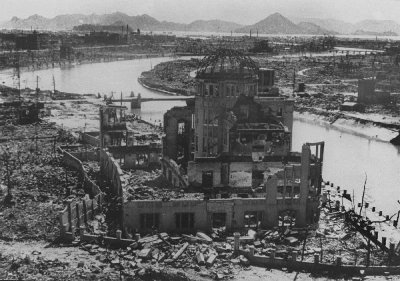
Japan marked 80 years since the atomic bombing of Hiroshima on Wednesday with a ceremony reminding the world of the horrors unleashed, as sabre-rattling between the United States and Russia keeps the nuclear “Doomsday Clock” close to midnight.
A silent prayer was held at 8:15 am (2315 GMT), the moment when US aircraft Enola Gay dropped “Little Boy” over the western Japanese city on August 6, 1945.
On a sweltering morning, hundreds of black-clad officials, students and survivors laid flowers at the memorial cenotaph, with the ruins of a domed building in the background, a stark reminder of the horrors that unfolded.
In a speech, Hiroshima mayor Kazumi Matsui warned of “an accelerating trend toward military buildup around the world”, against the backdrop of Russia’s invasion of Ukraine and the chaos in the Middle East.
READ ALSO:Ukrainian Drone Strikes Kill Three In Russia
“These developments flagrantly disregard the lessons the international community should have learned from the tragedies of history,” he said.
Prime Minister Shigeru Ishiba said it was Japan’s mission “to take the lead… toward a world without nuclear weapons”.
The final death toll of the Hiroshima attack would hit around 140,000 people, killed not just by the colossal blast and the ball of fire, but also later by the radiation.
Three days after “Little Boy”, on August 9, another atomic bomb killed 74,000 people in Nagasaki. Imperial Japan surrendered on August 15, bringing an end to World War II.
Today, Hiroshima is a thriving metropolis of 1.2 million but the attacks live on in the memories of many.
On the eve of the ceremony, people began lining up to pay their respects to the victims in front of the cenotaph.
READ ALSO:Russia Strikes Ukraine After Kyiv Offers Fresh Talks
Before dawn on Wednesday, families who lost loved ones in the attack also came to pray.
Yoshie Yokoyama, 96, who arrived in a wheelchair with her grandson, told reporters that her parents and grandparents were bomb victims.
“My grandfather died soon after the bombing, while my father and mother both died after developing cancer. My parents-in-law also died, so my husband couldn’t see them again when he came back from battlefields after the war.
“People are still suffering,” she added.
Wednesday’s ceremony was set to include a record of around 120 countries and regions including, for the first time, Taiwanese and Palestinian representatives.
The United States — which has never formally apologised for the bombings — was represented by its ambassador to Japan. Russia and China were absent.
READ ALSO:Anxiety As Trump Deploys US Nuclear Submarines Near Russia After ex-President’s Comment
Nihon Hidankyo, the grassroots organisation that last year won the Nobel Peace Prize, is representing the dwindling number of survivors, known as hibakusha.
As of March, there were 99,130 hibakusha, according to the Japanese health ministry, with the average age of 86.
“I want foreign envoys to visit the peace memorial museum and understand what happened,” the group’s co-chair Toshiyuki Mimaki told local media ahead of the commemorations.
Pope Leo XIV said in a statement that “in our time of mounting global tensions and conflicts”, Hiroshima and Nagasaki remained “living reminders of the profound horrors wrought by nuclear weapons”.
United Nations Secretary-General Antonio Guterres warned that “the very weapons that brought such devastation to Hiroshima and Nagasaki are once again being treated as tools of coercion”.
READ ALSO:Russia Strikes Ukraine After Kyiv Offers Fresh Talks
– Younger generation –
The attacks remain the only time atomic bombs have been used in wartime.
Kunihiko Sakuma, 80, who survived the blasts as a baby, told AFP he was hopeful that there could eventually be a nuclear-free world.
“The younger generation is working hard for that end,” he said ahead of the ceremony.
But in January, the Bulletin of the Atomic Scientists’ “Doomsday Clock” shifted to 89 seconds to midnight, the closest in its 78-year history.
The clock symbolising humanity’s distance from destruction was last moved to 90 seconds to midnight over Russia’s invasion of Ukraine in 2022.
READ ALSO:Russian Strikes Kill 16 In Kyiv
Russia and the United States account for around 90 percent of the world’s over 12,000 warheads, according to the Stockholm International Peace Research Institute (SIPRI).
SIPRI warned in June that “a dangerous new nuclear arms race is emerging at a time when arms control regimes are severely weakened,” with nearly all of the nine nuclear-armed states modernising their arsenals.
Earlier this month, US President Donald Trump said that he had ordered the deployment of two nuclear submarines following an online spat with former Russian president Dmitry Medvedev.



Headline
Insecurity: US Congressman Riley Moore Reveals Trump’s Mission In Nigeria
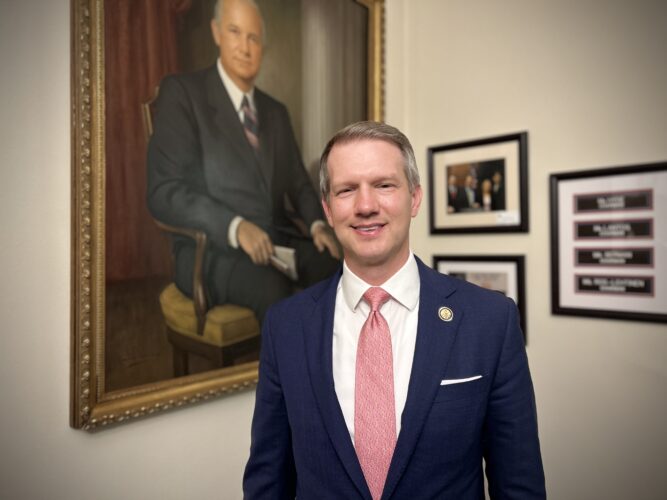
US Congressman Riley Moore has dismissed insinuations that President Donald Trump is attempting to bring war to Nigeria.
Moore made the remark in a post on his verified X handle on Monday.
His comments followed a US military airstrike on a terrorist enclave in north-west Nigeria on Christmas Day, reportedly carried out on the directive of President Trump.
“President Trump is not trying to bring war to Nigeria, he’s bringing peace and security to Nigeria and to the thousands of Christians who face horrific violence and death.
READ ALSO:Russia Calls up 135,000 Military Personnel
“The strikes against ISIS on Christmas, in coordination with the Nigerian government, have given hope to the Christians in Nigeria,” he said.
Recall that the lawmaker had previously stated that President Trump is focused on ending the killing of Christians in Nigeria.
It will be recalled that Moore led a US delegation on a fact-finding mission into alleged Christian genocide in Nigeria some weeks ago.
During his brief stay in the country, Moore travelled to Benue State, where he interfaced with religious and traditional leaders, as well as internally displaced persons.
Headline
Russia Calls up 135,000 Military Personnel
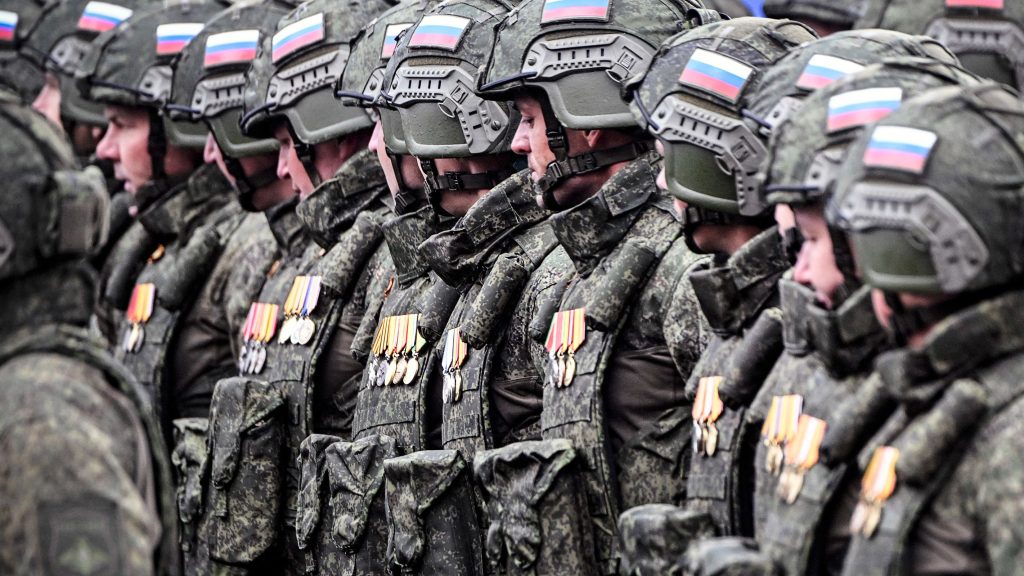
Russia has enlisted 135,000 conscripts for military service in 2026, following the conclusion of the autumn army draft by the Defense Ministry.
A statement on Monday said most personnel have been assigned to training units and military formations where they will “get a military specialty and learn to operate modern military hardware.”
The conscripts can choose to serve in any of the various military branches and armed services after an assessment of their health condition and the results of psychological examinations.
READ ALSO:Russian Strike On Odesa Region Kills Eight, Injures 27
The ministry disclosed that 680 recruits have joined scientific and research-production units, while 240 from the country’s national teams in Olympic disciplines joined sports companies.
However, military personnel who have served the established term of military service have been discharged and sent to their places of residence.
The latest enlistment confirms Russia is shoring up its troops deployed to the ongoing special military operation in Ukraine ahead of the new year.
READ ALSO:Putin Says Russia Ready For War, Blames Europe For Sabotaging Peace
A fortnight ago, European leaders reaffirmed their pledge to form a multinational force–under the aegis of the Coalition of the Willing–to assist Ukraine in securing land, skies, and seas.
The pledge is one of the six commitments the EU and heads of state developed for Ukraine’s security and economic recovery support measures.
In an interview with TASS on Sunday, Russian Foreign Minister Sergey Lavrov condemned Europe’s insistence on sending military forces to Ukraine.
“We have said many times that our Armed Forces would view them as a legitimate target,” he said, warning that anyone who attacks Russia would face “a devastating blow.”
Headline
How Our Airstrikes Stopped Christmas Attacks In Nigeria — US Lawmaker
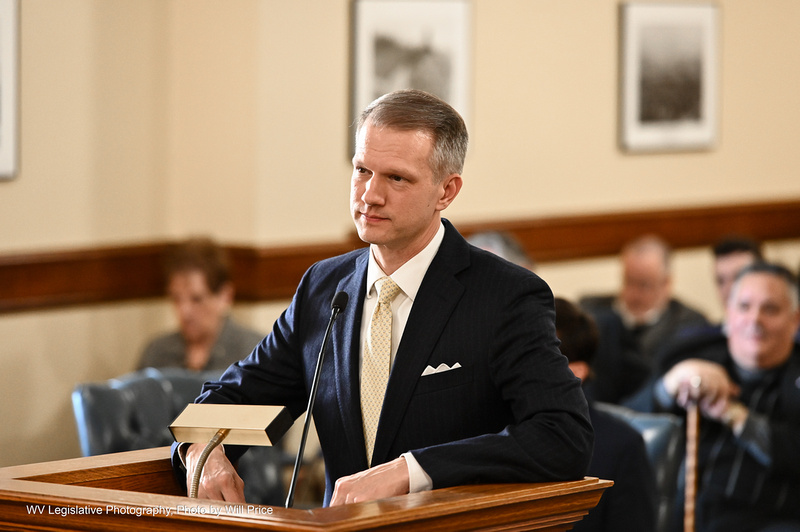
Riley Moore, a member of the United States House of Representatives from West Virginia’s 2nd District, has linked the absence of Christmas attacks in Nigeria this year to US military airstrikes carried out against Islamist militants on Christmas Day.
In a post on his official X account on Saturday, Moore contrasted the situation with the past two Christmas seasons, during which he claimed Christians were killed in attacks across parts of Nigeria.
The lawmaker noted that this year’s response targeted extremist groups instead of marking another period of violence.
READ ALSO:Rep Moore Confirms 12 Tomahawk Missiles Launched In Sokoto
He added that US forces acted decisively against militants in coordination with the Nigerian government.
“For the past two Christmases, Christians have been murdered in Nigeria. This year, thanks to @POTUS, Radical Islamic Terrorists were on the receiving end of 12 Tomahawk missiles as a present.
“The successful strikes on ISIS, in coordination with the Nigerian government, are just the first step to secure the country and end the slaughter of our brothers and sisters in Christ,” Moore wrote.
US President Donald Trump said on Thursday that American forces had conducted deadly strikes against Islamic State terrorists in north-western Nigeria.
Trump, who spoke via his Truth Social platform, warned that more attacks would follow if the militants continued killing Christians, adding that the Department of War executed numerous “perfect strikes.”

 Headline4 days ago
JUST IN: US Forces Bomb Terrorists Camps In Nigeria
- News5 days ago
Okpebholo Slams ₦25bn Libel Suit On Edo PDP Chairman
- Headline4 days ago
US Dept Of War Shares Video Of Air Strikes In Nigeria
- News4 days ago
PHOTOS: SGF George Akume Weds Ooni’s Ex-Queen
- News1 day ago
BREAKING: Anthony Joshua Involved In Road Accident
- News2 days ago
Ex-Edo Gov Obaseki Reacts As His Cousin Is Beaten, Stripped
- News4 days ago
Trump’s Airstrikes: Halt Military Cooperation With US Immediately – Sheikh Gumi Tells Tinubu Govt
- Headline4 days ago
U.S. Lawmaker Reacts To Nigeria, U.S. Airstrikes
- News4 days ago
Shehu Sani Reacts To Trump’s Military Strikes In Nigeria
- News5 days ago
Christmas: Otuaro Preaches Peace, Unity In N’Delta, Hails Tinubu’s Support For PAP


